

Home & Garden
Garden Glow-Ups
Make your green space a heaven on earth with these bucolic beauties
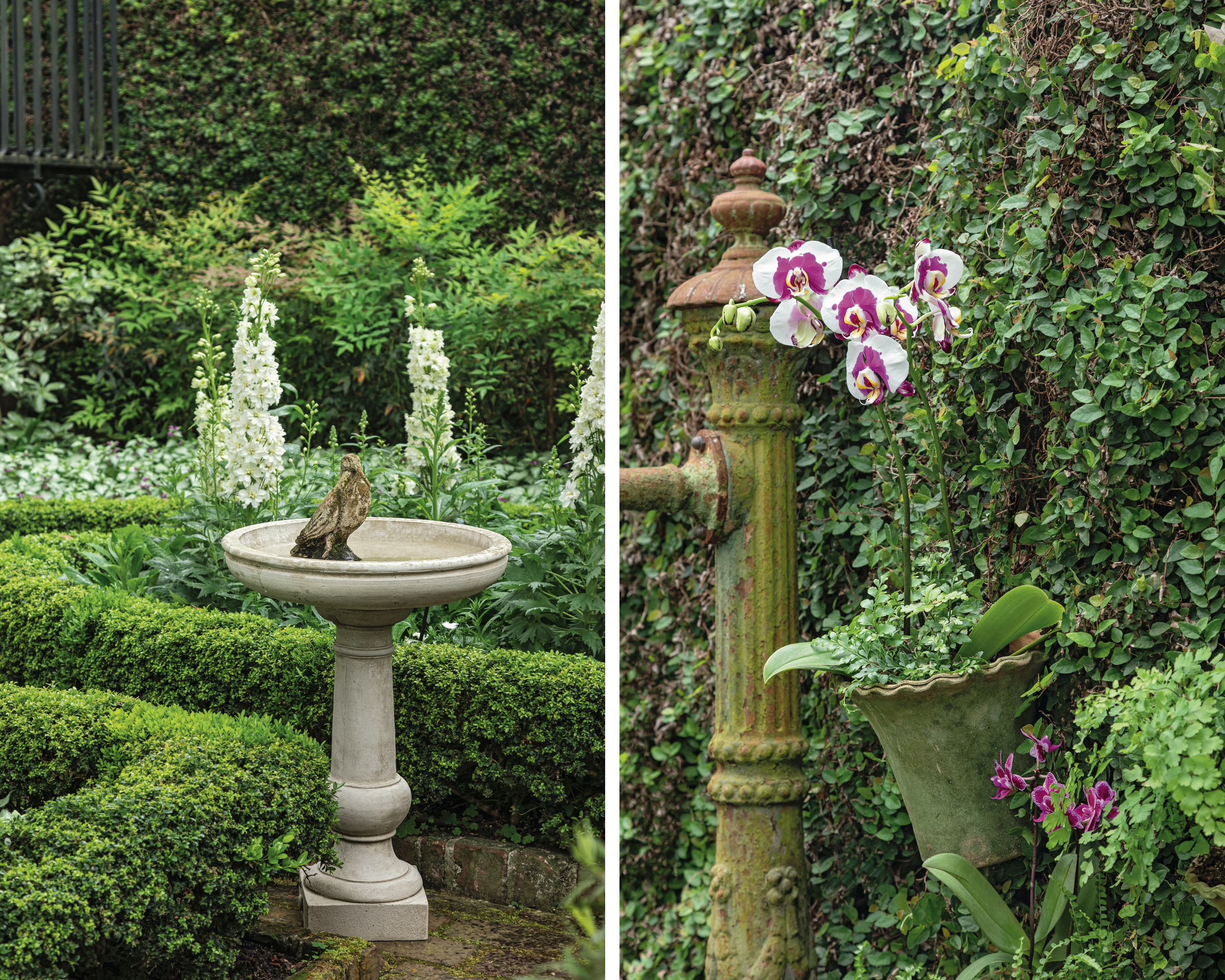
Photo: JULIA LYNN
• Birdbath
Welcome warblers and wrens to cool off in this stately cast-stone bath from the Williamsburg collection by Campania, seen here with a vintage bird statue—every piece nods to Virginia antiques and the timeless lines of eighteenth-century gardens ($400; garden-fountains.com).
Installing the three sizes of these pots by Campo de Fiori en masse on a wall and filling them with plants that pop creates a visual treat, and the aged mossy patina adds instant history. Plus their flat backs—which come with a hole for a masonry screw, nail, or hook—keep them from wobbling when watered ($24–$44; campodefiori.com).
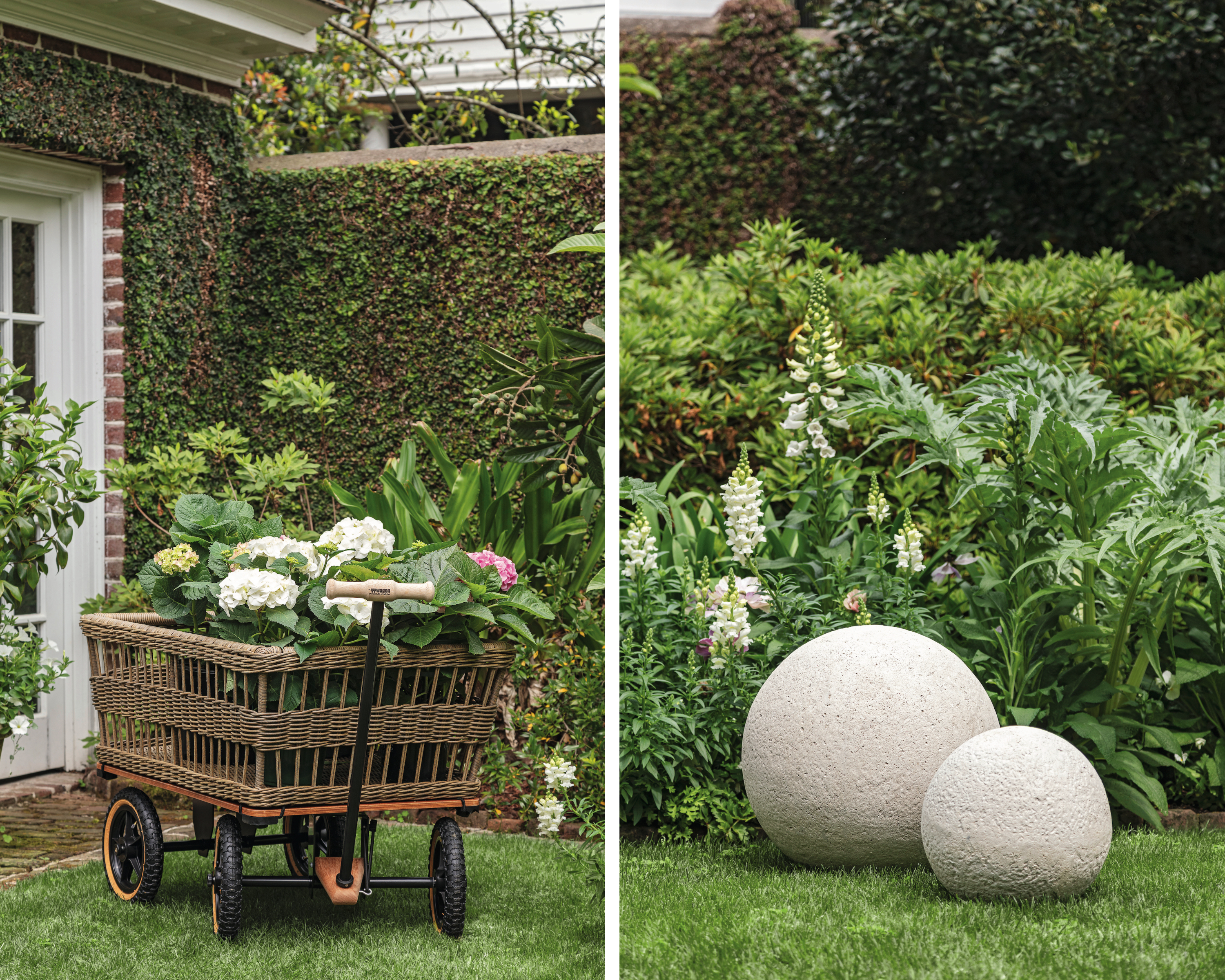
• Wagon
Woven resin fibers make this utterly charming Belgian-made garden cart from Weston Table weatherproof, while also echoing willow garden baskets of yore. And it’s not dainty: It can support heavy pots with ease ($1,895; westontable.com).
• Orbs
Architectural elements like these sculptural orbs, designed by Atlanta’s Suzanne Kasler for Ballard Designs, ensure that a garden always looks dramatic. These get cast by hand using volcanic ash, sand, stone, and resin, so no two are identical ($129–$230; ballarddesigns.com).
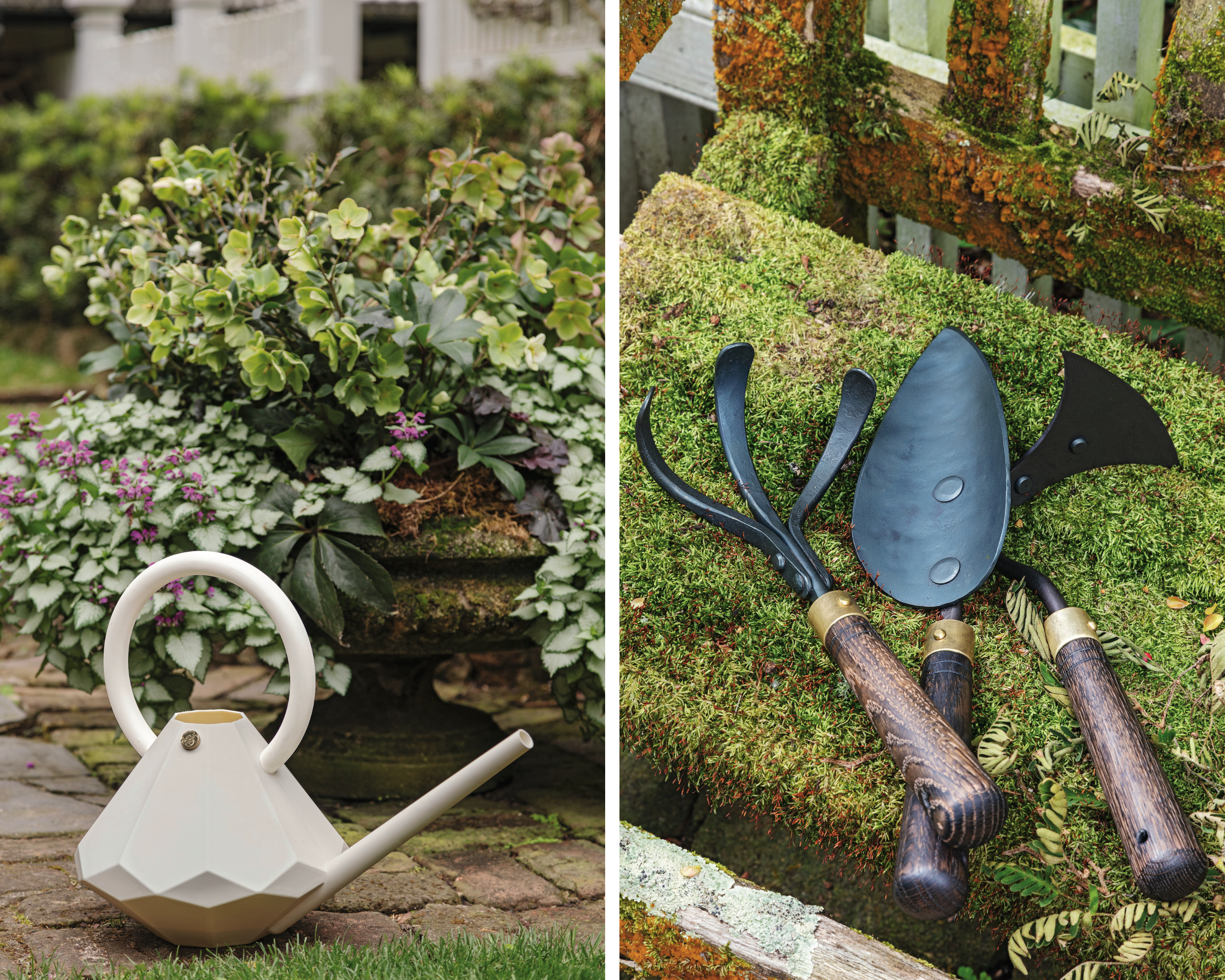
Photo: JULIA LYNN
Just as gardeners delight in learning about new seeds to sow and bulbs to plant, they get a similar rush when they discover fresh takes on everyday items, like this faceted watering can by the Swedish designers at Garden Glory. It’s just the right size for topping off delicate plants that need a light hand ($89; gardenglory.com).
• Tools
Blacksmith Corry Blanc forged carbon steel in his Waynesboro, Virginia, foundry for this Blanc Creatives garden rake, trowel, and weeder, all sturdy enough to turn the soil for generations to come ($185 each, $495 for set; blanccreatives.com).
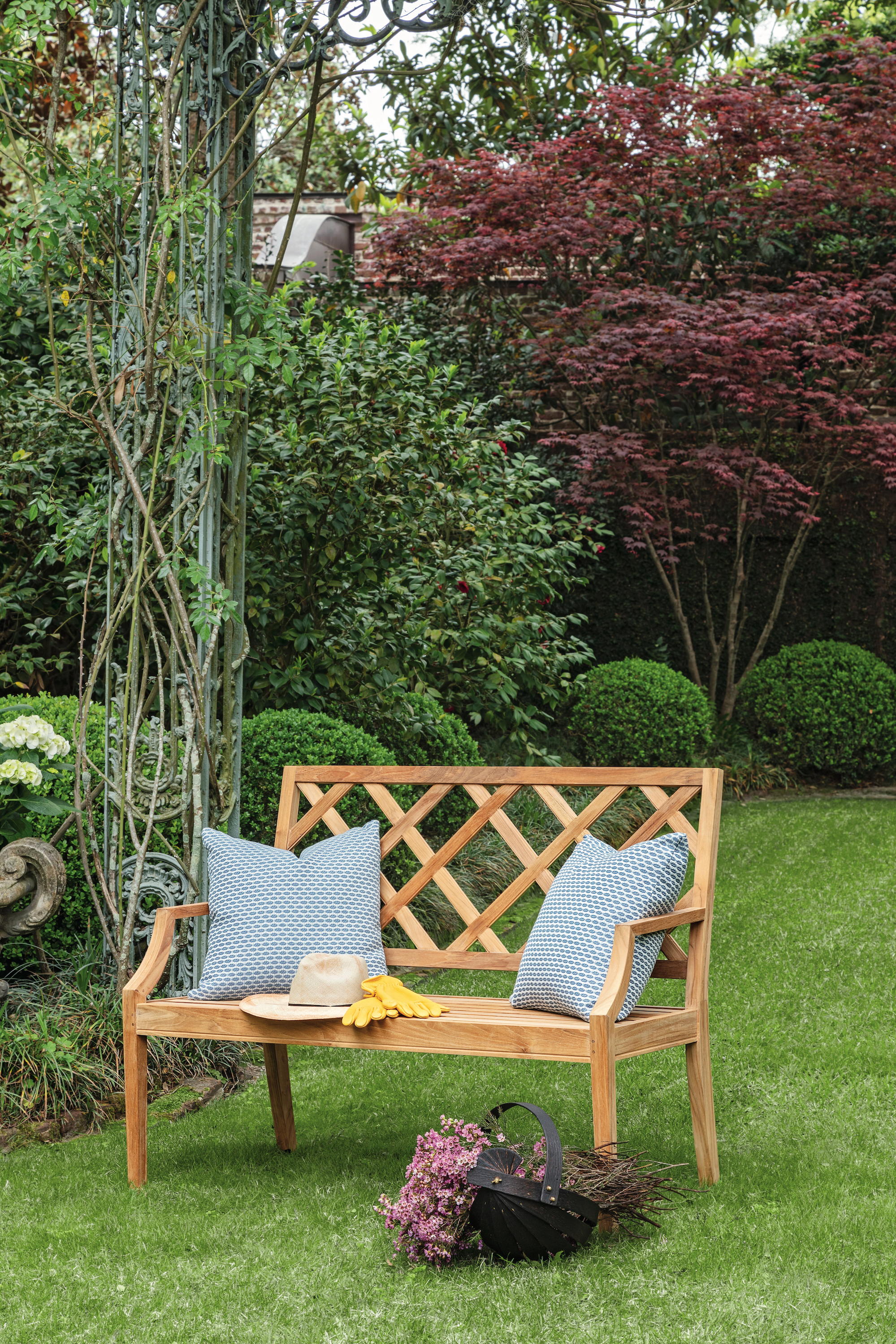
Photo: JULIA LYNN
From top:
• Bench
Traditional latticework makes this teak garden bench from Alabama’s Summer Classics look as if it fell out of a photo of Bunny Mellon’s stunning Virginia garden ($1,540; summerclassics.com).
• Pillows
Soft fabric in weatherproof natural linen by Schumacher brightens these indoor-outdoor pillows ($309 each; fschumacher.com).
• Hat
The founders of Gardenheir, the online garden emporium where you can find this handmade toquilla straw hat, hail from Florida, but after years spent in the fashion and art worlds in New York City, they packed it all up for the Catskills, where they now curate their collections ($178; gardenheir.com).
Independence, Virginia’s Fox Creek Leather crafts elkskin gloves that are both thick against thorns and supple enough to cradle cherry tomatoes without crushing any ($90; foxcreekleather.com).
• Basket
Salvaged white oak from a Virginia farm found new life in Blanc Creatives’ handsome garden basket, with an open mouth begging to haul cut blooms ($375; blanccreatives.com).
Garden & Gun has affiliate partnerships and may receive a portion of sales when a reader clicks to buy a product. All products are independently selected by the G&G editorial team.
Related Stories:
Home & Garden
Plenty of character and personal touches refreshed the Raleigh abode

Home & Garden
A gorgeous new book from Haskell Harris will delight interior-design lovers

Home & Garden
A vibrant new photo book celebrates homes with big personalities
Trending Stories:

Arts & Culture
For almost fifty years, they carried the bags of golf legends but also masterminded victories from the tees to the holes. Then, with one decision, their lives shifted, and the legacy of their glory days went unheralded. Finally, that’s changing

Food & Drink
Step aside New York and Chicago: Biloxi, Mississippi, has a secret pizza ingredient that’s ready for the spotlight

Arts & Culture
Decades later, those dainty florals still hold a powerful grip on the South