
Music
The South’s Best Music Towns: Where to Find Your Groove
From the Appalachian peaks and valleys where country found its wings, to the Deep South’s holy land of blues, these destinations for live tunes don’t just attract fans, they draw in legends
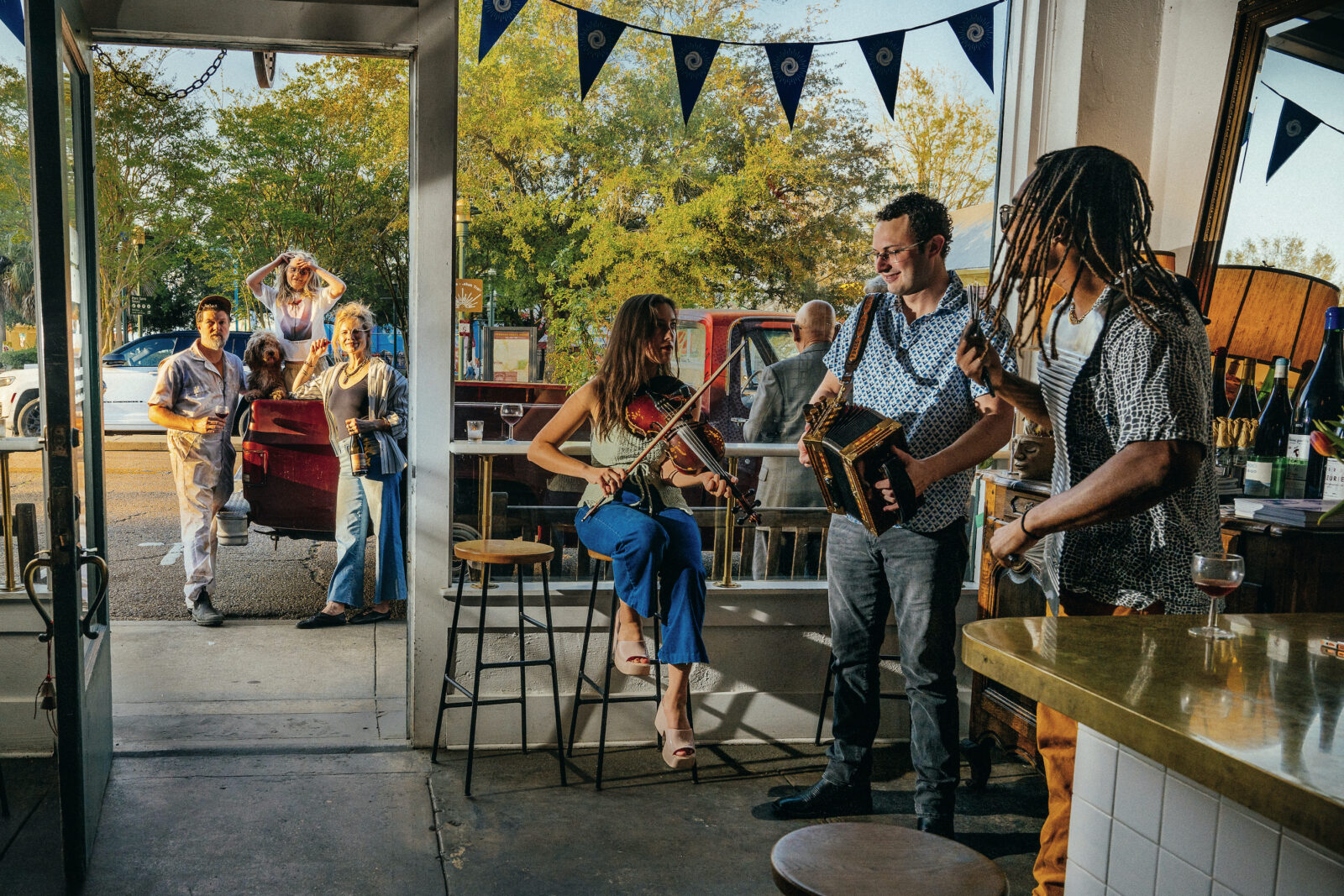
Photo: Joseph Vidrine
In Lafayette, Louisiana, Wild Child wine shop owners Denny and Katie Culbert and their daughter, Kiki, listen as Renée Reed, Luke Huval, and Drake LeBlanc jam.
Lafayette, Louisiana
In the bayou communities west of New Orleans, Cajun, zydeco, and swamp blues play on
by Matt Hendrickson
Joel Savoy surveys the Mardi Gras weekend crowd outside of Fred’s, a raucous dive in Mamou, Louisiana, as Steve Riley and the Mamou Playboys rip into another tune. Savoy grins and says, “My mom and dad wrote this song.” The Savoys are legends here in Acadiana. Savoy’s dad, Marc, is one of Cajun music’s all-time greats. Joel is a Grammy-winning producer, multi-instrumentalist, and, with his father, a maker of hand-built accordions.
Every Saturday morning, most of the family gathers at the instrument shop and Cajun cultural mecca Savoy Music Center in nearby Eunice for a jam session. Joel’s sister Sarah plays the upright bass and sings, and his brother, Wilson, often joins in while Marc and his wife, Ann, work the room, making sure everyone has enough boudin sausage and coffee. The crowd is mostly old-timers, a handful of younger players, and curious tourists. Many will next head over to the Saturday throwdown at Fred’s that lasts until early afternoon. “The Cajun repertoire is fifty to five hundred songs, depending on how deep you want to dig,” Savoy says as we drive back to Lafayette, passing rice fields dotted with crawfish traps, wooden boxes that poke through the water like camel humps. “Everybody plays the same song, so anybody can come up and sit in and play along.”
The night before, at the honky-tonk Blue Moon Saloon in Lafayette, Savoy played guitar with another Cajun king, Jourdan Thibodeaux, who blasted through covers and his own material, all sung in Cajun French. “I love playing with Jourdan, because he’s carrying the torch,” Savoy told me during a break in the set. “It’s important to all of us to keep it going.”
Two hours west of New Orleans, Lafayette sits in the shadow of the Big Easy, but its music traditions are no less important. Today, artists are moving (or returning) to the area after getting priced out of bigger hubs. Lodging options are growing to meet a rise in visitors, including B&Bs such as the centrally located Maison Mouton, and the charming Maison Madeleine in Breaux Bridge. The soon-to-open Hotel Lafayette, the first boutique hotel within city limits, will feature eighty-three rooms and an outpost of the Bayou Teche Brewery.
Sipping a tequila and grapefruit juice at the funky Spoonbill restaurant, Kelli Jones, another multi-instrumentalist, tells me she came here for college and never left. “Think of Lafayette’s music scene as a wheel with spokes pointing out in all directions,” she says. There’s zydeco in Opelousas to the north, swamp blues to the south, and traditional Cajun music east in Breaux Bridge. The venues range from traditional dance halls like La Poussiere and the Blue Moon, to Hideaway on Lee and Rock ’n’ Bowl, to house parties and RV parks. “I’ve played fun gigs in the middle of a field,” Jones says. “People will find the music wherever it’s played.” Best of all, to some of us: Many of the shows take place during the day and early evening (there’s not much of a late-night scene in Lafayette).
Savoy and I meet up again and slip into Wild Child just before it closes. If Andy Warhol lived in Lafayette, this vibrant wine shop would be his Factory. The store, with neon lights throughout, stocks small-production wines, dishes up oysters and scrumptious pizzas for lunch, and sells gifts like locally carved roux paddles. In the lounge, which hosts performances, there are stacks of cool photography books to peruse while sitting on a leather couch, sipping, say, a sparkling natural white wine from Germany. Co-owner Katie Frayard Culbert is a Lafayette native who also started the women’s fashion store Kiki with her mother. Wild Child is a collaboration with her husband, the photographer Denny Culbert. “Lafayette was the inspiration,” she says, then describes both her store and the city: “There’s a mishmash of music and other things, where you could walk out the door and stumble into something new.”
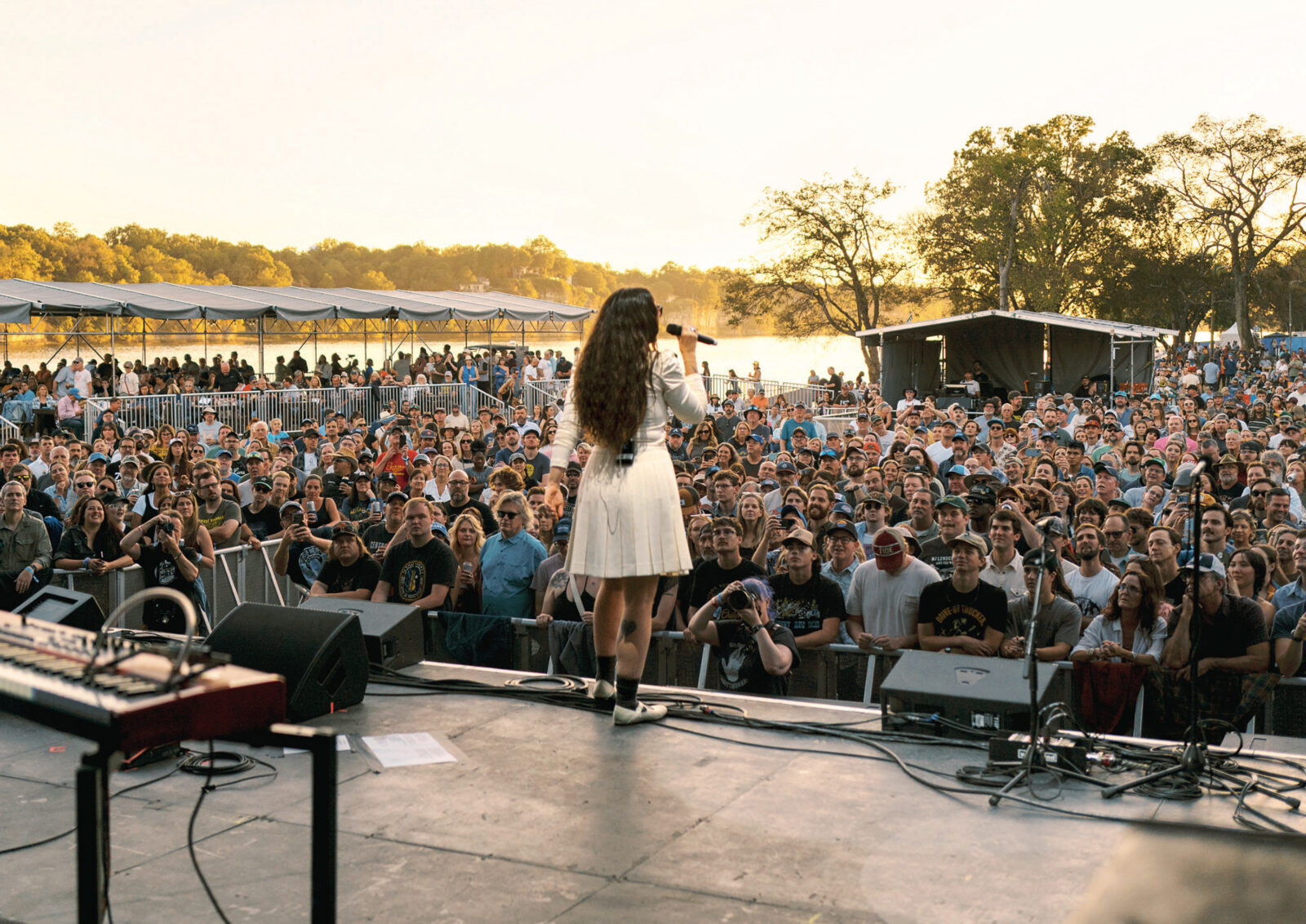
Photo: Josh Weichman
Waxahatchee performs at last year’s ShoalsFest in Florence, Alabama.
Florence, Alabama
Local lore draws pilgrims young and old to this lyrical corner of Northwest Alabama
by Jim Beaugez
Around northwest Alabama, recent history splits into before and after the release of Muscle Shoals, a 2013 documentary that revealed the region’s musical legacy to a new generation of fans. “People started to realize they needed to tell the story,” says Ben Tanner, the Alabama Shakes keyboardist who owns Sun Drop Sound recording studio with singer-songwriter John Paul White. Tanner grew up passing FAME—the Shoals studio where Wilson Pickett and Etta James cut hits in the sixties and seventies—on the way to school. But before the film brought those stories to a broader audience, much of the area’s history felt like local lore. Now the Shoals region, which includes Florence and Sheffield, readily welcomes those making the pilgrimage.
See & Do
While the scene picked up after local Percy Sledge’s “When a Man Loves a Woman” shot to number one in 1966, it began long before when W. C. Handy wrote “Memphis Blues,” one of that genre’s first published songs, in 1912. At the W. C. Handy Birthplace museum in downtown Florence, visitors can tour his childhood log cabin. Just across the Tennessee River in Sheffield, the Rocker Gallery showcases snaps by photographer Danny Clinch, best known for his candids and portraits of such artists as Bruce Springsteen and Pearl Jam, alongside American landscapes captured by Pat Sansone of Wilco, and owner Alan Daigre’s handmade rocking chairs. Nearby, FAME and the Muscle Shoals Sound Studio, where Lynyrd Skynyrd recorded, offer tours between sessions.
Eat & Drink
Sample blue-plate staples like catfish and the Bear Creek Meatloaf with pimento cheese grits at Odette, then walk it off on the way to Trowbridge’s Ice Cream. The same family has been running the spot since 1918, serving scoops of its signature orange pineapple flavor. Smoked meats top the menu at Bunyan’s Bar-B-Q, but don’t overlook the slaw dog, with its tangy, mustardy topping. Downtown Florence lights up at night with live music at Lava Room, which dishes out ramen bowls made with birria beef and tender chashu pork belly. On weeknights, over hickory-smoked barbecue, burgers, and overstuffed spuds, you’re likely to catch one of the region’s active studio musicians performing at FloBama. Gary Nichols, who replaced Chris Stapleton in the SteelDrivers before going solo, is a Tuesday regular; and former Jason Isbell sideman Jimbo Hart and longtime Little Richard guitarist Kelvin Holly sit in on occasion.
Stay
For a plush stay with a musical twist, the Renaissance Shoals Resort & Spa on the riverfront hosts performances at its Swampers Bar & Grille and recently unveiled Caution! Stones Ahead, an exhibition of the world’s largest private collection of Rolling Stones memorabilia. Over at the GunRunner boutique hotel in downtown Florence, the rooms are named for locals such as native son and Sun Records impresario Sam Phillips.
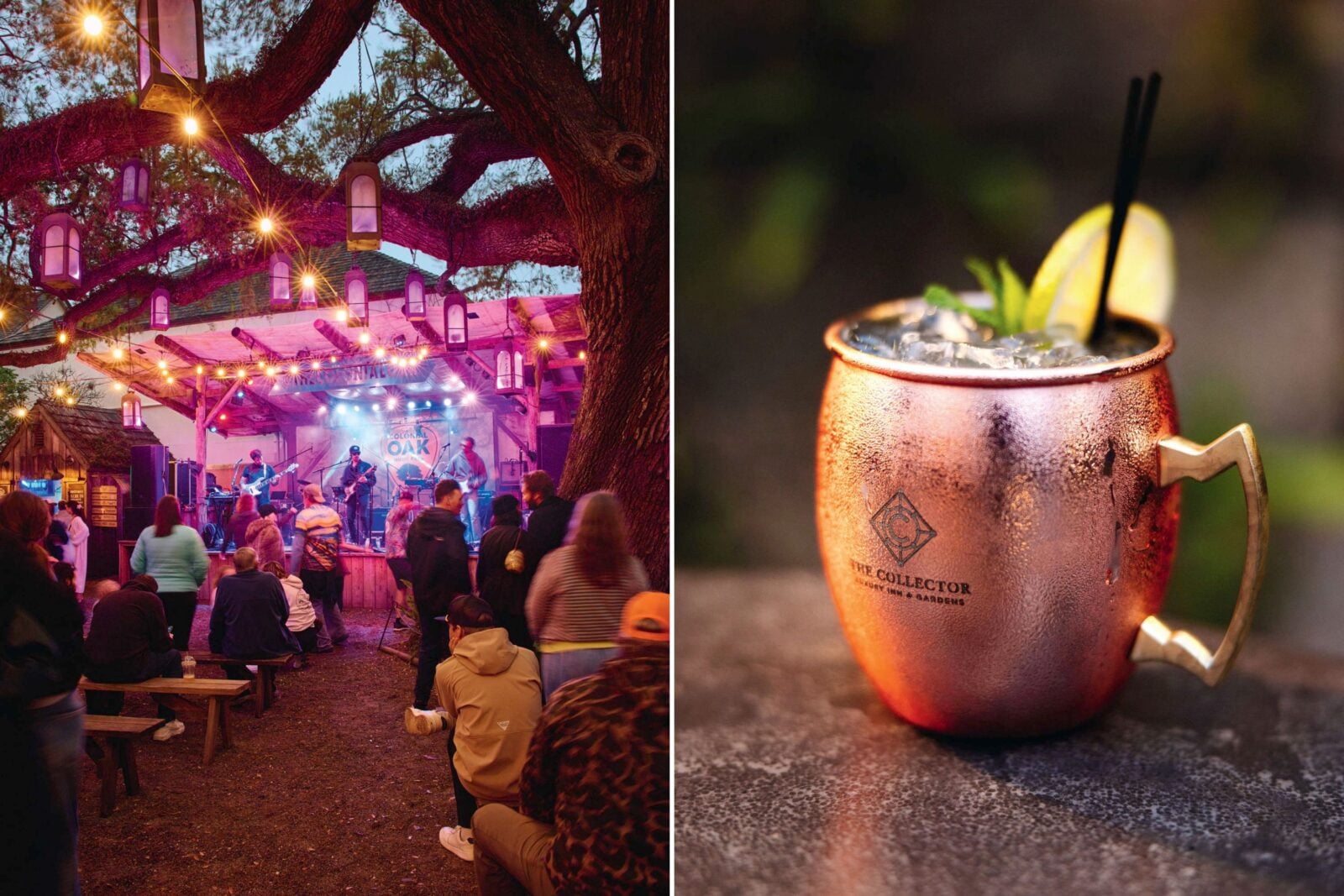
Photo: David McClister; Corey Woosley
Ajeva performs at Colonial Oak Music Park in St. Augustine, Florida; the Collector Inn’s Moscow mule.
St. Augustine, Florida
Sites and sounds abound in the oldest city in the U.S.
by Susan B. Barnes
Some of Cari Baker’s music industry colleagues have started throwing around a nickname for St. Augustine: “the Austin of Florida.” But the local booking agent knows the storied seaside enclave has its own personality entirely. “We are the oldest city in the United States,” she says, “and I think that history adds a layer of character you wouldn’t find in newer cities.” Whether you meander along the Historic District’s leafy boulevards dotted with Spanish Renaissance, Moorish, and baroque architecture; tour Castillo de San Marcos National Monument, the seventeenth-century Spanish fort overlooking Matanzas Bay; or just poke around the many boutique shops and corner cafés, chances are you’ll happen upon live music, too.
See & Do
Locals know to settle in at the Waterworks, a late-1800s pumping station that now serves as an intimate performance space and art gallery. On the weekends, grab a seat under a three-hundred-year-old tree at Colonial Oak Music Park, where both homegrown acts and nationally touring bands play in the shade. Headliners rock beachside at the nearly five-thousand-seat St. Augustine Amphitheatre on Anastasia Island, tucked right between the Intracoastal Waterway and the Atlantic. Regulars claim that thanks to its small size and partially open-air layout, there’s not a bad seat in the house to see the likes of Blackberry Smoke and James Taylor.
The Sing Out Loud Festival returns for its tenth year in September with more than 150 local, regional, and national artists playing free and ticketed shows citywide. “We’ve had an opportunity to really celebrate that music culture, in addition to the history,” says Baker, who books talent for the festival. “And Sing Out Loud has provided a spotlight on all those local artists who are already playing in town.”
Eat & Drink
One of St. Augustine’s original venues, Milltop Tavern & Listening Room has been dishing up pub fare alongside live music in the Historic District for more than fifty years. Right along the riverfront, you might catch a busker’s tunes in the air during lunch or dinner at the intimate La Cocina at the Cellar Upstairs above the San Sebastian Winery. And on St. Augustine Beach, the dog-friendly Original Cafe Eleven is a classic Florida spot to hear acoustic sets over catch-of-the-day dinners.
Stay
Steps from the downtown action, the Collector Inn & Gardens is a cozy arrangement of luxuriously appointed rooms housed in nine restored cottages. Or, retreat to the beach in one of Ponte Vedra Inn & Club’s new oceanfront suites.
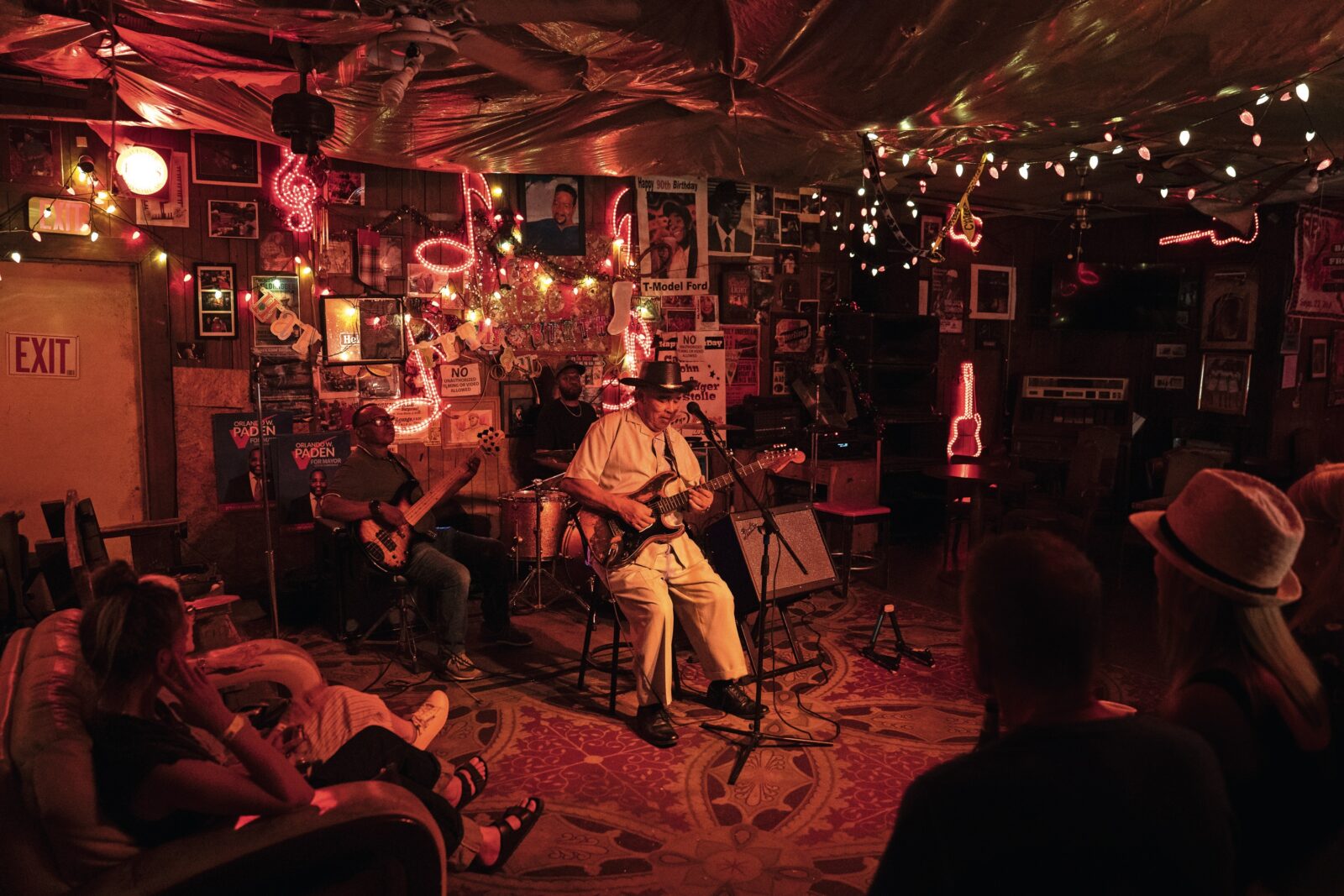
Photo: Rory Doyle
John Horton plays at Red’s blues club in Clarksdale, Mississippi.
Clarksdale, Mississippi
Ritual and memory at Red’s juke joint and Ramon’s
by Wright Thompson
My hometown of Clarksdale, Mississippi, is one of the world’s sense-of-place vortices, like Sedona but with bologna sandwiches and Double Quick fried chicken. It’s mostly known, if it’s known at all, as the spiritual ground zero for the Delta blues. Music is everywhere. Whenever I hear Muddy Waters or Big Jack Johnson or some old Paramount recording of Charley Patton, I am transported back to the mid-1990s, when I was in high school with a four-wheel drive and several big racks of Grateful Dead bootlegs. It’s a town with a soundtrack, and it’s my sincere belief that the droning backbeat of electric blues is audible in the blanket of August humidity, and the clouds of defoliant sprayed by yellow acrobat crop dusters on October fields. That the sound has somehow been internalized in the genetic code of the place itself.
I love my hometown. Life there revolves around ritual and memory. Both take me to Ramon’s (the restaurant) and Red’s (the juke joint that’s akin to the La Scala of the living blues) whenever I’m home for my own ritual of a long, social meal before heading to the dark music clubs that cluster around the Sunflower River. The perfect Delta night.
My father is buried not far past the restaurant on Oakhurst. Ramon’s is my favorite place to eat in the world, I think. To book a table, I text Scottie, the daughter of the owner, Mrs. Beverly, who sits like a queen behind the front counter. She famously does not suffer fools. Stories float around town about her throwing people out of the restaurant because they disrespected her family. I don’t know if that’s true, but I believe it. She seems like a woman with a code. Their whole family does, Scottie and her sister, Kelley, who graduated from high school with me. Class of ’96. The days of Widespread Panic and Steve Miller at Mud Island in Memphis, and “Thuggish Ruggish Bone.”
I feel like I’m one of the few people in town who can get a text reservation at Ramon’s, which probably isn’t true. But my thinking so says something about how the Elys make lots of people feel like they’re the king of the world inside the bunker of red sauce Delta Italian. People have lifetime orders. Everyone gets onion rings. My mom gets fried shrimp. Every time. My dad got hamburger steak with onions and gravy. I get cavatuna with veal cutlets and, if Mrs. Beverly is in a benevolent mood, a few perfect little meatballs on the side. Whenever someone special comes to visit me, I bring them to Ramon’s. That’s how I can let them swim in the vapors of old Clarksdale, which is an endangered but living thing.
Mrs. Beverly gives me a hug when I walk in past the neon Miller Lite sign. There’s a little card on the table that says Thompson. I like that. We bring in a bottle of bourbon and a bottle or two of wine. Often something great, a burgundy or a Sonoma County pinot. I can feel the ghosts. Sense their ecto-matter. My father sometimes.
In the summer, heat lightning flashes in jagged tears across the sky. It’s time for Red’s juke joint by the river. One night two women were in there frying crappie on a hot plate and serving bootleg sandwiches on white bread. Maybe Kingfish will be playing. We randomly walked in on that young blues legend once. Maybe some other local guitar hero will play a cover of “Purple Rain.” Maybe the door will open and let in a blast of humidity, defoliant mixing with hot fish grease. Between songs the air crackles with the hum of the amplifiers and the beer coolers on the far wall buzzing under the strain. It always sounds to me like a big mosquito light zapping bugs. Like a long-ago summer, ritual and memory, night after night.
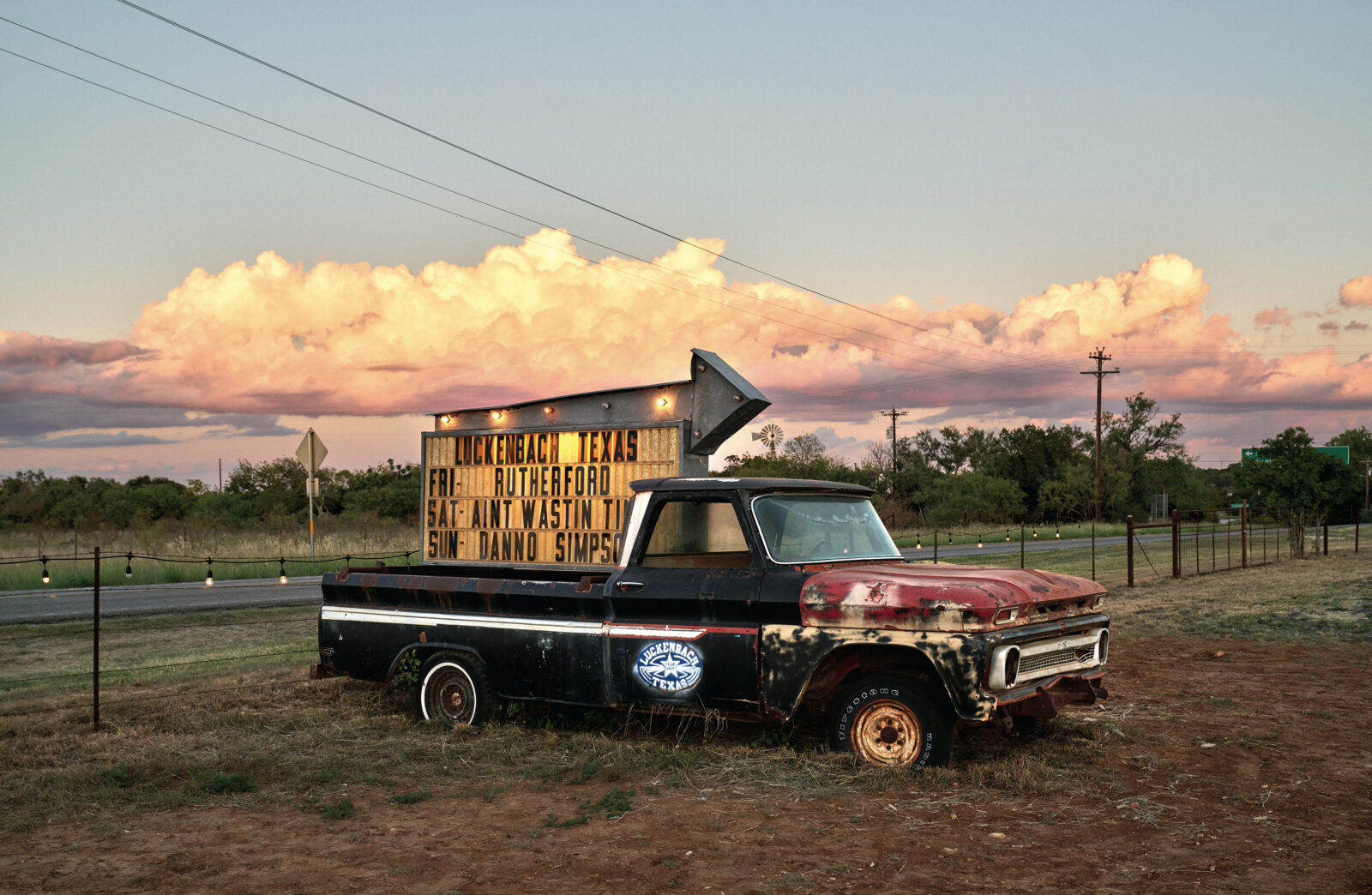
Photo: Nick Simonite
A big welcome in little Luckenbach, Texas.
Kerrville, Texas
Landscape meets live music in the honky-tonk heart of Texas
by Tom Foster
“If you can’t two-step to it, then they can’t play here,” says Megan Bruinsma of Crider’s Rodeo and Dancehall, a 101-year-old open-air country music institution in Hunt, Texas, one of several towns strung along the Guadalupe River near Kerrville, a Hill Country cultural hub. On the day that Crider’s was to celebrate its century mark last year, deadly floodwaters destroyed the riverside venue. Bruinsma’s family, who have helmed Crider’s since its inception, plan to open the rebuilt hall by this Memorial Day weekend and commemorate their centennial exactly one year late, on the Fourth of July—one of many venues set to welcome visitors returning to mourn, heal, and appreciate the remarkable mix of landscape and live music.
See & Do
With multiple outdoor stages at Quiet Valley Ranch, the beloved annual Kerrville Folk Festival has helped establish the careers of such titans as Steve Earle, Lucinda Williams, and hometown hero Robert Earl Keen. This year’s fest, from May 21 to June 7, will include the Steep Canyon Rangers, James McMurtry, and Lilly Hiatt. July’s Fourth on the River festival, organized by the team behind Kerrville’s restored Arcadia Live theater, is also a perennial hit.
Of course, you can’t visit this part of Texas and not ramble over to the mythic outpost of Luckenbach, immortalized in song and just as good in person, with an outdoor stage and an oak-shaded courtyard. It’s about a forty-minute drive from Kerrville, and if you’ve gone that far, it’s a crime not to visit the Albert Icehouse & Dancehall for cold beer and more tunes. Thirty minutes in the opposite direction from Kerrville, in Bandera, Arkey Blue’s Silver Dollar bills itself as Texas’s oldest honky-tonk, and that may even be true.
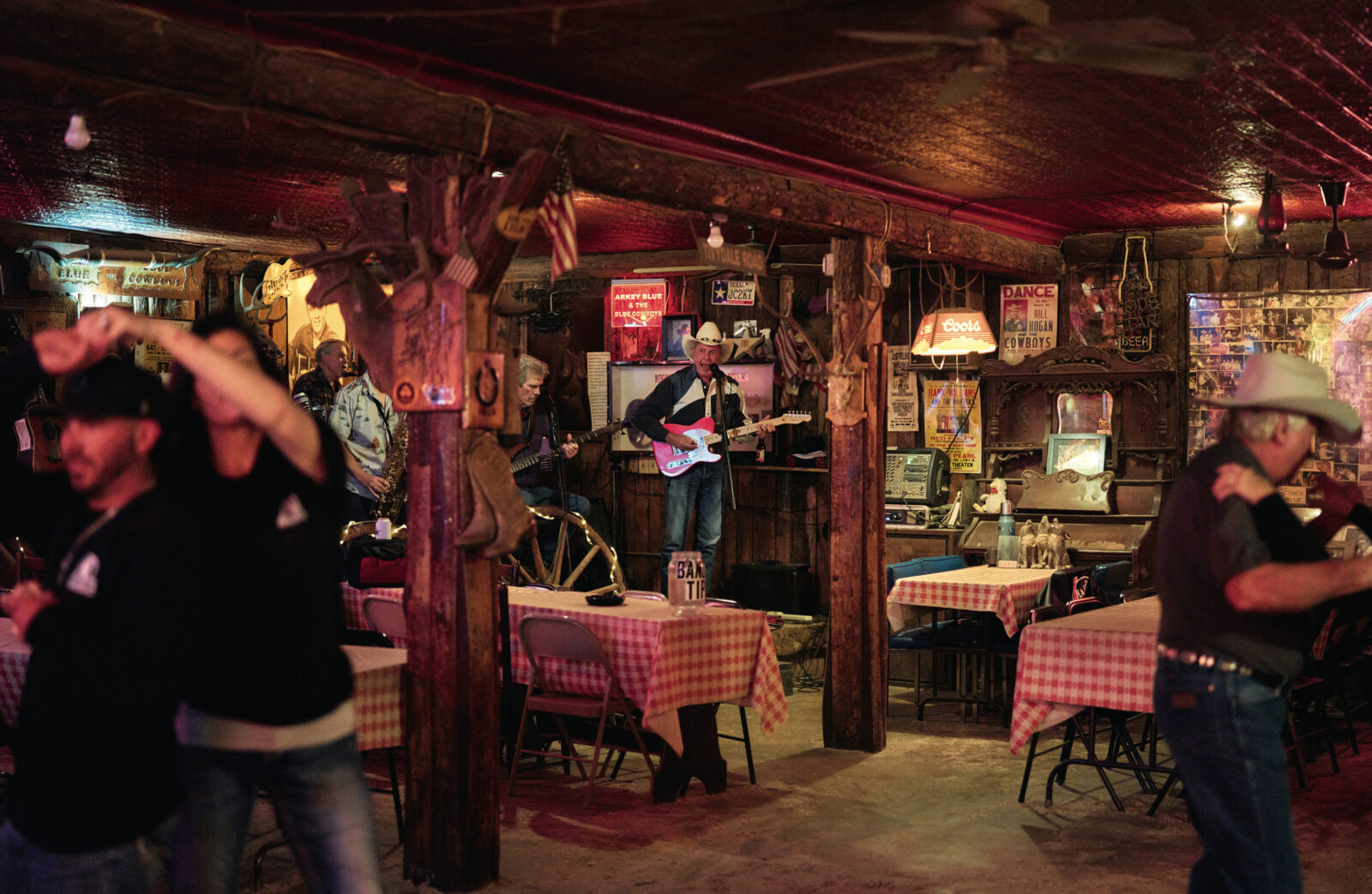
Photo: nick simonite
Music and dancing at Arkey Blue’s Silver Dollar in Bandera, Texas.
Eat & Drink
Francisco’s is Kerrville’s classic white-tablecloth spot for steaks and seafood, in an 1890 building that has housed both a mercantile and a bordello. Or go casual instead with award-winning craft beer and giant Bavarian pretzels at Pint & Plow. PAX Coffee & Goods, right off the main square, is the spot for a morning pastry and small-town chatter.
The booming Hill Country wine industry is worth sampling. Skip the tour-bus-style tasting rooms (unless you’re here for a bachelorette party), and head to the world-class William Chris Vineyards, which also draws a strong lineup of singer-songwriters to its outdoor pavilion every weekend, or the Singing Water winery, near the historic German town of Comfort. The latter offers a more intimate experience, live music, and a cabernet sauvignon that beat out its California competitors for the Best of Class award in the 2025 San Francisco Chronicle Wine Competition.
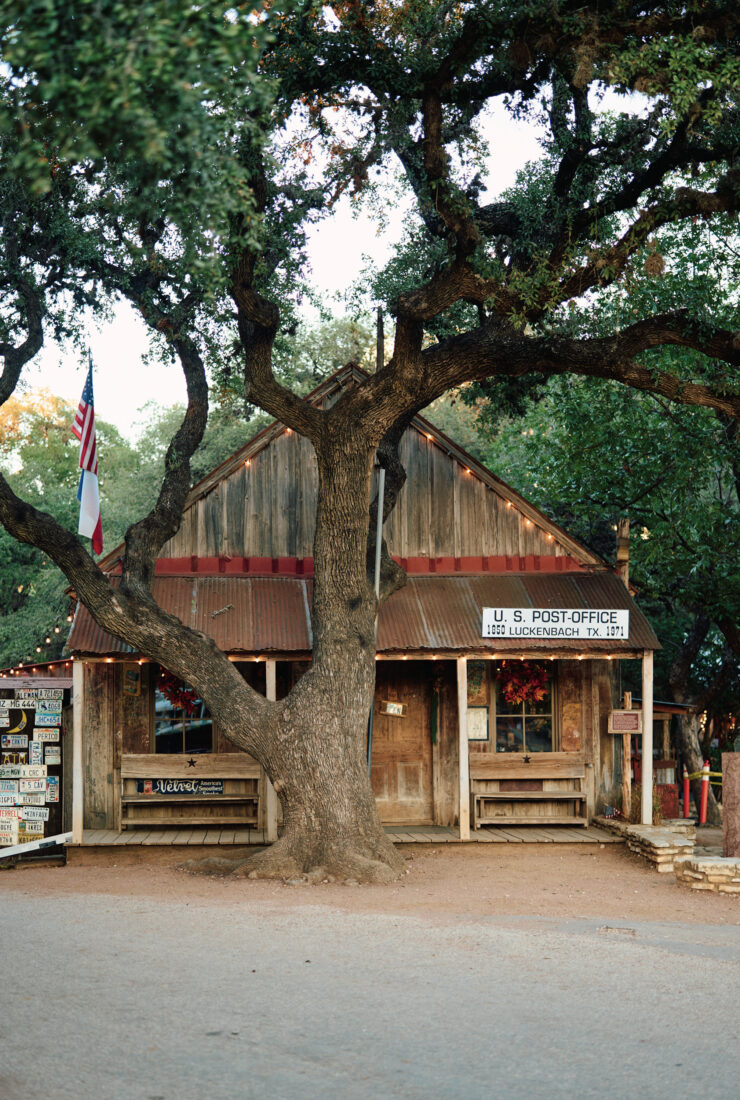
Photo: nick simonite
The historic former post office in Luckenbach.
Stay
Set on a pond and up a hill, where it was spared any damage last summer, Basecamp Resort offers a glamping-style stay close to Crider’s. The same owners also run the Barnett Bungalow, a thoughtfully restored 1930s vacation-rental home in the center of Kerrville. In Comfort, a pair of Austin hoteliers known as the French Cowboys have renovated two charming properties: the Meyer Hotel, a collection of cottages, and Camp Comfort, a rustic country cabin experience a few blocks away. For a full luxury experience, the new Albert Hotel in Fredericksburg has a spa, a cabana-lined pool, two restaurants, and a whiskey bar.
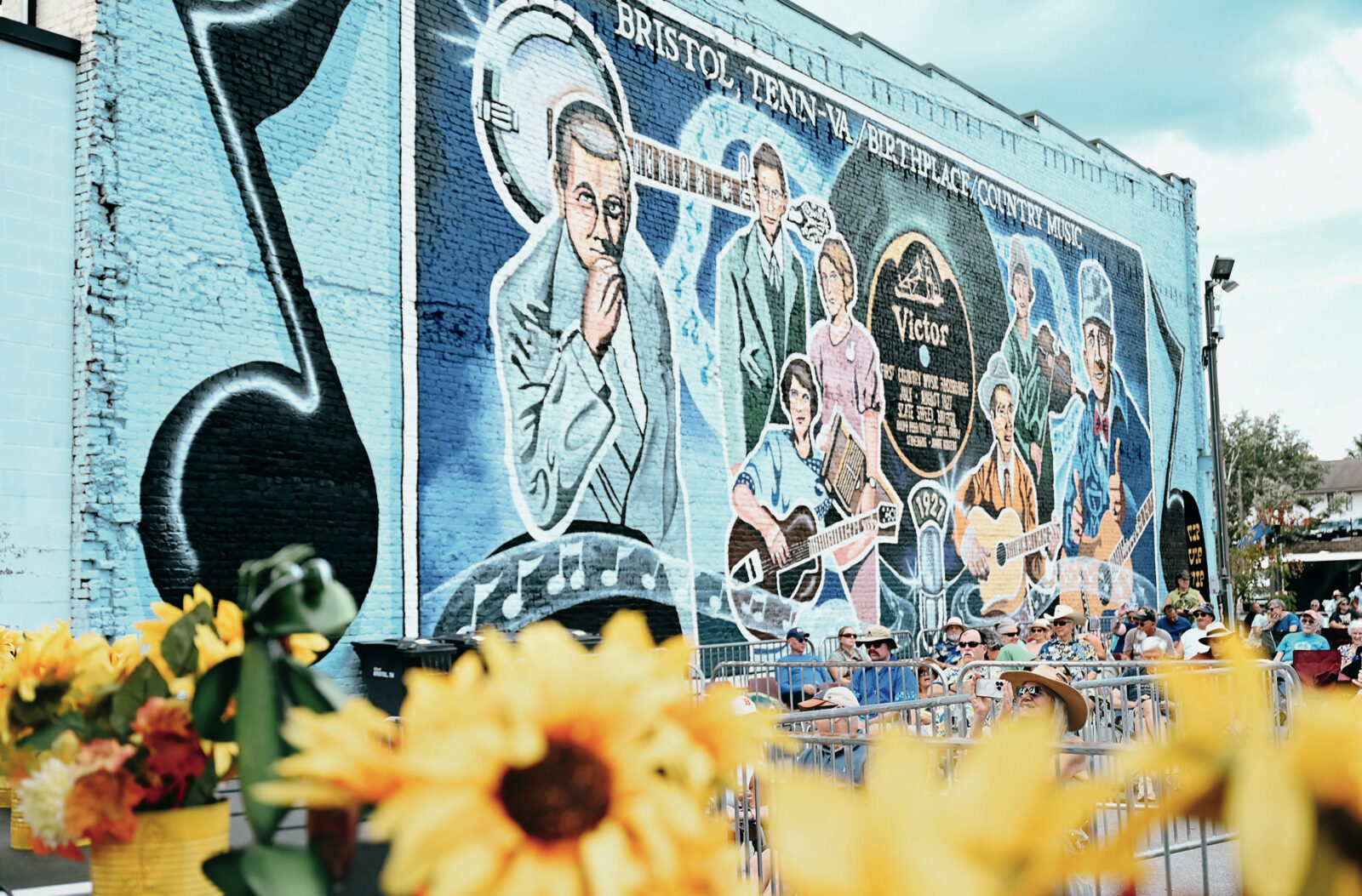
Photo: Hannah Laney
The Bristol Rhythm & Roots Reunion at the Country Mural Stage.
Bristol, Tennessee/Virginia
Country music’s roots sink deep in an Appalachian mountain town
by Marianne Leek
In the summer of 1927, the music producer Ralph Peer traveled to Appalachia to capture “hillbilly” and old-time music, from murder ballads to porch harmonies and hymns. He set up a studio in a hat store in Bristol, a mountain town that crosses the border of Tennessee and Virginia. Peer catalogued nineteen acts, including the Carter Family and Jimmie Rodgers, sparking the “big bang of country music.” Almost a hundred years later, the power of his Bristol Sessions still thrums throughout today’s music—and the town itself. “There’s a collective and individual spirit of those who came here to record,” says the Americana songwriter Jim Lauderdale. “I feel them smiling; I hear that music in the air.”
See & Do
Just around the corner from the Bristol Sessions site, the Birthplace of Country Music Museum tells the full story. When the Grammy-nominated singer-songwriter Amythyst Kiah was a student in East Tennessee State University’s Bluegrass, Old-Time, and Country Music Studies program, she helped shape the museum’s content. “With an active radio station, permanent and rotating exhibits, as well as a theater and classrooms for hosting live music, seminars, and speakers,” Kiah says, “it’s a must for anyone interested in the history of music in our region and its impact on popular culture.”
On State Street, which doubles as the state line, Kiah also recommends a stop at HollerHouse, a gallery, gift shop, and music venue that supports up-and-comers. “It holds a special place in my heart,” Kiah says, “because it celebrates all of the diverse misfits who still choose to embrace Appalachia as home.”
Two historic stages play host to traveling musical acts: the art deco theater Paramount Bristol and the century-old Cameo Theatre. On summer evenings, crowds gather for Border Bash events and the Sounds of Summer concert series, and September marks the twenty-fifth anniversary of the Bristol Rhythm & Roots Reunion, with the West Virginia–born Americana star Sierra Ferrell headlining.
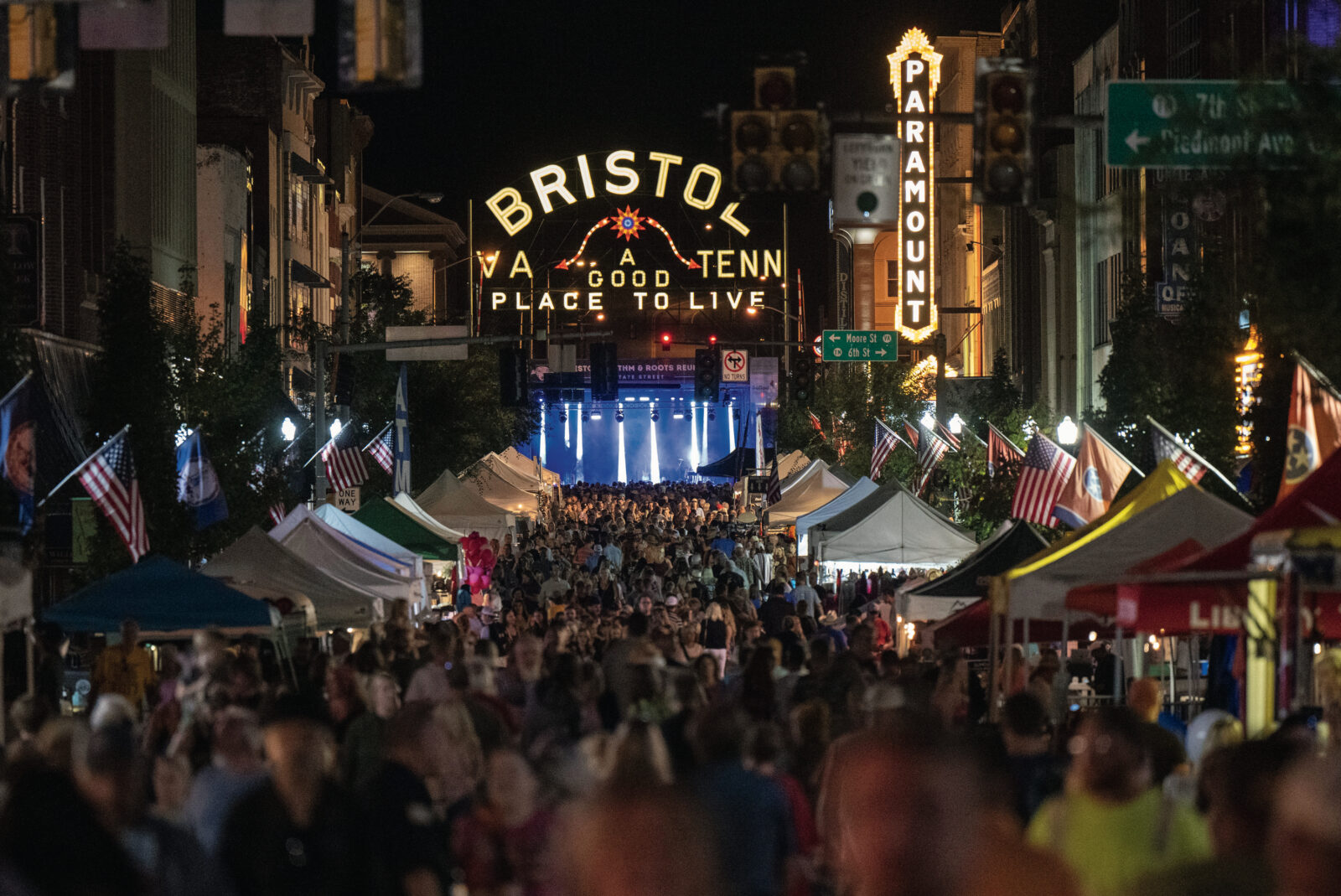
Photo: Earl Nielkirk
The Reunion crowd on State Street.
Eat & Drink
The Burger Bar has been hand spinning milkshakes and grilling juicy burgers since 1942—and was the last place Hank Williams, Sr., was seen alive, on New Year’s Eve in 1952. Grab a pint of local cider at the Cascade Draft House as bluegrass pickers set the tempo on the patio. Follow the sound of unvarnished harmonies to Stateline Bar & Grille to hear acoustic and karaoke sessions as authentic as the kitchen’s Reuben. For an encore, claim a slice of the popular, decadent pink almond cake at the cozy Blackbird Bakery, which stays open till ten.
Stay
The Sessions Hotel spreads across a historic granary mill and former candy factory and grocery store, with seventy guest rooms, each a thematic nod to the Sessions musicians. At the Bristol Hotel, your room key gets you into the Birthplace of Country Music Museum next door, and the on-site Vivian’s Table serves spins on such Appalachian classics as cornbread-crusted trout. Take the elevator to the hotel’s rooftop bar, LUMAC, where songwriters share their latest jams as the sun sets behind the Blue Ridge Mountains.
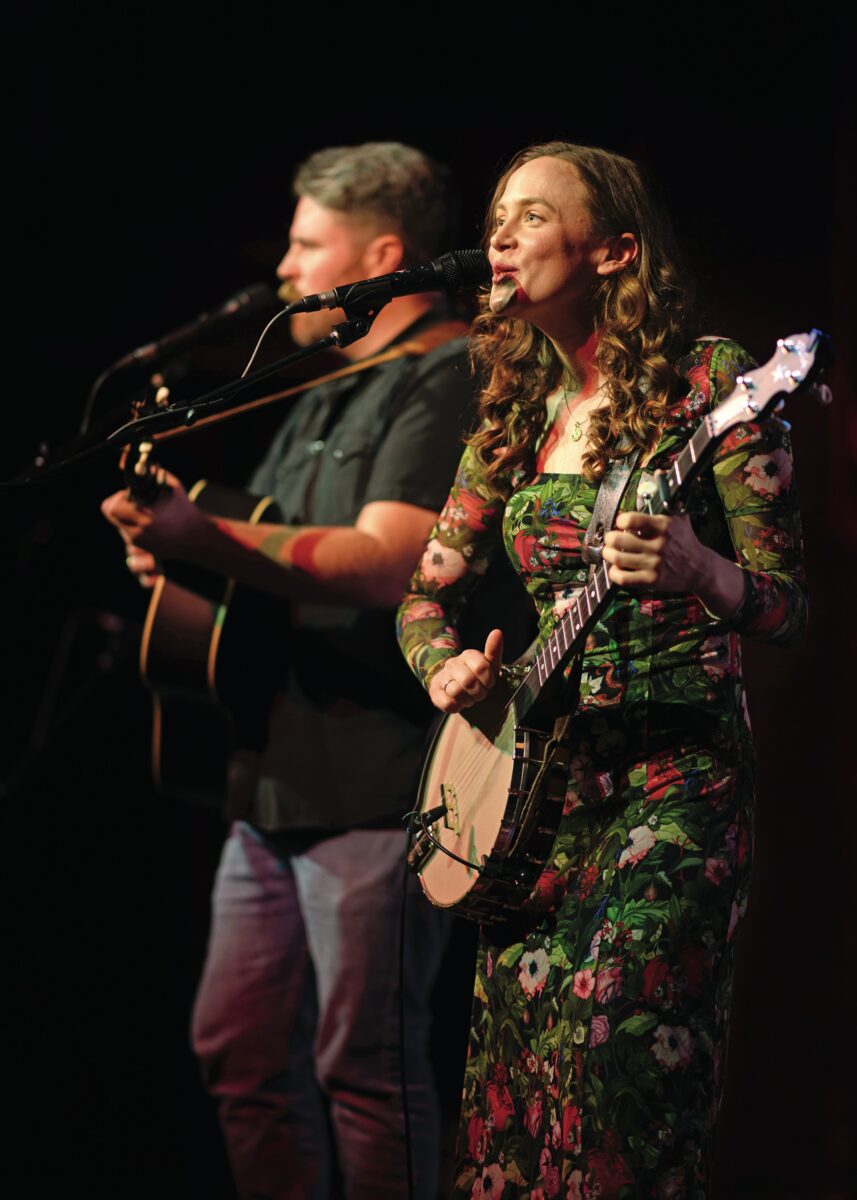
Photo: Samuel Cooke
Chatham Rabbits take the Pyrle stage in Greensboro, North Carolina.
Greensboro, North Carolina
Homegrown talent harvests a hometown revival
by Nic Brown
When I told the Uber driver that I had grown up in Greensboro but had moved away years ago, she said, “Greensboro’s not little Greensboro anymore!” and then turned onto Elm Street, where a line of people stretched down the block. They were all waiting to enter the Pyrle, downtown’s newest music hall, and as I stepped out to join them, my driver shouted, “I hope you get in!”
This is not how I remember things. Back when I was growing up, downtown in this midsize North Carolina Piedmont city was basically just tumbleweeds. We called it Greensboring. I was a young drummer then, and as soon as my band Athenaeum signed a record deal, I moved straight to Chapel Hill. These days, though? Greensboro has become a musical destination.
Eric Gales, who recently won two Grammys for his contributions to the Sinners soundtrack, moved here in 2012. Charlie Hunter, renowned for his guitar work with D’Angelo, arrived in 2019. And Sarah and Austin McCombie—the married couple who together form Chatham Rabbits, one of the region’s most popular Americana acts—relocated to a farm on the outskirts of town after living near the Research Triangle for years.
“Our friends in the scene there thought we were crazy,” Sarah says. “But Greensboro is my favorite place I’ve ever lived. It’s like the underestimated younger sibling who grows up and just blows your mind.”
Perhaps more than anyone, Greensboro’s homegrown talents have made their mark in recent years. Karly Hartzman, singer of Wednesday—one of the country’s most critically acclaimed indie rock acts—proudly reps her hometown. (I almost died when I saw her playing The Late Show with Stephen Colbert wearing a hat that said GRIMSLEY, Hartzman’s high school alma mater.) And Rhiannon Giddens, the most celebrated local of all, has seen her genre-spanning work recognized with two Grammy Awards, a MacArthur “genius grant” Fellowship, and the Pulitzer Prize for Music.
“For years Greensboro was a drive-past for every touring musician,” says Dominick Amendum, the Pyrle’s general manager. The night I was there recently, though, his venue, an immaculately renovated former theater housed within a 1936 Montgomery Ward, looked as if it had flipped that narrative. The room, which holds a thousand, was packed and rocking, adding truth to the Grateful Dead lyric printed on a wall: “Don’t tell me this town ain’t got no heart.”
With the Pyrle’s arrival, Greensboro now boasts a wide selection of performance spaces, including the three-thousand-seat Tanger Center and several smaller venues, like the two-hundred-person Flat Iron, owned by Josh King and Abbey Spoon, beloved figures who might have done more than anyone to cultivate the scene lately.
The Proximity Hotel, a sleek LEED-certified boutique, is perfect for music lovers. It abuts the excellent upscale restaurant Print Works Bistro and offers VIP ticket packages for events like Greensboro’s North Carolina Folk Festival. Its sister hotel, the O.Henry, features weekly jazz, as does the downtown café Common Grounds. Neighbors is the spot to catch a post-show beer and order a Chicago-style hot dog. In the morning, I recommend refueling with breakfast at the legendary Brown-Gardiner Drug Store.
Walking between venues later, I turned a lonely corner and heard a mysterious symphony. I looked around in confusion, trying to find the source, only to discover the actual Greensboro Symphony rehearsing right beside me, behind a bank of windows. No one else was around. I just stood there in shock, unsure if what I was seeing was even real, and for a minute I simply listened. There’s a special kind of magic in the sound of music coming from a place you least expected to find it.
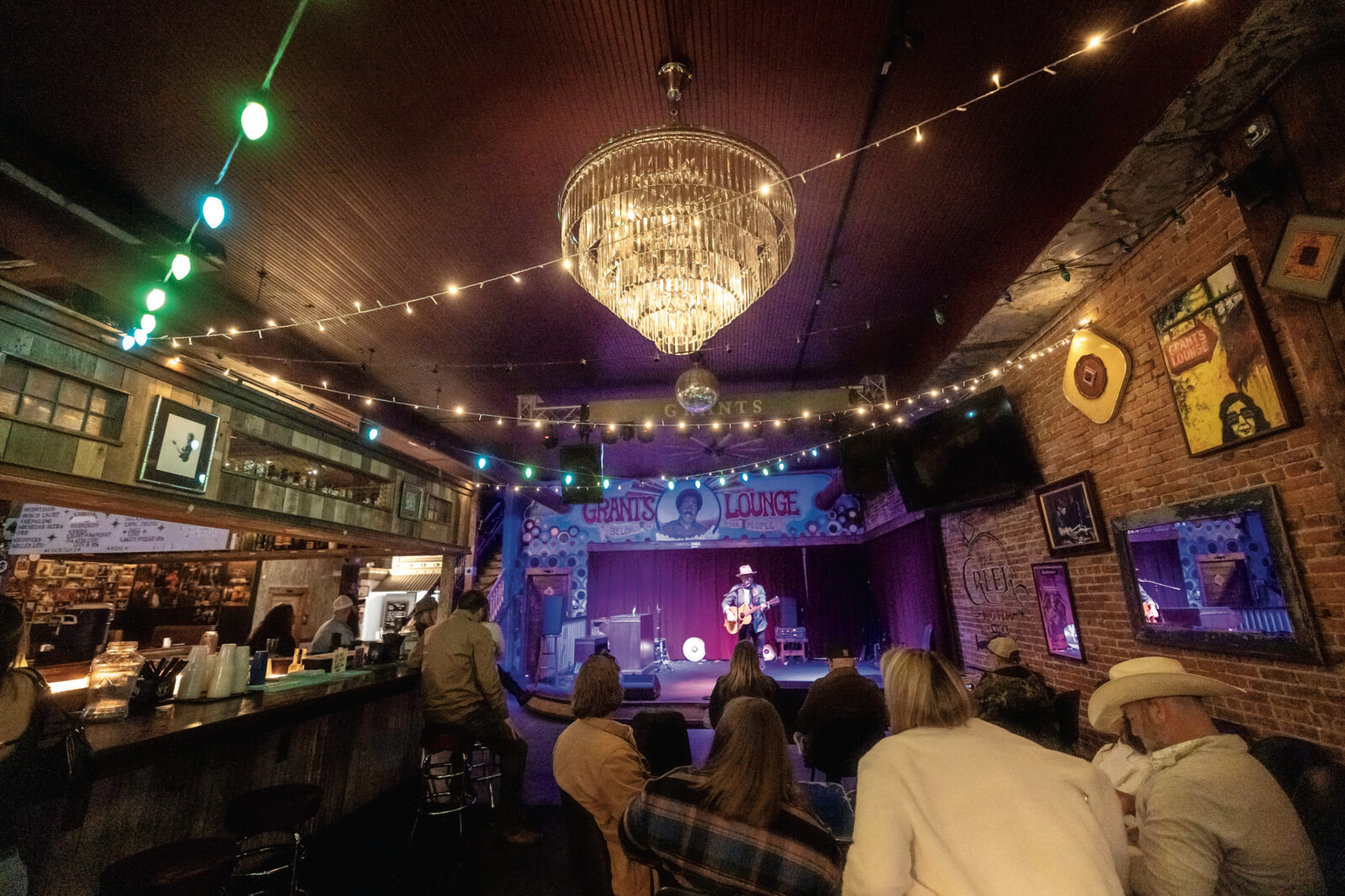
Photo: Russ Campbell
Grant’s Lounge in Macon, Georgia, marks its fifty-fifth anniversary this year.
Macon, Georgia
Legendary music at the forefront of the South’s modern sound
by Sheeka Sanahori
The first time singer-songwriter Brent Cobb played Macon, Georgia, a friend took him to Capricorn Records, then a dilapidated shell of itself before Mercer University’s $4.7 million renovation in 2019. Even in shambles, it never lost its allure. “It feels like magic,” Cobb says of stepping into the vocal booth where Gregg Allman and Percy Sledge once sang. “It feels like when you were a kid and you still had wonder.” These days, Cobb records in that same shag-carpeted booth, which is now fully restored and open during studio tours, an apt summation of Macon’s current scene: legendary music at the forefront of the South’s modern sound.
See & Do
A yellow shotgun house in the Pleasant Hill neighborhood opens the door to the unmatched life of Macon native son Little Richard. Docents add context to his breakthrough career, and a short film shares tales from the neighborhood.
At the Otis Redding Museum, memorabilia weaves an intimate narrative about the King of Soul. Up the street, the family’s Otis Redding Center for the Arts provides music education to children, and those lucky enough to catch a performance at the public amphitheater will witness music’s youngest prodigies.
Bands still stop their tour buses right in front of Grant’s Lounge on Poplar Street, now celebrating fifty-five years, to play the intimate venue once graced by rock gods Tom Petty and Wet Willie.
Eat & Drink
Cobb stops at Grant’s Lounge when he’s in town not only for music, but also for a late-night snack. “I gotta get me a pork chop sandwich down there,” he says of the fried chop on white bread. “It’s the greatest that I’ve eaten.”
Above a lively brewpub on Cherry Street sits Dovetail, an upscale farm-to-table restaurant with a robust cocktail menu. Seasonal vegetables star, as in a roasted carrot salad with carrot-and-clove puree paired with burrata and pickled snow peas. At the H&H daytime café, soul food staples arrive beneath 1970s posters recalling the early days of the Allman Brothers Band, the institution’s most famous patrons. Don’t skip dessert; the cakes and banana pudding are equally legendary.
Stay
Decamp from downtown’s rollicking music into the stillness of the 1842 Inn, a preserved Greek Revival bed-and-breakfast in the College Hill Corridor, where historic homes line the roads. Enjoy a gas fireplace and plush four-poster bed before kicking off the morning with breakfast on the wraparound veranda.
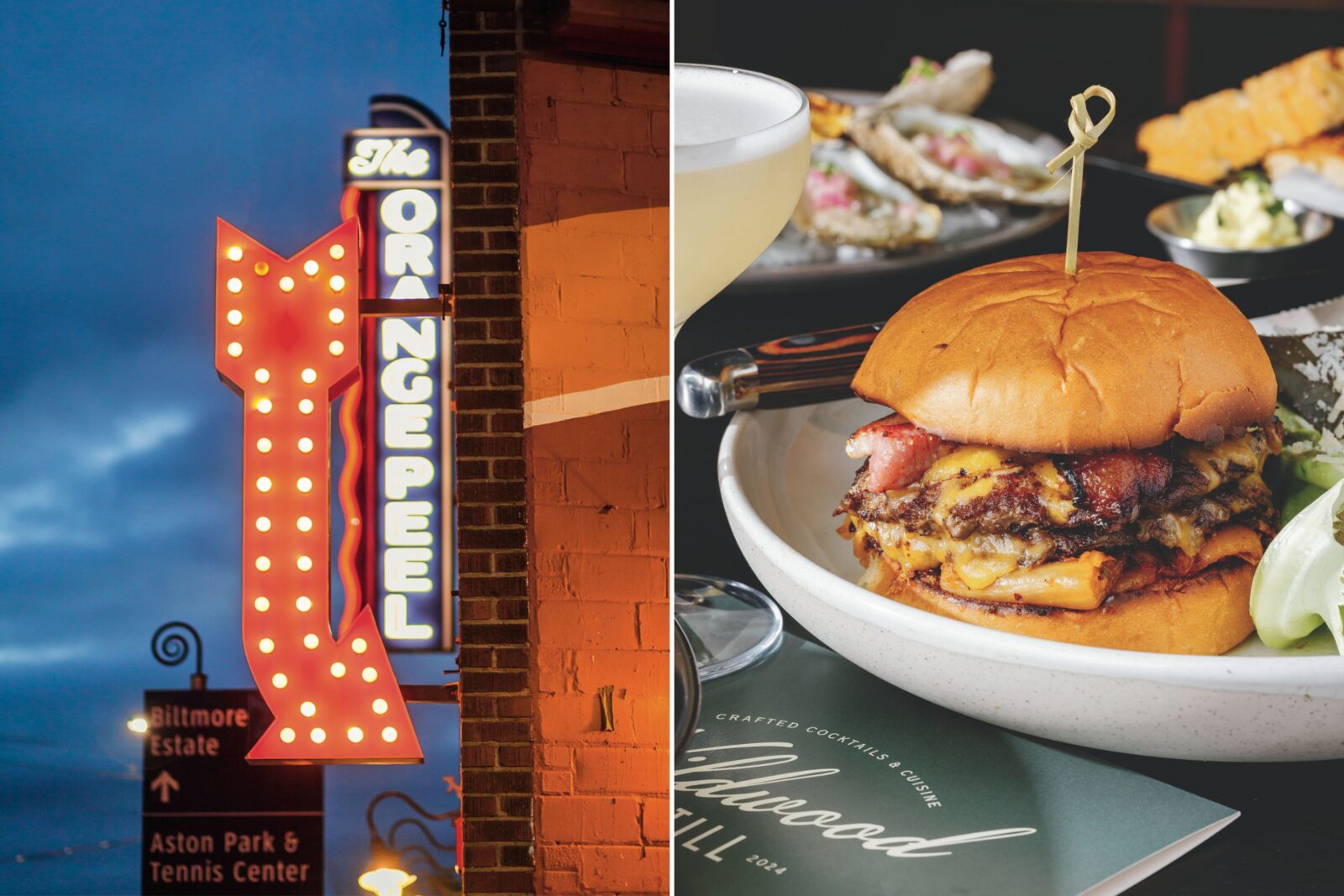
Photo: ExploreAsheville.com
The welcome beacon at the Orange Peel in Asheville; Wildwood Still’s Wagyu smashburger with house-cured bacon, in Asheville.
Asheville, North Carolina
A wellspring of inspiration and spirit coursing through the Blue Ridge
by Mary Catherine McAnnally Scott
In the shade of the Blue Ridge Mountains, the French Broad River snakes through the hollers where old-time string music first took root. Much like its landscape, which was rocked by Hurricane Helene in 2024, Asheville’s music scene is resilient. “We seem to find inspiration in each other, rather than competition, and I’ve always appreciated that,” says Daniel Shearin, a singer-songwriter in the folk-rock group River Whyless. MJ Lenderman and Animal Collective have laid down tracks at the city’s Drop of Sun Studios, while Echo Mountain Recording has hosted the Avett Brothers and Steep Canyon Rangers in its church turned recording sanctuary. Analog buffs even send their tracks over to Citizen Vinyl, North Carolina’s first record-pressing company.
See & Do
Helene washed away iconic riverside venues, but to Asheville music fans’ relief, Salvage Station recently announced plans to rebuild in a warehouse dubbed the “Homer Simpson doughnut building” for its distinctive graffiti. Barley’s, the Station’s sister property downtown, carries the torch in the meantime. The Grey Eagle, a jewel of the River Arts District, draws pilgrims to its nearly thirty shows per month. Across town, the cozy acoustics of AyurPrana Listening Room make it a favorite of artists trying out new material. On Saturday nights in July and August, locals slide into folding chairs (or dance right up front) at Shindig on the Green, the Asheville bluegrass festival marking its sixtieth year. The lauded local rock-and-roll photographer Sandlin Gaither knows just why these come-one-come-all events are essential. “Asheville has remained a haven for the independent-minded,” Gaither says. “The old school welcomes the new guard, just like it always has.”
Eat & Drink
In South Slope’s brewery district, Chai Pani dishes out glorious Indian food, and its founders, Molly and Meherwan Irani, adore music: “Our favorite spontaneous spot is 5 Walnut Wine Bar,” Molly says. “I love popping in unplanned because I walked by and heard great music spilling out of the window.” Gaither’s recommendations, similarly, keep a cold glass in your hand: “The co-owner and longtime Asheville musician Jay Sanders leads a great jazz night at the world-class cocktail bar Little Jumbo on Tuesdays,” he says. He also frequents Eulogy, Burial Beer’s neon-lit bar that hosts rising stars and established acts like Deer Tick. Within walking distance of the long-running Orange Peel venue, rooftop restaurant Wildwood Still has been wowing locals with a wide selection of whiskeys and modern Japanese bites.
Stay
Modeled after the personal taste of Asheville frequenter Mrs. F. Scott Fitzgerald, the posh Zelda Dearest sits handily between downtown and South Slope. The Flat Iron Hotel, a restored 1920s beauty, is also convenient, especially if you’re looking to snag a seat at its newly Michelin-starred restaurant. “For dinner before a show,” Molly advises, “you can’t go wrong with pizza at the bar at Luminosa.”
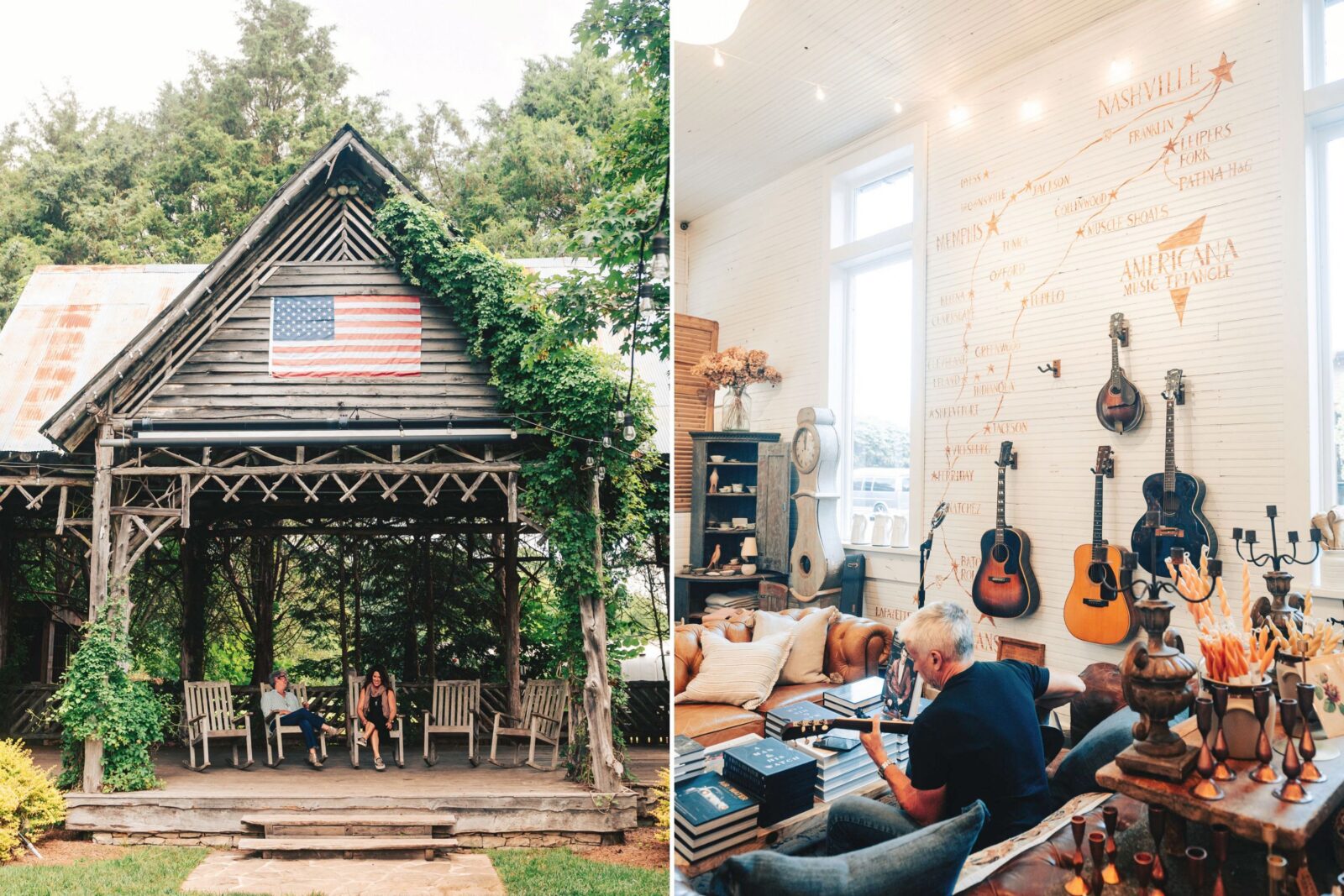
Photo: TIM ROBISON; Nathan Zucker/Courtesy of Visit Franklin
The Lawnchair Theatre in the village of Leiper’s Fork, Tennessee; a guest plays a communal guitar at Patina Home & Garden.
Leiper’s Fork, Tennessee
Just thirty miles from Nashville, history lovers answer the siren call of rural reverie
by Elizabeth Hutchison Hicklin
In the 1990s, when Aubrey Preston first stumbled upon a gathering of musicians in Leiper’s Fork, a farming village near the Natchez Trace Parkway southwest of Nashville, he wasn’t sure what he’d found. A rural fever dream, a hallucination, or a lost colony of pickers and songwriters? “It was the most beautiful place I’d ever seen,” says Preston of the rolling landscape, where creativity bubbled like the area’s limestone-filtered water, beckoning moonshiners and country music royalty alike. (Chris Stapleton, the Judds, and Hank Williams, Sr., have all called it home.) In the decades that followed, Preston, a musician and preservationist, brought together a group of locals who have revived and protected the picturesque hamlet one Victorian storefront and conservation easement at a time.
See & Do
The heart of the scene has long been Fox & Locke, a venue and meat-and-three restaurant, founded in 1947, that Preston and his wife, Michele, purchased in 2021. He enlisted Clair Global, who had revamped the sound system at Nashville’s Ryman Auditorium, to create an unparalleled listening environment. Live music runs Wednesday through Sunday, and Thursday’s famed open-mic nights draw surprise A-listers. Next door, in the Leiper’s Creek Gallery’s grassy backyard, the Lawnchair Theatre hosts summer movie nights and ForkFest, a free concert in the fall. At Patina Home & Garden, you’ll find European antiques and cut flowers from Patina Meadow, the hundred-acre creative home base for the celeb design duo Steve and Brooke Giannetti. The working farm is open for special events as well as pottery workshops. Before you leave the village, stop inside the David Arms gallery. Botanical paintings and stylish paper goods fill the handsome shop, but the back-deck view of Leiper’s Creek is reason enough for a visit.
Eat & Drink
“Leiper’s Fork Market is like the town’s commissary,” Preston says. “You can pick up grocery basics or grab a sandwich and some soft serve.” And you just might find country stars and construction crews sharing meals at the market’s oversize dining table. After briefly closing, another village landmark, the Country Boy, is back slinging comforting plates of biscuits and gravy and chili-smothered burgers, with the addition of the Tornado Room, a basement speakeasy with craft cocktails and live music. Save time for a taste of Tennessee whiskey at Leiper’s Fork Distillery, which also regularly hosts musicians. For alfresco tunes, there’s no setting more picturesque than Crown Winery, which hosts a songwriters series along the banks of a tumbling stretch of the Harpeth River.
Stay
Southall Farm & Inn sits on five hundred acres just five miles from Leiper’s Fork. In addition to the agri-resort’s gardens and orchards, guests can enjoy music at outdoor summer concerts. Or, to live like a local, book one of Fork and Field’s restored historic properties in town, including a six-bedroom Victorian manse.
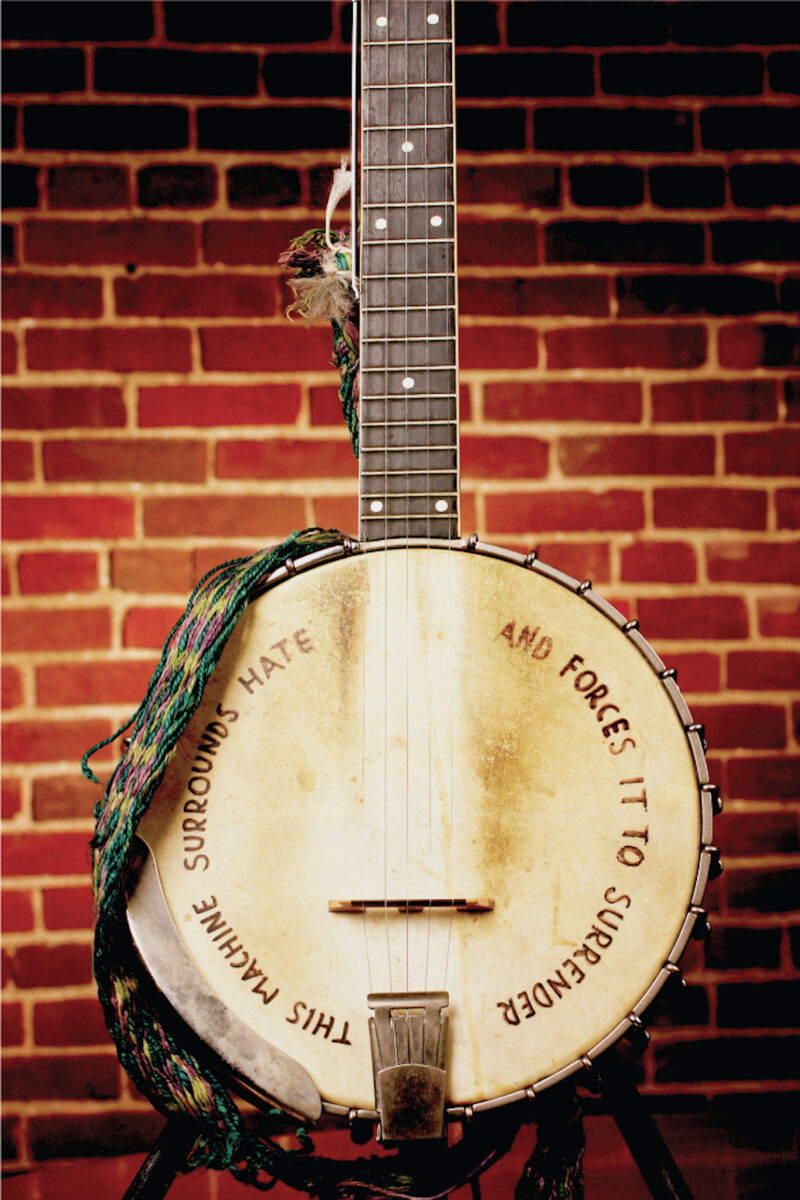
Photo: Courtesy of Bluegrass Music Hall of Fame & Museum
Pete Seeger Vega banjo at the Bluegrass Music Hall of Fame & Museum.
Owensboro, Kentucky
In this little city hard on the banks of the Ohio, bluegrass roots run deep
by Silas House
I first experienced Friday After 5, a weekly waterfront music and food festival in Owensboro, Kentucky, when I went to see the wonderful country singer Brit Taylor, who loves to perform in the community that sits right along the Ohio River. “It really is an underrated gem of a town,” Taylor says, “one of the coolest river towns.”
Through my invitations to visit as a novelist and poet, I’ve come to agree. I’ve often been feted by Owensboroans eager to share stories, barbecue, or burgoo (few Americans love mutton as much as folks there) and, always, songs. Music manager David Helmers, who cocreated the popular Railbird Festival in Lexington, grew up in Owensboro. “Music permeated downtown,” he says. “The norm was to be down at the barbecue festival with bluegrass bands playing on pop-up stations. Owensboro has always leaned into making its own fun.”
Much of that excitement comes from its proximity to Rosine, the birthplace of Bill Monroe, known as the father of bluegrass music. Fittingly, the Bluegrass Music Hall of Fame and Museum opened thirty years ago in Owensboro. On a recent visit I was especially moved to see Pete Seeger’s 1959 Vega banjo, which he played while leading singalongs of “We Shall Overcome” during the Civil Rights Movement. The museum also publishes the magazine Bluegrass Unlimited and runs the fantastic ROMP Festival—this year I am looking forward to seeing headliners I’m With Her, Marty Stuart, and Punch Brothers.
But the area’s musical history stretches beyond bluegrass, says Scott Napier, who directs the Capital Bluegrass and Traditional Music program at Owensboro Community and Technical College. “The world-famous Merle Travis style of [guitar] playing started here,” he says, also pointing out that Black musicians from the area made major contributions to bluegrass and the blues. Arnold Schultz, for instance, was a popular fiddler and guitarist who influenced Travis and Monroe. Schultz’s nephew, Harry “Sweets” Edison, played “on all of the Billie Holiday stuff, Count Basie,” Napier says. “He was one of the most on-call trumpet players in jazz.”
The diversity of genres doesn’t stop there. The city has supported its own symphony since 1966, which serves as the pit orchestra for traveling Broadway shows that play at the RiverPark Center. Ole 60 and Sons of Habit, two of the most dynamic bands emerging on the Americana scene, are from the area. The much-loved old-school bar Brasher’s Little Nashville downtown hosts live musicians most nights, and the Pub on Second showcases a rotation of performers along with a vast selection of cocktails, wine, and craft beer. A little further out, the Spot Coffee and Finery has even become the center of a burgeoning punk scene.
For grub, I might choose between Lure Seafood and Grille, situated on the river with a view of the beautifully lit Glover Carey Bridge, and the Miller House, a 1905 home turned fine-dining restaurant with a basement speakeasy that serves more than six hundred bourbons. Local favorites include burgers and shakes at the classic dairy spot the Big Dipper, as well as barbecue and burgoo, that Western Kentucky staple, at Old Hickory Bar-B-Que and Moonlite Bar-B-Q Inn. Come morning, Windy Hollow serves wonderful biscuits and the “tater mess” of fried potatoes, scrambled eggs, gravy, bacon, sausage, and cheese.
Yes, a clutch of new chain hotels sits along the Ohio, but I suggest expanding your Kentucky road trip to include Louisville, less than two hours away. There, the art-filled 21c Museum Hotel partners with the Louisville Folk School and 91.9 WFPK, a local radio station, to host musicians in residence and a regular concert series with the next generation of banjo, mandolin, and guitar greats.
No matter what, make time for one of those Friday After 5 concerts, held every Friday in the summer. I still think about the first time I saw the camaraderie on display there as folks gathered beneath the glow of the bridge’s lights. A clogging competition was on in full force, friends grilled out at the waterfront VFW, and everywhere, parents balanced kids on their shoulders, teaching them to listen.
Three Cities with a Bigger Beat
A trio of urban hubs that manage to keep their music scenes tight-knit
by Matt Hendrickson
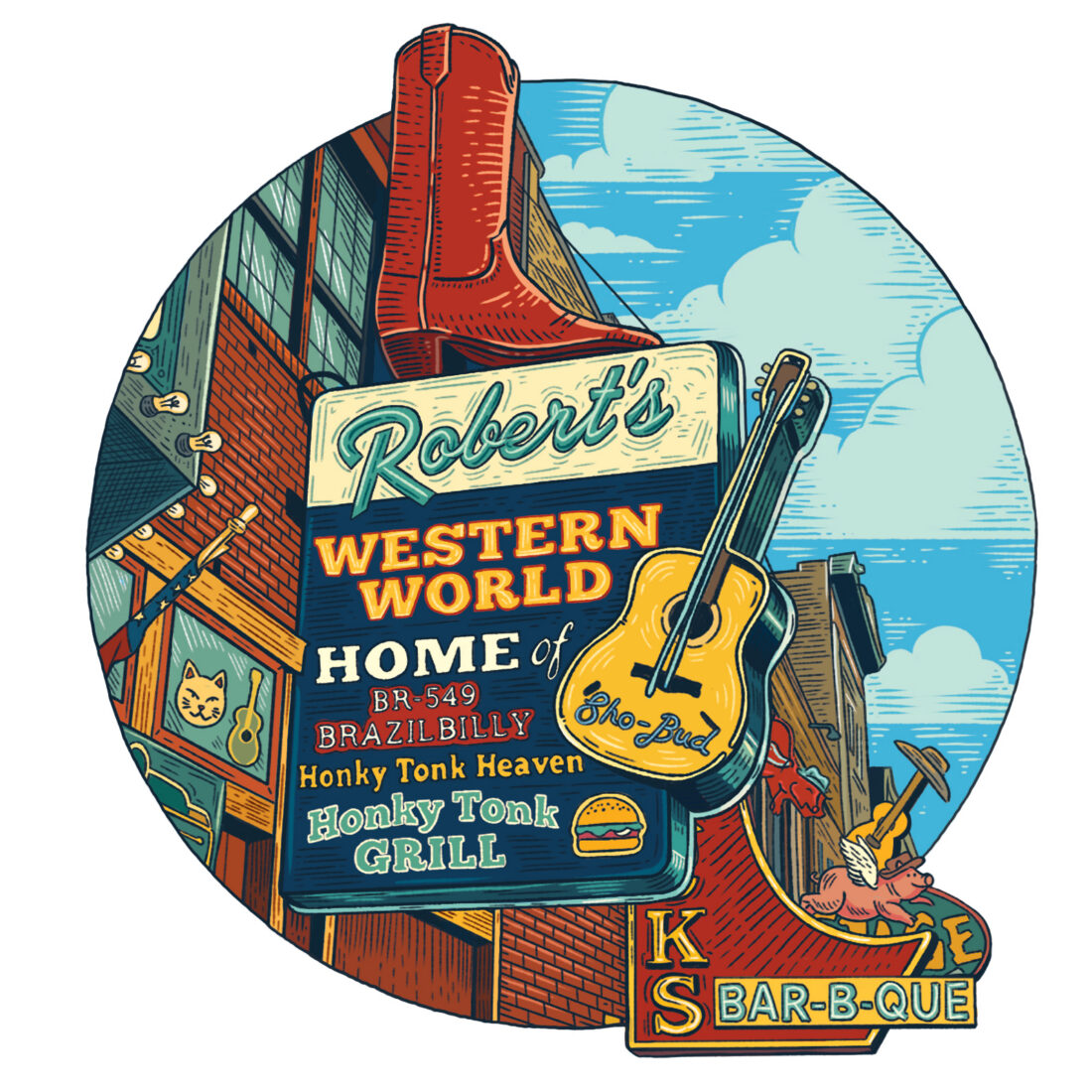
Illustration: MUTI
Nashville
Between the mobs that throng the Lower Broadway country music theme park and the continuing encroachment of the megapromoters that own the Pinnacle and the just-opened venue the Truth, Nashville’s music scene is at a crossroads. So what’s a visitor to do? Show some love to the indies still in the game, those smaller spots that are an important part of Music City’s fabric. Robert’s Western World holds its own on Lower Broadway, and it’s even expanded by buying the building next door. Honky-tonks like the new Skinny Dennis, Dee’s Country Cocktail Lounge, and Eastside Bowl during its Tuesday night bash should make anyone’s list. Singer-songwriter fans continue to honor the venerable Bluebird Cafe and Commodore Grille and flock to the venue-hopping Get Up nights. The Station Inn remains the home of bluegrass and picking parties. At the same time, clubs like the Basement East, the 5 Spot, the End, and the new Anzie Blue book a myriad of genres, including killer rock bands like Winona Fighter, the Latin roots sensation Angie K, and the one-of-a-kind Black country artist Pynk Beard, lately making waves with his timely “Ice on the Road.” So go indie. Eat well. Buy drinks. Snag merch. “Nashville’s iconic and independent venues play a vital role in the city’s music ecosystem, preserving the authenticity of our music scene,” says Deana Ivey, president and CEO of Nashville Convention & Visitors Corporation. “While the Grand Ole Opry and Ryman Auditorium remain legendary anchors, independent venues pay homage to Nashville’s roots and continue to nurture emerging songwriters and musicians who bring genuine, heartfelt sounds to our city.”
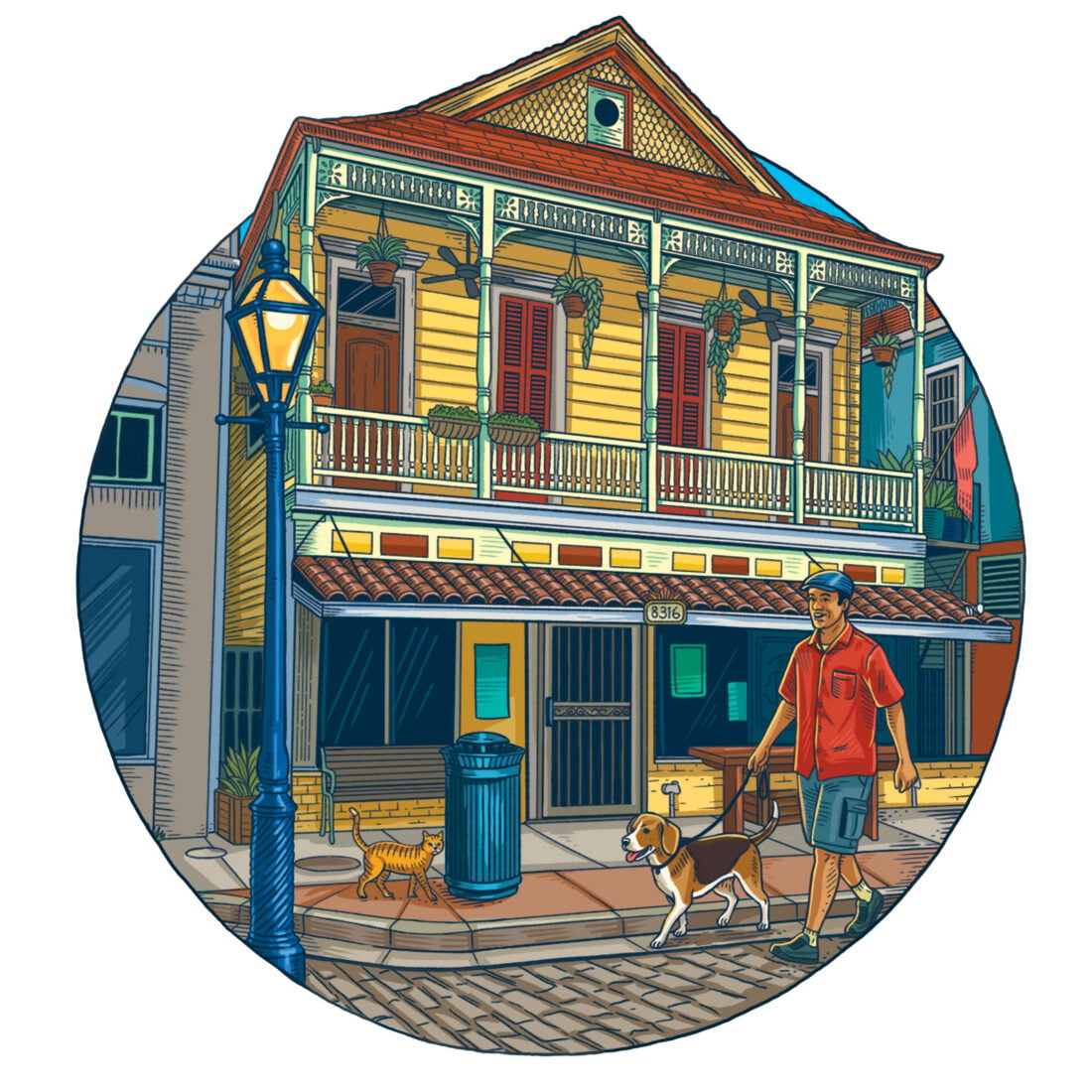
Illustration: muti
New Orleans
New Orleans has always been a music city, but the stories getting told in 2026 aren’t just the ones on Frenchmen Street. A younger generation of artists, a scrappier network of venues, and a slate of unique festivals like the Mid-City Bayou Boogaloo are reshaping what it means to make music in the Crescent City. The local rock scene is thriving with bands such as the Convenience, Timeout Room, and Pope. One of the city’s premier rock venues, Gasa Gasa, reopened last year in Uptown after abruptly closing in 2023. The St. Claude Arts Corridor strip running through the Marigny and St. Bernard Parish boasts a tight cluster of DIY and indie venues, including Siberia and the Zeitgeist Theater. Nearby in the Bywater, BJ’s hosts a Red Beans and Blues bash every Monday night. If you missed Jazz Fest in April, the NOLA Funk Fest is a must (October 16–18). And don’t forget NOLA’s divine creation, bounce music; you can hear the bawdy subgenre at places like Razzoo Bar & Patio on Bourbon Street or during Second Line Sunday parades, which kick into high gear in September. If it’s a legendary venue you’re after, Tipitina’s is still top-notch, as is the bastion of funk/R&B, the Maple Leaf Bar. “For my money, there isn’t a more diverse and culturally rich music scene anywhere else in the U.S.,” says Reed Watson, owner of the locally based music company Well Kept Secret. “New Orleans thrives because we take the folks that don’t fit anywhere else and give them a home and a place to create. It’s not just jazz and blues, either—the beautiful thing about this community is the niche and hyperspecific scenes, with sounds and styles as vast and deep as your imagination.”
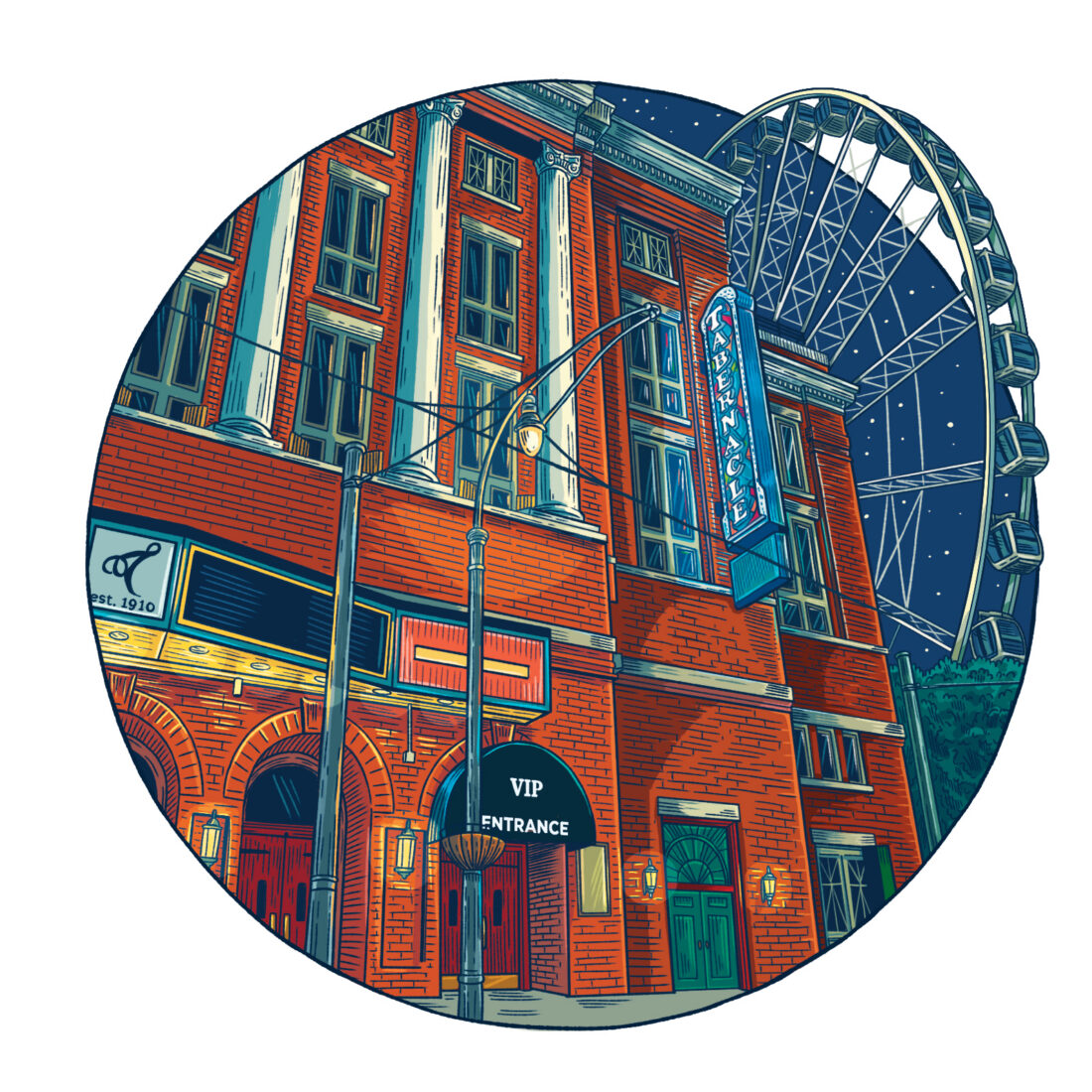
Illustration: MUTI
Atlanta
No one can deny Atlanta’s hip-hop cred. The sounds of such legends as OutKast and Goodie Mob have morphed into trap music, arguably the most important subgenre of the past fifteen years. With its gritty vocals and skeletal, skittish beats, trap music and its pioneers like T.I., Gucci Mane, Young Thug, and Future have influenced a who’s who of popular music—Bad Bunny, Ariana Grande, even country acts like Ella Langley and Shaboozey. School yourself at Atlanta’s Trap Music Museum, which traces the origins of and provides context for the often-misunderstood tunes, highlighting the narrative of struggle, resilience, and ultimately, triumph, that defines trap. Of course, A-Town has more on offer: A rock scene rooted in the Black Crowes, Georgia Satellites, and psychedelic Deerhunter. A vibrant R&B community shaped by TLC, Usher, and the legendary Gladys Knight, along with folk heroes such as the Indigo Girls and current sensation Faye Webster. Fittingly, the venues match the variety. Northside Tavern has nightly live music, heavy on blues and soul, and Eddie’s Attic in Decatur hosts open mics where the likes of John Mayer got his start. East Atlanta’s 529 is a locals’ favorite, and half a block away is the Earl, one of the country’s best rock-and-roll dives. Smallish venues Variety Playhouse and Aisle 5 anchor the Little Five Points neighborhood, while the ornate Tabernacle and the Eastern book top national acts such as St. Paul and the Broken Bones. And if you end up a trap music convert, check out the genre’s epicenter, Magic City—yes, it’s a strip club, but one pulling in pro athletes and other famous folk. Bonus: It serves what many consider the most epic version of ATL’s favorite bar snack, lemon pepper wings.