

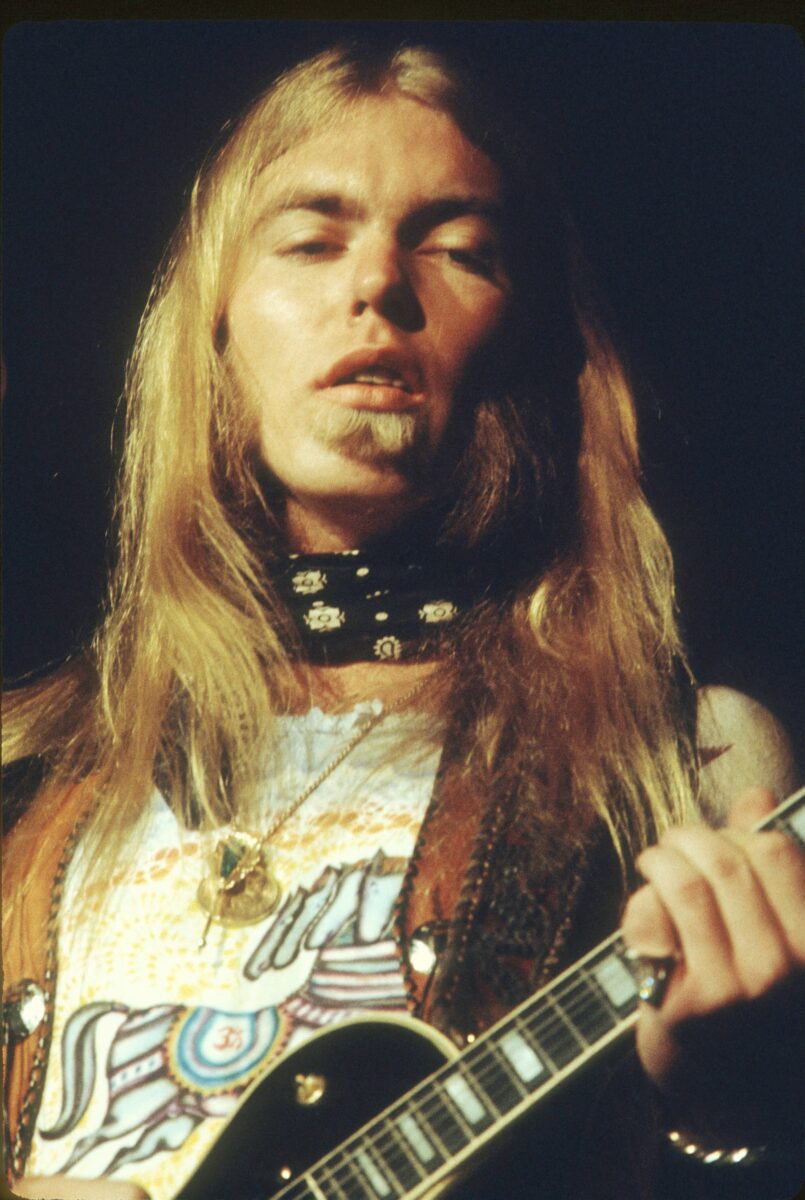
Fans of the Allman Brothers Band only saw the gruff-voiced, blonde-haired singer belting out songs like “Whipping Post” and “Midnight Rider” onstage night after night. Tabloid readers knew him for his well-documented struggles with drugs, alcohol, and matrimony, including a high-profile but doomed union with Cher. But the Gregg Allman that Michael Lehman knew didn’t square with any of them.

“I got to him at the time when he had just beaten all of that,” says Lehman, Allman’s longtime manager, about meeting him in 2004. The newly sober Allman “was seeing other people, family and friends, for the first time in a clearheaded way,” and he was eager to rebuild the relationships he had neglected during his years of dependency.
While the good times returned as the Allman Brothers Band enjoyed a third wave of productivity and popularity, Allman’s health soon began to fail him at an accelerating pace. His liver cancer diagnosis in 2010 led to a successful transplant in 2012, but just two years later the cancer returned. That’s when he and Lehman began game-planning how to go out on top and preserve his legacy.
In January 2014, after filming the tribute concert “All My Friends: Celebrating the Songs & Voice of Gregg Allman” at the Fox Theater in Atlanta, they rolled tape on a wide-ranging interview for the archives. Lehman had forgotten about it until after Allman passed in 2017, but now it serves as the foundation for a revealing new documentary, Gregg Allman: The Music of My Soul, which releases in theaters nationwide tomorrow, for one night only.
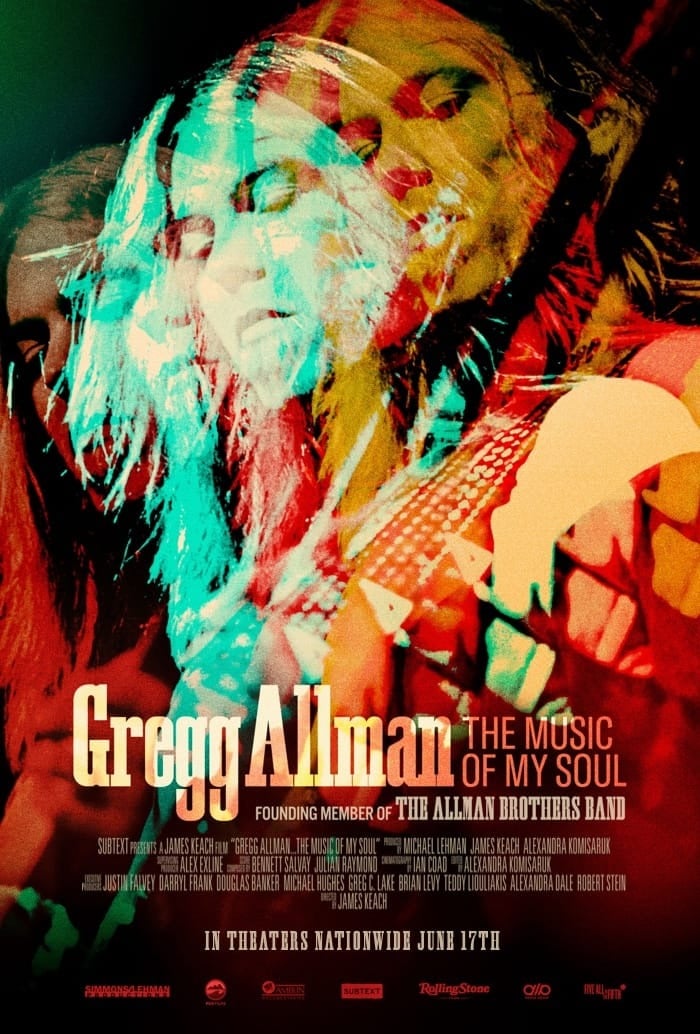
“I wanted to share Gregg’s story with the world, who he really was,” says Lehman, who collaborated on the project with James Keach, producer of the Johnny Cash biopic Walk The Line and Glen Campbell: I’ll Be Me, the “Wichita Lineman” singer’s farewell documentary. “That 2014 interview really became the bed for the film, and the beauty of it is that Gregg gets to tell his true story.”
The documentary covers Allman’s life from the beginning, including the founding of the Allman Brothers Band with brother Duane and Duane’s tragic death in 1971 from a motorcycle accident—a loss that haunted him and his music the rest of his life.
“In all of his songs, there’s a lot of pain, whether they’re ballads or up-tempo,” Lehman says. “I mean, ‘Tied to the whipping post’? They’re just heavy, incredible lyrics, and the fact that they came to him so easily and quickly during his younger years is mind-blowing and baffling.”
We spoke with Lehman on the eve of the film’s release about the Gregg Allman he knew best. Read the interview below, and watch an exclusive clip from the film about Grant’s Lounge, a Black-owned music venue in Macon, Georgia, that became the birthplace of Southern rock.
What did you want to convey about Gregg in this documentary?
I wanted to show the world who he really was as a person—not as a recording artist, not as a live artist, but the deep soul that he was. He was a kind, Southern, warmhearted, gentle, wounded, damaged soul, and not either the rock star or the legend or the incredible blues vocalist that we all know. That’s the most beautiful side of Gregg in my mind.
After their father died, Duane became Gregg’s father figure. So, when he lost Duane, maybe it felt like losing his father twice.
Gregg was the baby brother and didn’t know his father, and Gregg’s mother, Mama A [Geraldine Allman] as we called her, played both mother and father when they were little. But Duane stepped into those shoes, and part of Gregg’s drug and alcohol dependency was because he was trying to mask the pain of losing Duane, who he looked up to as a brother, as a father figure, and then trying to figure out how to carry on, how to enter into relationships with people, how to marry—and he married seven times—how to have children, how to try to parent. Without Duane, it was really difficult. He spoke about him every single time we were together. There wasn’t a day that went by where Gregg wouldn’t talk about Duane.
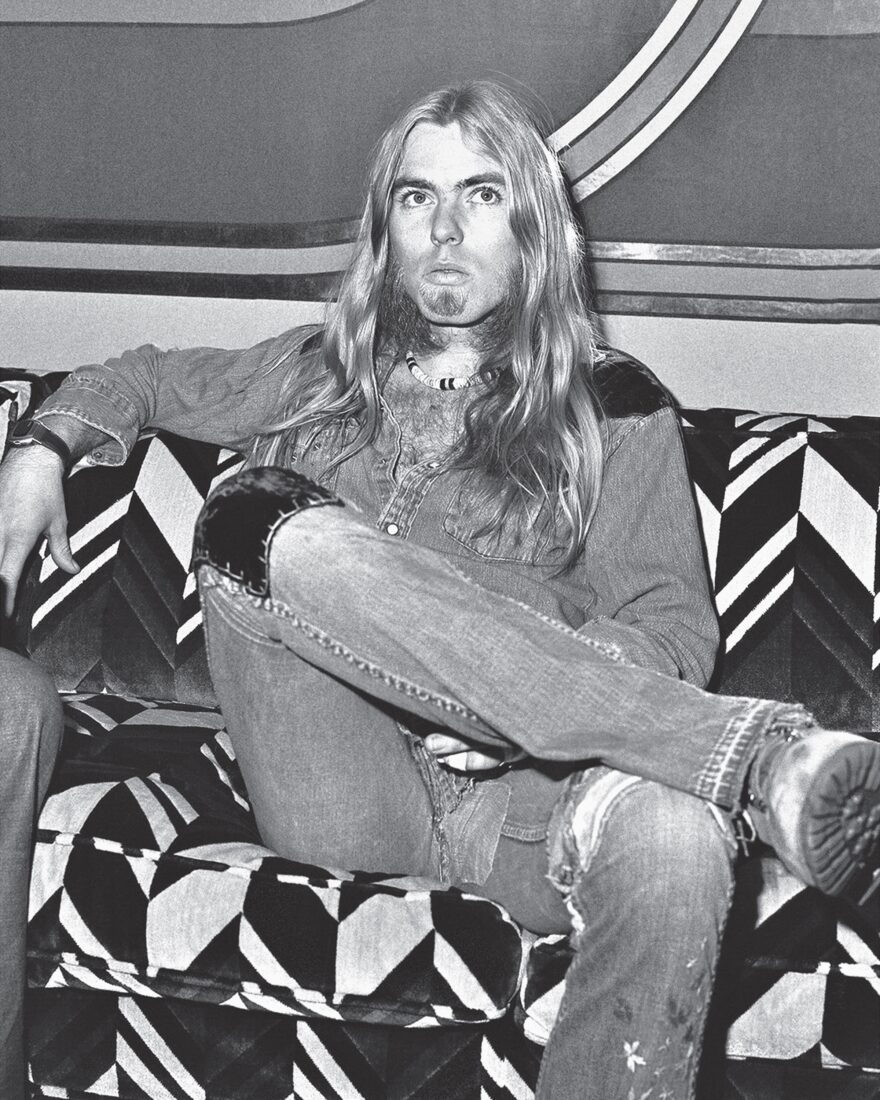
On a wall at FAME Studios in Muscle Shoals, [Alabama], a picture from 1969 documents where Duane and Jaimoe and Berry Oakley began putting together the Allman Brothers Band. As the film shows, it’s also where Gregg recorded his final album.
When Gregg decided he was ready to go back into the studio again, there was no better place to go [than FAME]. We wanted that analog sound and we wanted that board and that room that was so familiar. It took two or three times because Gregg had some medical setbacks, but we were finally able to go in and record that beautiful record [Southern Blood, released posthumously in 2017]. After Gregg passed, I remember being out in L.A. at the Capitol Records building and Don [Was] and I listening to the record start to finish, and both tearing up and being so emotional because of that bookend, those songs that were put together to deal with the end of Gregg’s life.
In your view, which of Gregg’s songs reveals the most about him?
Oh, there are so many beautiful songs. When you think of iconic songs, you’re probably thinking about “Melissa,” “Midnight Rider,” “Whipping Post.” “Melissa,” to me, is a beautiful song, and I know it was a song Duane loved. I think those three, because I’ve heard them hundreds of times live over the years, and I loved the way that Gregg interpreted them. I know they’re popular songs and there are so many others that are not played as often, but those three probably defined who Gregg was for me.
Jim Beaugez writes about music and culture from his native Mississippi. He has contributed to Garden & Gun since 2021 and has also written for the New York Times, Rolling Stone, Smithsonian, Oxford American, and Outside.