

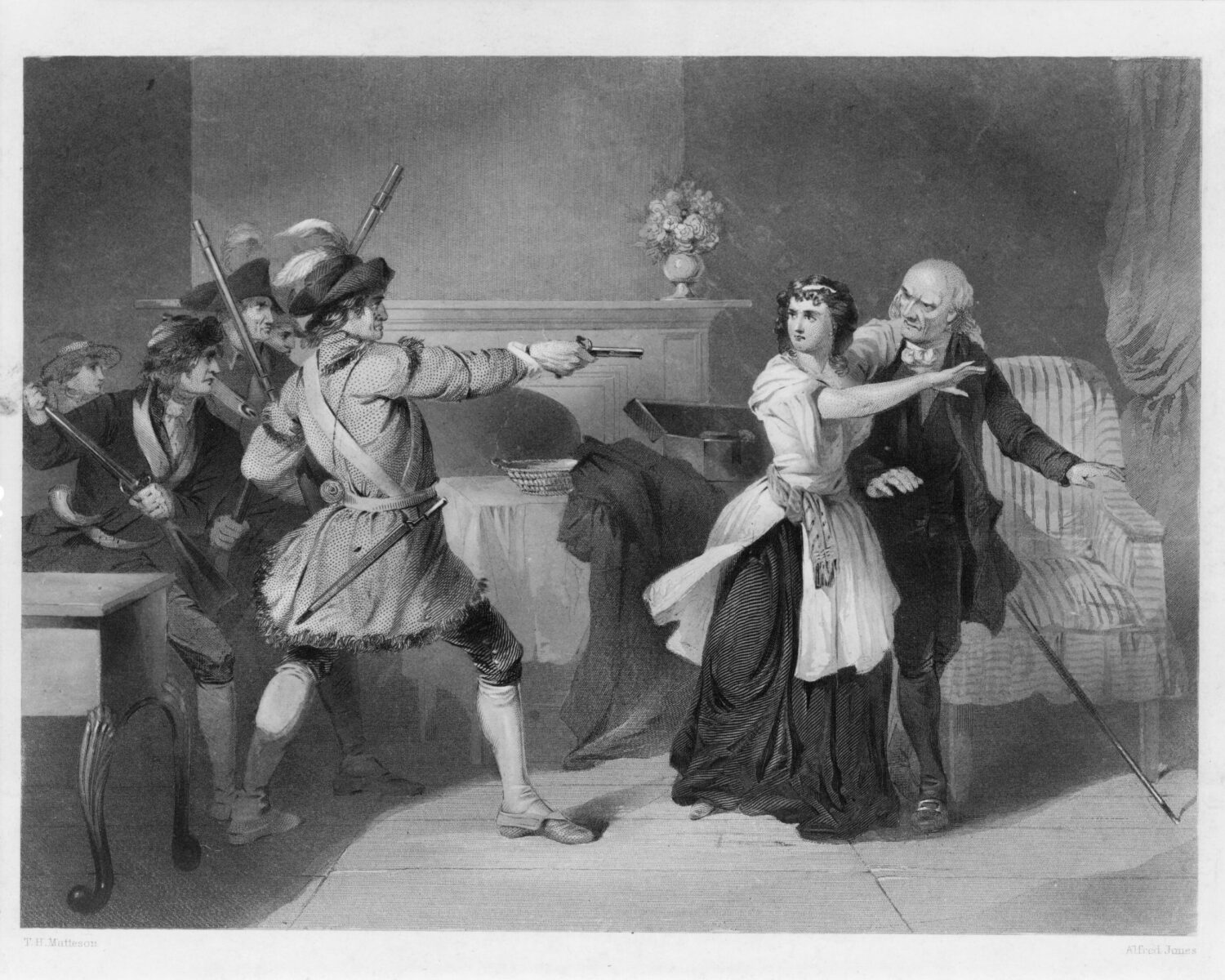
I’d heard the lore for years: As a teenager, my great-great-great-great-great-aunt Laodicea “Dicey” Langston Springfield had outwitted the redcoats during the Revolutionary War to save at times her brothers, her father, and other patriots fighting in the South Carolina backcountry. But I didn’t realize that Dicey’s renown extended much beyond our family chats. That is, until my friend brought me back a book on female spies from Washington, D.C.’s International Spy Museum. As I browsed the names in the table of contents, my jaw dropped. There she was: Daring Dicey.

Now the Greenville Symphony Orchestra has commissioned Dicey Langston: The South Carolina Girl Who Defied an Army, an original musical piece inspired by the spunky, sassy 1780s teen and composed with input from ten smart local teens of the 2020s. With world-premiere performances on April 25 and 26 at the Peace Center, the GSO hopes not only to celebrate a local Revolutionary heroine on the eve of the country’s semiquincentennial, says GSO executive director Jessica Satava, but also to spread her story farther—and what a story it is.
What we know about Dicey traces largely to Elizabeth Ellet’s first-of-its-kind 1848 book The Women of the American Revolution. In it, Ellet relates seven Dicey exploits from a time when Whigs (patriots) opposed neighboring Tories (loyalists to the crown) in the Langston family’s home district of Ninety Six. Dicey—her patriot older brothers away from home fighting and her father infirm—put on her big-girl pantaloons and aided the war effort, too.
Adults paid little attention to the young girl in her mid-teens, which enabled Dicey to overhear redcoat schemes and relay them to patriots, including news of a planned raid on the settlement sheltering her brother and his fellow soldiers. She slipped out after dark, and after traveling many miles and losing her footing as she crossed a raging river, she made it in time to warn them (and bake them hoe cakes) before returning undetected.
As loyalists began to catch on to Dicey’s espionage, they confronted her father, Solomon, with a pistol. Dicey stepped in front of him, daring them to shoot her instead. When stopped again later at gunpoint, Dicey refused to reveal the location of Whigs she had recently visited, exclaiming, “Shoot me if you dare! I will not tell you.” But she didn’t just save her spunk for redcoats. When her brother sent friends to retrieve a rifle from the Langston home, Dicey briefly forgot to ask for the password her brother had set, and demanded it as she returned with the gun. One of the patriots scoffed, retorting that they now practically possessed the rifle, and the person holding it too. “Do you think so,” Dicey cried, cocking the firearm and pointing the muzzle at him. “If the gun is in your possession, take charge of her!”
As a journalist who values fact-checking, I’ll note that Ellet heard these Dicey stories and others no more than thirdhand. She credits them to a conversation with Benjamin Franklin Perry, a Greenville resident and South Carolina state assemblyman, who claimed a Dicey descendant related them to him. And there were plenty of those descendants: Dicey’s 1837 obituary states that she and her husband, Thomas Springfield, had twenty-two children and 140 grandchildren and great-grandchildren.
Embellished along the way or not, these stories informed the text of Dicey Langston—written by Broadway director and lyricist Mark Waldrop and vetted for accuracy by the SC250 commission—as well as the group of middle and high school girls who collaborated with composer Peter B. Kay last October to help shape the work’s pacing, themes, and arc. “We thought there was just something missing from the equation,” Satava explains. “We knew there needed to be input from women, and that needed to be an integral part of how the story was told.”
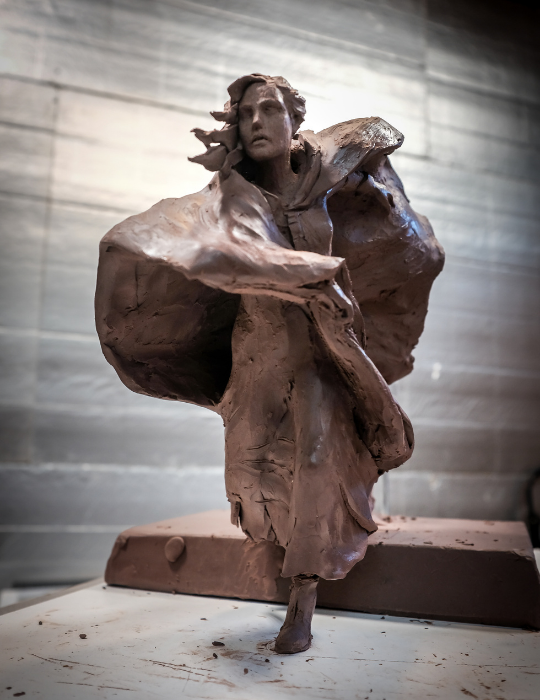
The girls, a mix of public, private, and homeschooled students, hailed from Travelers Rest, a Greenville County burg known for its avid embrace of Dicey, who resided near there with Thomas until she died. (In June, the town will unveil a statue of Dicey years in the making, by the sculptor Nick Ring.) Kay and a small group of GSO musicians ran through musical scales and exercises with the teens to tease out how sounds convey action—horses galloping, the river rushing—emotion, and atmosphere. The composer then “took those melodic fragments,” Satava says, “and incorporated them and stretched them and created variations from them, and turned them into what will be heard at the premiere.”
Satava and company hope the Dicey piece has legs. An abbreviated version will be performed this summer at stops on the GSO’s Lollipops children’s series at libraries across the Upstate. Other orchestras will be able to license the full piece too. “This is a story that will resonate with any young woman anywhere in the United States of America,” Satava says. “Courage is at the core of this story.”
Amanda Heckert is the executive editor of Garden & Gun and the editor of the magazine’s book Southern Women. A native of Inman, South Carolina, she previously served as the editor in chief of Indianapolis Monthly and as a senior editor at Atlanta magazine. She lives in North Charleston with her husband, Justin, and their dogs, Felix and Oscar.
Garden & Gun has an affiliate partnership with Bookshop.org and may receive a portion of sales when a reader clicks to buy a book. All books are independently selected by the G&G editorial team.