

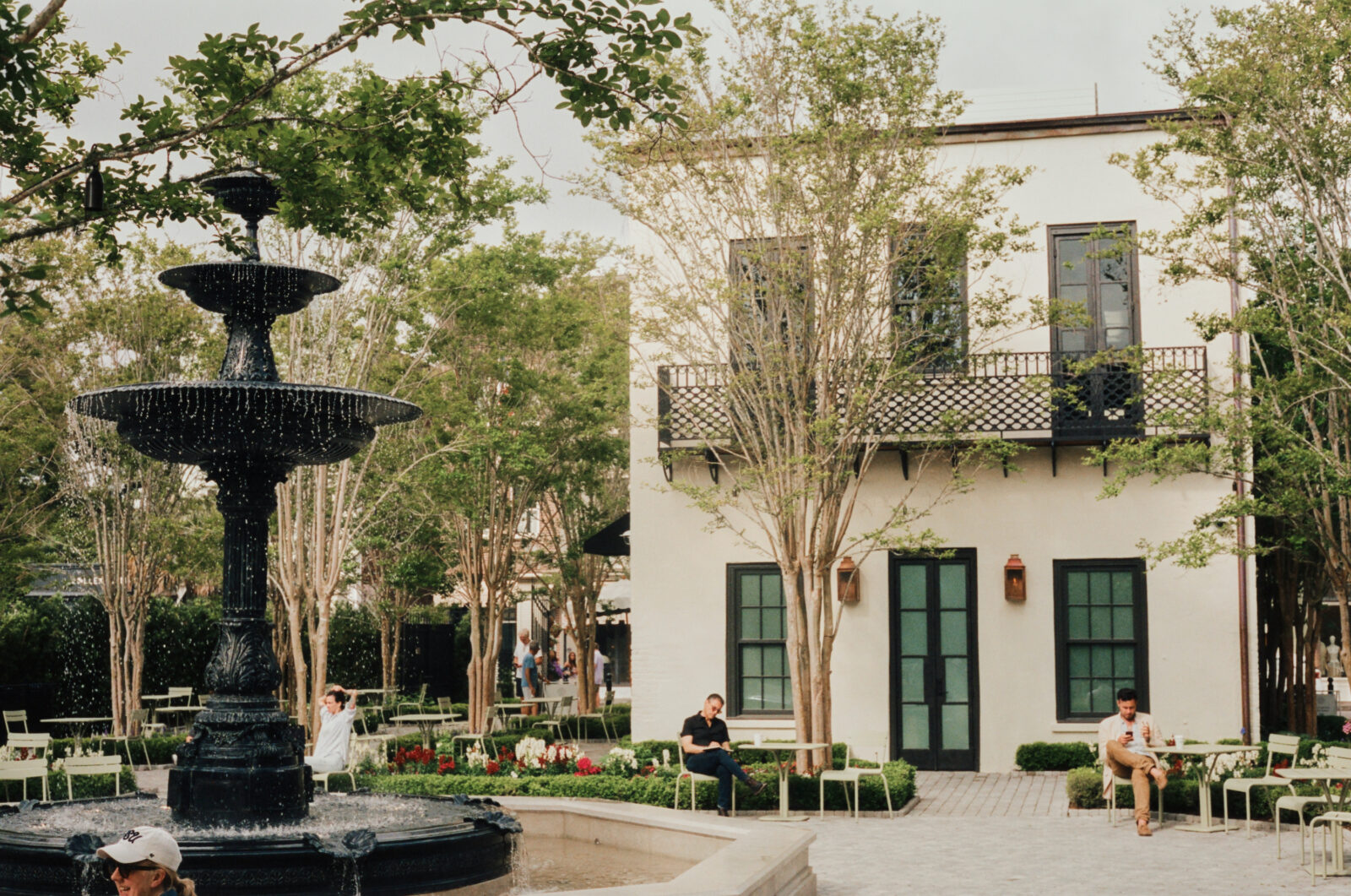
Through gates studded with cast-iron stars, a new green space invites a slowdown right off the buzzing sidewalks of two of the busiest thoroughfares in Charleston, South Carolina. At American Gardens, the din of King and Meeting Streets dies down, even as people gather. Friends perch on curved black benches for a morning catch-up, warm coffees in hand. Early risers stretch in the sun for a yoga session in the grass. Children circle up to hear stories from readers visiting from the neighboring Charleston Library Society and Buxton Books.
With more than a hundred full-grown trees, including an allée of twisting live oaks and crape myrtles, American Gardens feels like it’s been part of Charleston’s constellation of parks for decades. But before Beemok Hospitality Collection kicked off construction in 2024, 174 King Street was simply a one-acre slab of gray asphalt, a parking lot wedged between unoccupied utility buildings. When the vacant property became available in 2022, a reporter posed a headline question in the Post and Courier: “Is Charleston Losing Its Last Chance for a Central Park Downtown?” The story happened across the right desk: “[Beemok cofounder] Ben Navarro caught wind of the article and knew that it was a great idea,” says Eric Mann, the park’s general manager. Navarro, whose company owns the Charleston Place hotel and the forthcoming waterfront hotel the Cooper, purchased the property to recast a rare slice of urban block into an oasis of greenery and community.
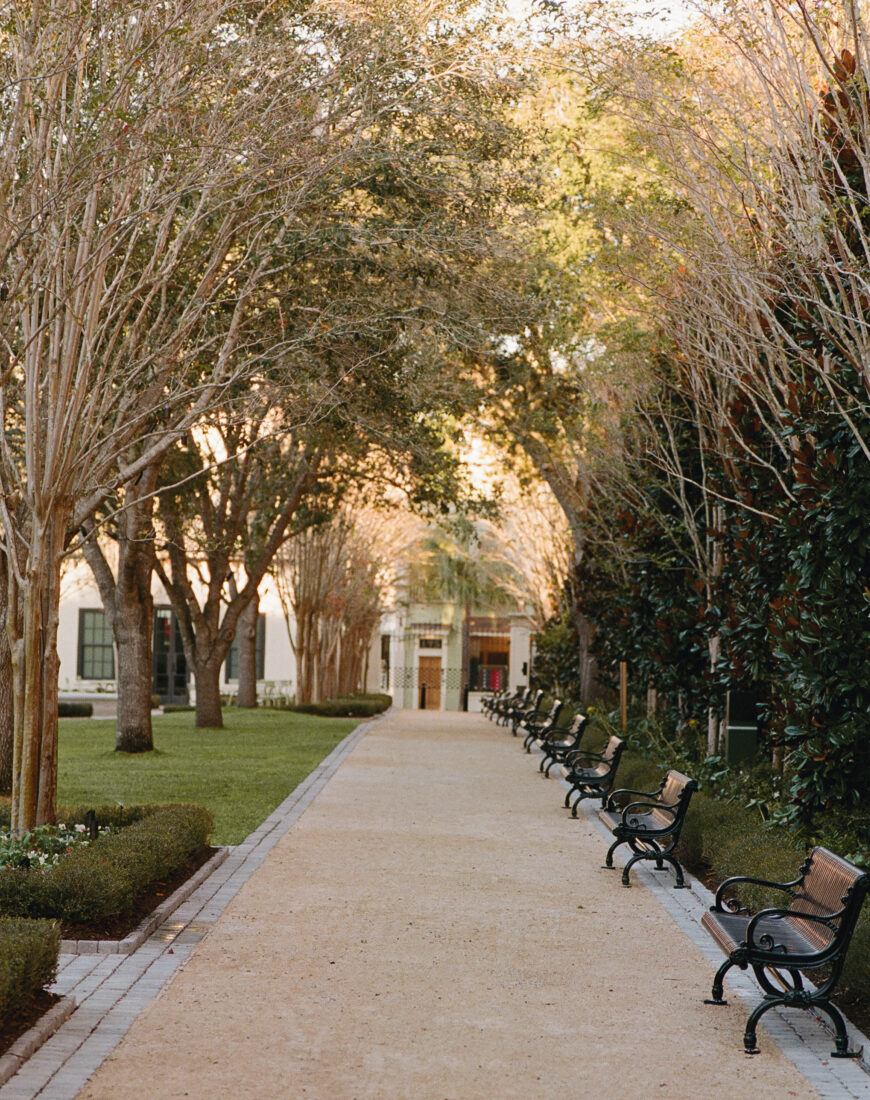
The Beemok team studied the great parks of the world and tapped the interior and landscape design firm Rees Roberts + Partners to lead the plans. “American Gardens intends to follow the same playbook that has made Bryant Park in New York so successful,” Mann says. Like Bryant Park, American Gardens abuts a library and dedicates its space to leisure: Trees and shade-dappled, compacted earth walkways frame a grassy lawn, and bistro tables abound. Soon after the park opened late last year, during its first winter season, it transformed into a festive holiday village with little wooden shop booths and a carefully restored, original Venetian carousel.
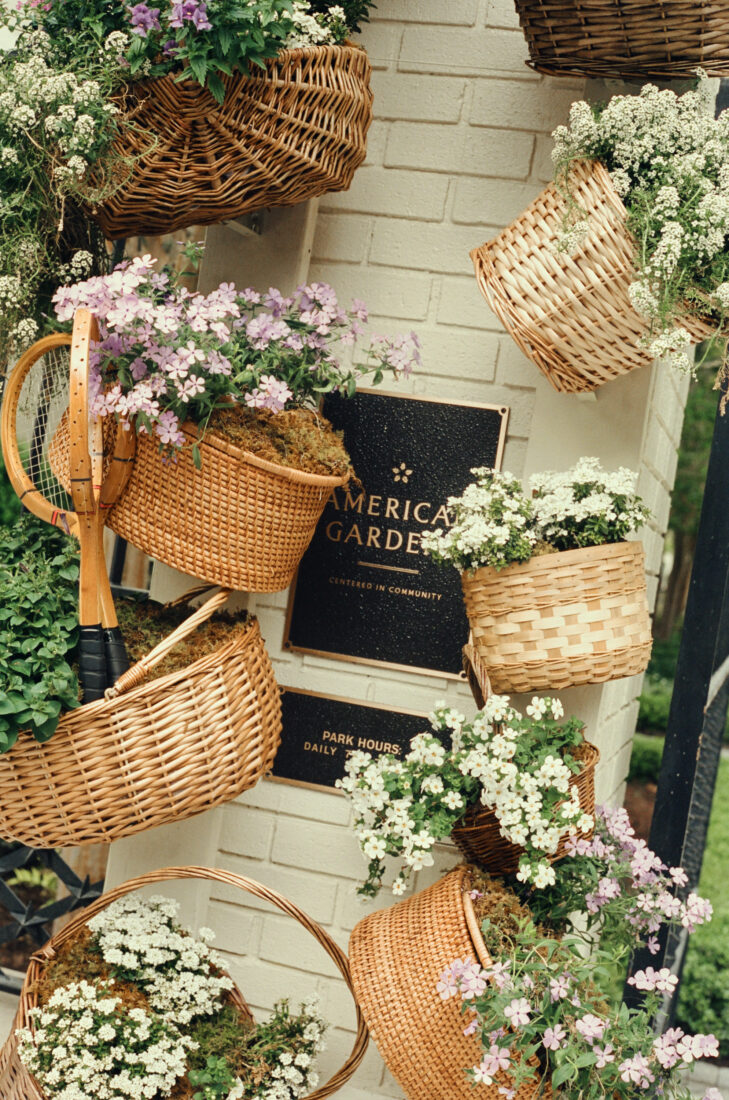
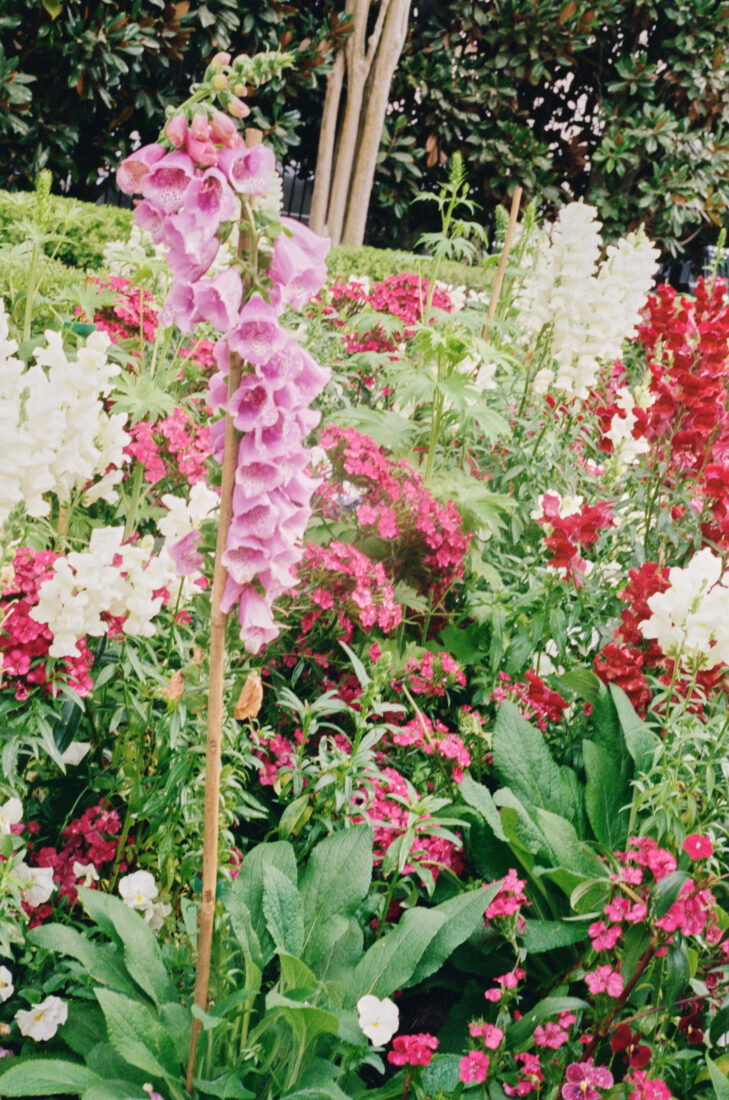
The Gateway Walk, an unofficial garden trail through downtown, threads from nearby churches and cemeteries into the garden between the Gibbes Museum of Art and the Library Society. “Every tree, annual, and perennial has been hand selected to be representative of the flora of the city,” Mann says. The daisylike yellow flowers of tractor seats and layered petals of camellias—blooms also found in the city’s beloved Hampton Park—flourish in the spring; summer brings the milky white saucers of Southern magnolias and the promise of shade beneath the live oaks. In cheery beds edging the walking path, a steady rotation of perennials and annuals bursts with seasonal color, promising “there will always be something new blooming at the gardens,” as Mann says, whether it’s the faces of blue anemones, magenta dianthus, violet towers of larkspurs, or white snapdragons peeking from behind a skirt of boxwoods.
The park also offers the peace that comes from proximity to water: A pair of eighteen-and-a-half-foot fountains, crafted by Alabama’s Robinson Iron, babble with the same serenity you’d find in a secret downtown alleyway where the murmurs of a fountain might float over the walls of a private garden. Yet one need only rest on a bench or at a café table to appreciate American Gardens’ soothing hum, rivulets of water pouring like rain from the scalloped edges of tiered basins, the fountains seemingly rising to join the church spires in the surrounding skyline.
Gabriela Gomez-Misserian, Garden & Gun’s digital producer, joined the magazine in 2021 after studying English and studio art in Virginia’s Shenandoah Valley. She is an oil painter and gardener, often uniting her interests to write about creatives—whether artists, naturalists, designers, or curators—across the South. Gabriela paints and lives in downtown Charleston with her golden retriever rescue, Clementine.