

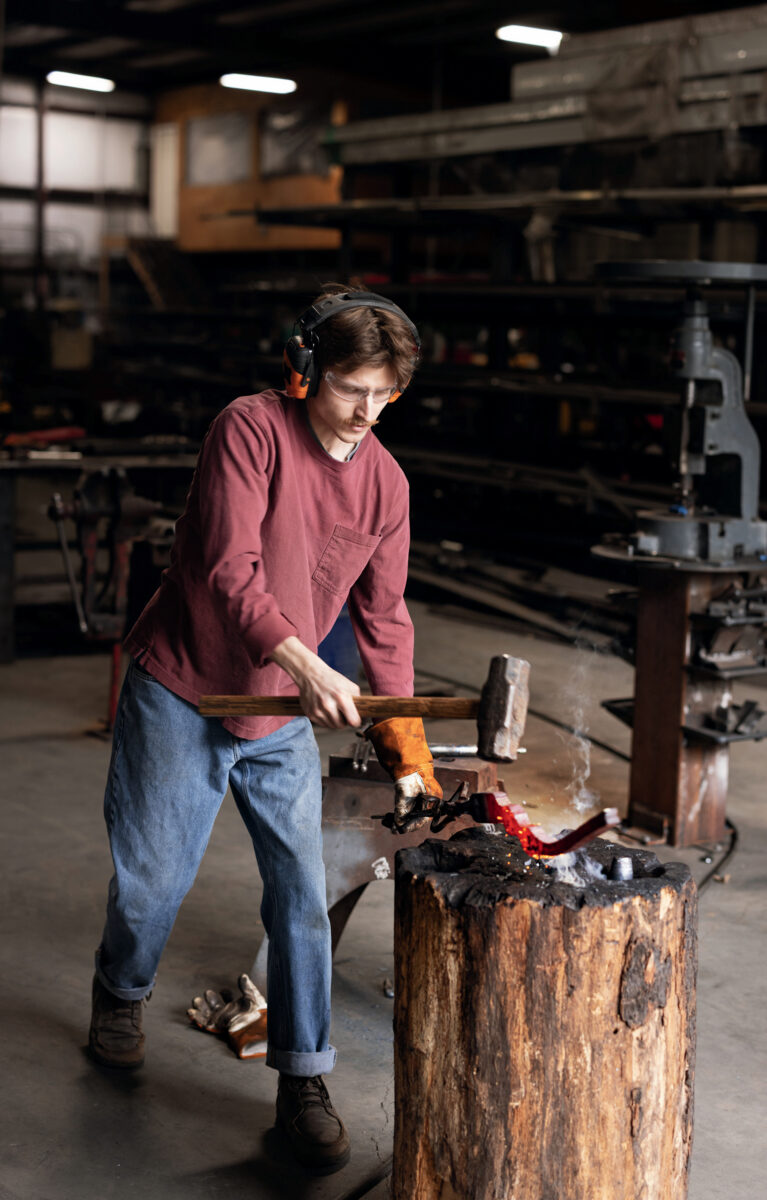
Venture east of downtown Birmingham to the city’s historic Avondale neighborhood and you just might hear the faint clink-clank of hammers striking steel. No, you haven’t stumbled upon a living-history museum. The soundtrack instead emanates from Iron Horse Metal Works, a ten-thousand-square-foot metalwork studio forging gorgeous custom residential pieces—stair rails, doors, outdoor structures, lighting, you name it.
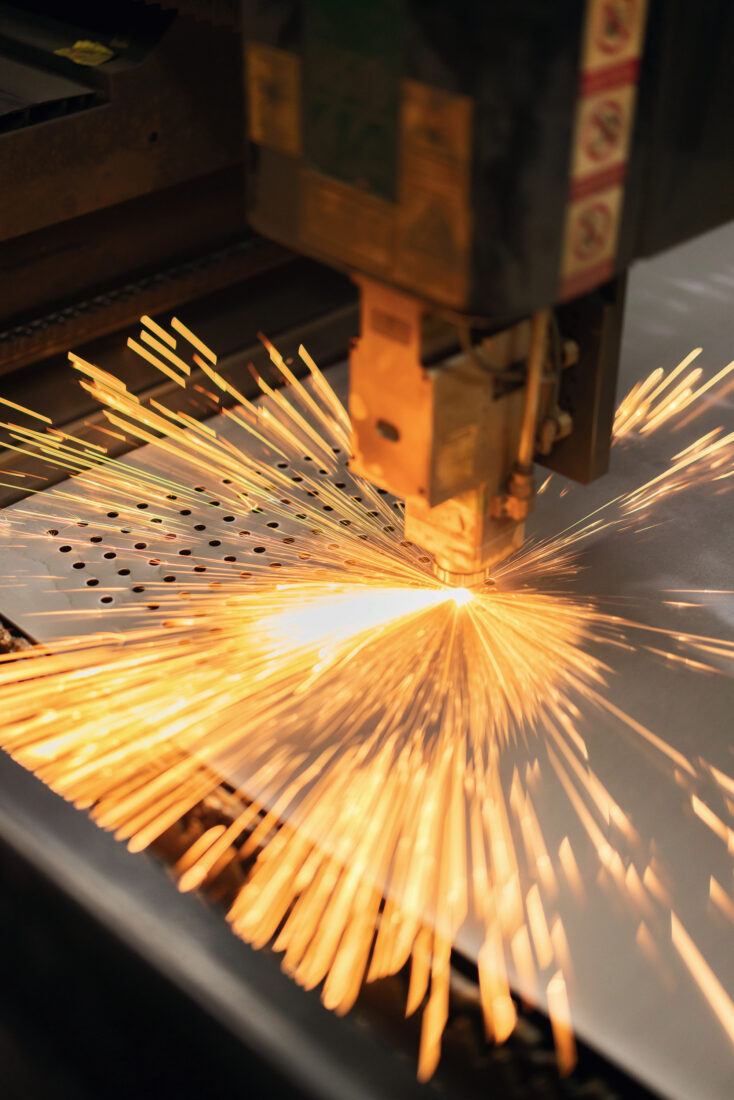
The new-school company, cofounded in 2016 by head blacksmith Brady Jackson, draws on the legacy of old-school Birmingham, long known as the Magic City due to its rapid growth from the iron and steel industry. “What’s cool,” says Jackson, who is forty-two, “is that the area we’re in used to be the blacksmith works for the railroad line.” But alongside timeless tools of the sort John Henry would have recognized, the ultramodern thrives here, too, including such contemporary machines as a ten-foot computer-controlled laser. Fabrication tables for assembling and welding dominate one area of the sweeping workshop. In another, a looming propane forge oven burns as high as two thousand degrees as it spits out white-hot metal ready to be pulled, bent, and chiseled into decorative rails and twisted door pulls. “Regardless of the new technology, the process of hammer striking anvil remains unchanged,” Jackson says. “You’re pulling it out by hand and hammering it by hand.”
That connection to the ancient is what attracted Jackson to metalwork, albeit via a winding road. After graduating from the University of Alabama with a degree focused on archaeology, he intended to pursue a master’s and work in academia. His hands had other plans. While on a six-month fieldwork assignment in the U.S. Virgin Islands, he returned in his free time to a boyhood love of woodworking. “In the evenings I was whittling wood and thought, ‘Man, I really don’t want to do this academic stuff my whole life.’” Instead, he headed to the West Coast to learn lutherie. When the 2008 recession hit, “people weren’t exactly spending money on instruments,” as Jackson puts it. He moved back to his home state and settled in Birmingham, and on a lark, found work in a local blacksmith shop. The craft quickly had him smitten. “You get into almost a Zen state where you’re concentrating on what you’re doing, but you’re also kind of just letting it simply happen,” Jackson explains. “That’s one thing I really enjoyed right away. The other thing was the power hammers.”
After nearly a decade honing his trade, Jackson launched Iron Horse with former colleagues Javier Sanchez and Jose Fausto. In the studio, their team of eight works with steel, brass, copper, and bronze, taking on commissions from across the country. While the bulk of the crew focuses on fabrication and installation—welding, cutting, and assembling pieces that have already been forged—Jackson handles what he calls “the hot work,” along with the studio’s other blacksmith, Quinn McKay.
In the young McKay, who graduated from the American College of the Building Arts in Charleston, South Carolina, Jackson found a kindred spirit. Neither of them takes for granted that at Iron Horse, no two days are the same. Some they spend hand forging fifty identical gate scrolls; others, sketching new designs. The men share a love of lighting fixtures. “It’s so fun experimenting with different forging techniques and how they affect the quality of the light,” McKay explains.
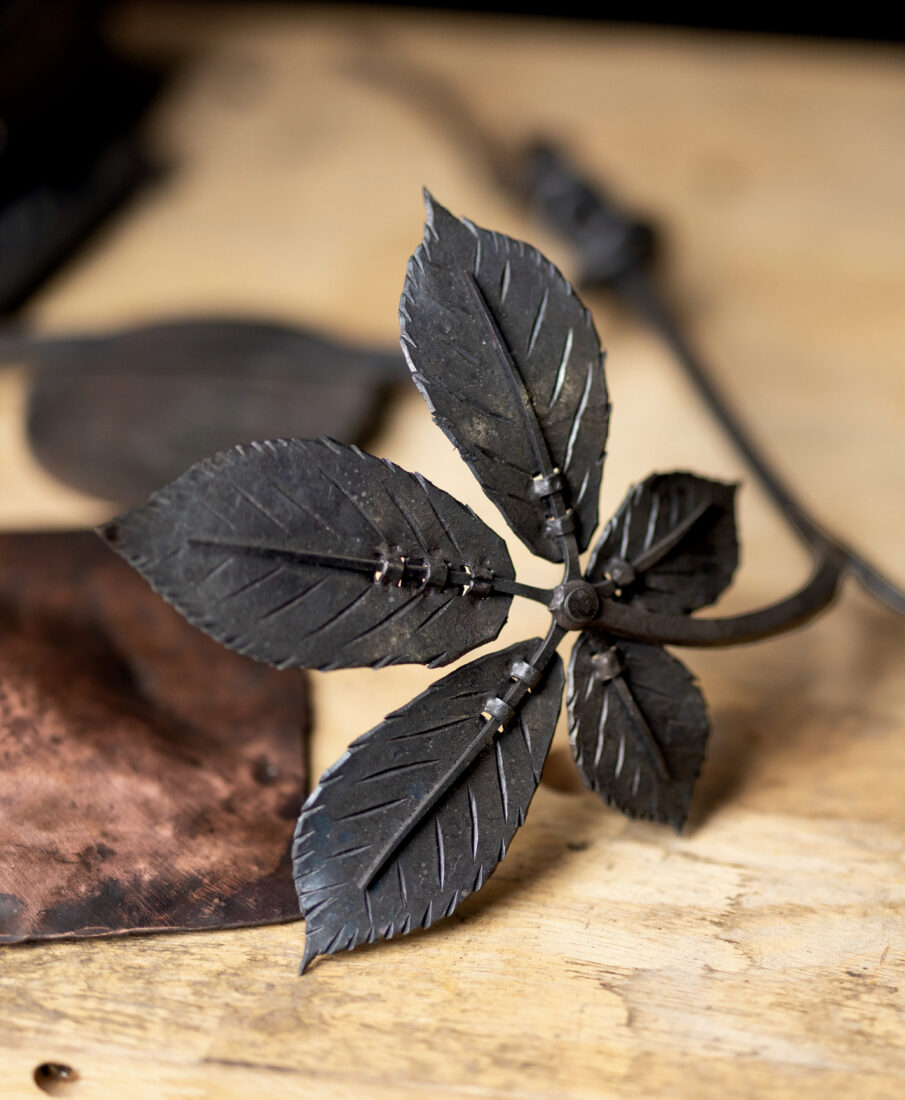
For a recent project, for instance, they crafted three identical chandeliers, accented with curved pagan deity–esque horned heads forged by McKay. In the clients’ reference photos, the chandeliers were cast in bronze—an easier process for shaping metal, Jackson explains. Their challenge? Re-create them as forged pieces. “I went through three experiments, jumping back and forth between the power hammer and the anvil,” says McKay of making the heads. Ultimately, he established most of the form with the power hammer, then finished the detailing by hand at the anvil. “As someone who has always struggled with attention,” McKay says, “this kind of detailed work is my refuge.”
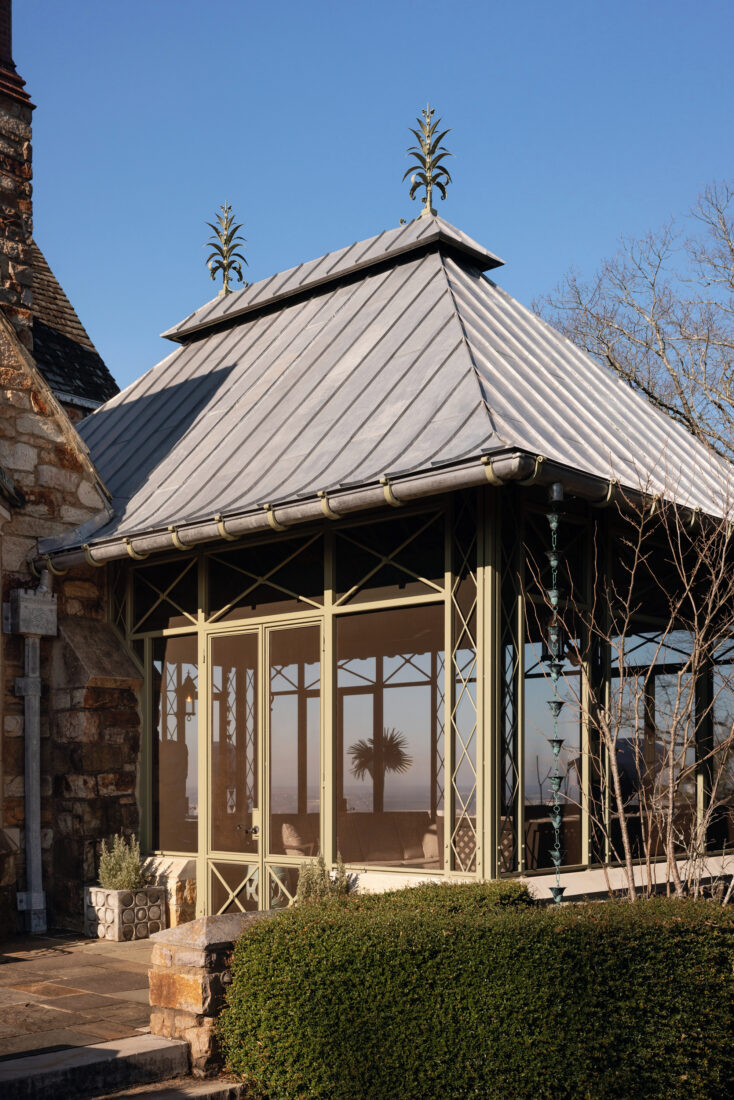
Though Iron Horse welcomes small projects, the team also embraces large-scale jobs. Another recent commission called on the company to create pieces for and assemble a steel pavilion for the owners of Birmingham’s historic 1920s Swann House, with elements ranging “from the framework to the little curved raptor tails that hold the gutters,” Jackson says, as well as twenty-five hand-forged camellia blossoms and four ornate lanterns crafted to resemble original designs.
The whole team pitched in to erect the pavilion. “We’re up there twenty feet in the air, and the wind just comes howling over the ridgetop while we’re trying to weld,” Jackson recalls of working at the Red Mountain site, where, fittingly, the iron ore deposits that gave birth to the city’s steel industry were discovered. “It was an adventure.” One might even call it magic.