

Travel
Three Newly Renovated Waterfront Hideaways, Just in Time for Summer
Life on the edge can feel positively tranquil at these revamped coastal escapes
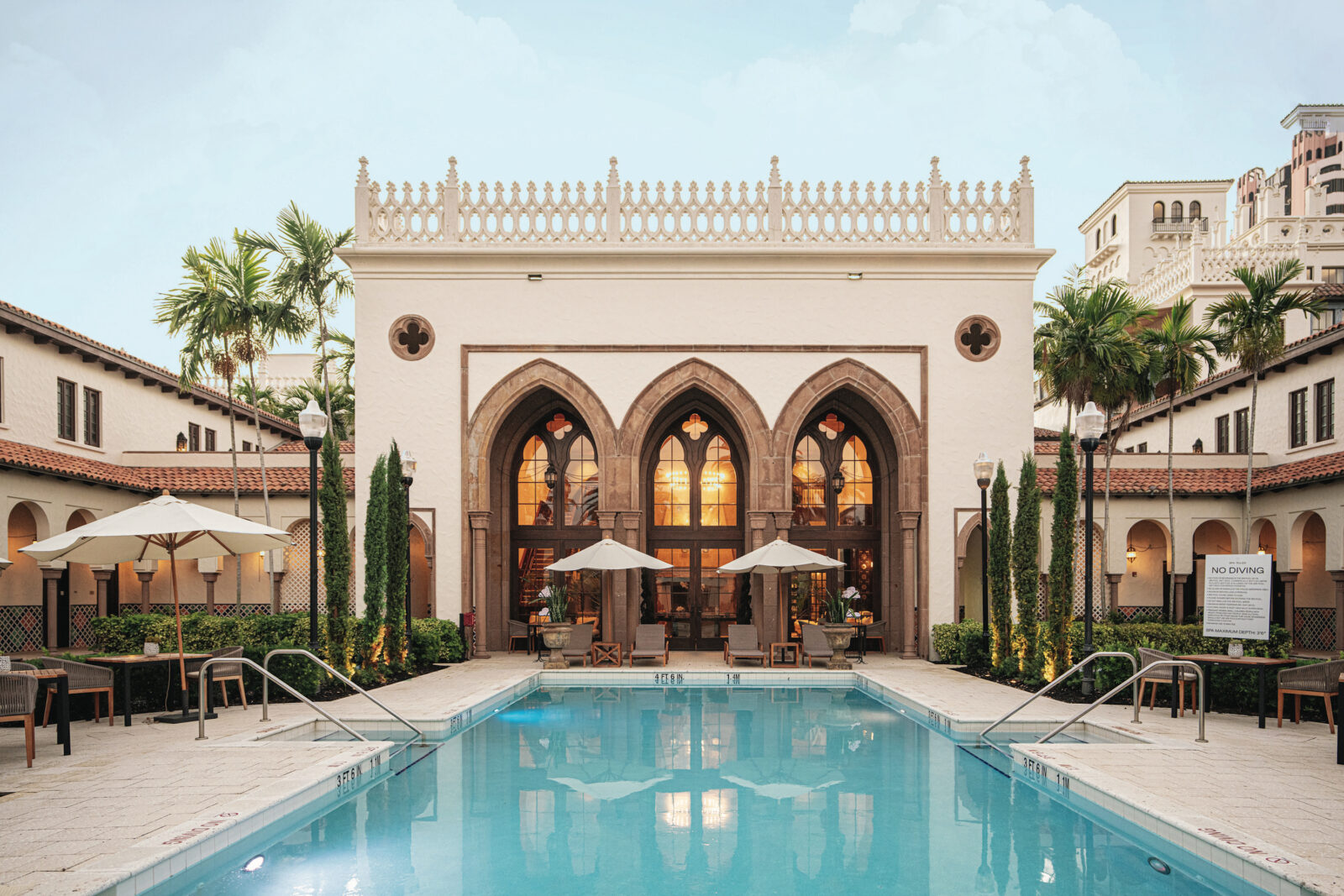
Photo: The Boca Raton
The pool at the Boca Raton’s Spa Palmera.
Everyone loves a weatherworn coastal inn—until the wheezing AC unit can’t match the summer heat, and the sandy beach towels are starting to look more shabby than chic. Thankfully, these classic waterfront locales have stayed authentic while freshening up, thanks to the hosts’ attention to all the right details. Case in point: The nineteenth-century foyer banister at the Wicklow Hall bed-and-breakfast in South Carolina. New owner Judith Puckett-Rinella and her teenage daughter spent six months sanding through its old, coffee-brown stain by hand to reveal a heart-pine grain that arriving guests now feel compelled to touch. That gorgeous inn, along with two more coastal stunners, are ready to show off how they hit refresh.
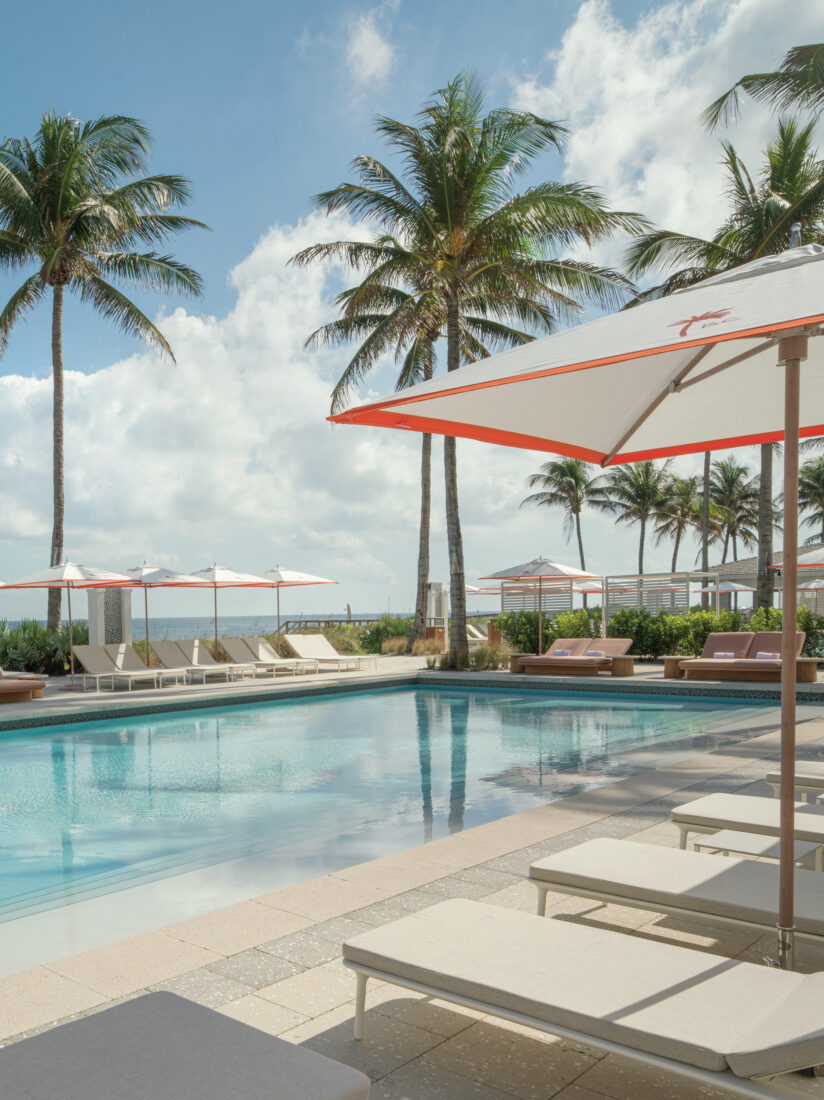
Photo: The Boca Raton
One of three oceanfront pools at Beach Club at the Boca Raton.
The Boca Raton
Boca Raton, Florida
Once upon a time, the architect Addison Mizner, already celebrated for introducing Mediterranean Revival to South Florida’s design vernacular, kicked off his grand scheme to transform the seaside village of Boca Raton into a resort city with the glamorous Cloister Inn. Actually, that time was 1926, and the hotel, now the heart of a two-hundred-acre, palm-shaded property that includes five stylistically diverse lodging options, is celebrating its centennial in a style of which Mizner no doubt would have approved. “You feel the century in the arches, courtyards, and the way the light moves,” says Daniel Hostettler, the president and CEO of the resort collectively known as the Boca Raton. “But the energy is unmistakably present-day—families in motion, friends lingering over dinner.”
It’s fitting, then, that the Boca Raton recently unveiled a multiyear, $375 million makeover that, if anything, emphasizes Cloister’s luxe Mediterranean aesthetic of gardens, pools, fountains, columns, and so many arches. A sizable chunk of that budget also hopped over Lake Boca Raton to the resort’s Beach Club, the airy, tropics-leaning hotel that commands a half mile of private, golden-sand beach. What might be the clinching factor when choosing between the two? “It’s really about mood and proximity,” Hostettler says. “Cloister is the architectural heart, with easy access to many of the dining and gathering places.” (The Boca Raton boasts more than fifteen restaurants and cocktail lounges.) “Beach Club,” he adds, “is for guests who want the ocean to be the backdrop all day, with direct beach access and an easy seaside rhythm.” Guests at all sites can easily pop over to the shoreline. Getting around the property is as simple as hopping aboard a shuttle bus, or even better, the resort’s own water taxi.
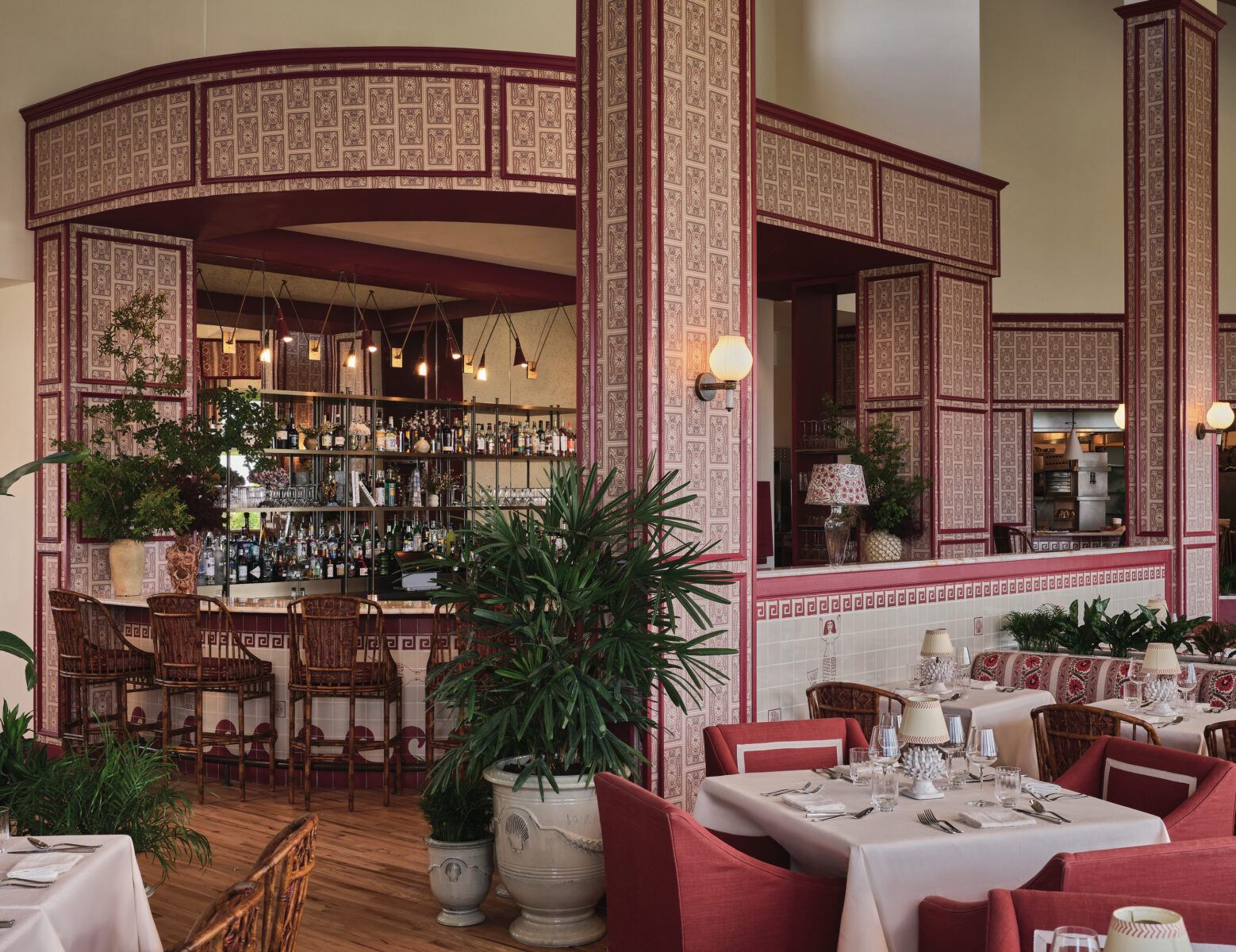
Photo: Michael Clifford/The Sanderling
The dining room and bar at chef Vivian Howard’s Theodosia, the Sanderling’s signature restaurant.
The Sanderling
Duck, North Carolina
Occupying the full width of one of the slimmer sections of the famously narrow Outer Banks, the Sanderling takes full advantage of its perch on both Currituck Sound and the Atlantic Ocean. “Being sound to sea makes us really special,” says Brad Harvey, the general manager. “There aren’t many places in the world where you can watch the sun rise over water from your balcony and watch it set from a pier just steps away.”
A resort-wide redesign that Harvey calls “transformative,” undertaken last year to coincide with the Sanderling’s fortieth anniversary, just might steal guests’ gaze from nature’s glowing glory. Directed by interior design firm Ward + Gray, the revamp evokes a lived-in Southern beach house (think beadboard and white oak) with a dollop of what the firm calls “haute bohème.” While the color palette leans sandy beige, faded blue, and serene green, custom Schumacher wallpaper delivers drama. Deep red tones further heighten the theatrical elegance at Theodosia, chef Vivian Howard’s seafood-centric restaurant named for a South Carolina first lady believed to have been lost at sea off Cape Hatteras in 1812 at age twenty-nine.
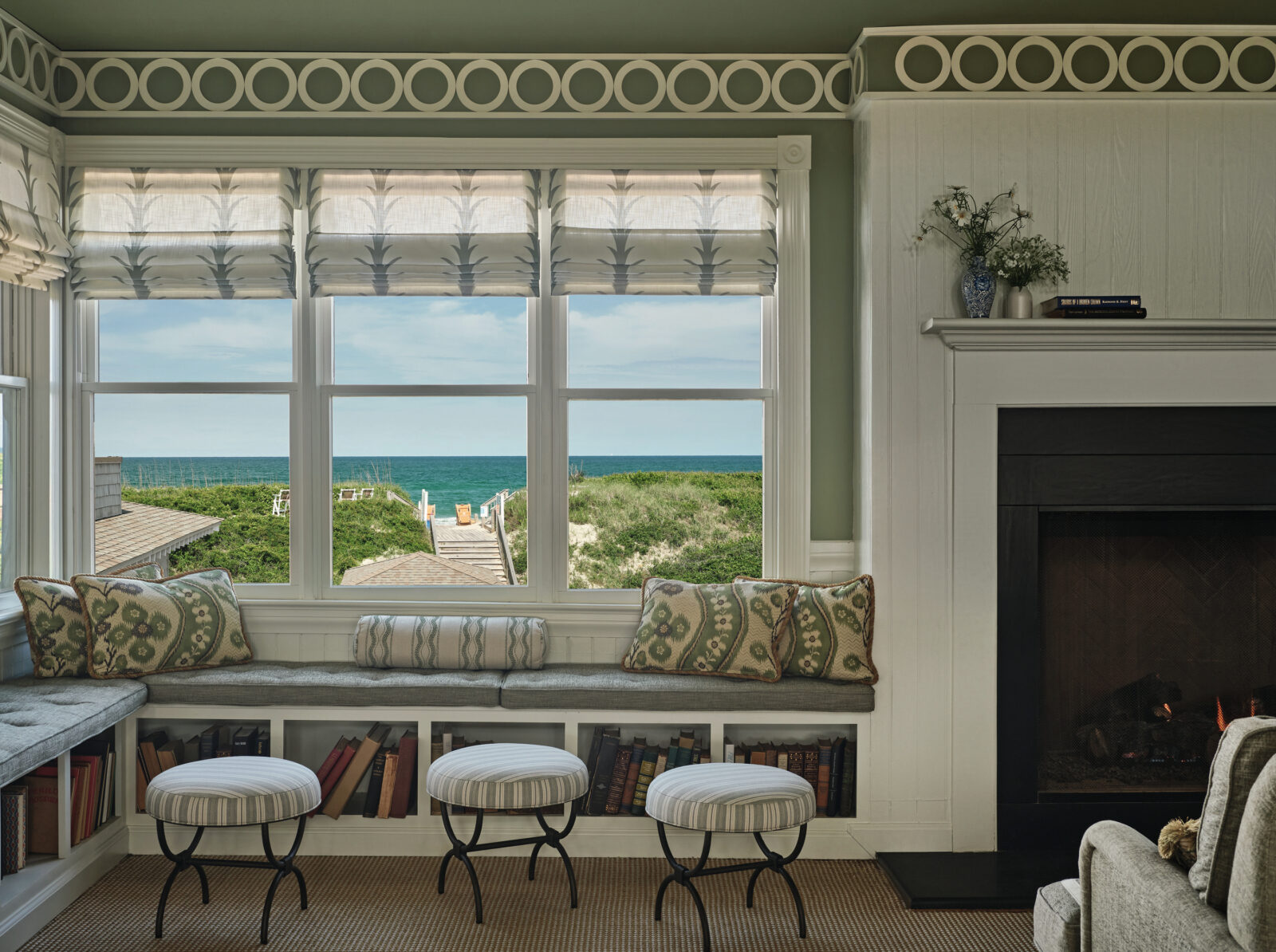
Photo: Michael Clifford/The Sanderling
Stools with a view and a fireplace anchor a sitting room at the Sanderling, in Duck, North Carolina.
Performing such a comprehensive redesign can be risky for the kind of boutique resort where families return over decades for the comforts of rising for morning yoga, pedaling bicycles into town to window-shop, and gathering around firepits for evening s’mores. “Fortunately, they love it,” Harvey says. “I’ve had so many guests say it just feels lighter, more in keeping with the region. When you come to the Outer Banks, you breathe a little easier. This isn’t a hurried place. It’s good for the soul to listen to the ocean.”
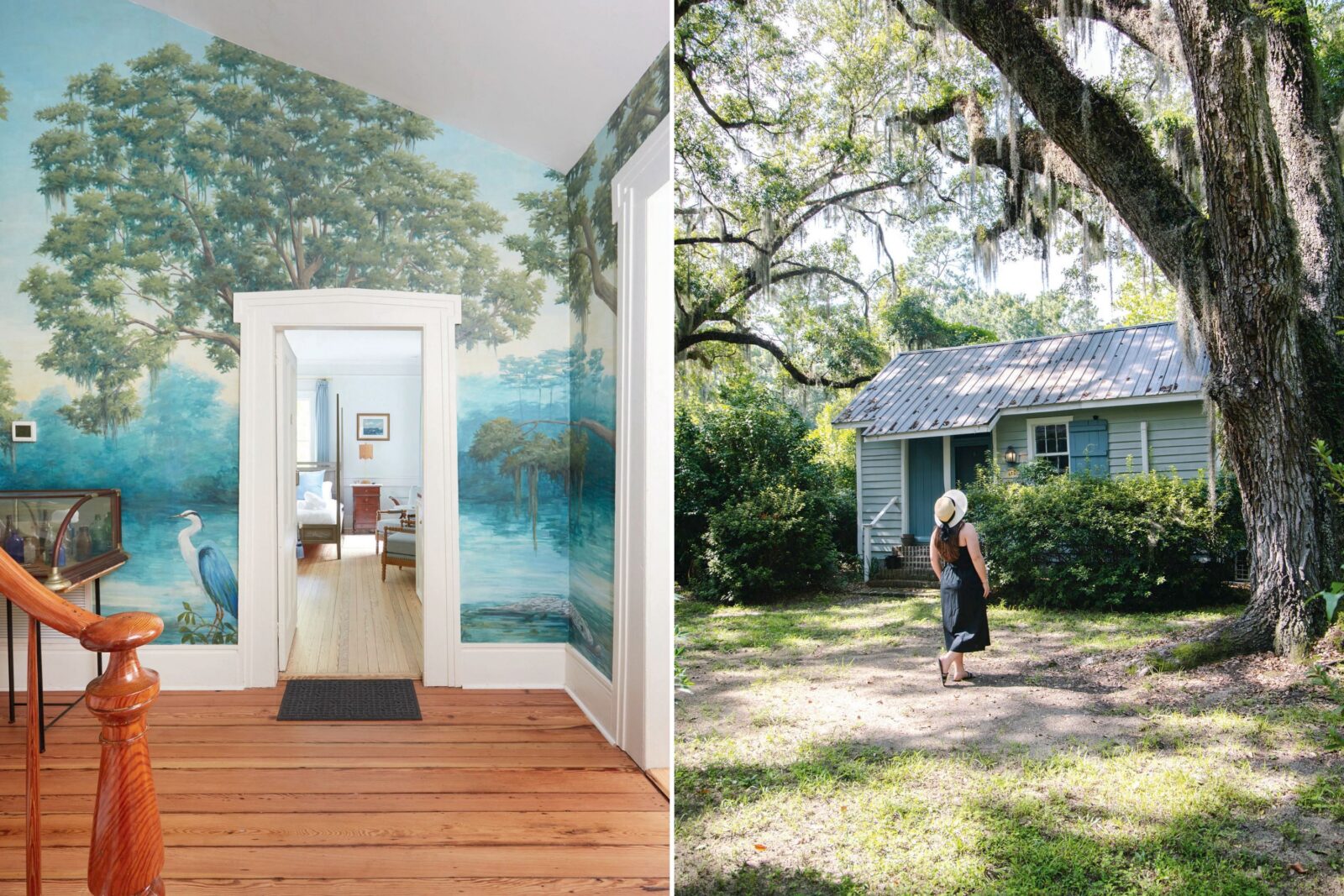
Photo: Wicklow Hall/David Rinella; Catherine Lowe Perry
At Wicklow Hall, near Georgetown, South Carolina, artist Lynne Fensterer painted a marshland mural inside the main foyer; Wicklow Hall’s oak-shaded grounds.
Wicklow Hall
Georgetown County, South Carolina
You have to love a bed-and-breakfast that seamlessly welcomes wedding parties and duck hunters. Such rural hospitality seems perfectly natural at Wicklow Hall, given its garden-like setting beneath mossy live oaks that transitions to the surrounding Santee River Delta between two major wildlife management areas. The lush, eleven-acre property near the bayside community of Georgetown was reborn just last year after nearly two centuries as a private residence, with an early-1900s swerve as a gun club’s annex. Rustic-meets-refined digs now include five suites in the 1835 main house, two cozy cottages, and a mini lodge converted from a horse stable (where the waterfowler gang might hole up).
Using eyes for design honed from careers in photography, new owners Judith Puckett-Rinella and husband David Rinella shouldered the work, from selecting Italian marble for the bathrooms to restoring fireplaces. They also recruited extra talent, including the Beaufort, South Carolina, artist Lynne Fensterer to paint the mural that wraps the main foyer in a blue-green marshland tableau of alligators, deer, and herons. “Our guests want to experience the Lowcountry, and though our grounds are groomed to about two hundred yards, the back is like Jurassic Park with boars and bobcats,” Puckett-Rinella says. “We also arrange kayaking tours and know a sea captain who does a catamaran tour.”
It’s the mix of guests, she says, that has made the first year of hosting special. “Typically, a B&B is retirees, which is great, but we get so many young people, which makes things lovely and vibrant. We get birders heading for the Tom Yawkey Wildlife Center. We get couples celebrating anniversaries. We get sport fishermen with their big boats, and travelers coming through for golf tournaments. It really warms my heart the way people interact with each other at the bar.”
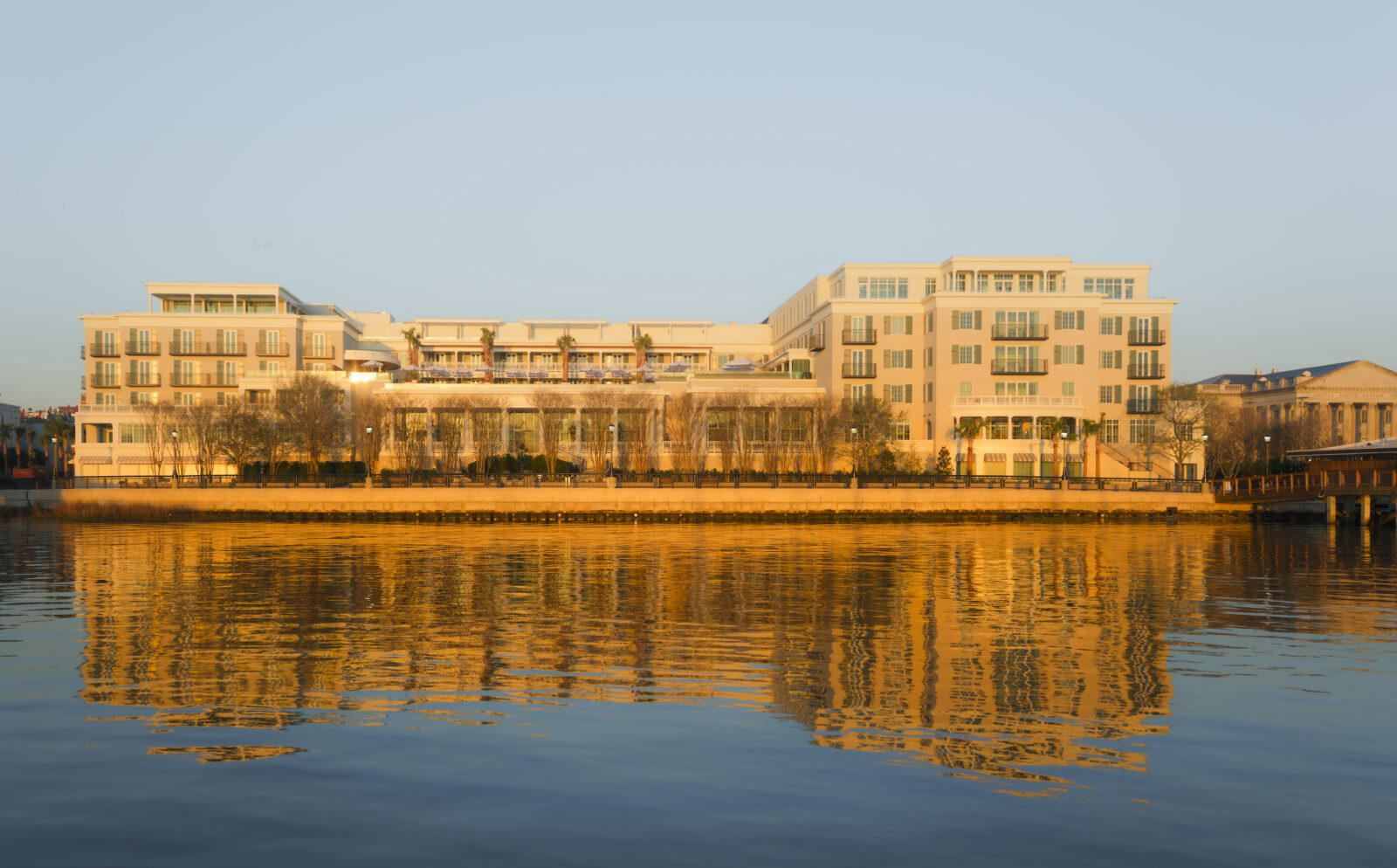
Photo: Courtesy of the Cooper
The Cooper Hotel in Charleston overlooks the harbor.
Plus: A Brand-New Charleston Harbor View
The Cooper makes waves in the Holy City
It only took the Charleston peninsula several centuries to sprout a luxury waterfront hotel, but the Cooper is prepared to make up for lost time as a focal point of an ongoing wharf redevelopment. Constructed on the site of the decommissioned Ports Authority building, the six-story, 191-room hotel rests just steps from the harbor, its U-shaped upper floors cradling a sabal palmetto–bordered rooftop infinity pool that shares the view. Its quartet of dining options includes a Mediterranean-inspired signature restaurant, the Crossing, helmed by executive chef Nick Dugan of Charleston’s popular Sorelle. Among the amenities: a seven-thousand-square-foot spa and a new marina where the Cooper’s own Hinckley yacht is moored. And if your Charleston must-do list includes a selfie in front of the famous Pineapple Fountain, it flows just a stroll away in Waterfront Park.
Steve Russell is a Garden & Gun contributing editor who also has written for Men’s Journal, Life, Rolling Stone, and Playboy. Born in Mississippi and raised in Tennessee, he resided in New Orleans and New York City before settling down in Charlottesville, Virginia, because it’s far enough south that biscuits are an expected component of a good breakfast.