

Arts & Culture
The Jaw-Dropping, Hand-Sewn Beauty of San Antonio’s Fiesta Gowns
Artisans stitch care into every seam of pageant dresses
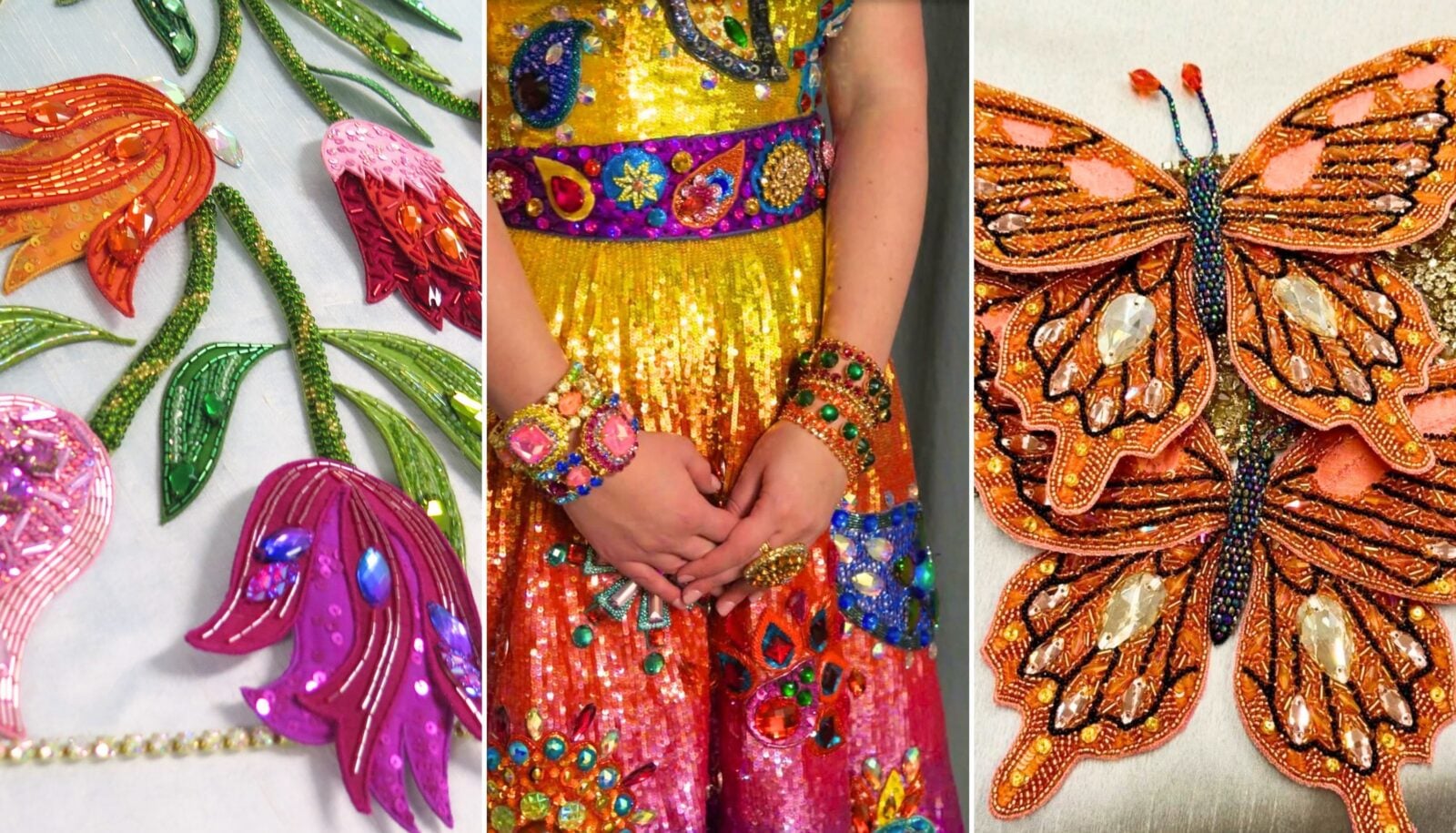
Photo: Bianca Calvert
A tulip detail on one of Veronica Prida’s creations; an ombre-sequined dress; beaded butterflies.
Each spring, San Antonio pulses with Texas-size pomp and pageantry during its annual Fiesta celebrations. With more than one hundred events over eleven days (April 16–26), the city swirls with revelry and technicolor confetti, lively parades, and a flush of royal engagements, including the coronation of the Order of the Alamo. This civic organization invites approximately twenty-five young women to join its royal court every April, continuing a tradition that started in 1909. The participants still don glimmering crowns and crystal-encrusted gowns, their twelve-foot trains stitched with sequins and stories.
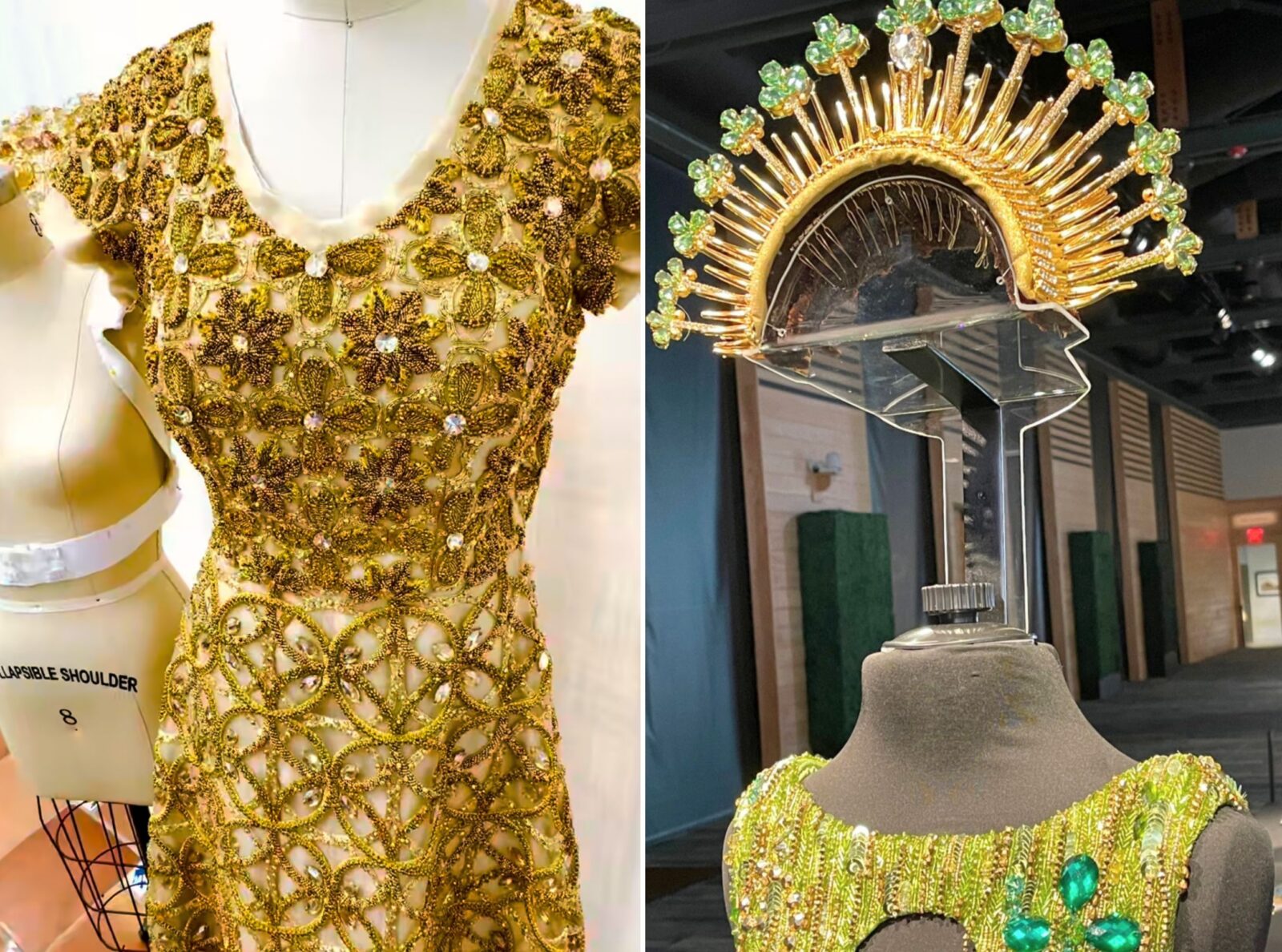
Photo: Bianca Calvert
A gilded, hand-embellished dress by Prida; one of Prida’s chartreuse-colored gowns paired with a golden-rayed crown.
To create these awe-inspiring pieces, highly skilled artisans sew away in home studios and meet with clients in professional ateliers across the city. Veronica Prida is one of four prominent designers who dream up these extravagant costumes, bringing with her a prestigious résumé in fashion, including an early internship at Oscar de la Renta.
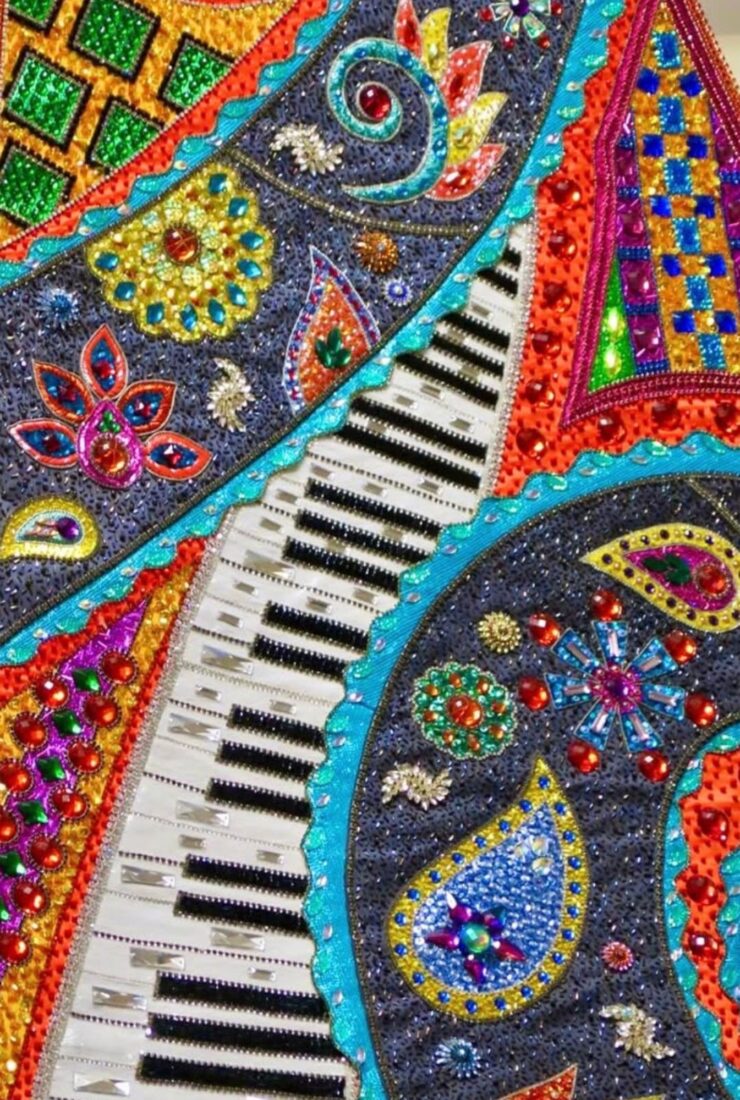
Photo: Bianca Calvert
A dress’s train decorated with paisley and piano keys.
Inside her atelier, colorful crystals and rhinestones shimmer in the sunlight. “There’s no school for this,” Prida says. “We’re keeping the craft alive.” After sixteen years upholding one of the city’s most singular art forms, she says the work continues to uplift her. “This tradition is part of the essence of San Antonio. If you’re not from here it’s hard to understand, but I compare it a bit to a quinceañera.”
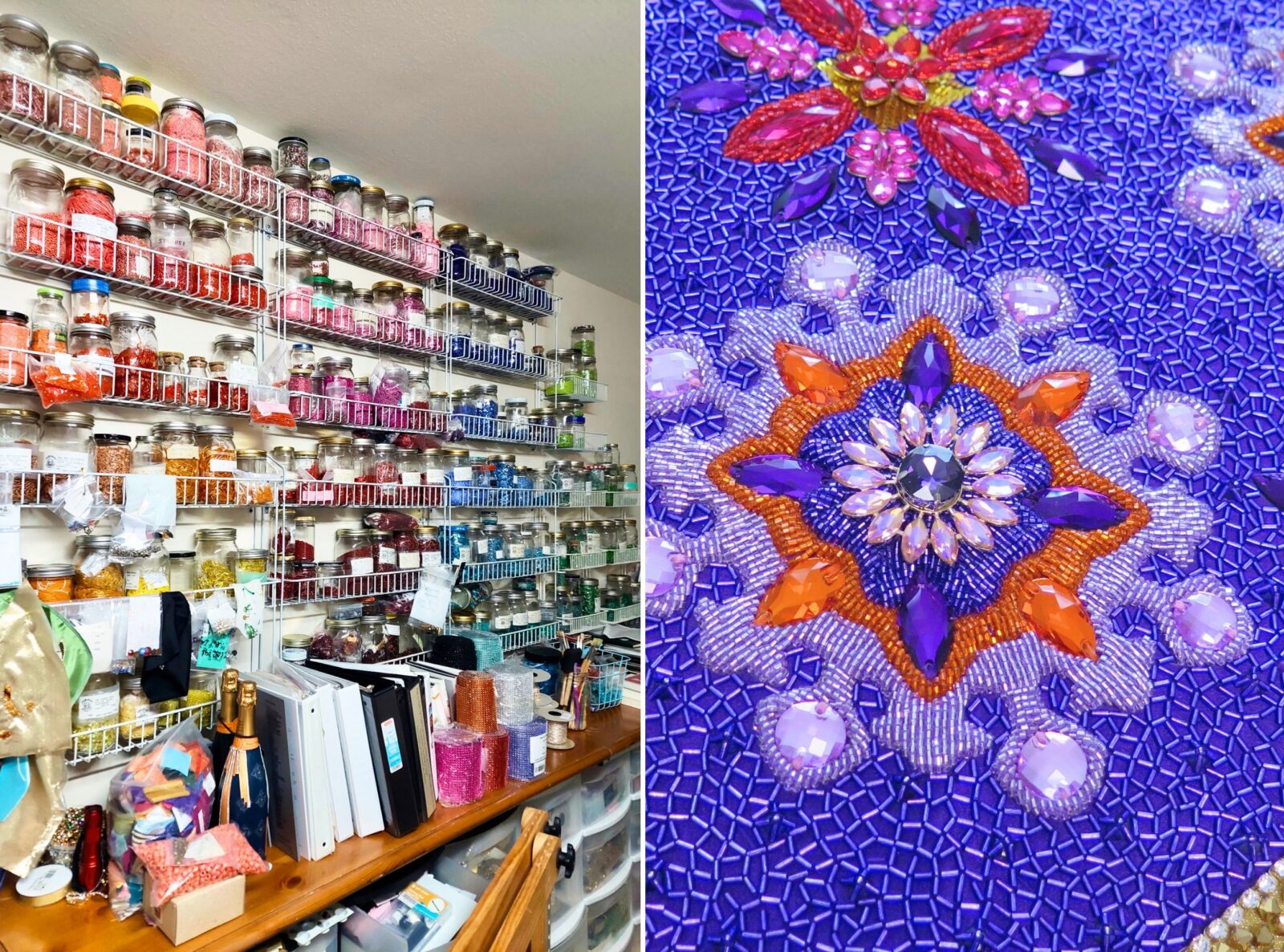
Photo: Bianca Calvert
Jars of beads organized by hue in Mechiel Whitmore’s atelier; a technicolor detail of intricate floral beadwork on one of Prida’s dresses.
Every year, Prida oversees the ensembles for eight to ten royal duchesses, employing a team of twelve artisans who all specialize in different skillsets, from hand-beading to tailoring and threadwork. She and the three other designers also collaborate with a network of local talents, including Christopher Crouch and Cari Hill, who construct bespoke tiaras that complement the finished looks.
Prida begins each dress’s train with a formal sketch, followed by individual drawings for each design element. “The client never sees my drawings, but I love them,” Prida says. “I’ve saved boxes and boxes…there is beauty in the process.” After mapping out the motifs on grid paper, she traces the pattern onto buckram fabric. Artisans then bead the design entirely by hand. “It’s like a puzzle,” Prida says. “We make all the pieces, and then we assemble them on the train and stitch them together—it’s literally hundreds and hundreds of hours.”
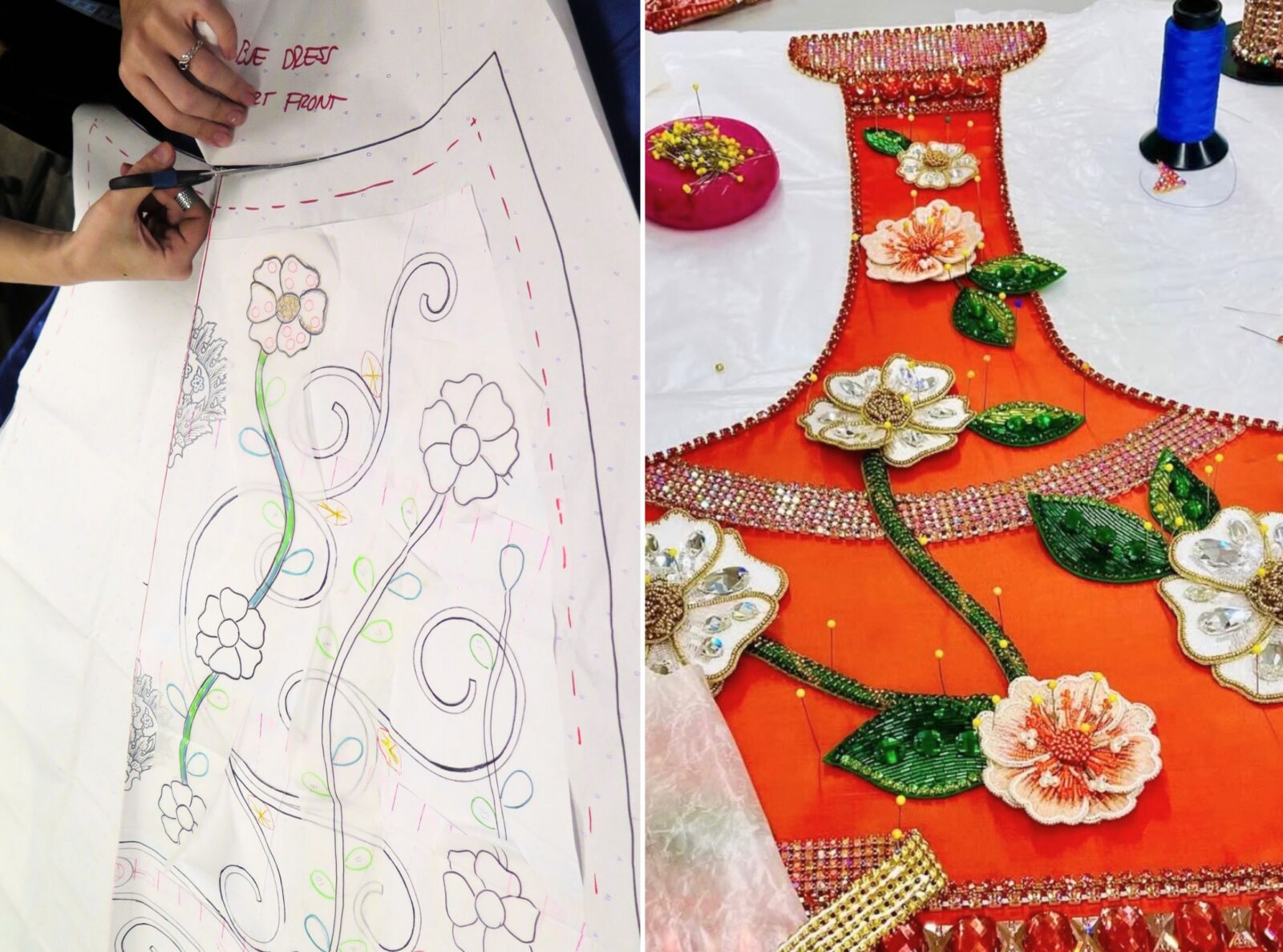
Photo: Bianca Calvert
Prida’s preliminary drawings guide the embroidery; one of Prida’s pieces in progress, with three-dimensional flowers on a vase.
Master embroiderer Javier Castillo has been making museum-worthy designs since 1992, drawing from his rigorous training in Paris, his appreciation for the finesse of French couture, and his own family’s needleworking heritage; in the 1940s and ’50s, his grandmother and her sisters sewed costumes for the Barnum & Bailey Circus. “We use a lot of metal embroidery or zardozi,” he says of his trains, some of which weigh upward of fifty pounds. “It’s an ancient technique using coiled metal that’s padded and has a three-dimensional finish.”
For dressmakers like Mechiel Whitmore, drafting and sewing these creations is a privilege that requires engineering and ingenuity—not to mention fabric-filled closets, countless boxes of thread, and jars brimming with rainbow-colored beads. “The whole front of my house, including the bedroom and the formal living and dining areas, are all workspace,” Whitmore says. In addition to the Order of the Alamo’s Coronation, she fashions robes for other royal courts, including fall’s Floresville Peanut Festival southeast of the city, and the San Antonio Lutheran Coronation.
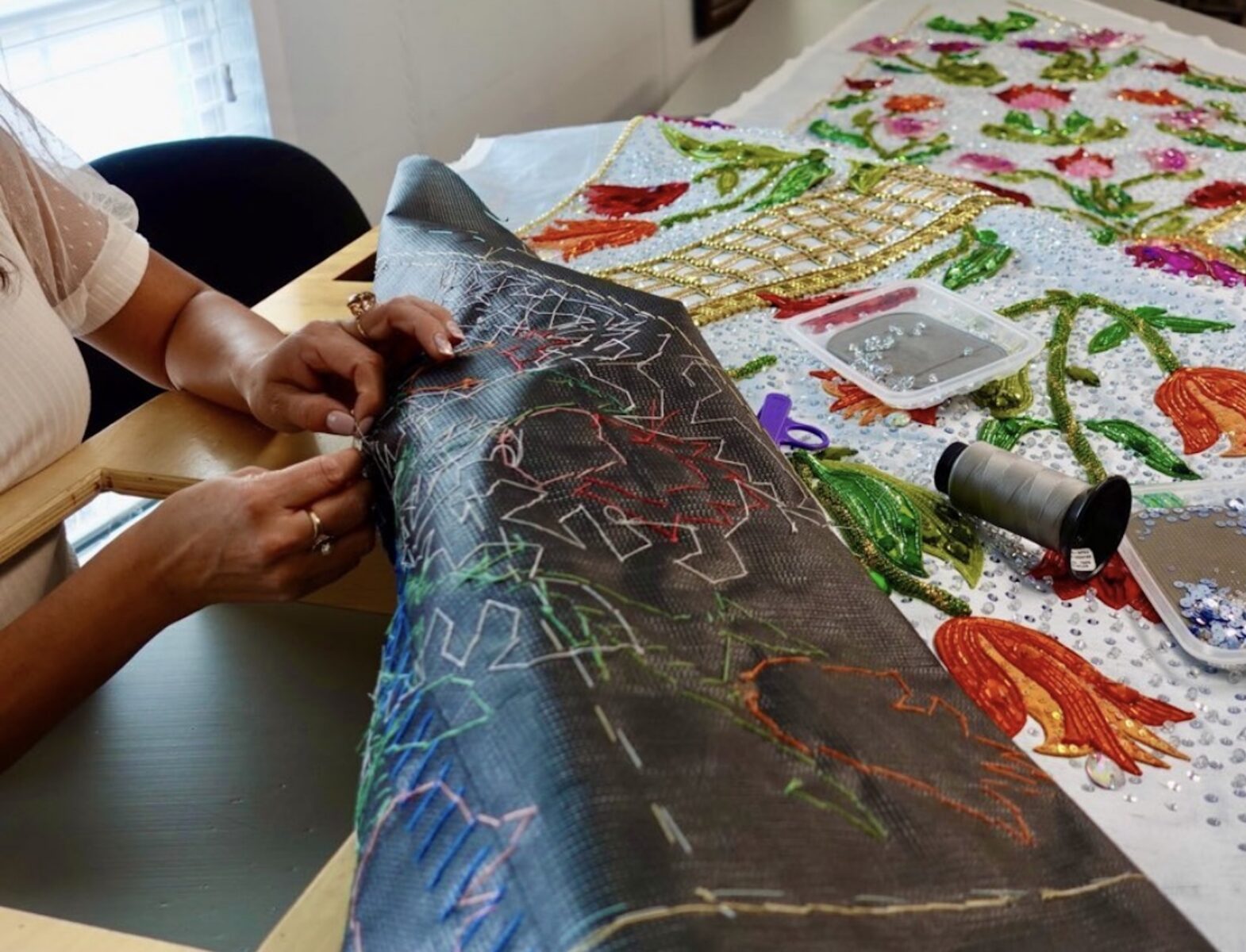
Photo: Bianca Calvert
A train in progress, featuring tulips.
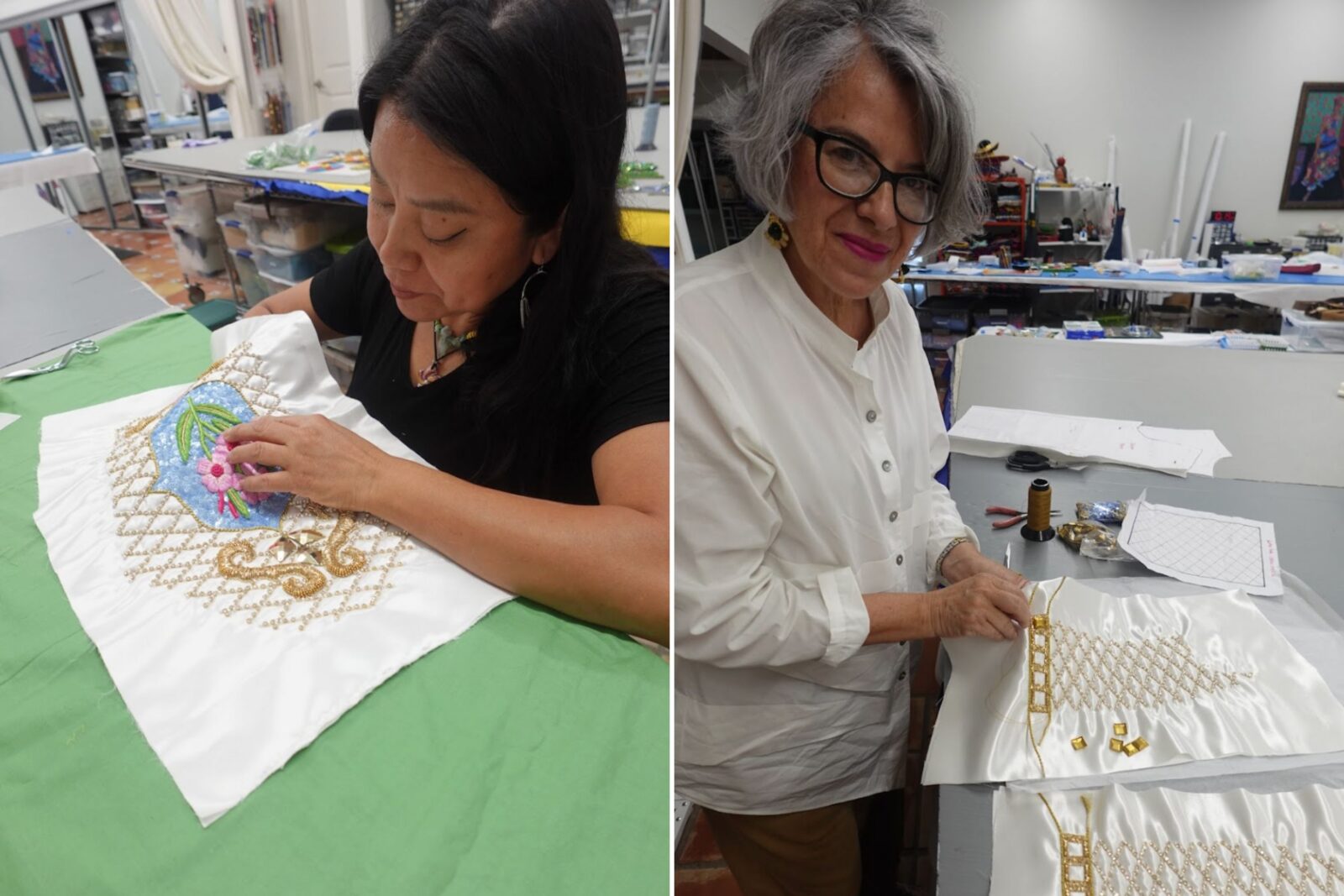
Photo: Bianca Calvert
Master beader Ingrid Pelico (left) and Prida work on a bespoke jacket.
Since 1957, the latter nonprofit has also organized a pageant in April, and volunteers and participants’ families make the gowns, trains, and capes. Richelle Saur, vice president of the Lutheran Coronation Association, appreciates the camaraderie that comes with dressmaking around San Antonio. “The first dress I worked on when I joined the board, I’d go over to the girl’s house,” she says. “Her mom didn’t sew, but she’d invite all her crafty friends over on Fridays and make dinner, and we sat around her table and sewed. We’ve seen young girls who are really shy or timid step into themselves and have confidence; this gives them a chance to shine.”
Shine they do, thanks to the capable hands of San Antonio’s community and the masterful artisans putting care in each stitch. Whitmore recalls one of her most ambitious Fiesta assignments, an Amelia Earhart–themed train covered in the motif of a hybridized hibiscus named for the late aviator. She and her team used steel strapping to shape the flowers, then sewed individual sequins onto fabric to convey the petals’ nuanced shading. “It literally took eight days, eight hours a day, to complete one petal,” she says. “It was magnificent.”
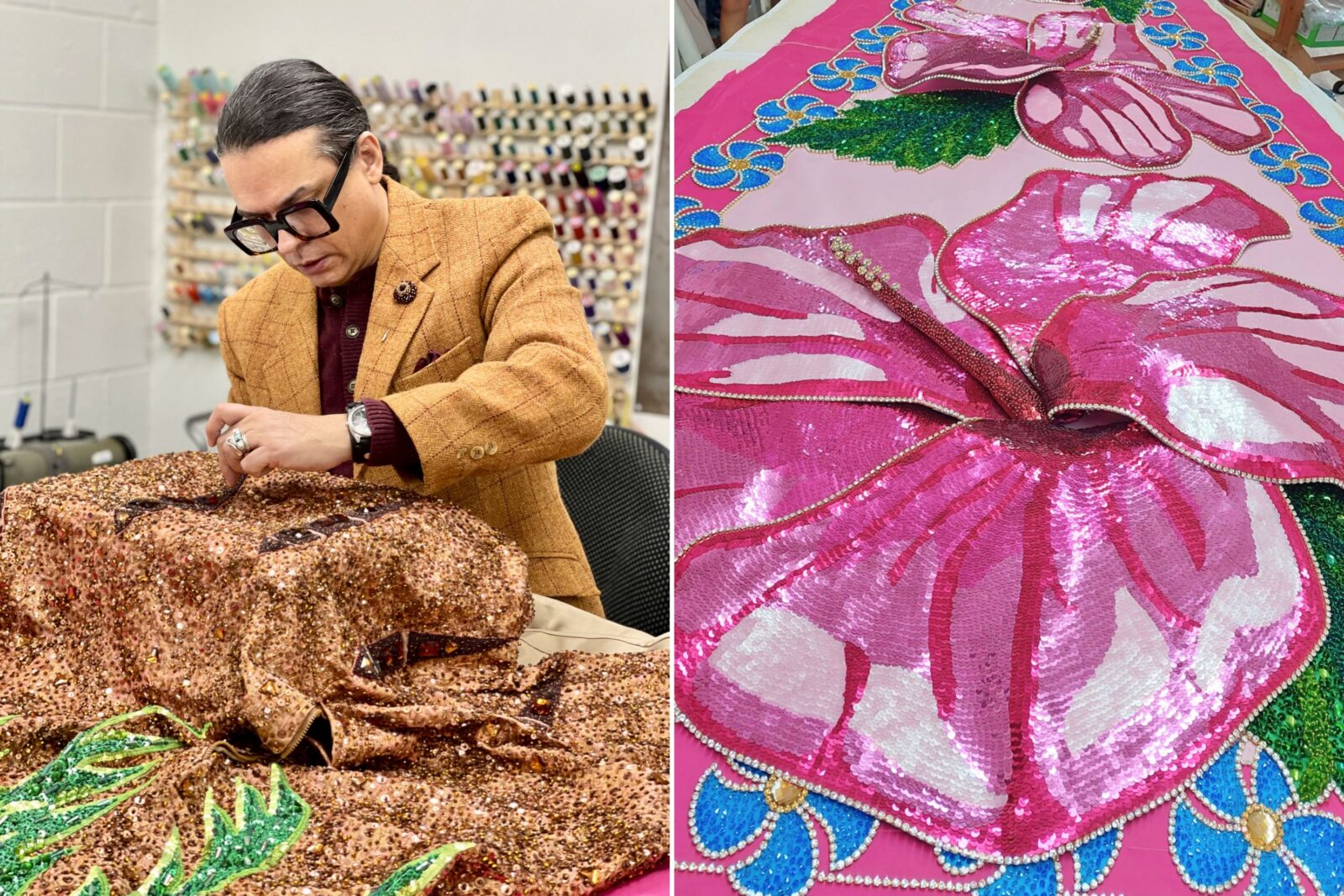
Photo: Bianca Calvert; courtesy of mechiel whitmore
Master tailor John Zuluaga transfers Prida’s intricate designs onto fabric; Whitmore’s hibiscus creation.