

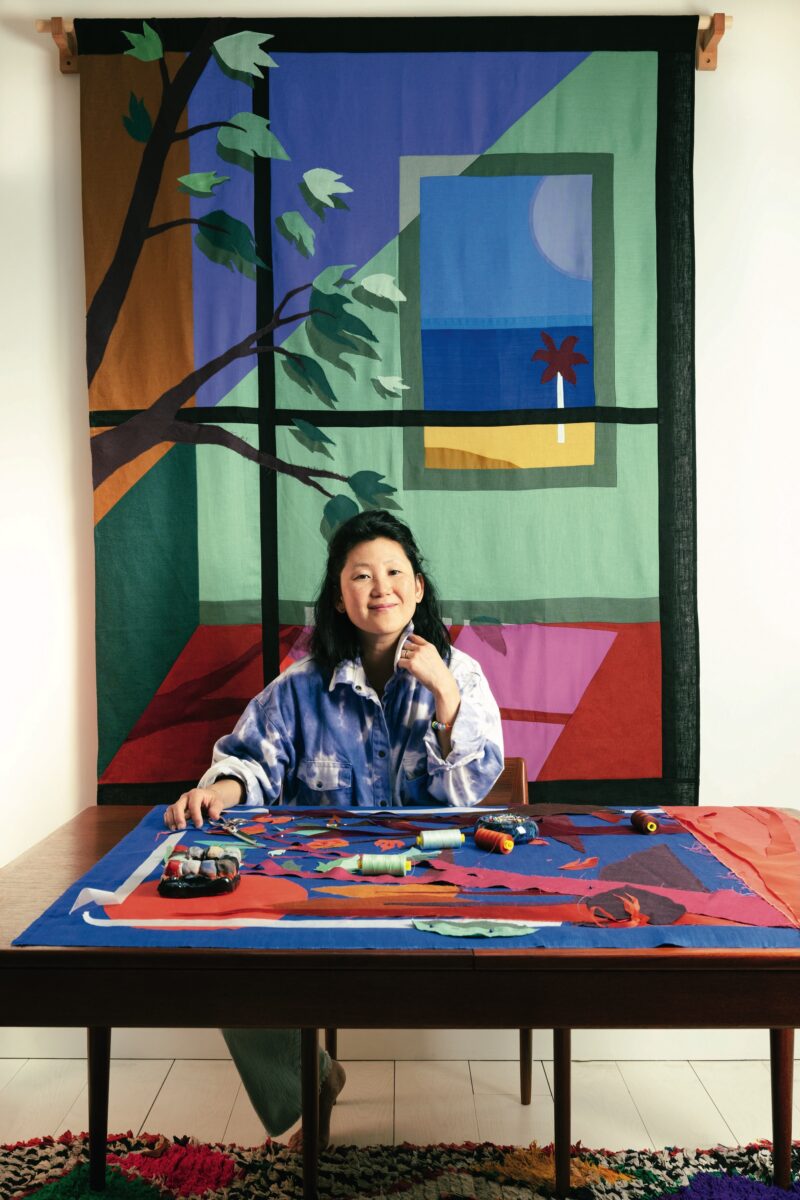
With swatches of organza, linen, and voile in hand, Lisha Bai is on a scavenger hunt for color. In New York City’s Garment District, the Alabama-raised textile artist gathers a tactile palette for the fabric collages she creates depicting color-drenched rooms. She evaluates how light passes through the pieces of burnt tangerine, twilight violet, soft magenta, and a recent favorite, “bonsai green,” then buys all ten yards of that last hue in stock, in case she doesn’t encounter it again.

“I like the hunt for a particular shade, but color is relational,” Bai explains. “I’ll find one color, then look for its counterpart.” When Bai can’t locate the “other mate,” she starts over, zipping between stores for hours or days until she matches up just the right couplet. “The materials themselves often end up guiding the work, so sourcing has shifted from trying to find something exact to staying open to what I come across.”
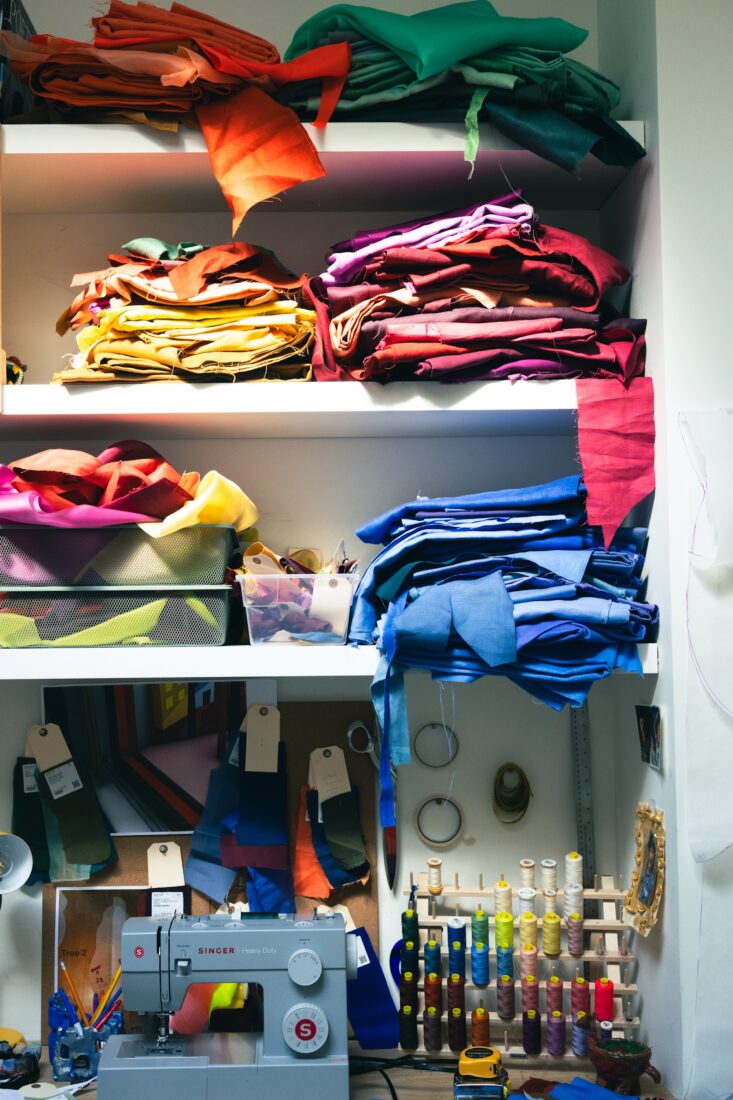
In her Brooklyn home studio, the forty-six-year-old then composes with her palette of fabrics, considering color and translucency as she sews her window-themed works. Her striking pieces have featured in New York solo exhibitions and, this year, a venue that perhaps provides her the largest audience yet: the Madison Avenue Hermès. Bai installed a whimsical, jewel-toned village in the boutique’s window display—a “form of public art,” she says, blending sculpture and textiles.
Even in her two-dimensional pieces, entire worlds unfold on flat surfaces. In the nearly seven-foot-tall Bonsai in the Window, light spills from a square pane into a room of deep iris purple. Bai overlaid three different brown linens on a purple checkered floor to shape a patch of sunlight and the bonsai’s shadow. Through the window of Orange Tree, Bai varied levels of saturation to build depth, the intense sunset orange of a central tree trunk rising in the foreground while a dimmer, cooler brown counterpart fades with atmospheric perspective to the horizon. Alongside the window, gingham curtains in complementary squares of lemon yellow and pale purple hang from a dowel and float inches above the floor.
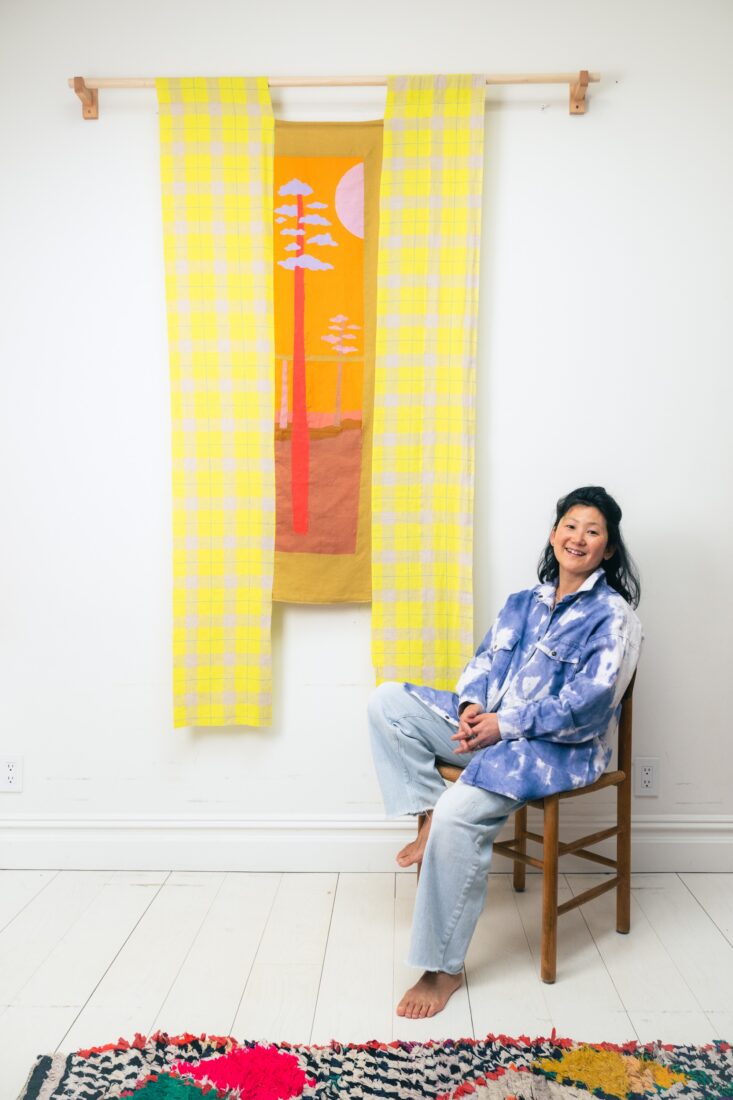
“I’m interested in the tension between illusion and materiality, and in the historical idea of painting as a window onto the world,” Bai explains, nodding to her artwork’s trompe l’oeil effect—its ability to trick the eye and shift between dimensions. Her collages then both represent and become the thing they depict: a kind of stained-glass window that presents a peek into another place, both real and imagined. “I’m somebody who often sees two sides of something, always thinking about different ways one thing can be perceived.”
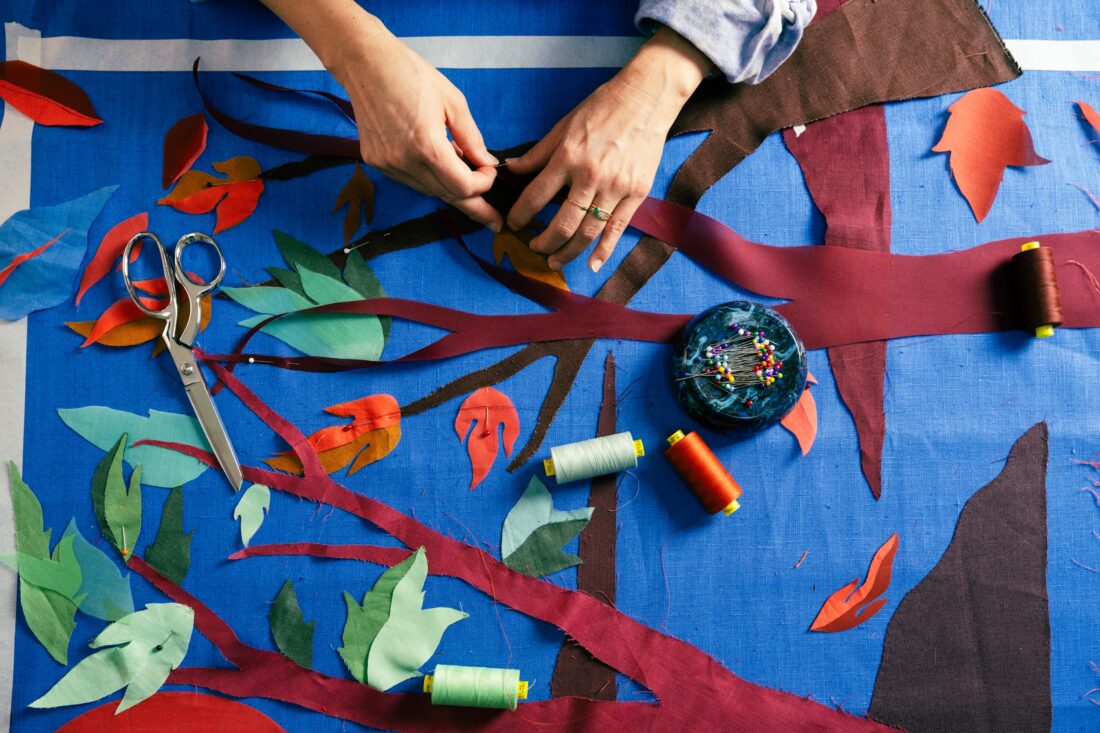
Bai has explored windows in her work for some fifteen years. But before she took sewing lessons with a friend, the professional tailor Erin Proud, and began dreaming up textile collages, she wielded other nontraditional materials, including sand, resin, and puff paint. Growing up in Huntsville, Bai reveled in wandering through craft stores, soaking up quilts in antique shops and friends’ houses, and admiring Korean textiles in her own home, like traditional hanbok dresses. She moved to New York City after college to work at a gallery, and returned there after earning her master’s in printmaking and painting at Yale, but she still looks to her roots for ideas. The energetic composition of repurposed materials in Gee’s Bend quilts and the geometric patchwork designs of Korean bojagi wrapping cloths offer a wellspring of inspiration. “Both traditions have really shaped how I think about what textiles can do.”
Her practice of stitching and joining reflects the cultural overlap in her own identity, too. “‘Home’ has become less about a single place for me, and more about a feeling or a way of holding different parts of myself at once,” Bai says. “It’s something that’s built over time—not fixed. In that sense, it’s a lot like the work, made up of fragments that don’t always fully resolve, but still come together into something whole.”
Gabriela Gomez-Misserian, Garden & Gun’s digital producer, joined the magazine in 2021 after studying English and studio art in Virginia’s Shenandoah Valley. She is an oil painter and gardener, often uniting her interests to write about creatives—whether artists, naturalists, designers, or curators—across the South. Gabriela paints and lives in downtown Charleston with her golden retriever rescue, Clementine.