

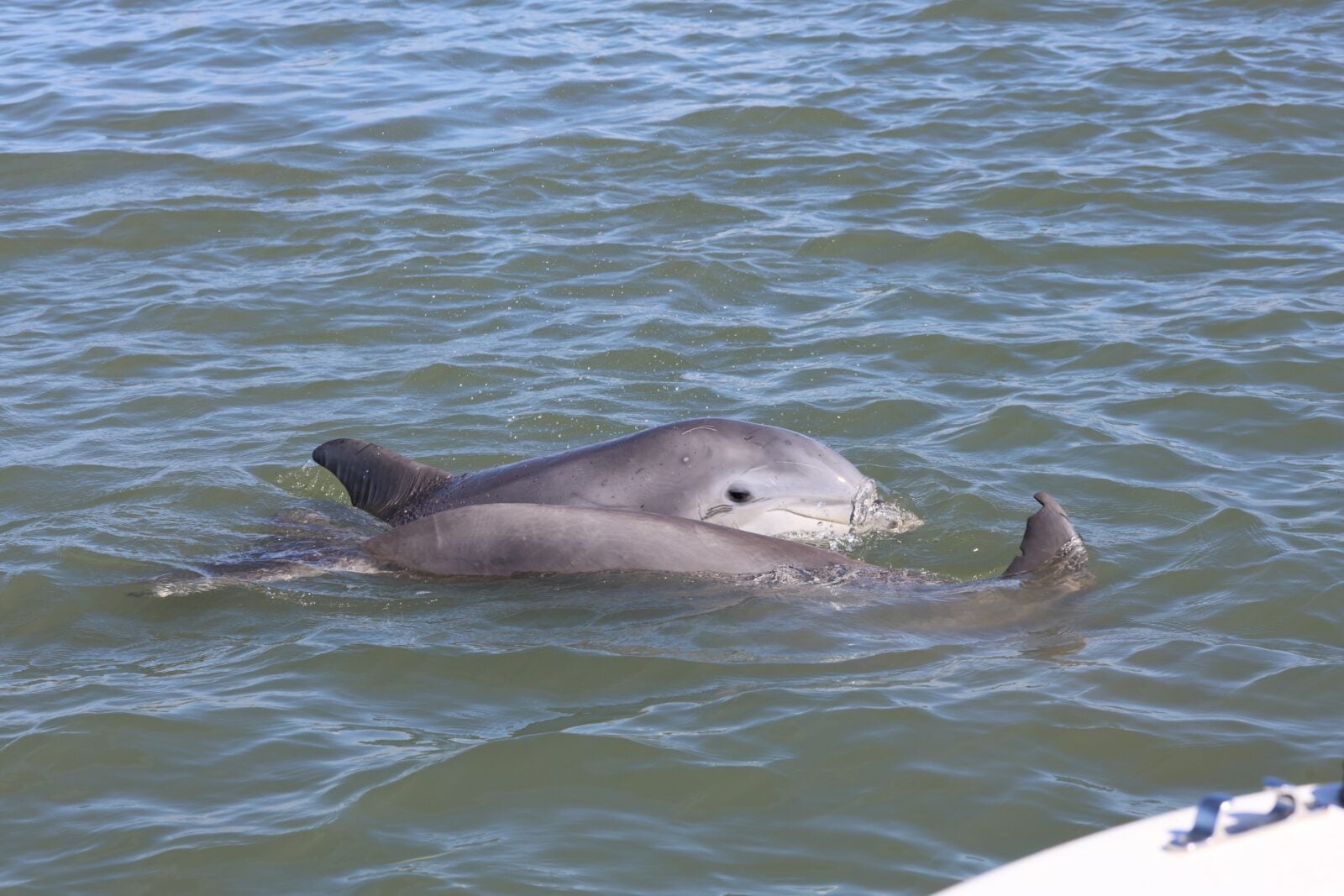
In March of 2025, Lauren Rust, the executive director of the Charleston-based Lowcountry Marine Mammal Network, got a surprising call: There had been a sighting of a tailless baby dolphin swimming alongside its mother in the wild. “I didn’t believe it until I saw a video,” she remembers—but the youngster was indeed tailless and indeed managing to swim. Since then, her network has kept an eye on the dolphin, whom they named Koa, which means “little fighter” in Hawaiian. A few weeks ago, when the mother and calf duo popped up in a buzzing waterfront hub in Charleston called Shem Creek, the disabled dolphin gained local fame.
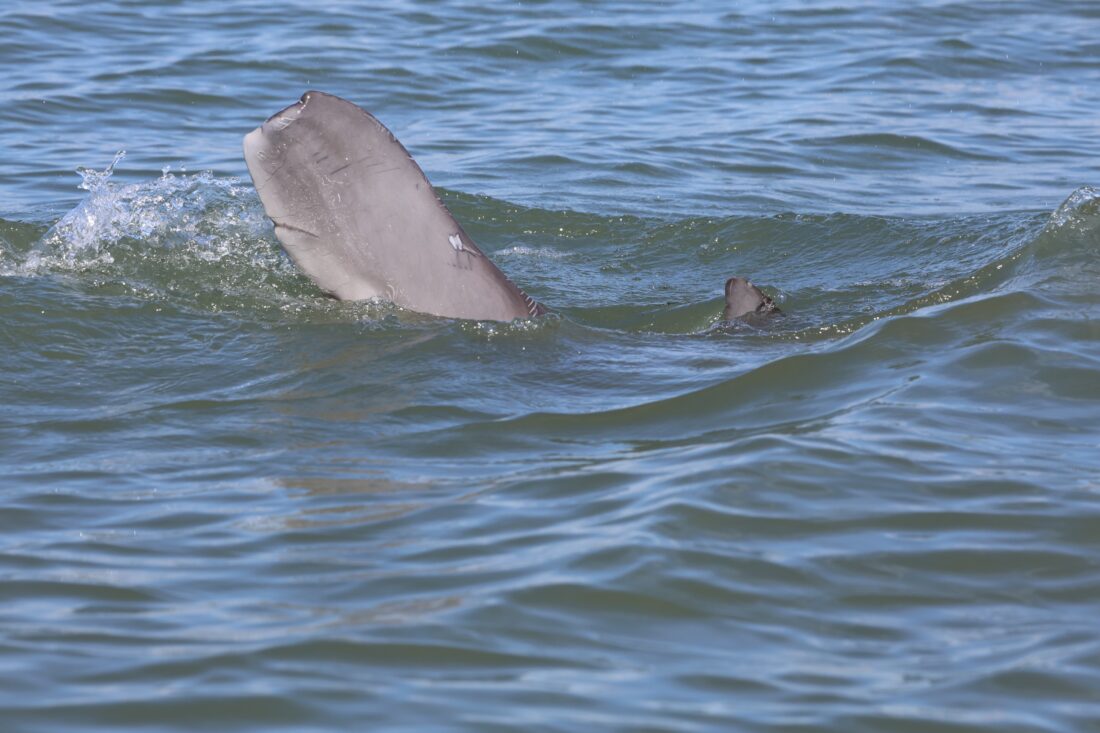
Koa, whom biologists estimate to be between three and five years old, probably wasn’t born without a tail. Rust and her team can’t say for sure what happened, but the defect most likely resulted from an entanglement with a rope or line that slowly amputated the animal’s flukes. To swim, Koa uses the peduncle—the powerful, muscular region located between a dolphin’s dorsal fin and the tail flukes that moves the tail fin up and down. Though Rust has seen Koa swimming independently, the calf often keeps close to its mother. It’s not unusual for young dolphins to stay with their mothers for up to six years, but Koa swims even closer to mom than normal. “I suspect Koa is in the slipstream, or maybe the mother is boosting it a little bit with her tail,” Rust says. The last time she saw the pair, two other dolphins were swimming very close to them, too.
Video: Courtesy of the Lowcountry Marine Mammal Network
Koa isn’t the first recorded instance of a dolphin without a tail. Rust knows of five other cases, including Winter, a rescued bottlenose who lived at the Clearwater Marine Aquarium in Florida and became famous worldwide for using a silicone prosthetic. But Winter did not wear the prosthetic all the time, or even most of the time, and mainly adapted by moving her peduncle left to right as a fish would, rather than up and down as dolphins normally do. Another wild tailless dolphin spotted in Texas, named Dino, also swims in that style.
“We’ve gone out and spent some time with Koa,” Rust says, and though the dolphin is still attempting the up-and-down motion, the team observed it just beginning to discover that it can move side to side. “I suspect over time it will probably move toward a left and right motion, since that seems to be an adaptation for this,” she says. In the meantime, Rust speculates that Koa’s mother may still be nursing to supplement her calf’s diet, since diving down to hunt without a tail likely presents a significant challenge.
Some concerned residents have questioned why Rust and her team don’t capture Koa and put on a prosthetic tail, or why they don’t remove the dolphin from the wild and place it under human care. At least one of those questions has a clear answer. “Dolphins shed their skin multiple times a day, it’s difficult to get a good fit, and a prosthetic would be coming off. Plus, they cause ulcers and other issues,” she explains. “So that’s absolutely not an option when Koa is in the wild.”
As for placing the dolphin in captivity, the biologists feel it’s better to leave the calf living wild and free with its mother, with whom it shares a deep and lasting bond—one possibly made even closer by the disability. For now, they plan to let the story play out without intervention. “It’s a miracle, but Koa is surviving out there,” Rust says. And of course, the Lowcountry Marine Mammal Network will continue to monitor Koa alongside the other members of Charleston’s population of bottlenose dolphins.
“To live without a tail is incredible, and Koa speaks to the resilience and adaptability of dolphins,” she says. “I think this story is going to have a huge impact on our understanding of when we should put an animal into human care, and what disabilities dolphins and other marine mammals can live with and deal with in the wild.”
Lindsey Liles joined Garden & Gun in 2020 after completing a master’s in literature in Scotland and a Fulbright grant in Brazil. The Arkansas native is G&G’s digital reporter, covering all aspects of the South, and she especially enjoys putting her biology background to use by writing about wildlife and conservation. She lives on Johns Island, South Carolina.