

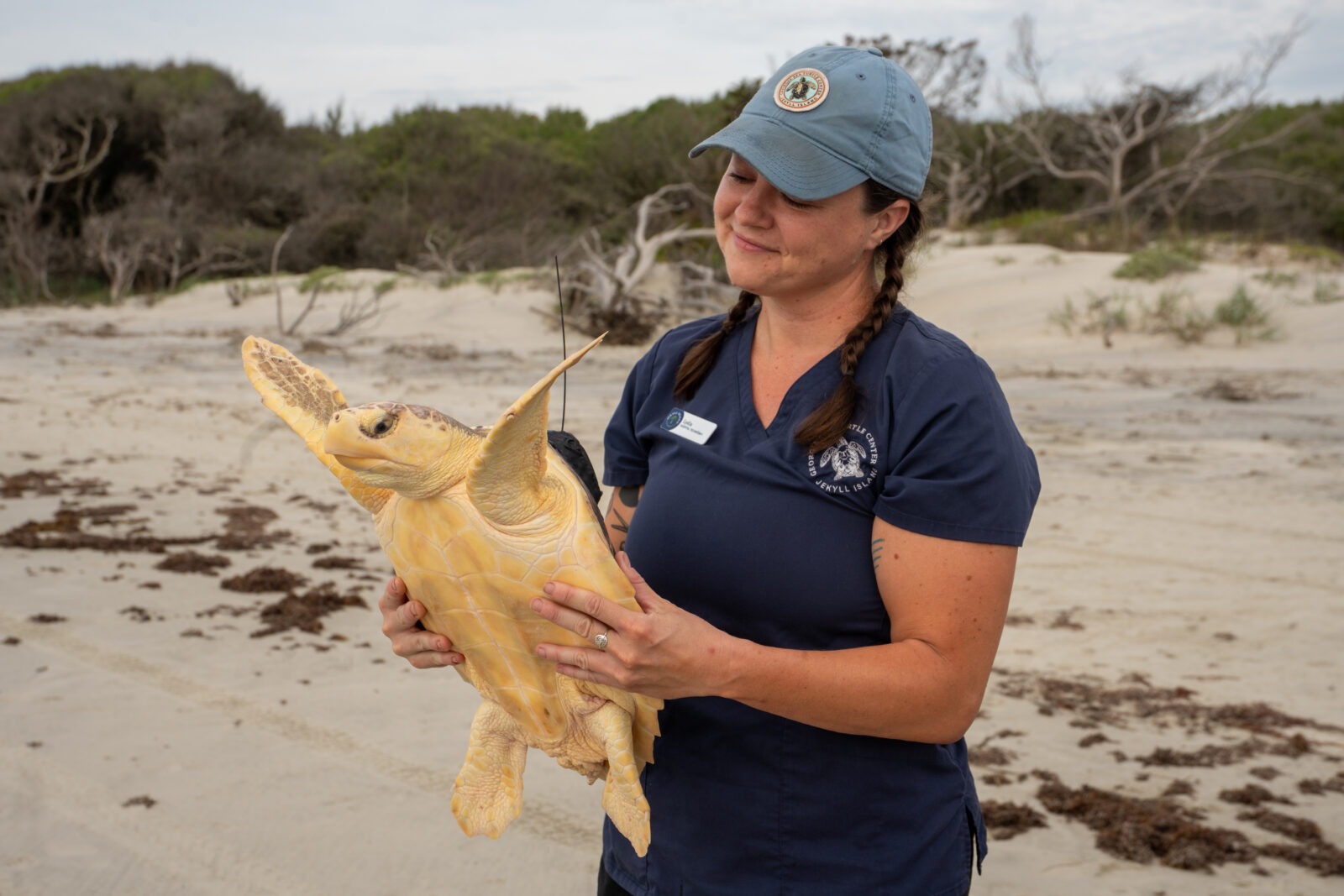
The ocean is full of strange creatures, and yesterday it just reclaimed another one: a young sea turtle with the beak of a Kemp’s ridley, the coloration of a loggerhead, a spunky personality, and a backstory that captured the hearts of millions.

The unique turtle was discovered cold-stunned—the reptilian version of hypothermia, caused by rapidly falling water temperatures—last November on a beach in Brewster, Massachusetts. The New England Aquarium, facing an influx of cold-stunned turtles, asked the Georgia Sea Turtle Center on Jekyll Island to take a group of them: eight Kemp’s ridleys and one juvenile loggerhead. But when the animals arrived, center director Jaynie Gaskin thought there had been a mistake, and that the loggerhead was in fact another Kemp’s ridley, the smallest and rarest sea turtle species in the world.
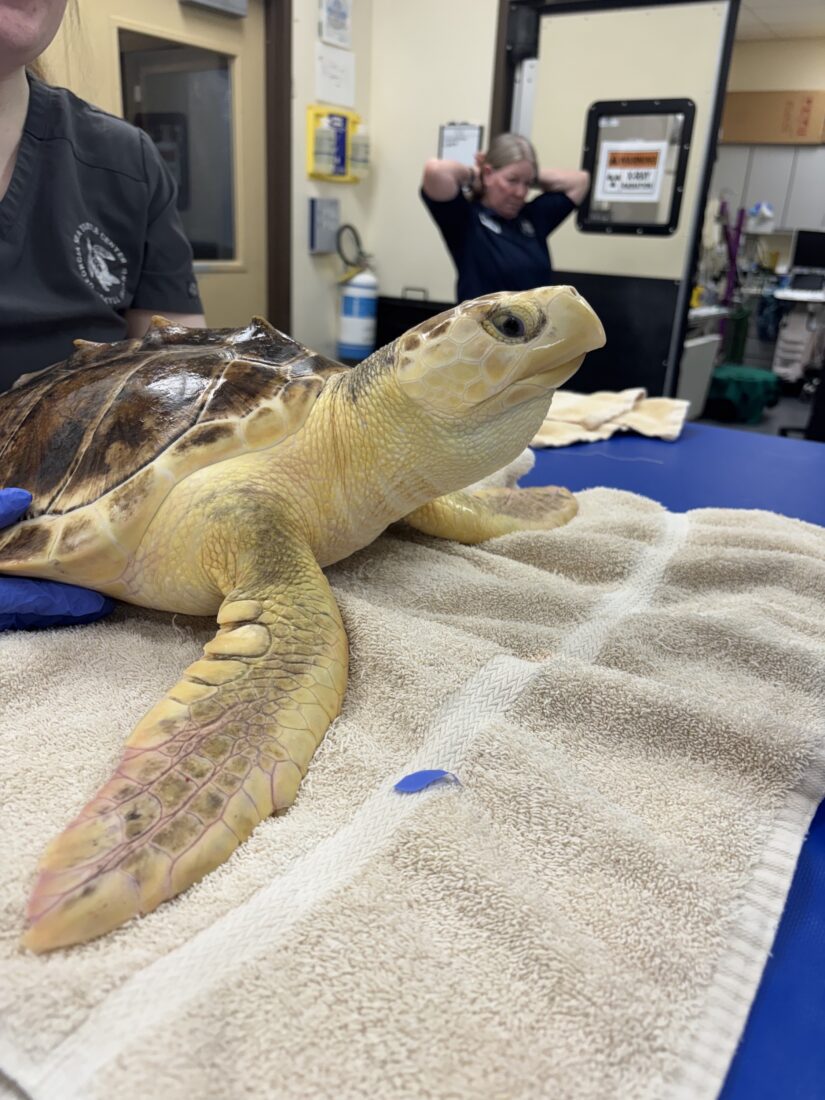
“I’ve been working with sea turtles for fifteen years,” she recalls. “This one really fooled me.” Her double take convinced her of the need for genetic testing. The results solved the mystery: This turtle was a rare first-generation hybrid, with a Kemp’s ridley mother and a loggerhead father.
Hybridization in sea turtles isn’t well documented or well understood. Though some have turned up in the past—like a hybrid of a green sea turtle and a hawksbill in Florida, and a Kemp’s-loggerhead in South Carolina—they are few and far between. “This reminds us that it is happening out there,” Gaskin says. She speculates that hybridization might unfold as a long-term evolutionary strategy for the Kemp’s, which are more specialized and very rare, to expand their nesting sites and diets to adapt to a changing world. “Sea turtles have been swimming on for millions of years,” Gaskin says. “I think they know what they’re doing.”
The Georgia Sea Turtle Center team named the turtle—whose sex won’t be known until it reaches reproductive age in a few decades—Earl Grey and posted the results of its parenthood online, sparking the interest of nearly thirty million people in a viral video.
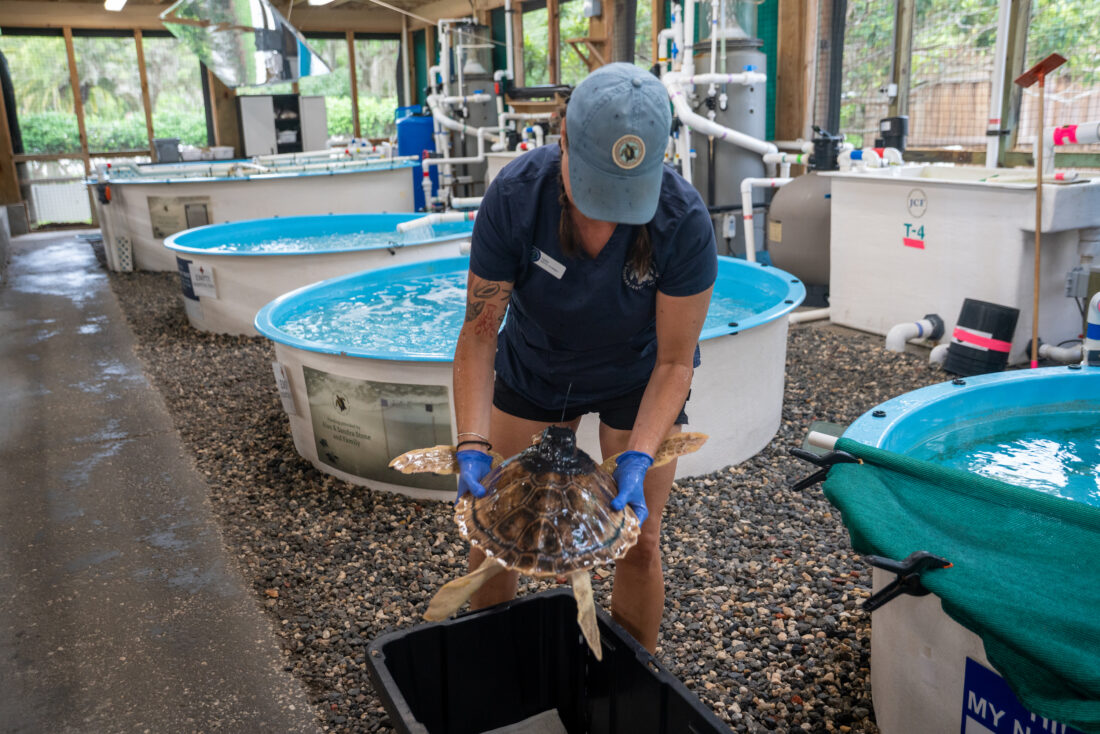
The team also placed the cold-stunned turtle in gradually warming water, treated lesions on its skin, and administered antibiotics for infections incurred while its immune system was lowered. As the turtle’s health improved, a bright personality emerged. “Earl is spunky,” Gaskin says. It likes to play and scratch its shell among obstacles built from PVC pipe, hide in Rubbermaid tubs, and feast on shrimp.
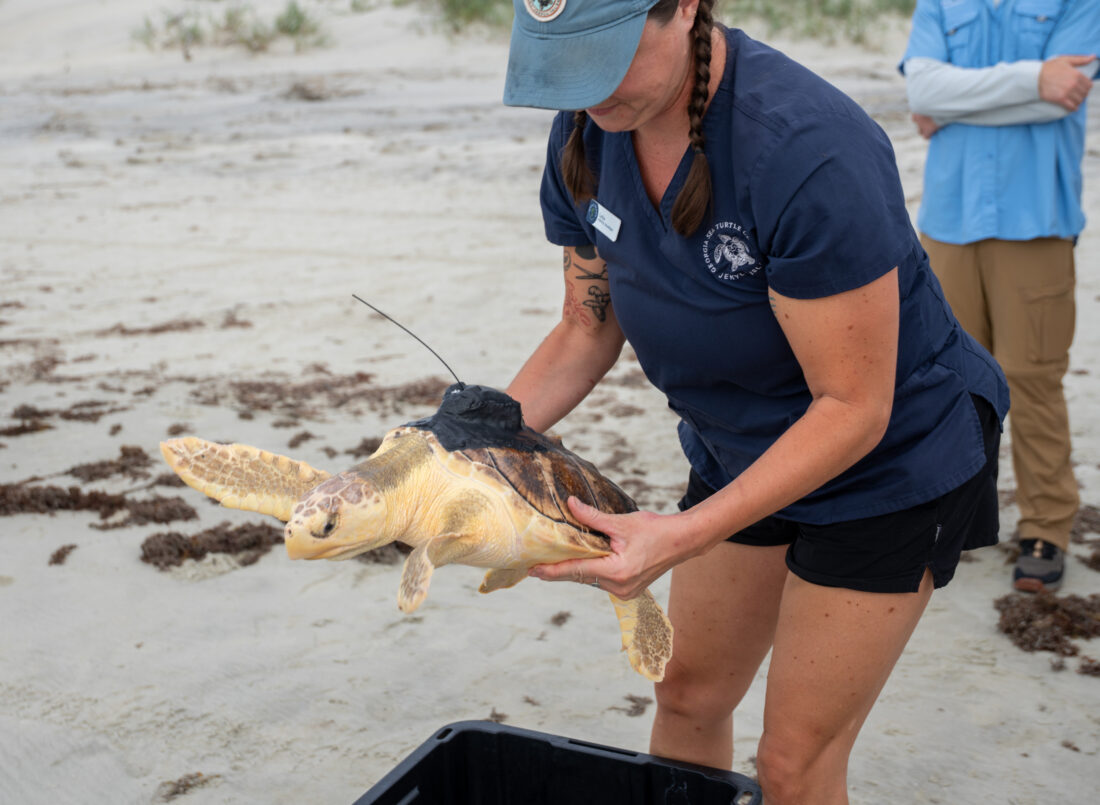
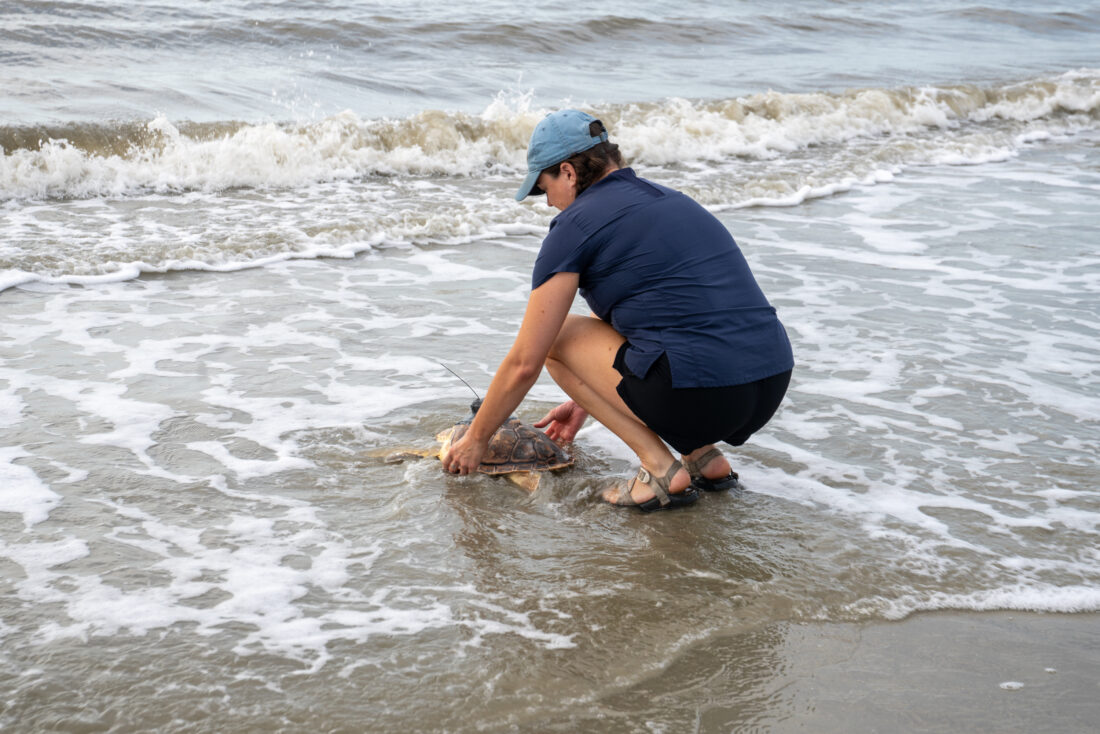
And yesterday evening, after nearly six months of rehab, Earl Grey finally returned home to the Atlantic Ocean. “Of course we’re attached, but it’s always the goal to release that animal so it can live in its home, exhibit normal behaviors, and hopefully come back and contribute to the population that we’re working to save,” Gaskin says. Earl quietly headed out to sea at Ocean View Park on Jekyll Island, equipped with a satellite tracker that will help scientists keep tabs on the reptile and study its behavior.
“A huge question we have is how being a combination of two species will affect Earl Gray’s reproductive behavior as an adult,” Gaskin says. “It’s a reminder that though we have been rehabbing, studying, and conserving sea turtles for many years now, we still have a lot to learn about them, and they can still surprise us.”
Lindsey Liles joined Garden & Gun in 2020 after completing a master’s in literature in Scotland and a Fulbright grant in Brazil. The Arkansas native is G&G’s digital reporter, covering all aspects of the South, and she especially enjoys putting her biology background to use by writing about wildlife and conservation. She lives on Johns Island, South Carolina.