
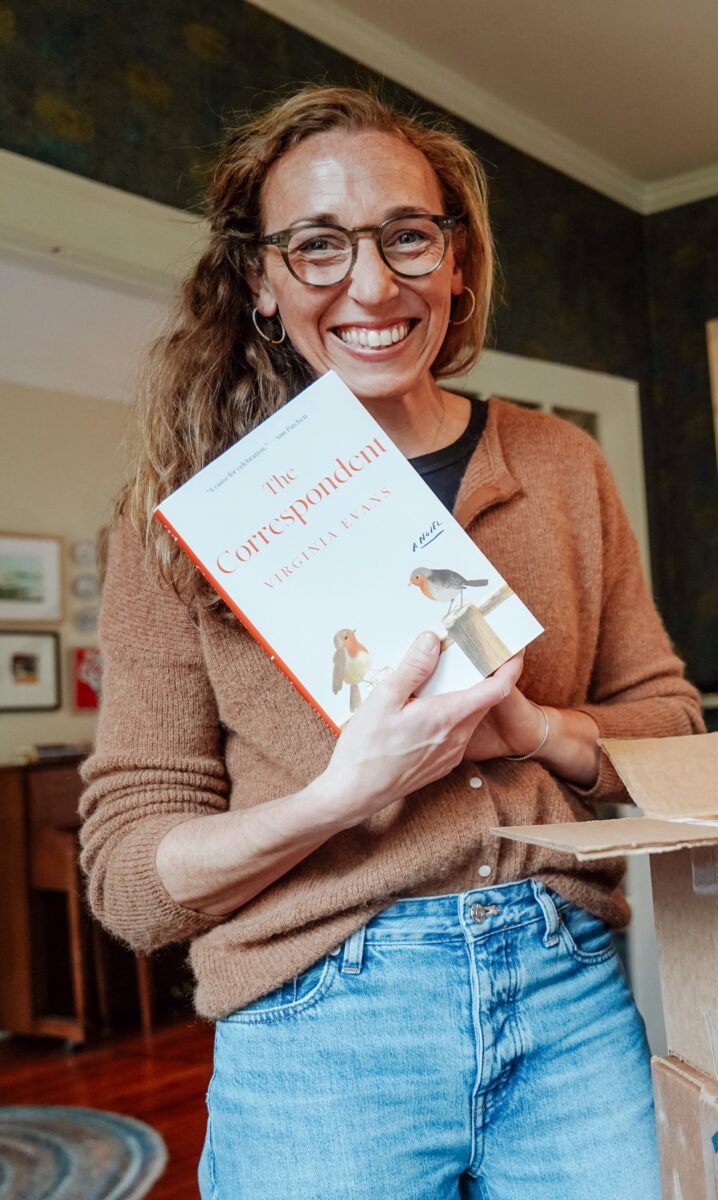
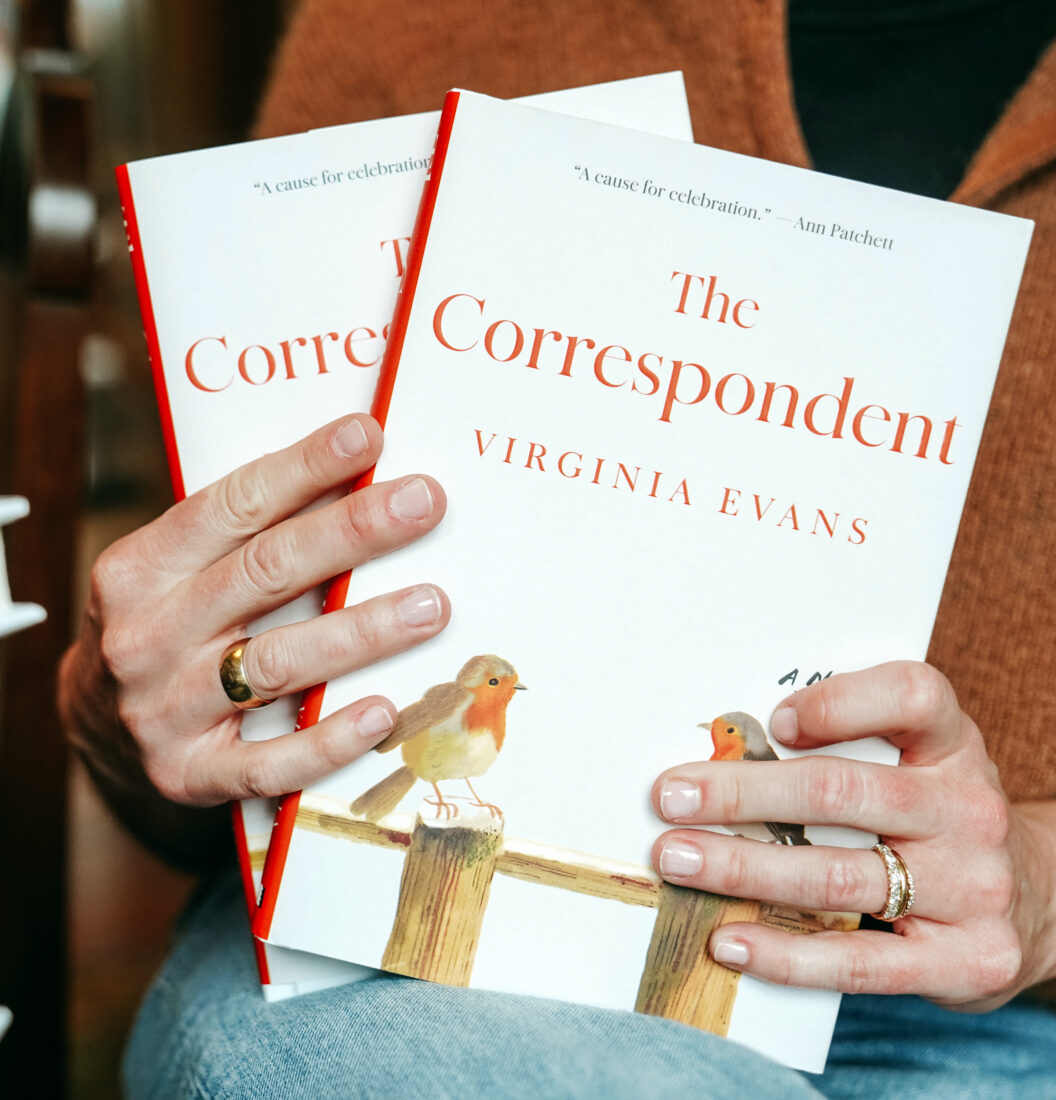
Virginia Evans first began writing novels twenty years ago, but it wasn’t until 2025 that her slow-burn big break arrived, with the publication of her debut work of fiction, The Correspondent.The book became a word-of-mouth phenomenon, growing in popularity among book clubbers until eventually reaching the top of The New York Times Best Seller list.

The epistolary tale, which follows the life and written correspondence of a retired lawyer, Sybil Van Antwerp, was awarded the 2026 PEN/Hemingway prize. This month, it received the 2026 Women’s Prize for Fiction, and a movie adaptation starring Jane Fonda is in the works.
In her official biography, Evans often says she’s “from the East Coast of the United States,” which includes her birth in South Carolina, growing up in Philadelphia and Severna Park, Maryland, and logging much of her childhood on Virginia’s Sandbridge Beach. Evans now lives in Winston-Salem, North Carolina. In November you can catch her at the Charleston Literary Festival in South Carolina. We chatted with the author about the South, the lure of letter writing, and her tenacious journey to publication.
Are there any stereotypes about the South that hold true for you?
It’s muggy and buggy and tough to endure in the summer. In the morning, you walk outside with your coffee and break a sweat. I still can’t get over it—neither can my husband.
What do you think people get wrong about the region?
I think one stereotype of Southern hospitality is that there’s a falseness to it, but my experience is it’s not a falseness. It’s a genuine desire to share your home. There’s a warmth to people here. They’re friendly and approachable and you don’t feel like you’re on your back foot; you’re brought in, which I love.
Were you always a big reader and writer?
Reading was a huge part of my life starting at a very young age. I still identify as a reader, maybe even more than a writer. I took creative writing classes as an undergraduate at James Madison University, and that’s when I first knew I wanted to write.
What were some of your favorite books and writers growing up?
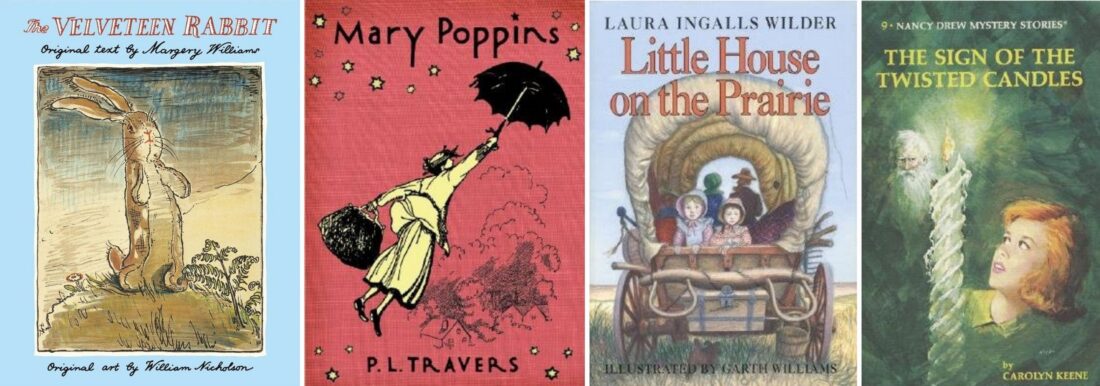
My sister and I were obsessed with The Velveteen Rabbit, Mary Poppins, the Little House series, and I read all the Nancy Drew mysteries. I started reading classics in high school. Steinbeck stands out to me. As for Southern writers, I remember being morbidly appalled and fascinated by Flannery O’Connor’s short stories.
Is there anything you’ve been reading or watching lately that’s inspired you?
I just finished the first season of Broadchurch, which has been replaying in my head. I also recently reread While I Was Gone by Sue Miller, which is one of my favorites of her older books. I was just at Parnassus Books and picked up John of John by Douglas Stuart. I loved Shuggie Bain. It changed my life and taught me so much. I felt educated in a way I didn’t know I needed to be educated about people, families, alcoholism, and poverty. I sobbed at the end.
You wrote seven books before The Correspondent marked your publishing debut. What kept you going?
I heard an interview [the golfer] Rory McIlroy gave about the pursuit of greatness where somebody asked him ‘Do champions have something? What’s the common denominator?’ And he said, ‘I think it’s belief. Actually, it’s not belief, it’s knowing…knowing you’re going to win.’ When he said that, I knew that’s what I had, this knowing. What motivated me for years was getting to the end and thinking, I must do better. It’s still how my brain works.
What’s been the most moving part of this monumental year for you?
Receiving positive feedback from writers I respect and hearing from women who like Sybil are in their seventies and eighties. I’m in my thirties, and when the book came out, I thought, I hope I did right by these women. Sometimes you feel like books can either be commercially successful or part of the literary landscape, and it’s shocking to feel The Correspondent is doing both at the same time. I feel really grateful.
Reading The Correspondent felt like working a puzzle. Did writing it feel the same for you?
I love that it reads like a puzzle. I feel that too, though it didn’t feel that way when I was writing. Instead, it felt like building railroad tracks while you’re on the train, adding as you go. I wrote the letters in order and built Sybil’s story from age seventy-three to the end.
What is it about the epistolary style that drew you?
There’s just something about it that’s so intimate, that first-person familiarity, like when you’re writing a letter…it’s a warm reading experience. I’d read 84, Charing Cross Road by Helene Hanff right before I started writing this book, and that kicked me into wanting to try the format. When you’re reading a book like that, there’s all this visual stimulation on the page with the date and address, the sign-off, the white spaces, and paragraphs…I think it’s good for our brains.
What’s your own experience with letter writing?
I’ve always been a letter writer and have written to lots of people I don’t know, like authors, artists, and public figures. Not everybody writes back, and you can’t always find an address, but I think often people do. There’s something magical about letters and the postal system, and the original connectivity of the world. Now, we have connectivity all the time, but that wasn’t true until recently. When I think about history, so many stories hinged on letters written and received, letters found and saved. So much of what we know about the human experience is through them.
Like Sybil, do you have any rituals when you write? What does your creative process look like?
Not with letters, but I do with books. I write in the morning with my coffee and glass of water. I turn off the internet and get quiet. The dog sits outside my study. I always have one notebook for the book I’m writing and whatever other paraphernalia I need. My writing method is very militaristic. For years, it was seven days a week. Now it’s six. There’s this quote above my desk by Isak Dinesen that says, ‘Write a little every day without hope, without despair,’ and that’s become my mentality. Once I feel I’ve made progress, that can be enough; I have a lot of grace for myself now.
Have you saved any special correspondences?
I have a letter framed in my study from the author Maggie O’Farrell. I love everything she’s ever written. I wrote to her, and she wrote me back, which was special. I also have a note framed from Ann Patchett. There’s a book called The Happiness of Getting It Down Right that’s composed of letters between the Irish writer Frank O’Connor, and his U.S. editor, Bill Maxwell. Their letters go back and forth over the duration of their relationship, which was editor to writer, but also friend to friend. I cherish this book, and bought a copy for my editor, Amy Einhorn, as a gift. It’s out of print, but when I opened the used copy I found for her, this paper fell out, and it was a handwritten note that said, With The Regards of Harriet O’Donovan Sheehy, who was Frank O’Connor’s wife. She had taken this book of her husband’s, included a handwritten note, and sent it to whoever then sold it to me. I have it framed and it’s something I really cherish…it’s evidence of a person who lived.
Garden & Gun has affiliate partnerships and may receive a portion of sales when a reader clicks to buy a product. All products are independently selected by the G&G editorial team.