

Arts & Culture
Welcome to the World of the $400,000 Vintage Land Rover
“If Land Rover’s original engineers were building a classic Defender now, I believe this is exactly what it would be,” says Paul Potratz of Helderburg
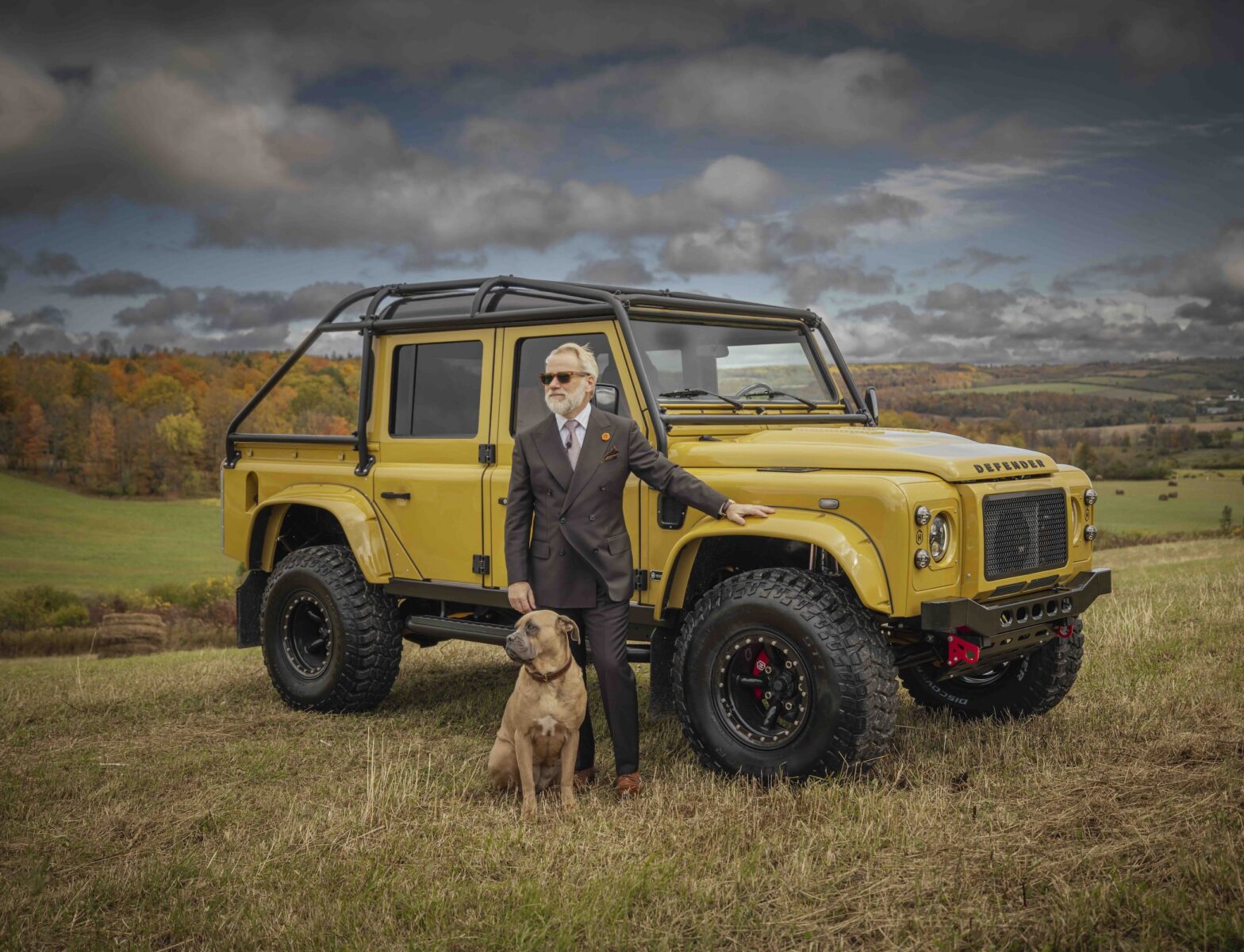
Photo: Courtesy of Helderburg
Paul Potratz with his dog, Lucy, and a renovated Defender.
When Paul Potratz was growing up in Memphis, he worked at his father’s car repair shop while daydreaming of becoming a fashion designer. Following a career during which he built and sold three companies, he has merged those youthful influences into a very specific endeavor—re-engineering and upgrading old Land Rover Defenders for clients who love the classic, British-made workhorses as much as he does. Performed in England and on Potratz’s estate in Northwest Arkansas, the work is bespoke from grill to taillights—suspension, brakes, exhaust, and lush interiors of Scottish leather, German wool, and exotic hardwoods. End results, identified by the venture’s Helderburg badging, are intended to be driven daily despite price tags of $288,000 to $406,000. We asked Potratz to engage his parking brake long enough to elaborate.

When did you first become enamored with Defenders?
My dad repaired difficult vehicles at his shop—Peugeots, Alfa Romeos, and of course, Land Rovers. There was a British guy who pulled up in his Defender, and I was in love. I still love them because they remind me of my dad, who died at a pretty young age. It’s the feeling more than anything else. I can go for a drive in a Defender and feel like I’m on an expedition.
Beyond Defenders, is it safe to say you’re somewhat of an Anglophile?
Definitely. My boots, my pens, my suits, my shotguns—if it’s made in England, it excites me, especially if it’s handmade. My wife laughs, because she says, “Can you not just get deodorant at the grocery store?” I like this British brand, Floris, so what I do is have my Helderburg partner in England put a couple of sticks in a Defender before shipping it over here. Sometimes they make it through, and sometimes there must be some good-smelling customs officers.
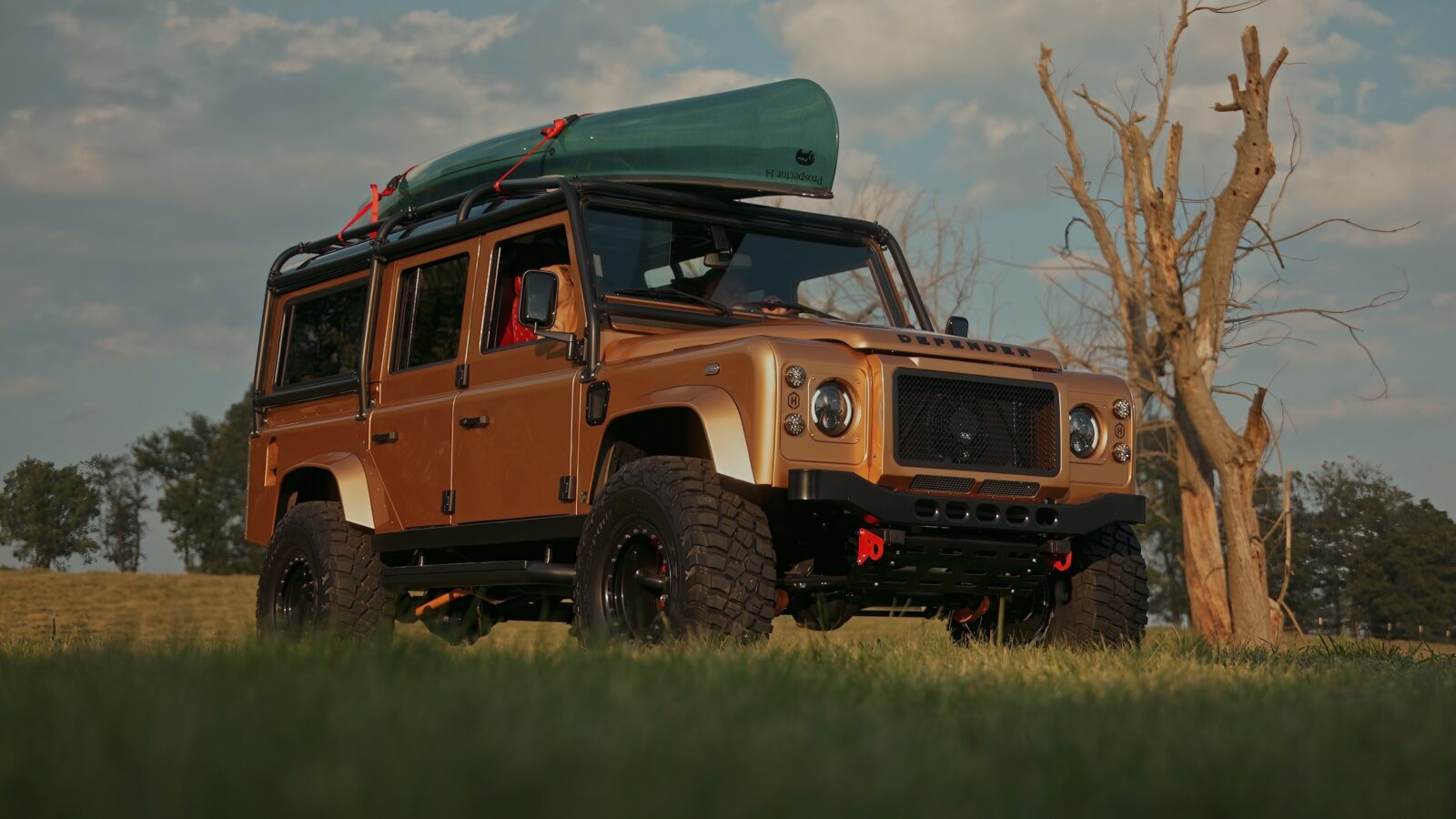
Photo: courtesy of Helderburg
Potratz tailors each re-engineered Defender to a commissioned buyer.
How did you end up basing Helderburg in the Arkansas Ozarks?
I was in New York, up in the Catskills, trying to do the test miles in seven feet of snow a year. Then I did a vintage car rally in the Ozarks and fell in love with the roads and the people. So when my wife saw the listing for the Haldenmere estate two years ago, we flew in and made an offer on the spot. Even though the house is somewhat new, it’s very European, limestone and lots of craftsmanship. There’s plenty of room for clients to visit. I have a test course on the property, and trout fishing and sporting clays. We have fun and drink wine and smoke cigars.
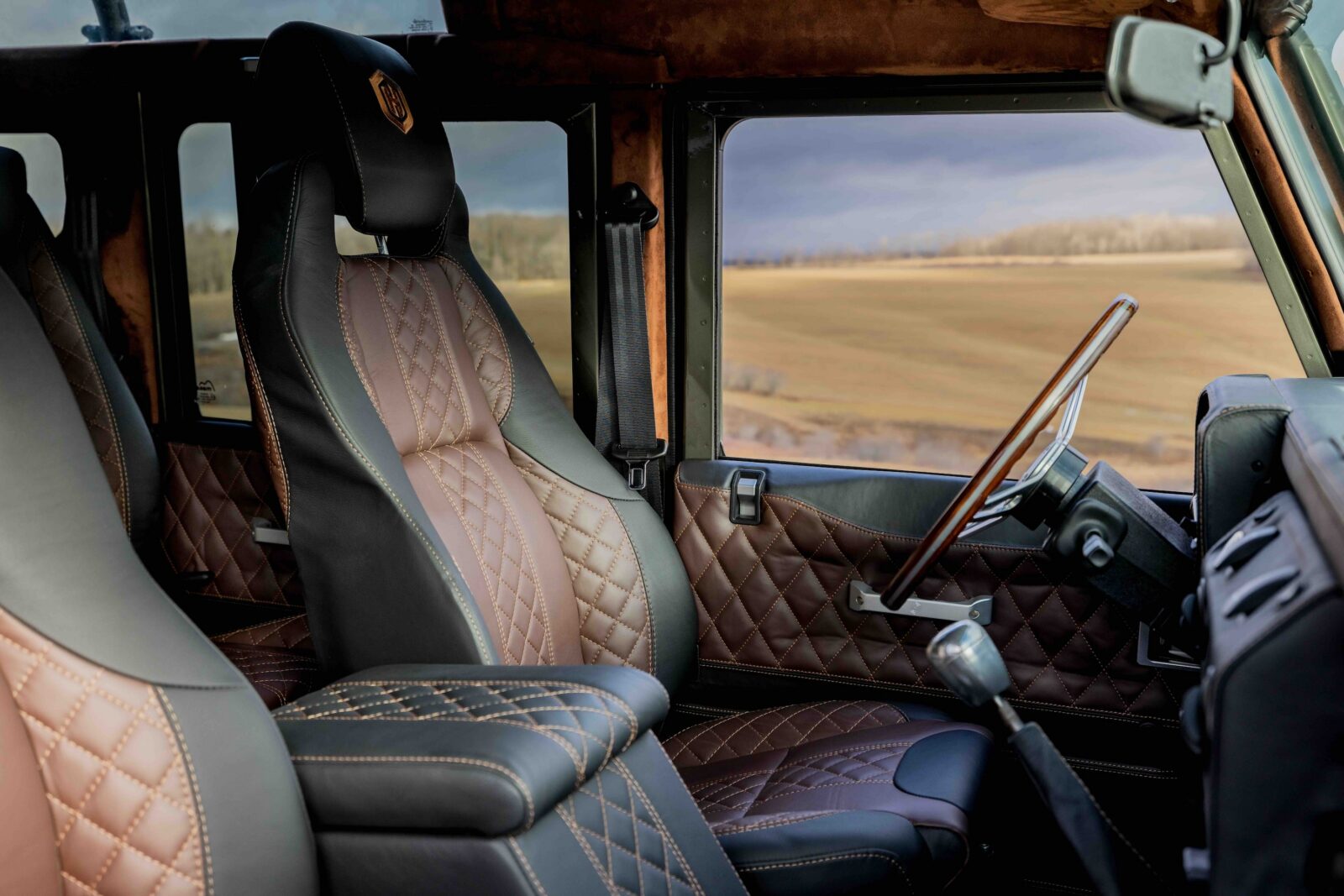
Photo: courtesy of Helderburg
Cabins feature Scottish leather, German wool, and exotic hardwoods.
How does the process begin?
I find and buy old Defenders, mostly on farms and wineries in countries where the steering wheel was already placed on the left side—Italy, Poland, France, Germany. Then they go to the property in England, where at any time I have forty or fifty sitting in the hedgerow. When we start someone’s custom build, we pick one up with a forklift and bring it to the shop and strip it down. After the mechanical work takes place there, they get shipped here to Arkansas for fine design elements—audio systems, ambience lighting, mahogany and teak flooring. And then I’ll put three hundred, five hundred miles on, which is my excuse to drive a lot of different Defenders. A number of clients also come here to pick them up.
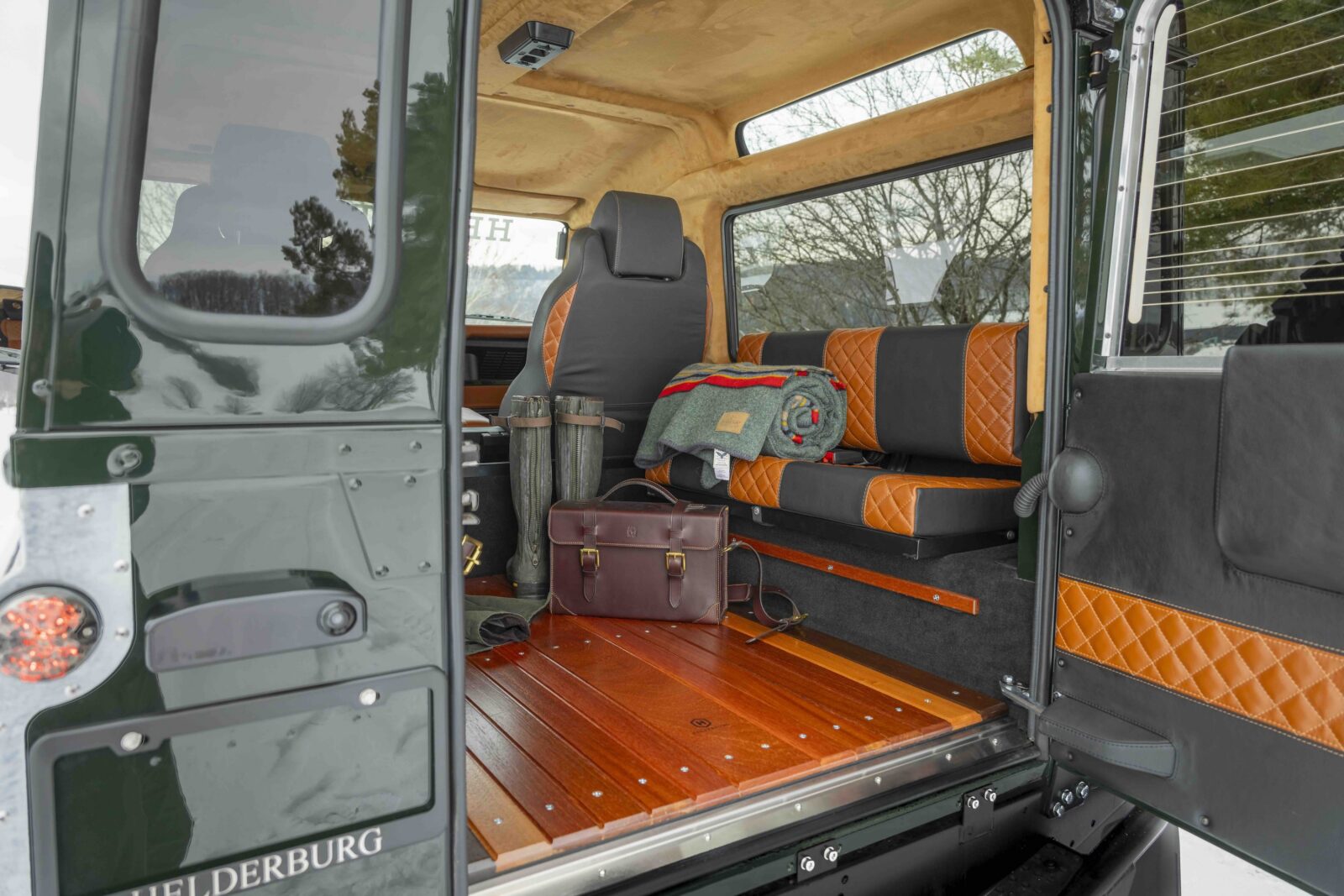
Photo: courtesy of Helderburg
A look inside the cargo area.
Is the rather large dog in some of your photos allowed in your own Defender?
That’s Lucy, our six-year-old Cane Corso. She’s with me all the time, sitting in the passenger seat. She loves to swim, and jumps back in the truck all muddy. There’s a reason it took me two years to find the right tannery for the cabin leather. It’s boot thickness with a high-wax content and can withstand a 130-pound Cane Corso climbing all over the interior.
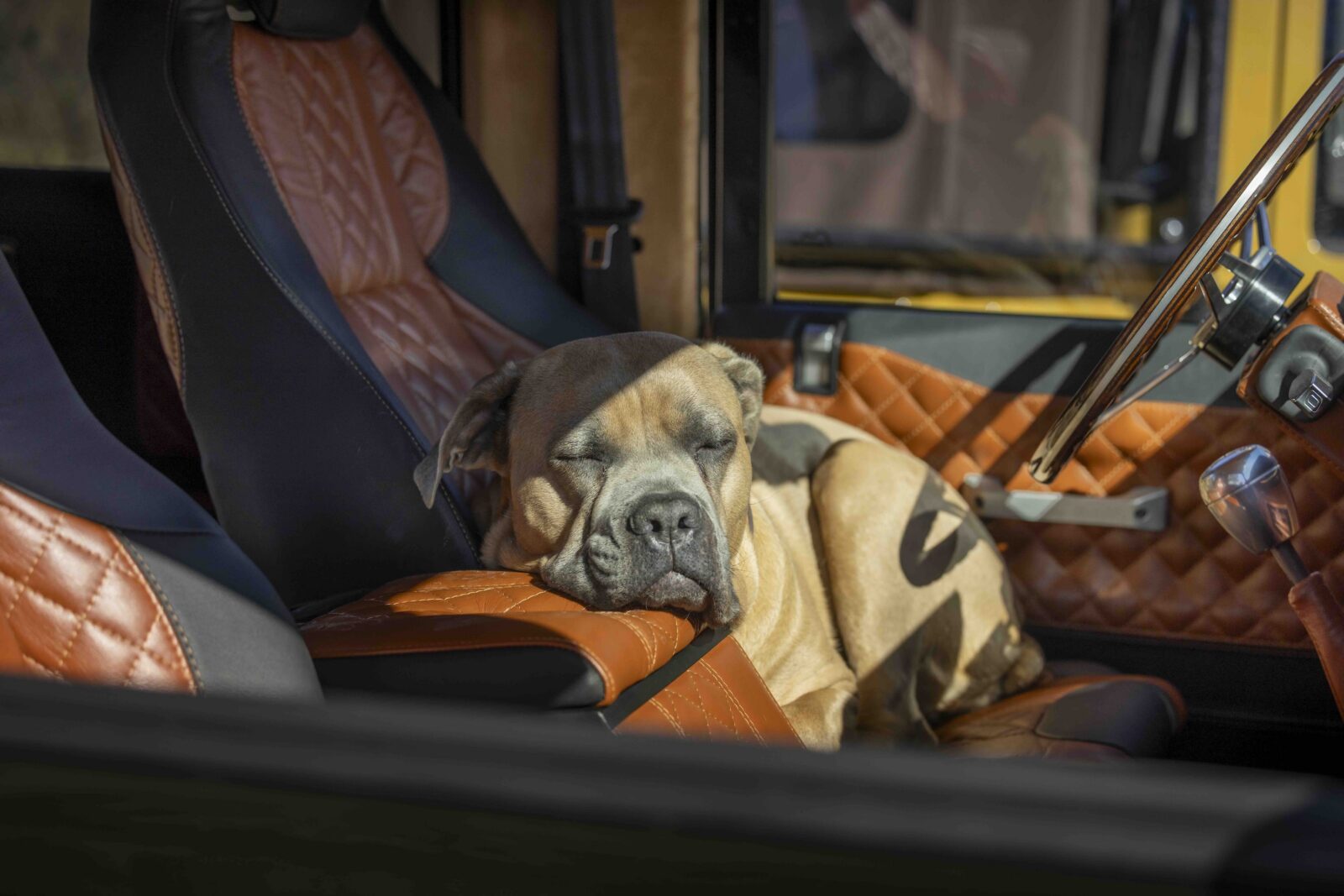
Photo: courtesy of Helderburg
Potratz’s Cane Corso, Lucy.
What distinguishes Helderburg re-engineering from a restoration or a resto-mod?
A resto-mod can be a reproduction chassis and body made in China and an American-made V8 on a pallet. You can guess the quality. And we do much more than a restoration. What I’m doing is keeping it authentic—we give all our clients an official certificate of registry from the British government that shows their vehicle is an original, classic Land Rover Defender built in Britain. We use the original engine blocks and re-engineer the crankshafts, connecting rods, cylinder heads, radiators, braking systems, headlights, suspensions, analog gauges, even glass, with upgraded components we manufacture ourselves. Defenders were originally built as farm trucks. We’re modernizing them so they have the performance and smooth suspensions to be driven in the United States and take long vacations or drive up the side of a mountain like a brand new Mercedes G-wagon. If Land Rover’s original engineers were building a classic Defender now, I believe this is exactly what it would be.
What kind of man hours are we talking about?
Well over three thousand hours. The paint job alone is four hundred hours.
Are they daily drivers or family heirlooms?
Both. I have a client in Memphis, a surgeon, who drives to the hospital every day. And I have an older client in Vermont who already has made a succession plan—his two sons will split time driving his Defender. It’s rare that a Helderburg gets resold outside the family.
Steve Russell is a Garden & Gun contributing editor who also has written for Men’s Journal, Life, Rolling Stone, and Playboy. Born in Mississippi and raised in Tennessee, he resided in New Orleans and New York City before settling down in Charlottesville, Virginia, because it’s far enough south that biscuits are an expected component of a good breakfast.