
Food & Drink
How Ope Amosu Turned Homesickness into a Houston Restaurant Sensation
The entrepreneur and accidental chef set out to create a West African Chipotle. Then ChòpnBlọk took on a life of its own.
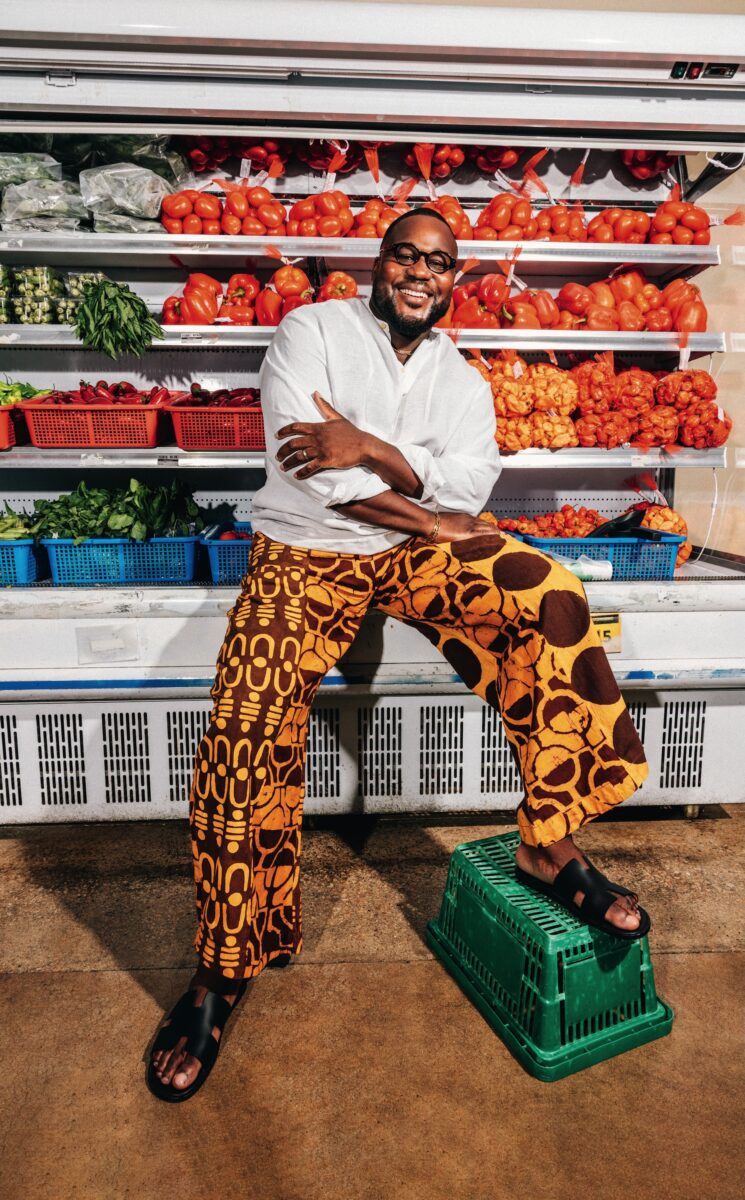
Photo: Arturo Olmos
Here’s something important to know about Houston, or at least about its restaurant community: Every time I have come to Houston to meet a chef, that chef has insisted on taking me to somebody else’s restaurant first.
Ope Amosu keeps the streak alive.
I’m in Space City to visit ChòpnBlọk, the West African restaurant Amosu opened in the Montrose neighborhood in late 2024. The thirty-nine-year-old chef and entrepreneur intended that restaurant—along with its first iteration, a stall in a nearby food hall—to be a cornerstone of what he envisioned as a fast-casual empire, something like a West African Chipotle. Instead, ChòpnBlọk has taken on a life of its own, evolving into a full-service restaurant that is not only the hottest scene in Houston, but one of the most exciting places to eat anywhere in the country. At the same time, it fulfills Amosu’s original goals: to provide a taste of home to the immigrants from Nigeria and neighboring countries who make up an increasingly large segment of the city’s famously diverse population, and to introduce the rest of us to a suite of flavors and techniques that, at their best, taste like the future of American food.
But before we even step inside the Montrose space, with its stylish mash-up of African and Black Houstonian motifs, Amosu insists we first climb into his electric Hummer and drive west, beyond the Beltway, to a strip mall that contains a Nigerian restaurant named Famous Princess African Kitchen. With us is his wife and business partner, Janelle. The three of us are seated at a table long enough for six, and soon an avalanche of dishes covers every inch. There are bowls of lava-red Asake, a stew of beef in palm oil with red peppers, and its virid twin, Ayamase, which glows with green peppers, Scotch bonnets, and habaneros. Snow-white fufu, the doughlike starch made from pounded yam, comes encased in banana leaves beside a pyramid of hot puff puff, golf-ball-sized orbs of fried dough that glisten like golden reptile eggs. A furiously bubbling clay pot contains seafood okra stew while another holds hunks of goat in a sauce made from ground ogbono seeds; both are known as “draw” soups for the way they stretch mucilaginously when spooned. It is a stunning mix of colors, tastes, smells, and textures. The motto of Famous Princess African Kitchen is DELICIOUS FOOD TO FIT YOUR LIFESTYLES, and I am very close to changing my lifestyle to live closer to Famous Princess African Kitchen.
The restaurant’s namesake princess is its owner and chef, Oluwaseyi Johnson, who arrived in Houston twelve years ago from Ondo State in southwestern Nigeria, joining what has been a hub for Nigerian immigration since the oil boom of the 1970s and ’80s. An estimated 150,000 Nigerian Americans now reside in the Houston metro area, the largest such community in the United States. This includes a growing, more assimilated first generation who, like waves of immigrant groups before them, are now introducing their culture to a wider public.
Amosu fits squarely in this category. He was born in London, but his Nigerian-born parents soon relocated to Texas. While they found their footing, Amosu and his brother lived with their grandmother in Lagos, receiving an early cultural immersion, and finally arrived in Texas when Ope was four.
Their first stop was in the Houston suburb of Alief, a onetime farming community that, by the 1980s, had transformed into a teeming hodgepodge of immigrants from all over the world. Soon, the family moved to the more affluent Sugar Land, but Ope grew up with a foot in each world—attending private school in West Houston but surrounded by the language, music, and flavors of Nigeria. At school, he talked about Nickelodeon and ate pizza and hot dogs; at home, it was jollof rice and Nollywood movies. In both places, he says, he would look around and think, “There is no way anyone around me is experiencing what I’m experiencing.”
An avid athlete, Amosu followed a scholarship to study business and play defensive end at Truman State University, in northeastern Missouri. (A torn-up knee ended his football career before his junior year.)
“Does it ever snow here?” he asked on his recruiting visit. “Never!” his hosts assured him.
“They were being sarcastic, but they didn’t know I was being serious,” Amosu says. “It snowed all the time.”
If West Houston felt far from his native Nigerian culture, Missouri was another galaxy. The distance gave him a dawning sense of what he’d left behind, and what he’d taken for granted: “I realized I’m not hearing the language that I heard every day. I’m not getting access to the food I used to get at home. And I wanted that stuff.” The drive from school to Houston took fifteen hours, but Amosu found himself making the trip whenever possible. By the time he graduated, in 2010, his parents had relocated back to Lagos, but Amosu returned to Houston, first to work for a wholesale signage company and then to get an MBA from Rice University. After all, food was one thing, but business was business.
The world is full of chefs who have been drawn to the professional kitchen for romantic reasons—love of cooking, the adrenaline of the line, a personal story to tell—but who lack the skill or interest in the vital financial nuts and bolts of actually running a successful restaurant. Amosu is the opposite. To him restaurants were first and foremost an exercise in entrepreneurship. Even when he landed on the idea for what would become ChòpnBlọk, he had every intention of staying as far outside the kitchen as possible.
After graduating from Rice, Amosu went to work on the executive track of General Electric’s oil and gas business. For much of the next ten years, he was based in Philadelphia but spent extended time traveling, including overseas in Latin America, Southeast Asia, and Dubai. Wherever he went, the story was the same: Finding the Nigerian flavors of his youth meant going on an expedition. “If I wanted to tap into my culture, I’d have to commit to driving an hour and a half to two hours,” he says. This became the simple problem he was determined to solve. At the same time, back in Philly, he began to notice a trend that would help define the next decades of American dining: the rise of quality fast-casual restaurants like Shake Shack, Sweetgreen, and Honeygrow.
All of this culminated in a single moment. Amosu was at an energy conference in Houston. Driving to the site, he passed an Italian fast-casual restaurant, and something clicked. “You know what?” he thought. “I’m going to open the first modern West African–inspired food and beverage concept!”
At the conference, he could barely pay attention, sitting in back and frantically researching his idea. Afterward, he rushed to his hotel, breathless to reveal his great inspiration to Janelle, herself a graduate of the business program at Truman State, where they met.
“Dude,” she said, once he’d spelled it out. “That is a terrible idea.”
Looking back now, Janelle says, “He’s the dreamer. I’m more like, ‘Here are all the steps that have to happen to make this dream a reality.’ Working at a restaurant is hard labor! Why would we want to do that?”
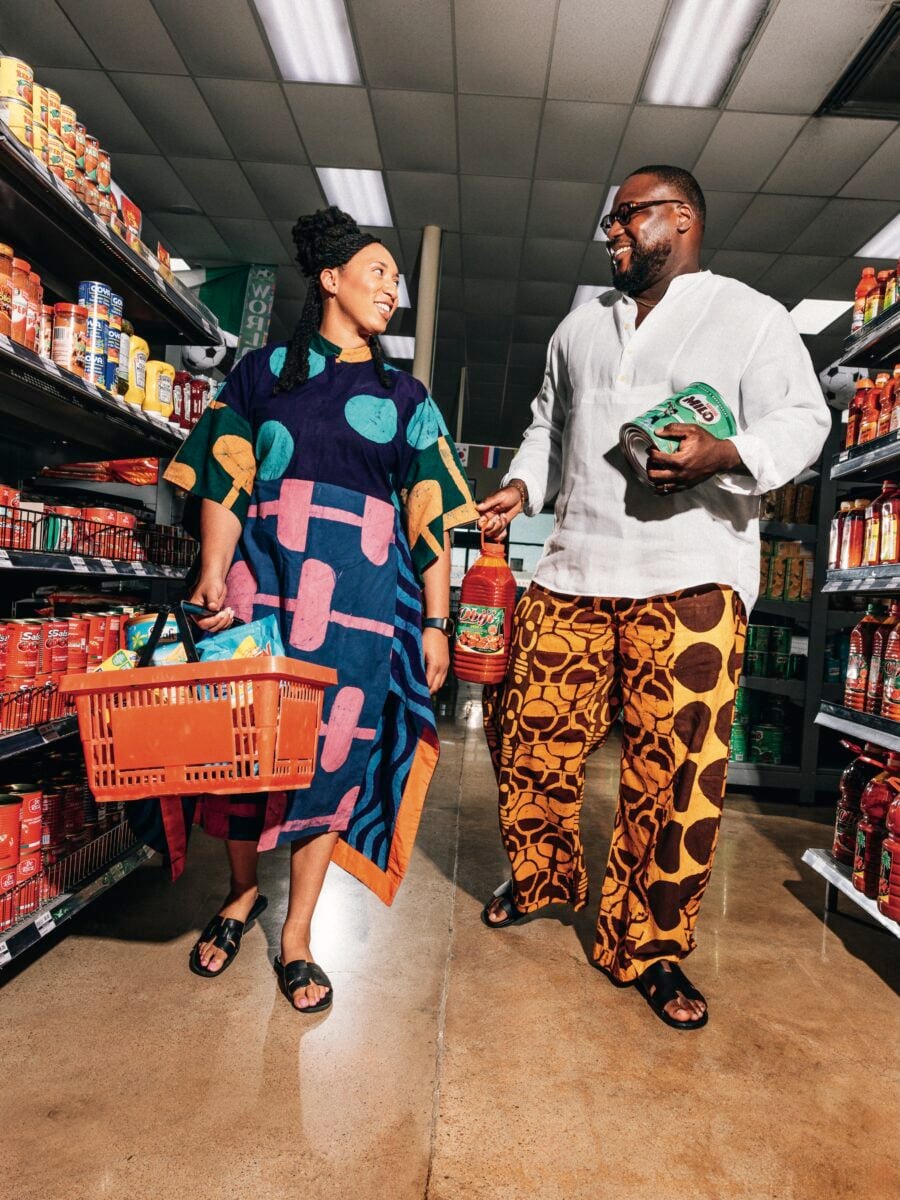
But Amosu couldn’t shake his idea. He put together a business plan. Then he decided that what he really needed to do was get some practical experience, “boots on the ground,” as he puts it. So, in addition to his day job, the oil executive got himself hired part-time as a prep cook and dishwasher at Chipotle.
The fast-casual Mexican behemoth was more down-market than what Amosu envisioned for his own company, but he wanted to study its systems and processes. Plus, it had one more appeal: “My restaurant was going to run off of rice, so I needed a restaurant that moves a lot of rice.”
When Janelle heard this latest plan, she breathed a sigh of relief. This is going to suck so badly, she thought, that he will definitely quit.
But Amosu stayed, for four long months, soaking up whatever he could. Janelle was impressed. Though she still saw a major problem. Finally, she sat her husband down. “What you haven’t realized is that the reason you have to drive out of your way to go get your food is that you don’t know how to make it,” she told him. “You don’t have a product. So, I think you should stop talking to me about this until you come up with one.”
And that was when Ope Amosu realized he would have to become a chef.
He wasn’t starting exactly from scratch. On all those long quests to West African outposts from Philly to Dubai, he had lingered in kitchens, asking questions and taking notes. It was a given, he thought, that the best Nigerian food was cooked in home kitchens, so he began reaching out to the best Nigerian home cooks he knew. He explored deep rabbit holes on TikTok and Instagram, where an explosion of young chefs and content creators—many from Africa—were inventing new fusions of Western and traditional dishes. Mostly, he served Janelle a lot of jollof rice, working on his method until one night the verdict came down.
“Hey, this actually bangs,” she said. “This is legit.”
That is not to say that Amosu the businessman had left the building. Like many restaurateurs, he decided to stage a series of pop-ups as a kind of focus group for his new project. Unlike most of them, Amosu turned his into actual focus groups.
Amosu called his pop-ups, which began in 2018, Chop’d & Stewd, an homage to Houston’s native genre of hip-hop called “chopped and screwed.” He found a space in his cousin’s apartment complex. Then he set out to find ten guests who represented different segments of his imagined market—a detailed taxonomy that included such categories as ’Ericans (a term for Nigerians, like him, who grew up in the United States); OGs (immigrants like his parents); and Cultural Millennials, who might consider adventurous dining part of their identities. He asked each invitee to bring a date. The deal was that diners paid a forty-dollar deposit to hold their seat but then got the money back in cash when they arrived. In return, Amosu required them to fill out two comment cards: one about the food, the other giving detailed information about their dining habits.
“This was around the time that Black Panther came out,” Amosu says. “So I would have them cross their arms, like they were in Wakanda, and say this oath about how they promised to be engaged, be honest, and tell me why they felt the way they felt.”
As word of the dinners spread, Chop’d & Stewd, soon to be modified to ChòpnBlọk, quickly became one of Houston’s hottest dining tickets. By November 2021, when Amosu opened his 670-square-foot stall at the Post food hall, in Houston’s old Post Office, it had already become a cult hit.
It should be said that nothing about ChòpnBlọk feels like a restaurant that has been focus-grouped. It presents as the totally organic product of its creator and community. But before I can learn that for myself, Amosu has a couple more restaurants he wants me to see.
One morning, we meet in the Rice Village neighborhood at an outpost of a small chain called Local Foods. Houston-born, with two branches now in Austin, Local Foods is Amosu’s fast-casual North Star. He admired the chain’s quality, the deliberateness with which owner Benjy Levit had expanded, Levit’s constant tinkering with the menu, and the way each space looked unique but felt tied together by a clear aesthetic. He went so far, he says, as to stalk Levit from store to store, hoping for an encounter.
“I wouldn’t call it stalking,” says Levit, now Amosu’s friend, who met us for breakfast. “I’d call it manifesting.”
Back in the Hummer, we head to the cluster of neighborhoods and towns in Southwest Houston that still make up the center of Nigerian life in the city. Joining us this time is Zainob Amao, a textile artist and filmmaker who grew up between Houston and Nigeria and serves as ChòpnBlọk’s creative director. As we cross into Southwest, the two lose themselves in a reverie of nostalgia, pointing out landmarks: houses they lived in; grocery stores where they picked up phone cards for their parents; the Burger King where one of Amosu’s uncles worked as a manager, able to secure jobs for newly arriving family; houses that held secret takeout Nigerian restaurants. Somewhere in the twist of suburban streets, Amosu says, lives a lady who will sell him palm oil when he’s in a pinch.
“Is that your auntie?” Amao asks.
“She’s everybody’s auntie!” Amosu says. “We call her Mama Garage.”
In case this doesn’t already feel like a small village, we stop in to a Senegalese restaurant called Dakar Street Food for a snack of meat pies, hibiscus tea, and a whole red snapper burnished with yassa marinade, the classic Senegalese sauce of alliums and Dijon mustard. Sitting next to us, looking very surprised, is one of ChòpnBlọk’s valet parkers.
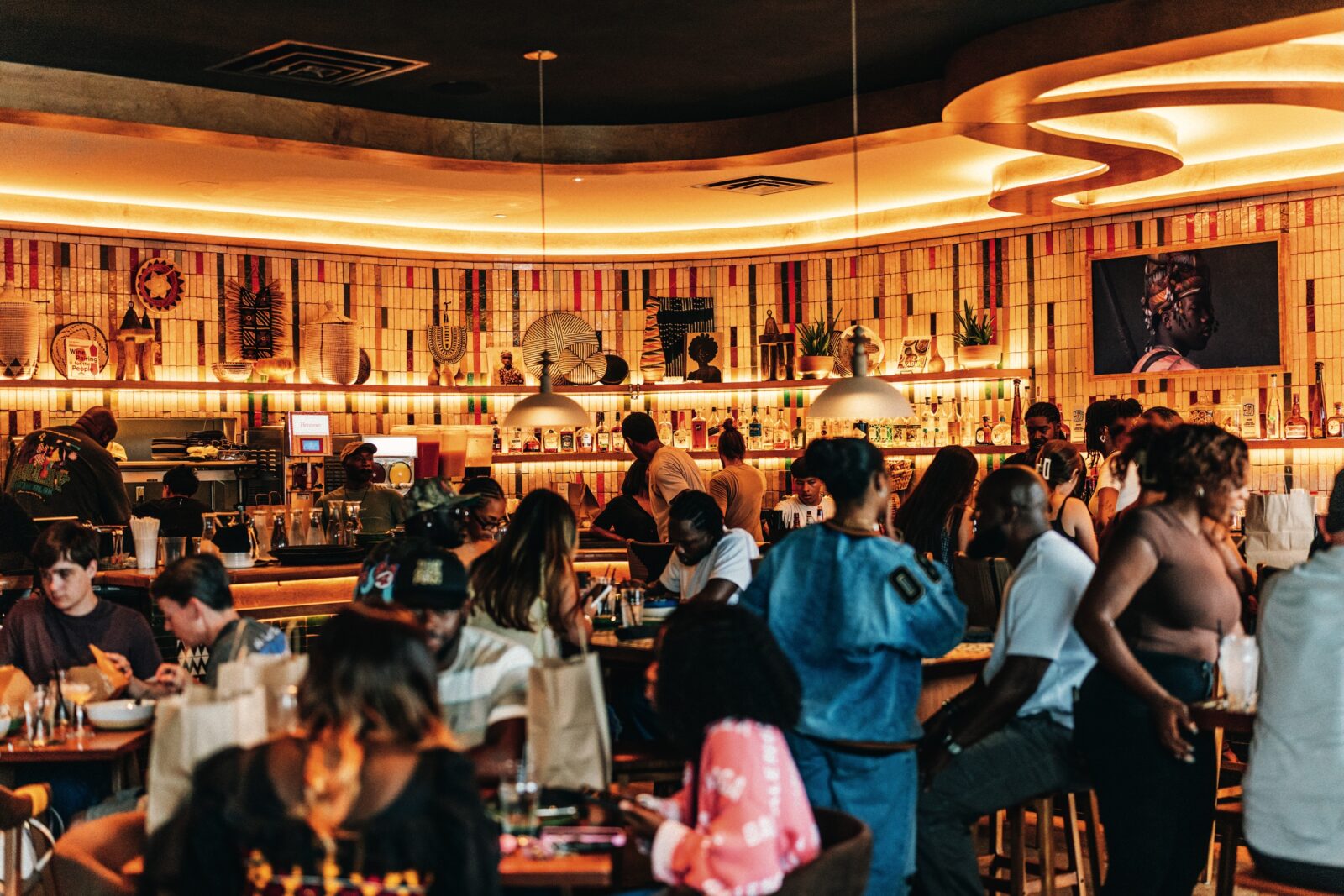
And then, finally, we head to Montrose. If you go to enough restaurants, you begin to recognize instantly one that is humming at exactly the right frequency: some mix of lighting, music, design, and human energy that makes you feel as though, at that moment, there is no place on earth you would rather be. On a busy night (which is nearly all of them), ChòpnBlọk is one of these. The crowd is buzzing and notably diverse, still a stubborn rarity in American dining. Tiles echoing the pattern of Nigerian textiles stripe the wall behind the bar. Another is hung with album covers by artists from Fela Kuti to Solange Knowles. The soundtrack is a similar blend of Afrovibes, hip-hop, and R & B. It’s all very—there’s no other word for it—sexy.
Another thing instantly apparent is that this is not a fast-casual restaurant. Ope and Janelle Amosu did open it that way. It took all of a week for it to become clear that diners wanted something more: People sat down without ordering and waited for a nonexistent server; they were confused about how to get more food or drinks; mostly, they refused to leave.
“It just felt like an unfulfilled experience,” Janelle says. “You could feel this vibe of…”
“Awkwardness,” Ope says, finishing her sentence. He still has plans to expand ChòpnBlọk, but now as full-service restaurants.
Underlying everything that makes the place exciting is, of course, the food. It is not a Nigerian restaurant per se. Its flavors draw from across West Africa, including Senegal, Liberia, and Ghana. Though Amosu dislikes the word fusion, many of his dishes explicitly cross the streams of African and Southern cuisine: He sears the bottom of his jollof rice, to give it the smokiness of the Nigerian version, but also includes the Creole trinity of onion, celery, and bell pepper, which nudges it toward jambalaya. He uses finely chopped collard greens, braised into silky submission, for vegan “Liberian greens” that have no business being as flavorful as they are.
The pulsating heat and the funk of fermentation that we experienced at Famous Princess African Kitchen are both toned down at ChòpnBlọk. There is no “draw” of slime to be found; nor traditional “pounds” like fufu, which encourage eating with your hands. One step at a time, Amosu says. His job now is to work up a level of trust with his audience before taking them even deeper into the cuisine. This is not the kind of restaurant that food writers like to describe as “uncompromisingly authentic.” Call it compromisingly authentic.
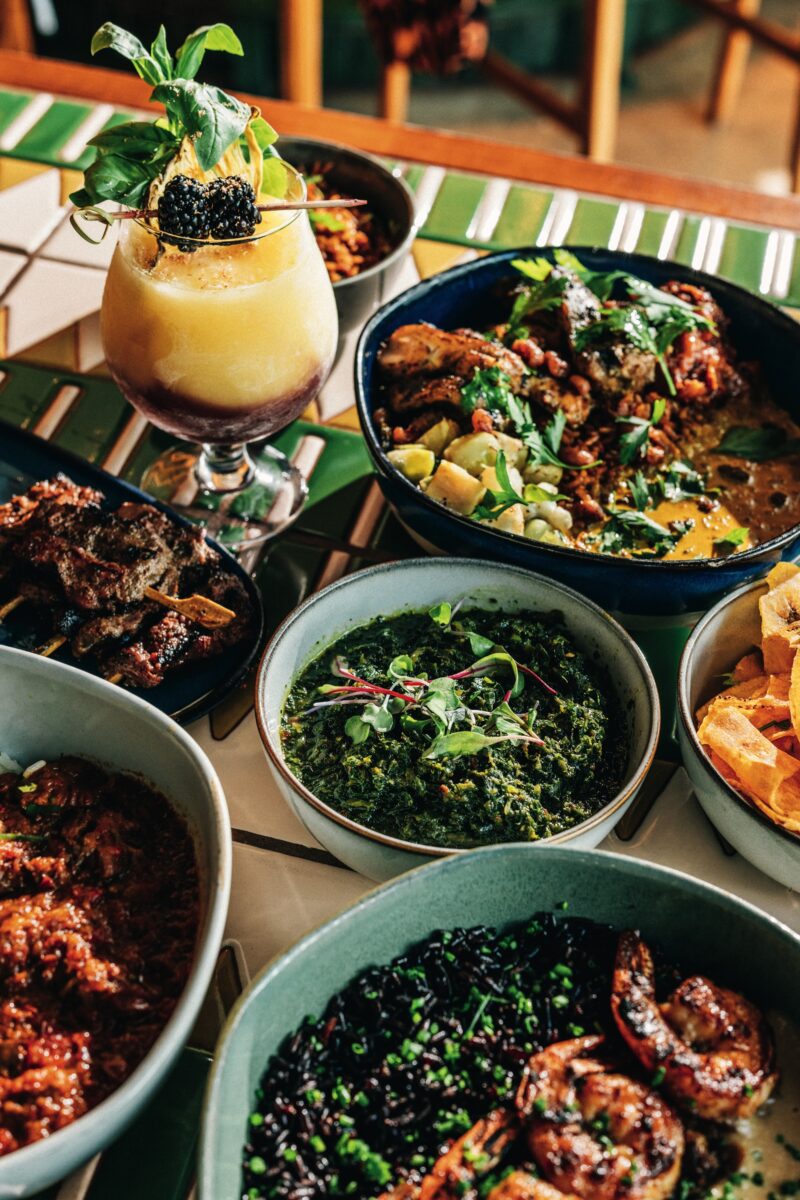
The appetizers include a classic version of the street-food staple suya—grilled beef dusted with a spice blend used at a legendary suya stand outside the Lagos Polo Club—and a Scotch egg with deviled egg filling, an innovation I wouldn’t be surprised to see spread across the South. But the main attractions are served in bowls, which happens to be Amosu’s favorite way to eat. “I think the spork is the greatest invention of all time,” he says.
In the democratic fast-casual tradition, you are offered the chance to mix and match the contents of your bowl, but I would give real thought before messing with the intricately constructed preset offerings. By far the most popular is the Golden, which layers jollof rice with sweet plantains, sticky grilled chicken, and vegetables tossed in suya spice, all of it covered in a coconut-laced yellow curry that further extends its references toward East Africa. The Black Star steers more Senegalese, with plump shrimp robed in a yassa-inspired curry. It is not easy to construct such flavor bombs without losing precision and clarity, but ChòpnBlọk succeeds. As a friend puts it bluntly, “It’s hard to imagine more delicious food.”
Earlier this year, Amosu, who went into restaurants without wanting to go into the kitchen, was named a James Beard Foundation finalist for Best Chef: Texas. In the beginning, he struggled a bit with impostor syndrome when using that title, but he’s mostly gotten over that. “Am I a chef?” he says, laughing. “Well, I’m doing a lot of cooking…”
According to Janelle, it was easy all along: “The trick to get Ope to cook is to start. Then he’ll jump in and tell you how to do it right.”