
Land & Conservation
A Journey into the South’s Last Old-Growth Swamps
Photographer Mac Stone has spent years documenting ancient cypress forests and the hidden life within them. Step inside that secret world and his stunning new compilation.

“Cypress trees, with their flared buttresses and arching limbs, are just amazing. They have this incredible ability to outlast, to outlive, and survive where no other trees can,” says Mac Stone. For well over a decade, the Florida-born, South Carolina–based photographer has documented the most ancient stands of cypress trees in the American South, and his new book, Cypress: The Last Old-Growth Swamps, captures that remarkable primordial endurance across dozens of intimate images.
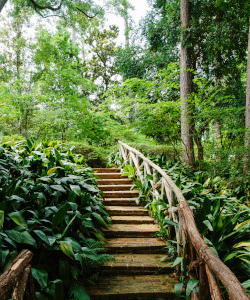
Cypress is more than a celebration of the longest-lived wetland tree species on Earth. It’s also a reminder of all that was lost—including millennia-old cypress giants and entire species like the Carolina parakeet and the ivory-billed woodpecker—when the vast majority of old-growth forest across the South was logged across the nineteenth and twentieth centuries. A few pockets remain, and it is these tracts that Stone sought to capture. He spent spent weeks or months exploring the Spanish moss–draped cypress groves of North Carolina’s Black River; the winding, watery passageways of Audubon’s Biedler Forest and a three-hundred-acre cypress stand in Congaree National Park in South Carolina; and the wilds of Corkscrew Swamp Sanctuary in Florida.

Beyond single trees, Stone wanted to capture the connectivity and complexity of the entire ecosystem, from its tiniest insects to creatures like the Florida panther. “When you step into an old-growth forest, you just get this feeling that this is what woods are supposed to be like,” Stone says. “Everything is mature, shaped by time, and vibrant.” Cypress, which pairs Stone’s photographs with his own commentary as well as essays from conservation legends like Dave Stahle, a University of Arkansas dendrochronologist, is an invitation to enter a hidden, ancient world that was almost entirely lost.

Below, step inside this world, and order the book, published September 1.

Stone captured this turtle and alligator sharing the same log during his tenure as a naturalist living at South Carolina’s Beidler Forest in 2009. “In this part of the swamp, there aren’t many opportunities for ectotherms to sunbathe,” he says. “So there are only a handful of places they’ll go to bask on a cold day to get warm—a natural bottleneck that was great photographically.” The reception to the stark moment of predator and prey sharing space, which won an award, convinced a young Stone that there was a need for more imagery from the swamp.

“I visit this tree every time I’m at Beidler,” Stone says, “almost like a pilgrimage.” On one trip, he approached a favorite giant cypress to find a raccoon curled up on a fallen log next to the tree. The animal then climbed into the hole and poked his head out as Stone snapped away. “It was just one of those gifts from the swamp gods. He helped tell the story of how these hollow trees provide habitat for all sorts of things.”

“You’d think Florida would have surrendered all its secrets by now. But this peninsula remains stubbornly wild at its fringes,” writes Stone about the depths of Corkscrew Swamp Sanctuary. “And paradoxically, those fringes are often found deep in the interior: swampy, primeval, and difficult to reach. In these sodden, seldom-visited corners, mysteries still cling to the trees.” Stone, fellow photographer Carlton Ward Jr., and conservation scientist Peter Houlihan committed to solving the mystery of the pollination of the ghost orchid, a vanishingly rare epiphyte that clings to tree trunks and blooms in ethereal white. After thousands of attempts, they captured the first-ever photographs of insects pollinating the rare flower in Florida’s swamps, and proved that the plant has multiple pollinators, including this giant sphinx moth.

In the uplands of Corkscrew Swamp in Florida, Stone set up camera traps to showcase Florida black bears rubbing against trees. “Normally you’re trying to avoid bears when camera trapping because they’re so curious, they have to touch everything, and they absolutely destroy your camera traps,” Stone says. “Every time I’d go check the camera, it would be an explosion of equipment all over the ground and maybe one usable frame.” Though he lost four cameras and a few strobes during the year or so he shot here, in the end, he got what he wanted: Images that show how these scratching posts act as communication hubs on which the bears rub their scent to alert one another to their presence.

“A comprehensive project like this makes you look even closer at a place,” Stone says. He wanted a photograph of a mushroom, for example, to serve as above-ground evidence of the complex networks of mycorrhizal fungi in the root system of trees. To get the perfect shot, he lay on the ground and discovered that a wolf spider was tucked under the mushroom cap. “It was amazing to think about how mycorrhiza helps the trees with nutrient absorption and all these things, and then to also see how it provides forage and refuge for other animals.”

Stone sees the prothonotary warbler as the quintessential swamp bird. “They might not look like it, but they are—they’re cavity nesting and they depend on all the things that old-growth swamp has.” He captured this portrait of one last year at Beidler, using a remote trigger for his camera as the bird made delivery after delivery of grubs to the tree hollow. “I had specifically been looking to make a photograph of a prothonotary warbler in its habitat, and this was magic.”
Lindsey Liles joined Garden & Gun in 2020 after completing a master’s in literature in Scotland and a Fulbright grant in Brazil. The Arkansas native is G&G’s digital reporter, covering all aspects of the South, and she especially enjoys putting her biology background to use by writing about wildlife and conservation. She lives on Johns Island, South Carolina.
Garden & Gun has an affiliate partnership with Bookshop.org and may receive a portion of sales when a reader clicks to buy a book. All books are independently selected by the G&G editorial team.