
Underwater Gardener: Jessica Mailliez
A Florida angler and ecologist revives the aquatic meadows that support sea life
Affiliation: Sea & Shoreline
Location: Homosassa, Florida
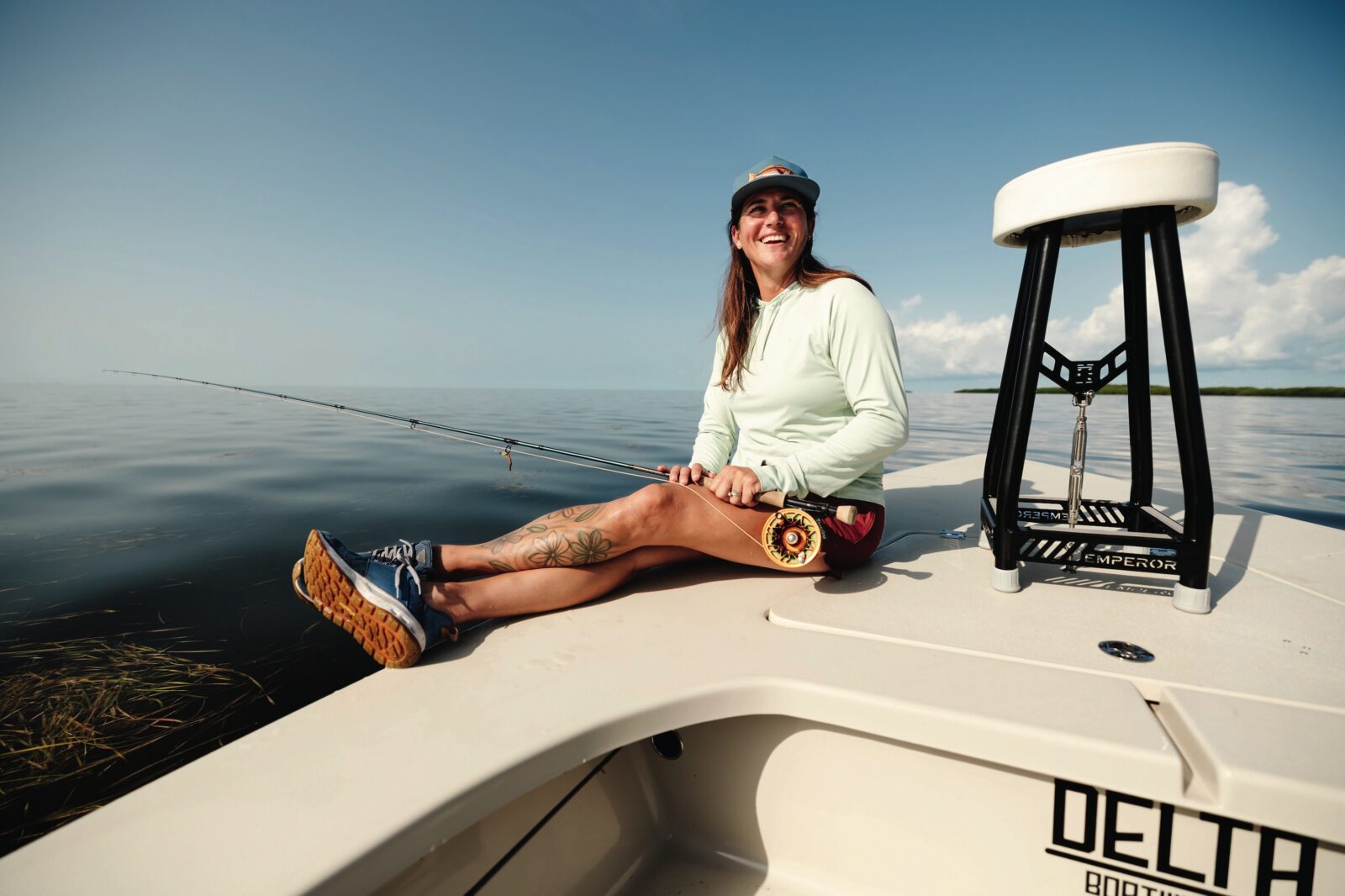
Jessica Mailliez will be the first to admit she has an ulterior motive for devoting herself to aquatic restoration: She loves being out on the water herself, fishing for tarpon in spring, snook and scallops in the summer, and redfish, her favorite, come fall and winter. But perhaps more than most anglers, she deeply understands the ecosystems that make her quarry tick.
After pursuing a career as a teacher, Mailliez returned to school for marine biology, worked as an ecotour guide at Mote Laboratory, and studied growth patterns of marine fish for the Florida Fish and Wildlife Conservation Commission. But she wanted to do hands-on conservation work, so she signed on with Sea & Shoreline, a private firm that specializes in the recovery of seagrass, flowering vegetation that forms vast underwater meadows that shelter young fish, protect shorelines from erosion, and filter pollutants.
Statewide, Florida’s marine and freshwater systems are threatened by pollution, runoff, and algal blooms. If a system collapses, it turns from a wildlife haven into a ghost town choked by invasive plants, detritus, and sediment. Sea & Shoreline tries to prevent those collapses, or, if it’s too late for that, revive the system by planting seagrass or freshwater vegetation. Mailliez might start this kind of project by running a giant vacuum over a fifty-to-one-hundred-acre target area to uncover the mineralized, sandy bottom. Then comes the vegetation. After growing the needed species (often eelgrass—the firm has three nurseries), Mailliez and team plant it underwater, one pot at a time. As it grows, “we take care of it like it’s our garden,” she says.
After Sea & Shoreline replanted the Crystal and Homosassa Rivers, the water slowly became clearer, and manatees and turtles and pinfish returned to graze. Instead of getting wiped out by hurricanes, the seagrasses there resprouted after storms, proving the resilience of a healthy LIFEsystem. Mailliez is now working to avoid a collapse of the Rainbow River system in Central Florida, but at any given time, Sea & Shoreline has a dozen or so projects in play statewide. Overall, the group has revitalized some five hundred acres of seagrasses and stabilized shorelines and marshes with natural materials and native plants.
“Seagrass restoration will always have my heart,” Mailliez says. Seagrass “may not be very well known, but it is incredibly important for oxygenating the water. It feeds our manatees and our turtles. It houses all our young fish species, and basically builds our entire fishery. I want people to know how important it is and fall in love with it.” —Lindsey Liles
Sapelo Guardian: JR Grovner
One of the Georgia island’s few remaining Gullah Geechee residents fights to preserve its cultural and ecological diversity
Affiliation: Sapelo Island Tours
Location: Sapelo Island, Georgia
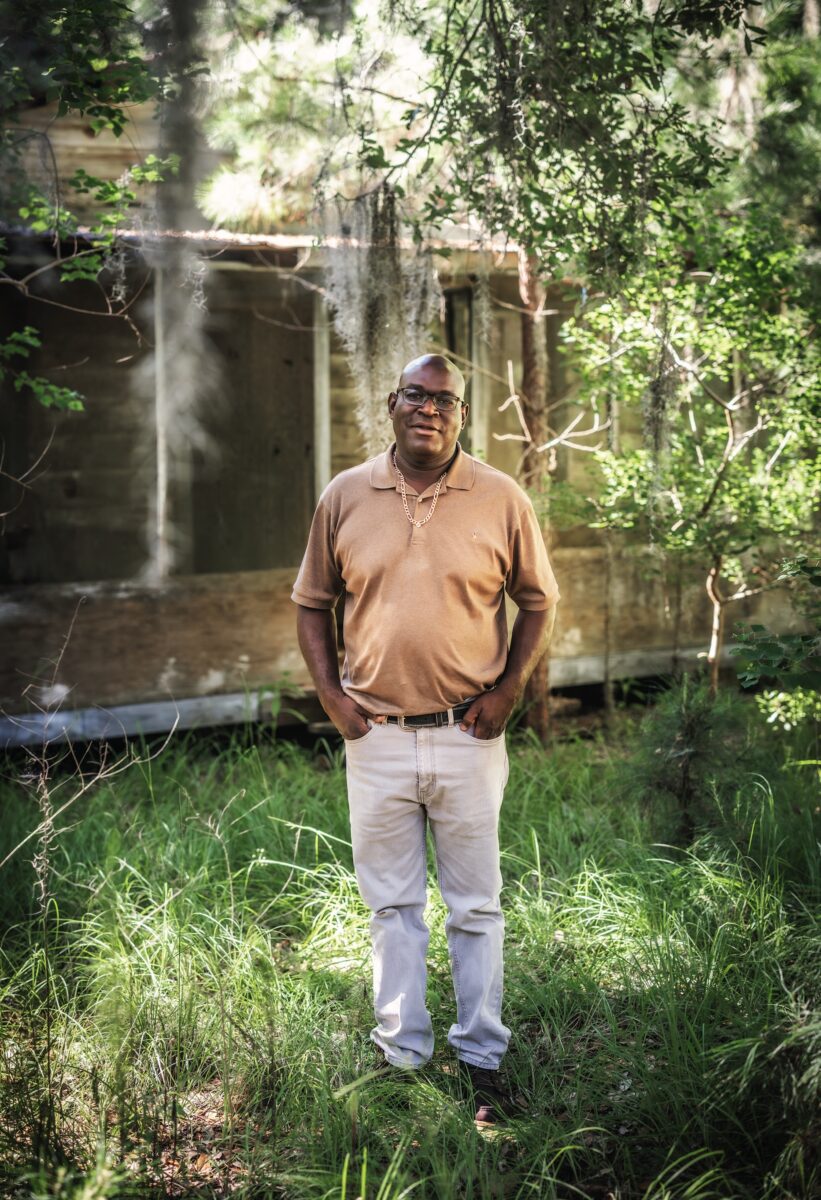
About forty-five miles south of Savannah lies Hogg Hummock, a community on Georgia’s Sapelo Island established after the Civil War by JR Grovner’s formerly enslaved ancestors. Today it’s the country’s last intact Gullah Geechee enclave, and the last private neighborhood on the ecologically significant barrier island, where the Black founders’ descendants now own just 3 percent or so of its 16,500 acres. To help promote and protect what’s left of this legacy, Grovner runs Sapelo Island Tours, ferrying visitors from the mainland to introduce them to the diverse wildlife, abundant fruit trees, pristine beaches, and self-sufficient ethos that defined his childhood there.
Grovner’s preservation mission intensified eight years ago when Hogg Hummock residents won a lawsuit against McIntosh County and the State of Georgia over the ferry schedule and dock accessibility (Sapelo is reachable only by boat). A fatal gangway collapse on the island in 2024 led to another legal battle—earlier calls to fix the already unstable structure allegedly went unanswered. In the latest struggle, Grovner and Sapelo’s other Gullah Geechee residents have opposed county zoning laws that would allow taller, wider structures on the island, a potential boon for developers—but not so much for the community’s position on the National Register of Historic Places nor its fragile ecosystem. Hundreds of species call Sapelo home—trout, loggerhead turtles, manatees, crabs, and brown pelicans among them—as does the Sapelo Island National Estuarine Research Reserve, a facility that’s become key to understanding estuarine and coastal habitats.
At forty-seven, Grovner is more determined than ever. “If I quit,” he says, “then there won’t be anything for my children. My enslaved ancestors died on and for this land.” To inspire visitors to understand and love Sapelo as he does, his tours stop at such spots as the historic Behavior Cemetery, an old sugar mill, the ruins of Chocolate Plantation, the lighthouse, an Indigenous shell ring dating back four thousand years, and, naturally, Hogg Hummock. Grovner also galvanizes friends and neighbors, speaks out at county commission meetings, helps other islanders maintain ownership of their land, and insists that the Gullah Geechee have a say in Sapelo’s future.
“I guess that people consider me to be an activist,” Grovner explains, “but I consider myself to be protecting my family’s land. The value is priceless. There is not another place like Sapelo Island in the world.” —Kelundra Smith
Shark Evangelist: Candace Fields
Even apex predators need love, and this researcher and specialist has plenty to share
Affiliation: Cape Eleuthera Institute
Location: Eleuthera, the Bahamas
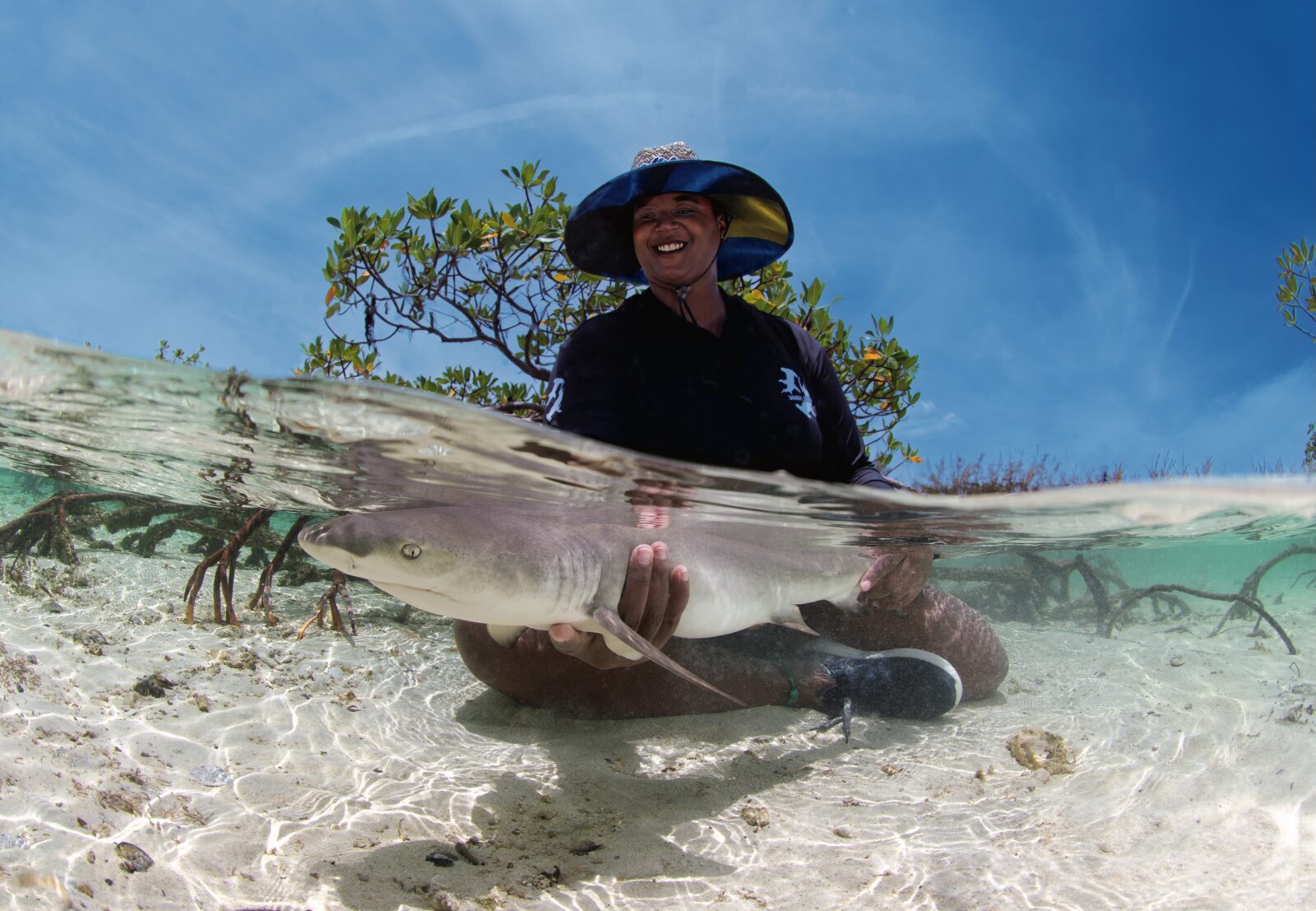
Give her an audience of shark-wary kids and Candace Fields becomes a Spielberg-level storyteller, intent on flipping the script on Jaws. In the decades since that fear-churning blockbuster made people think twice (or three or four times) before an ocean swim, shark population dips, due largely to bycatch from commercial overfishing and demand for shark fins, have raised their own alarms. “We’ve seen a fifty to ninety percent decline in oceanic whitetips since the 1950s,” says Fields, whose doctorate research focused on that critically endangered species. “Sharks are crucial to the marine ecosystem. A reef without sharks is an unhealthy reef.”
Growing up in Nassau, in the Bahamas, Fields was always drawn to the water. “Forget the sandcastles, I was like, ‘I need my goggles—I want to look at the fish,’” she recalls. Now she is the first native-Bahamian shark specialist, returning to her homeland (and home waters) to further her passion for protecting this apex predator. At the Cape Eleuthera Institute (CEI), Fields is creating monitoring stations throughout the islands to evaluate the effectiveness of conservation measures established in 2011, when the Bahamas became the Atlantic’s first shark sanctuary. “To be at the forefront of anything is a big deal for such a small island nation,” she says. “We should be proud of being a big bright spot for sharks. As one of the last shark strongholds in the Atlantic, the Bahamas acts as a barometer for the population more widely.” Currently, however, no official data exists to evaluate the sanctuary’s success, and, as Fields notes, “you can’t make data-driven policy without data.”
When negative human-shark interactions result in calls to modify protections, Fields wants science to inform those decisions. Shark-related tourism brings an estimated $113 million to the Bahamian economy annually, she notes, but commercial and sport fishing are even bigger, and given this complex fish-eat-fish/people-eat-fish world, balance is imperative. “It’s not ‘save the sharks’ at all costs,” she says. “Shark depredation [when sharks eat fishermen’s catch] is a real issue. We need data to mitigate that responsibly.”
In addition to her research and regular appearances on Nat Geo TV, Fields serves on the board of the education-focused Sharks4Kids and loves teaching young Bahamians and students at the CEI’s parent institution, the Island School, about the misunderstood creatures in their beautiful blue backyard. “Seeing their perspective shift is everything,” she says. “That’s how you make genuine impact. People can’t care about what they don’t know about.” —Stephanie Hunt
Trash Talker: Bonnie Monteleone
Getting a grip on (and letting go of) the hold plastic has on the world and on the sea
Affiliation: Plastic Ocean Project
Location: Wilmington, North Carolina
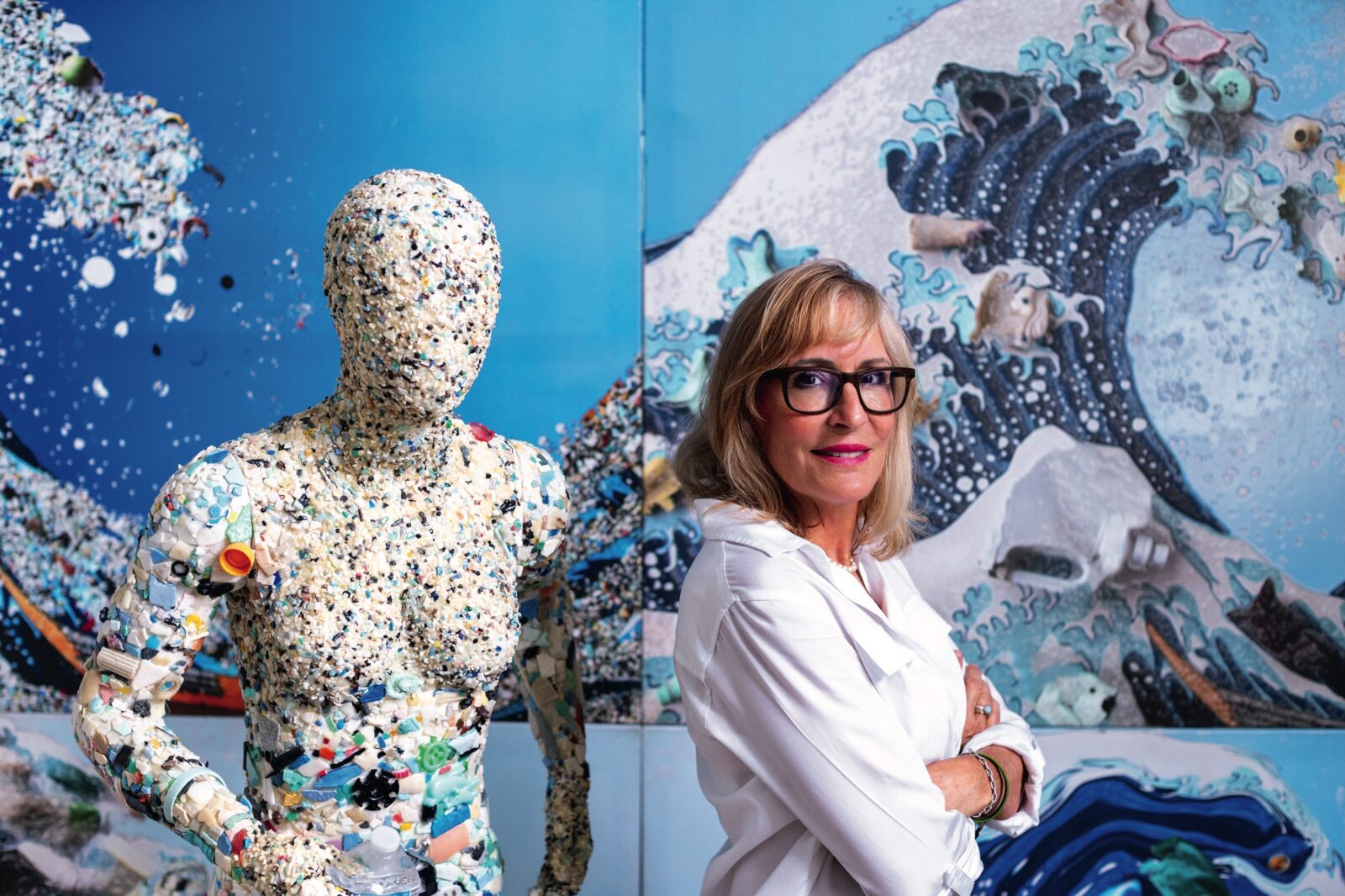
Hearing a story about a snapping turtle changed the course of Bonnie Monteleone’s life: As a hatchling, the turtle had crawled through a plastic ring, and as it grew, instead of breaking, the plastic constricted its shell into an hourglass shape the reptile would live with all its days. Monteleone was forty-nine and lacked a science background, but she vowed from that moment to dedicate herself to researching plastics in the ocean.
While completing a master’s thesis on the North Atlantic Garbage Patch at the University of North Carolina Wilmington, she sailed ten thousand nautical miles all over the world, sampling plastics on the water’s surface. “Thousands of miles away from land, human detritus was everywhere,” she says. The problem’s magnitude and complexity convinced her that before tackling cleanup, “we have to stop the faucets.”
In 2012, she founded the Plastic Ocean Project to do just that. The nonprofit funds and conducts scientific research, gets youths involved through internships, invites community action with cleanups, helps certify restaurants and other businesses that reduce single-use plastics, and facilitates artistic outreach with such touring exhibitions as What Goes Around Comes Around, which features a replica of the famous wood-block print Under the Wave off Kanagawa using sea-gleaned plastics. Monteleone is also at work on her second documentary, If the Ocean Could Talk, which sheds light on the plastic problem through the North Atlantic right whale—lipophilic chemicals found in pesticides and plastic are contributing to the deaths of firstborn right whale calves and other marine mammals.
Though what ends up in the water seems overwhelming—a garbage truck of trash a minute; more pieces of plastic than stars in the sky—all is not lost. Companies like Atlantic Packaging, the country’s largest sustainable packaging outfit, give Monteleone hope—as does human ingenuity. “I always tell young people, the future is in waste, and figuring out how to use what we’ve already produced,” she says. “We just have to step up and say, ‘Where do I fit in this equation and how can I help?’”
The freedom to say no to plastic packaging in the first place, she emphasizes, rests with the consumer. “All we have to do is affect a major corporation by four percent of their bottom line to get their attention, so we don’t have to have everybody on board,” she says. “We have the power. We just have to use it.” —Lindsey Liles
Reef Doctor: Phanor H. Montoya Maya
An inspiring ray of light for the Sunshine state’s devastated coral communities
Affiliation: Coral Restoration Foundation
Location: Tavernier, Florida
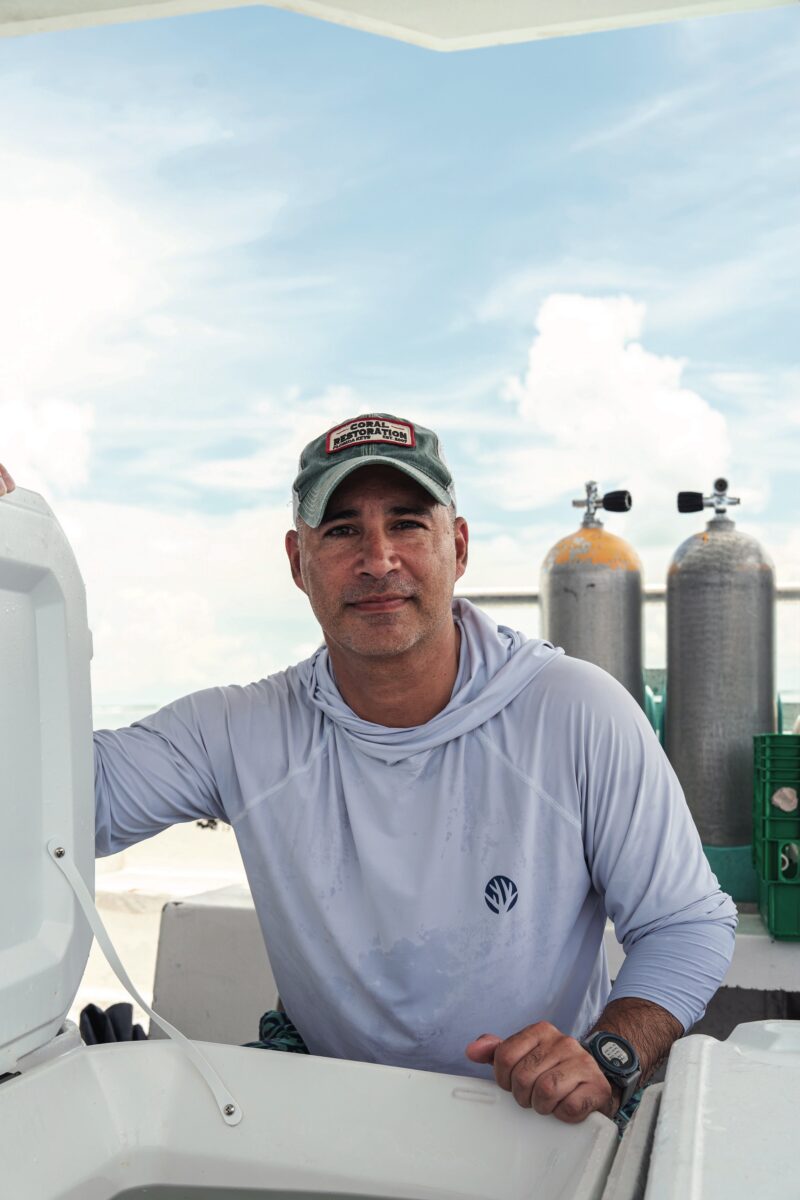
Growing up in landlocked Cali, Colombia, Phanor H. Montoya Maya adored his summertime visits to the Pacific Coast with his mother’s family. He traces his fascination with coral to one outing there in particular, with a fisherman who caught fish barehanded above a cauliflower coral formation on an otherwise desertlike seabed. That coral appeared as “this little oasis of life,” Montoya Maya recalls. To experience this wonder again, he learned to scuba dive and eventually pursued advanced degrees around the world, including a PhD in ecological genetics.
The youthful Montoya Maya was onto something. While coral reefs occupy a mere 1 percent of the ocean, they provide habitat and support for a quarter of all marine species. That equals some $3.4 billion in yearly value, the National Oceanic and Atmospheric Administration estimates, thanks to reefs’ crucial role in supporting fisheries, protecting coastlines, and luring tourists. Warmer waters, polluted runoff, and overexposure to sunlight, though, have caused large swaths of the world’s corals to expel the algae—their main food source— that symbiotically live inside them. This “bleaching” leaves corals vulnerable to starvation and disease. Healthy coral cover in the Florida Keys alone has plummeted 90 percent since the late 1970s.
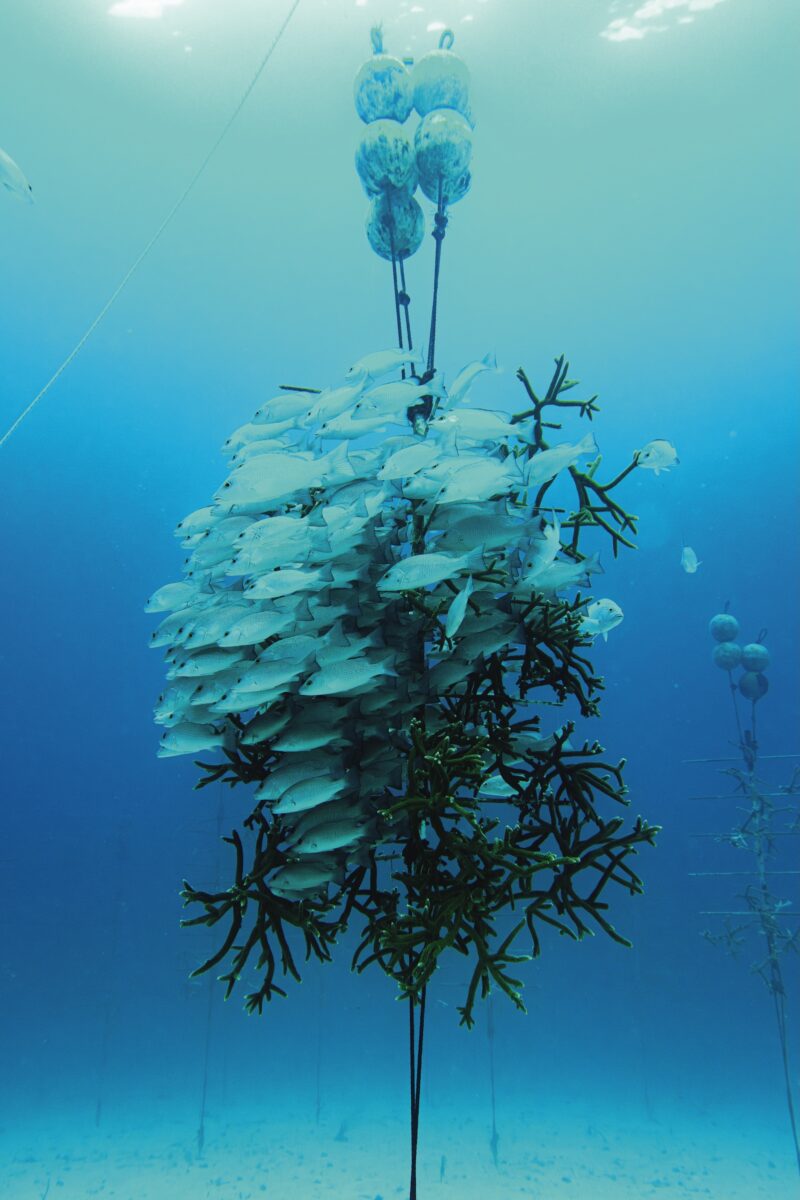
As the Coral Restoration Foundation (CRF)’s restoration program manager, Montoya Maya leads and inspires his innovative and widely emulated team to help corals rebound. Take 2023’s widespread bleaching event, due to high temperatures; even then, “pockets of survivorship” fared better. So he and the CRF focused their efforts on those spots, “outplanting” onto reefs multiple variants of their nursery-grown coral so “the adaptive potential would be embedded in the restoration process.” Montoya Maya oversees these CRF operations in both the office and the water, including running one of the world’s largest coral nurseries, spearheading these outplanting efforts, and catching spawn at nighttime—all of which ensure genetic diversity and promote hardiness.
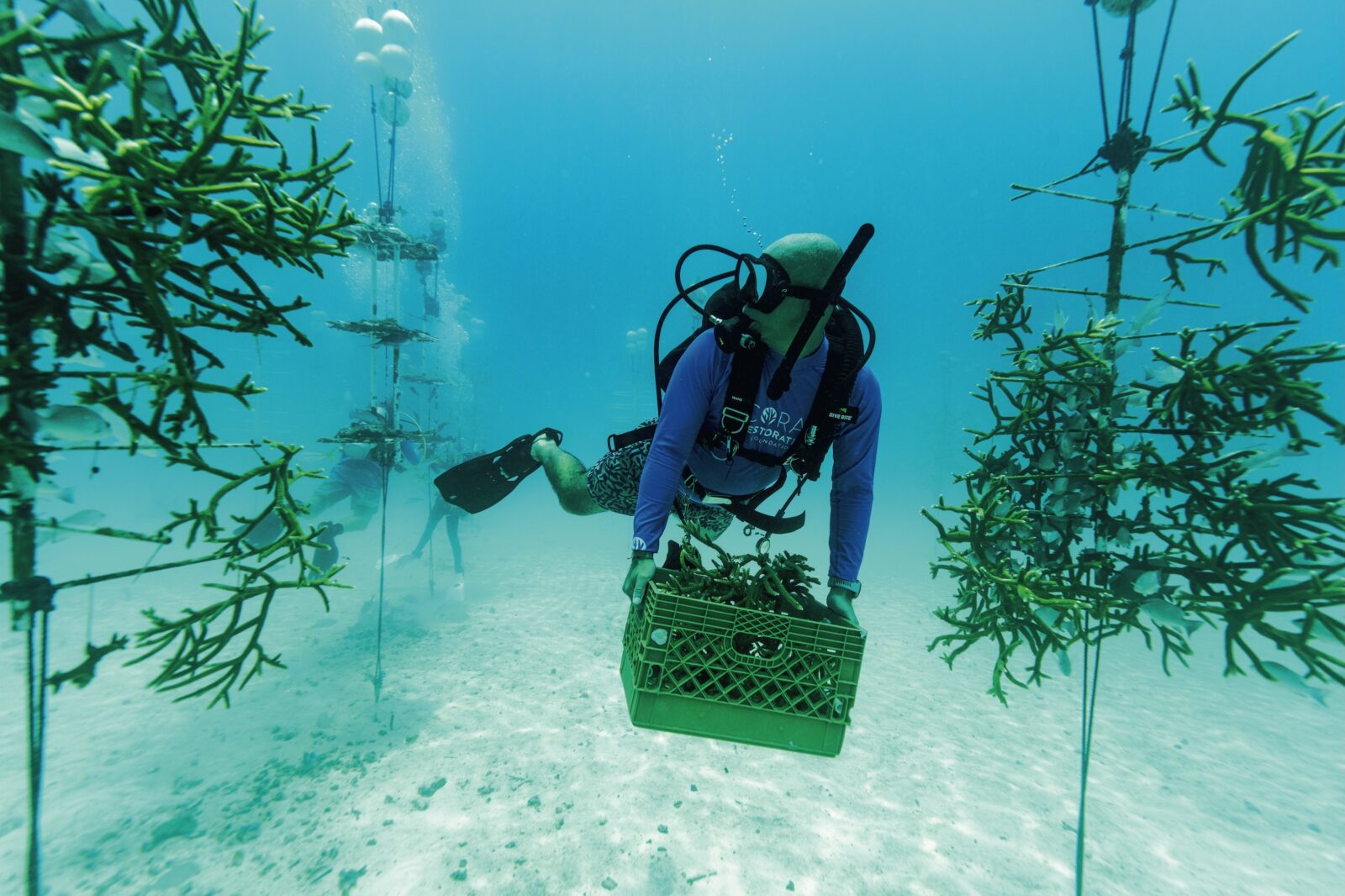
“The reefs have the capacity to bounce back,” Montoya Maya says, “but we need to create that enabling environment for the reef to become resilient.” The CRF’s strategies also buy time for them to boost local interest—say, by recruiting skilled citizen scientist volunteers. “When people get engaged in cleaning the nurseries,” he says, “in seeing the reef, in monitoring the health, planting the growth, they start to care.” —Amy Brecount White
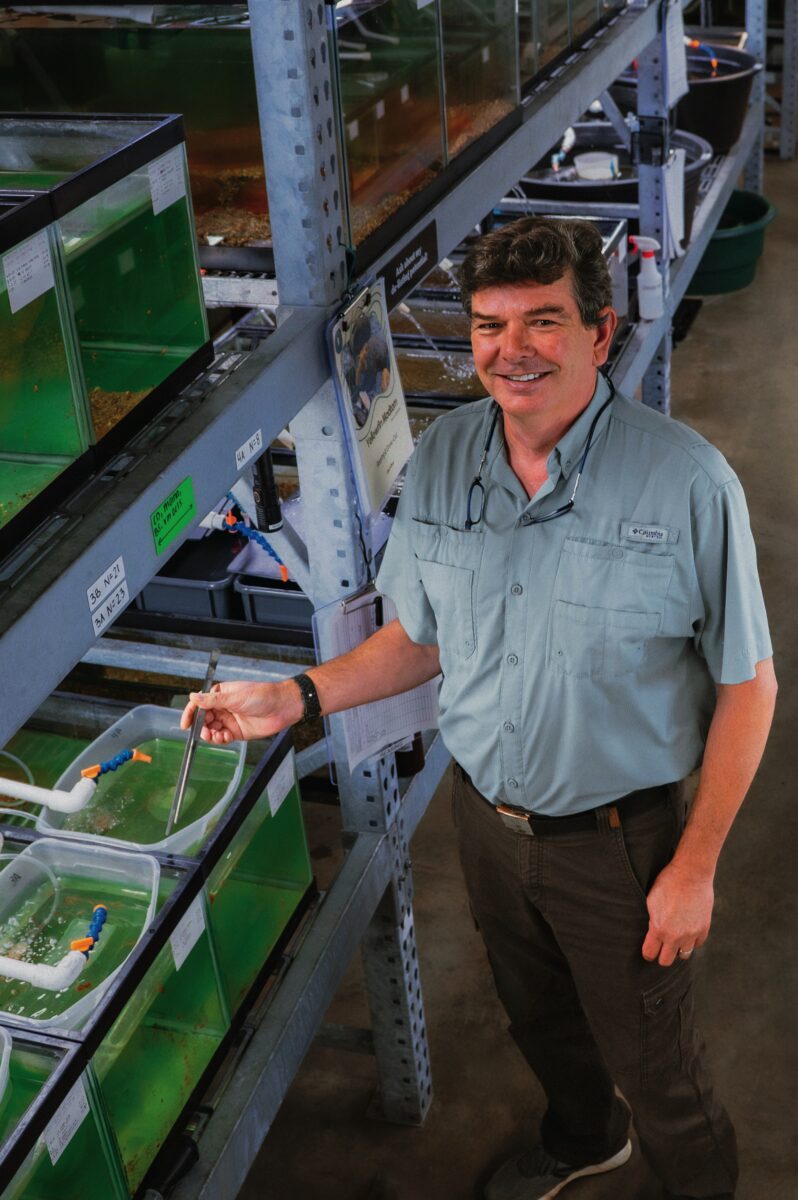
Hero of Tiny Fish: Bo Baxter
From darters to minnows to madtoms, overlooked species find a devoted lifeguard
Affiliation: Conservation Fisheries
Location: Knoxville, Tennessee
Deep in Cherokee National Forest, Bo Baxter steps into a clear stream, preparing to lower a large plastic bag into the slow-flowing water. Within the bag, tiny fish swim—100 of the 1,475 baby Tennessee dace the ichthyologist and his team at Conservation Fisheries (CF) have carefully raised and are today returning to the waters where they belong.
Back at CF’s Knoxville lab, thousands more fish spanning fifteen species grow in tanks—the turquoise and red-striped candy darter, a miniature catfish called the yellowfin madtom, and the crimson-streaked Tennessee dace among them. CF will eventually release them into streams and rivers across Appalachia and beyond to fulfill the nonprofit’s mission: to save the South’s astounding diversity of increasingly rare, strikingly beautiful nongame fish.
Baxter has been involved with CF for most of his career. While studying at the University of Tennessee, he began working in an aquarium store where CF’s cofounders, J. R. Shute and Pat Rakes, were propagating yellowfin and smoky madtoms in the back. Before the two started the nonprofit in 1992, they hired Baxter as their first employee. Though he left to work for the Tennessee Valley Authority for a couple of decades, he returned to CF in 2020 and became executive director soon after.
CF and Baxter’s job have only become more crucial with time. The Southeast is a global hotbed of fish diversity, due to the region’s ancient geology and the Appalachian Mountains’ historic lack of glaciers, which allowed species to go on evolving “for millions and millions of years,” Baxter says, sometimes specializing to thrive in only a single watershed. Now factors like pollution, damming, and climate change have imperiled many of them. Once an agency or other group restores a species’ habitat, however, CF stands at the ready. “We’re the last piece of the restoration puzzle,” Baxter says. “We bring in the fish.”
Propagation often requires extensive trial and error to dial in the conditions a species needs to reproduce in the lab. It’s “equal parts inspiring and heartbreaking,” Baxter says—the lab has cared for probable “endlings,” individuals that may be the last of their species. In total, CF has worked with eighty-seven fish species. Baxter’s next challenge: raising funds for a new, larger facility on the Tennessee River. “Education is a huge part of what we do,” he says. “If you can get people out in a river with a snorkel, or in the lab to see these amazing fish, they’ll care, and they’ll want to protect what we have.” —Lindsey Liles
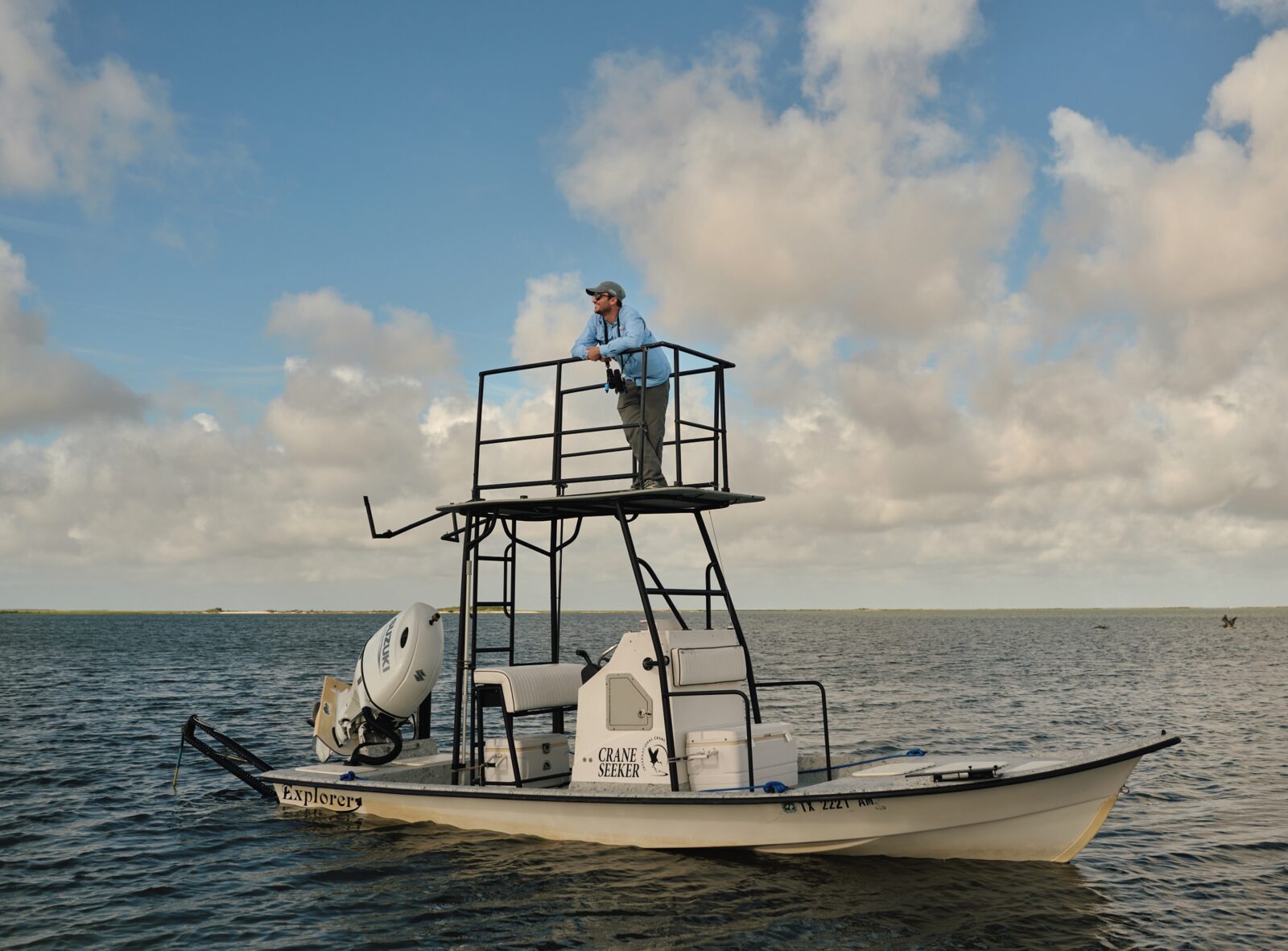
Whooping Crane Whisperer: Carter Crouch
Some of the continent’s rarest birds have a Gulf Coast ace on the case
Affiliation: International Crane Foundation
Location: Fulton, Texas
Early on a summer morning, the trumpeting call of two whooping cranes echoes over the salt marsh at Aransas National Wildlife Refuge, along the Texas Gulf. Carter Crouch maneuvers his boat, Crane Seeker, closer to examine the tallest bird in North America, its white feathers splashed with red on the head and wings dipped in an inky black.
The Wichita Falls, Texas, native has wanted to do pretty much exactly this since he was eight, when he wrote in a journal his goal of becoming a bird biologist. A University of Oklahoma zoology degree first led the now PhD to working with American kestrels, northern bobwhites, and loggerhead shrikes. Four years ago, he became the director of Gulf Coast programs for the International Crane Foundation (ICF) and shifted his focus to the whooping crane. In the forties and fifties, the iconic species had brushed within twenty-one birds of extinction in the wild due to hunting and habitat loss before an international conservation effort boosted its numbers to the more than eight hundred that exist today. But “we can’t get complacent,” Crouch warns. The birds are sensitive to water quality issues, wetlands decline, and worsening droughts—all growing threats.
Every winter, more than five hundred of the birds head from their summering grounds in and near Canada’s Wood Buffalo National Park to this slice of coastline to spend the cold months eating Carolina wolfberries, crabs, and small fish. They represent the last self-sustaining migratory population of whooping cranes. The ICF, though, is tackling the species’ conservation from all angles: lobbying for greater protection, educating the public, working with landowners, rearing birds in captivity, and researching the Aransas–Wood Buffalo birds. Crouch and his team of five also conduct counts, collect behavioral data, and monitor both the birds that are using new habitat types farther inland and those summering in Texas rather than migrating north. Last year, the ICF and partner organizations acquired 3,300 acres near the refuge, a third of which the ICF owns and has named Wolfberry Whooping Crane Sanctuary to create even more habitat.
The birds’ charisma and comeback story help—each year, thousands of fans flock to Texas to see them, pumping money into the local economy. “People connect with them for so many reasons,” Crouch says. “They’re tall and graceful, and they mate for life and dance with their partners. Cranes have such a hold on us.”
For his part, Crouch plans to ensure whooping cranes keep making the 2,500- mile annual journey to Texas for generations to come. “I stepped into a very long conservation story with this species,” he says. “I want to do what I can to carry that story forward.” —Lindsey Liles
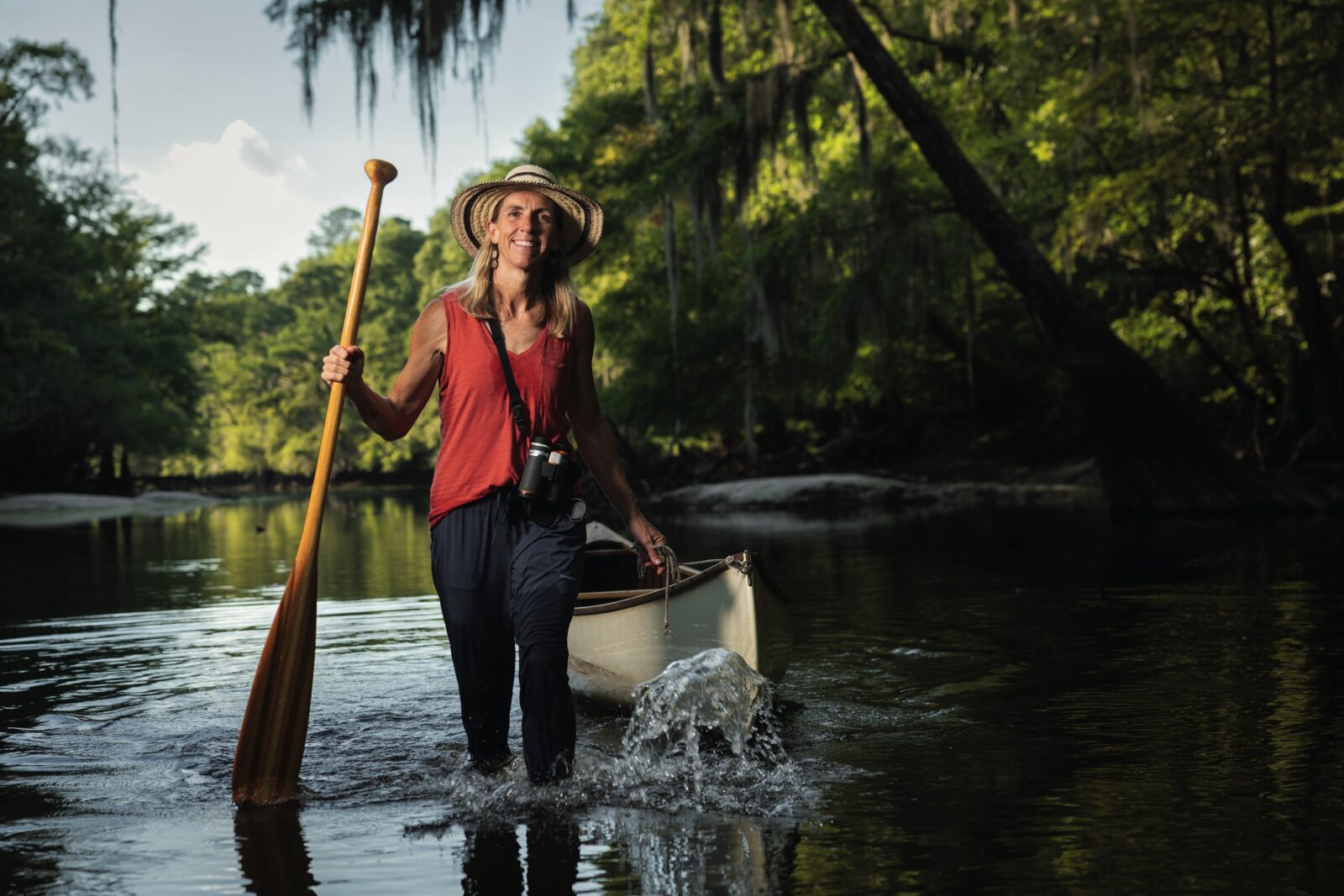
River Banker: Maria Whitehead
Strengthening South Carolina’s habitats and communities, thousands of acres at a time
Affiliation: Open Space Institute
Location: Brevard, North Carolina
Maria Whitehead has banded birds in Australia, studied endangered species on the edge of Hawaii’s Haleakalā Crater, learned avian taxidermy to build study skins, and taught hundreds of students about ecology. But her heart—and the heart of her work—has always beckoned her to the habitats of South Carolina.
Whitehead grew up there exploring bottomland hardwood forests in her native Back Swamp community. After studying biology at Davidson College, she pursued a master’s and PhD focused on avian ecology before eventually pivoting from academia to a more hands-on job with the Nature Conservancy in South Carolina. Over ten years, she helped add thousands of acres of land to the Waccamaw Refuge and surrounding Winyah Bay landscape—plus laid the groundwork for protecting her home waterway, the Black River.
Those efforts paid off this year, under her decade-long position with the Open Space Institute (OSI), which protects key acreage to conserve wildlife habitat, sustain communities, and fight climate change. As the OSI’s senior vice president of land for the Southeast, she aided in securing South Carolina’s largest conservation easement ever, sixty-two thousand acres over three counties. The spread lies adjacent to the nine thousand acres of the new Black River State Park that she and her team had been assembling since 2019, with such partners as the Nature Conservancy and Ducks Unlimited.
South Carolina’s first linear state park now comprises seventy miles of flowing water and significant land along it, all home to swallow-tailed kites, river otters, alligators, and freshwater turtles. And while the Black River site supports habitat protection, management, and restoration for this wildlife and flood resilience, it’s very much for people as well.
“So many communities have been cut off from the natural world in their own backyards,” Whitehead says. As she and her partners planned the project, they invited underrepresented groups, including the Pee Dee and the Waccamaw tribes, to weigh in on culturally significant plants and how the park could welcome Native Americans. That engagement also revealed that many residents couldn’t swim, so the OSI helped catalyze a pool initiative offering instruction to the region’s children that reached almost five hundred students in its first year. Towns near the state park’s Black River banks, like Andrews and Kingstree, are beginning to see its potential as an economic and tourism driver too.
“Often, the narrative around conservation is that it is adversarial and at odds with people,” she says. “But it can actually be a way to address our social and environmental issues together, if we approach it the right way. That gives me hope.”—Lindsey Liles
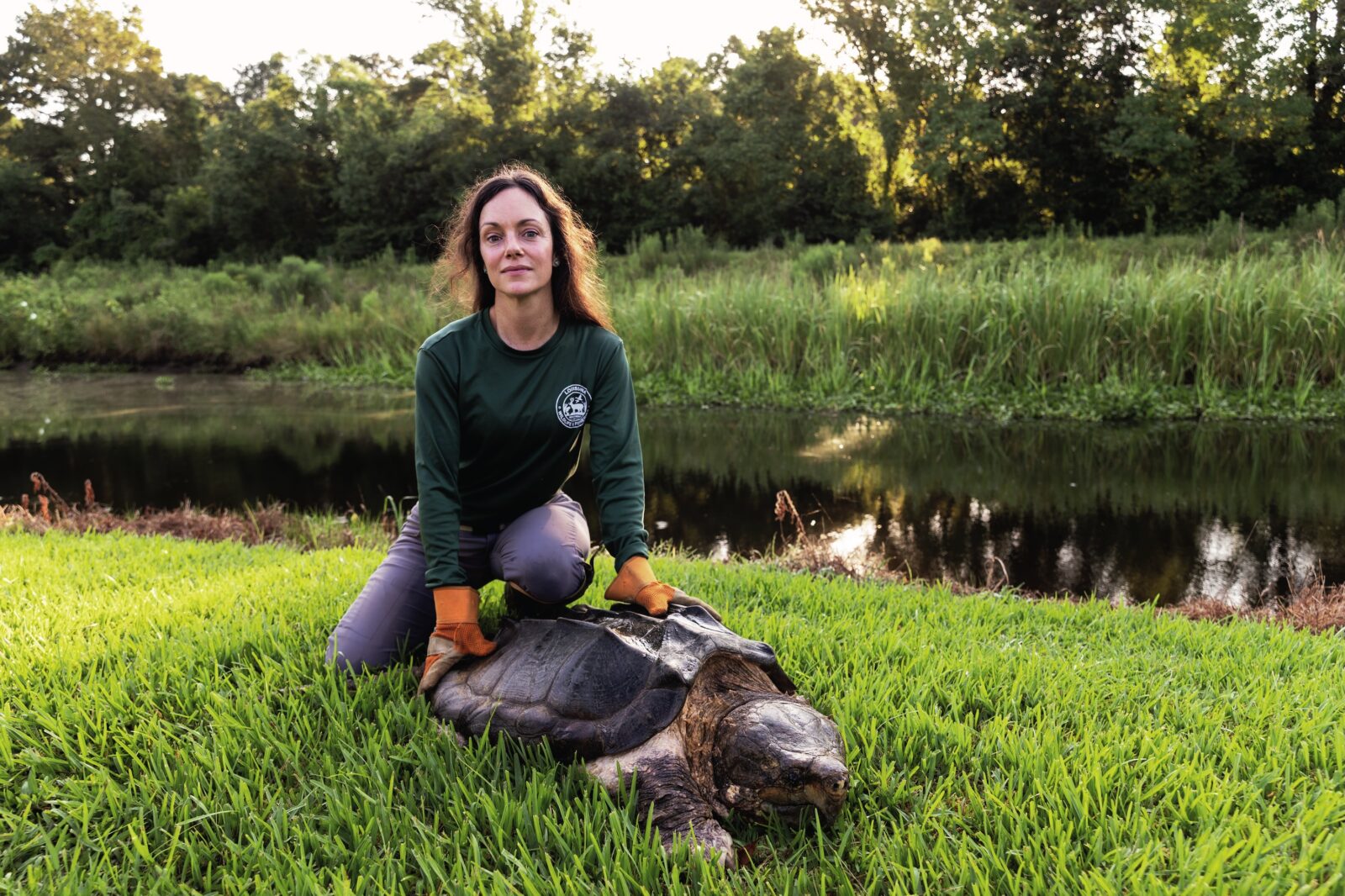
Turtle Appeal: Keri Lejeune
Turning a sportsman’s paradise into one for reptiles and amphibians
Affiliation: Louisiana Department of Wildlife and Fisheries
Location: Lafayette, Louisiana
As the Louisiana state herpetologist, Keri Lejeune has more projects running than she cares to count. After all, Louisiana is a Southeastern hot spot for reptiles and amphibians thanks to its subtropical climate and diversity of habitat, “from bayous and rivers and marshes to upland pine forests with rolling hills,” she says. But many of the species that call those places home—including the beautifully patterned Pearl River map turtle and the secretive Louisiana pine snake—are struggling due to the loss of those spaces, along with pollution, invasive species, and poaching.
Lejeune has long known she wanted to fight those challenges; she grew up south of Baton Rouge roaming her grandparents’ rural property, and when a wildlife biologist visited her ninth-grade class, she realized she’d found her path. After studying wildlife management and ecology at LSU, she worked with rare, threatened, and endangered species in Florida before returning to manage gopher tortoises, rare mussels, and map turtles for the Louisiana Department of Wildlife and Fisheries. “Being able to come back home and contribute here was really important to me,” she says. In 2021, she became the state herpetologist, and almost immediately took on her greatest obstacle—and achievement—to date.
Previously, Louisiana did little to regulate turtle harvests; it was the last state in the Southeast to prohibit unlimited, undocumented harvest of all but four species. Lejeune found herself watching, helpless, as species as varied as wild mud, box, and snapping turtles were taken to supply the global pet and meat trades. One year, more than 115,000 mud turtles alone got shipped abroad. “I couldn’t be in the job without doing something about this,” she says. So she built a new plan, and in 2025, the Louisiana Wildlife and Fisheries Commission approved it. Not only is the commercial harvest of turtles now outlawed, but so is owning invasive species like Burmese pythons and tegu lizards. She’s taking her fight international too, as a key member of a global group aimed at combating illegal trade.
Back in Louisiana, Lejeune is also rewilding alligator snapping turtles from captive breeding; restoring wetlands to reintroduce dusky gopher frogs, a species last sighted in the state in 1967; fine-tuning nest protection for ringed map turtles; and acquiring key habitat in watersheds like the Bogue Chitto River. “When we improve habitat and water quality for one suite of species,” she says, “it is benefiting many others, and that is so rewarding.”—Lindsey Liles
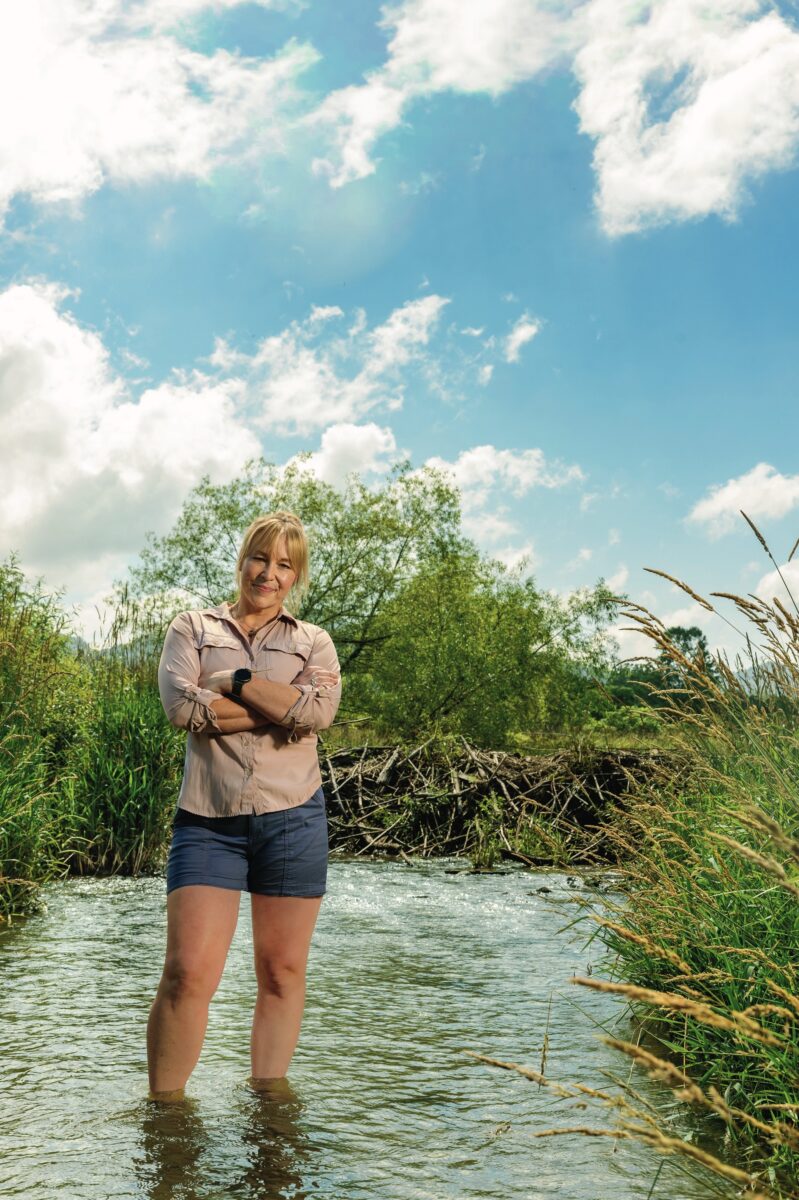
Current Keeper: Josselyn Lucas
Working with, not against, nature to restore streams and improve riverine habitat
Affiliation: Natural Resources Conservation Service
Location: Boone, North Carolina
Among the rolling blue mountains along the Virginia–North Carolina border, Josselyn Lucas points out a mosaic of restoration projects her team and the USDA’s Natural Resources Conservation Service (NRCS) have helped implement—a farm where reconnecting a stream to its floodplain reduced erosion and flooding; a property where native riparian vegetation they planted now filters runoff and stabilizes stream banks; a river where a dangerous, obsolete dam they removed reopened more than three hundred miles of habitat.
Lucas, a North Carolina native, spent nine years as an environmental consultant, leading stream and wetland restoration and developing mitigation projects for a real estate company, before she had a rude awakening. “I had surveyed the most magical Appalachian cove that was teeming with life,” she recalls. “I thought there was no chance my company would develop it.” And yet, it became an asphalt plant. Soon after, she quit.
Since 2022, she’s instead played a large-scale game as the Working Lands for Wildlife Aquatic Framework coordinator for the NRCS, building the Southern Waters Framework. That project provides a road map for private landowners to access programs, funding, and expertise that can help them meet the needs of their farms, ranches, or timberlands while also reconnecting waterways, preventing erosion, and generally improving watershed health.
It’s much needed: Southern waterways, though home to unmatched biodiversity, are under siege. Dams and roads fragment them. Development chokes them with sedimentation and runoff. Perpetrators strip them of protective vegetation. All of which threatens wildlife like fish, mussels, and salamanders, and humans too—as evidenced by storms like Hurricane Helene, which caused raging waters in Western North Carolina that blew out infrastructure and claimed more than a hundred lives.
Water “literally shapes our world,” Lucas says. “We can’t control it or fight against it. We have to work with it.” That means finding nature-based solutions; instead of, say, installing concrete retaining walls that eventually fail and require costly replacement, Lucas helps landowners reconnect streams to floodplains and plant vegetation to create “roughness” to slow and catch debris during a flood—which not only saves money long-term but creates crucial habitat and more productive land, too.
Additional private landowners getting on board for such solutions, be it on two acres or two thousand, would change the game for the region. “If you do good for yourself and your piece of a watershed,” Lucas says, “you do good for your neighbor downstream. When you’ve got a whole community participating, that starts to add up. I want people to know they can be the unlikely conservationists we need to protect our most important resource.” —Lindsey Liles
Expert Council
Meet the esteemed eco-advocates who helped select this year’s Champions
JJ Apodaca
As the executive director of the Amphibian and Reptile Conservancy, the Asheville herpetologist and geneticist JJ Apodaca helps safeguard turtles, salamanders, lizards, snakes, and frogs countrywide, working on a landscape scale to protect and restore habitat in areas of high diversity. He also works with some of the South’s rarest and most imperiled species, including hellbenders, bog turtles, and Hickory Nut Gorge green salamanders, and in 2023 became a G&G Champion of Conservation and received the U.S. Fish & Wildlife Service Theodore Roosevelt Genius Prize for his genetic work combating turtle trafficking.
Chris Crolley
As owner of the ecotour company Coastal Expeditions in Charleston, South Carolina, 2022 Champion of Conservation Chris Crolley has spent decades connecting people with the Lowcountry’s waterways through kayaking, paddleboarding, and ferry excursions to such places as Cape Romain National Wildlife Refuge. In 2018, he launched the Coastal Expeditions Foundation, a nonprofit that supports habitat restoration, conducts environmental education, and backs community initiatives that help protect the seaside ecosystems Crolley has devoted his career to sharing.
Jacqueline Echols
Since 2011, Jacqueline Echols, a retired professor of political science and public administration, has led Atlanta’s South River Watershed Alliance, championing the restoration of one of Georgia’s most overlooked waterways by monitoring water quality, organizing cleanups, and advocating against development. The 2023 Champion of Conservation is also expanding the South River Water Trail, creating access points that encourage communities to reconnect with, and protect, the sixty-mile river.
Carter Kruse
For twenty-six years, Carter Kruse has been involved with the late philanthropist Ted Turner’s conservation and land management programs, and he currently serves as the director of science and conservation for Turner Enter-prises, Inc., and the Turner Institute of Ecoagriculture. The North Dakota native and avid hunter and angler coordinates science, research, and conservation activities across Turner properties, with projects that include the native cutthroat trout, the Blanding’s turtle, the arctic grayling, and prairie wetland and riparian restoration.
Mamie Parker
Fish and wildlife biologist Mamie Parker worked for three decades for the U.S. Fish & Wildlife Service, where she served as chief of staff, led the agency’s fisheries program, and became the first African American regional director in the Northeast. The Arkansas native has advised organizations including the National Wild Turkey Federation, Ducks Unlimited, and the Bureau of Land Management, and today is a coach, speaker, and consultant with Ecologix Group, a Chesapeake Bay–based environmental strategy firm.
Charlie Potter
Charlie Potter has spent more than forty years advancing wildlife conservation and opportunities for hunting and fishing across the country. He now serves as the president and CEO of the Max McGraw Wildlife Foundation, which supports a future with hunting, fishing, and land stewardship through scientific research and outreach. Since 2000, Potter has also hosted WGN Radio’s The Great Outdoors podcast; authored two books, Following the Flight and A Lifetime in Waders; and served as the executive producer of Wings over Water, an IMAX 3D film on waterfowl and wetland conservation.