

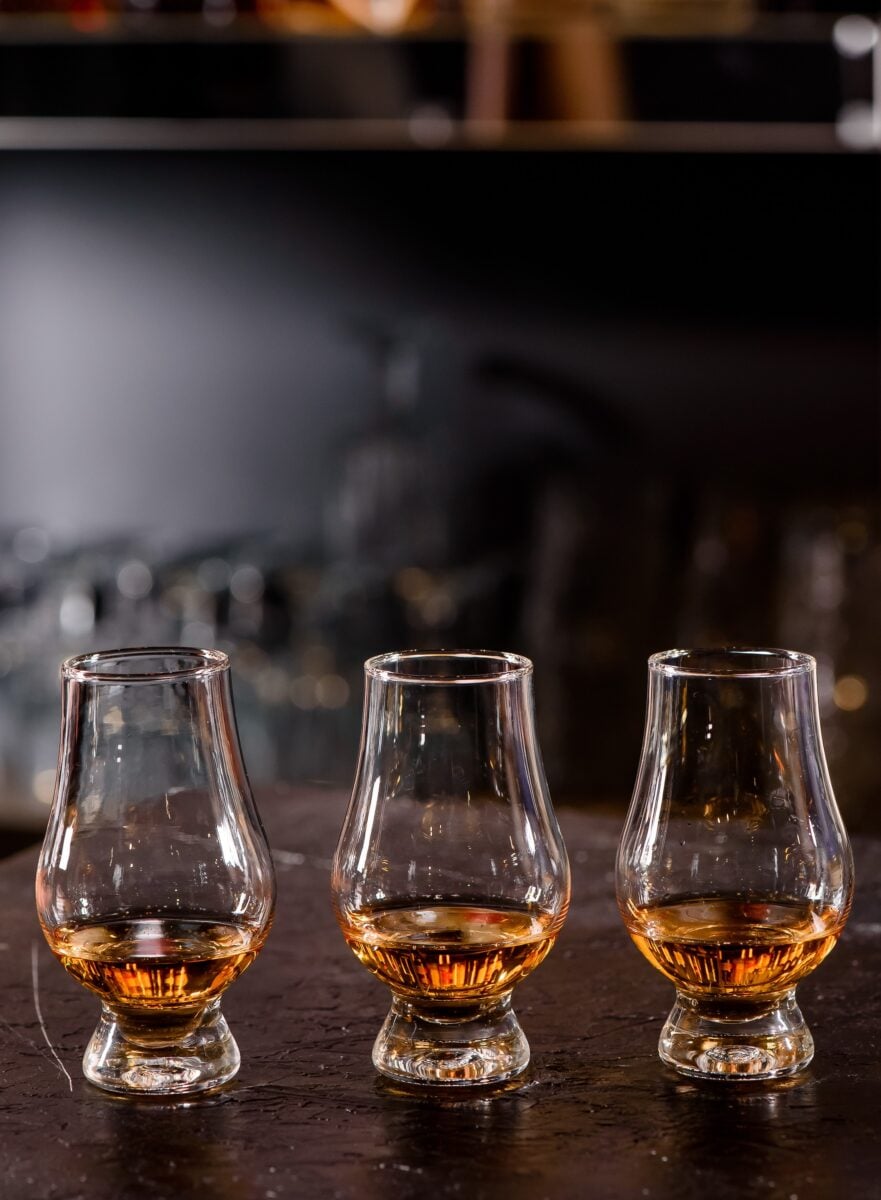
Give two people at a whiskey tasting a sample of the same bourbon and what would you expect to happen? They should each experience the same taste and smell, right? Not at all: Taste and smell are individual, affected by everything from the number of papillae on your tongue—the bumps we call “taste buds”—to the size of your nasal cavity and even your age.
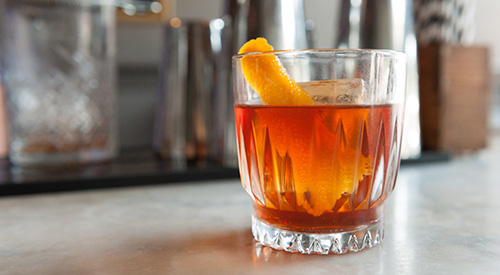
But what about gender and the idea that women are better tasters than men? It’s a common belief in bourbon circles, and there’s plenty of anecdotal evidence to suggest that might be the case. It does make some biological sense that in order to protect their children, women are hard-wired to detect subtle changes in smells and tastes that signal when food is spoiled or unsafe.
The discussion comes up from distillery tasting rooms to wine panels. While working on my 2018 book, Distilling the South, I visited more than fifty distilleries in eleven states. Though I certainly encountered plenty of men who assumed I couldn’t possibly understand the science of turning grains into drinkable alcohol, I also noticed the increase in women either working in distilleries or visiting tasting rooms to learn.
Still, the scientific evidence is sketchy on whether there’s a real difference in how men and women perceive bourbon and flavors, and what—if anything—accounts for it.
Dr. Paul Wise is a researcher with the Monell Chemical Senses Center in Philadelphia, an independent institute dedicated to studying taste and smell. An expert on flavor and the interaction of taste intensity and retronasal odor (how we perceive things like the smokiness in a bourbon, for instance), Wise has heard the claim about women being superior tasters many times, but he doesn’t think there’s much proof. In studies, he says, the actual difference between men and women is very small and can vary as much between age groups as it does between gender.
So much of what we taste depends on smell. One popular demonstration among Wise’s Monell colleagues is to distribute a distinctive flavor of jelly bean to tasters (banana is a good one for this). Hold your nose while you chew and try to identify the flavor. Before you swallow, let go of your nose and breath in: It will suddenly jump out at you. And while some people believe women are more sensitive to smells, there’s no real proof of that either, he says.
There are such wide variations between individuals that it’s hard to draw solid conclusions. Women of child-bearing age may be more sensitive to odors, but women who are post-menopausal may not be. One thing Wise has noticed in studies, though, is that women tend to be better study subjects. “It seems like women take it more seriously and pay closer attention,” he says. That could make them stand out in other scenarios, like bourbon tastings.
Peggy Noe Stevens sees something else at play with female tasters. A Kentucky native and the founder of the organization Bourbon Women, Stevens was the first woman to receive the title of master bourbon taster and worked with Brown-Forman for seventeen years. She’s heard the discussions about women having superior olfactory receptors, and the theories that women developed more sensitivity to tastes and smells to safeguard their children. But after years of leading tasting events, she has another theory: Women may just be better at describing what they’re tasting.
“Are we, as women, more expressive?” she says. “We are baking at home and cooking at home. A man might say [something tastes like] caramel, while a woman will say ‘the topping of a crème brûlée.’ Is our vocabulary just more expressive?”
Stevens’s wealth of experience in leading tastings has shown her something else that challenges stereotypes about women and whiskey. “What I definitely know, when we have done blind tastings at all different proofs and grain bills, women will go with the higher proof, the more robust, and the spicier,” she says. “It’s absolutely contrary to the assumption that to get a female consumer, we have to make whiskey that’s sweeter, milder, and lower proof.”
Becky Harris, the master distiller of the craft producer Catoctin Creek in Purcellville, Virginia, agrees with Stevens that women’s experience as cooks may give them an advantage as distillers and blenders. “I grew up cooking and tasting,” says Harris, who was a chemical engineer before she and her husband, Scott, opened their distillery in 2009. “You kind of build up a bank of the vocabulary of tastes and smells. What kinds of things go good with this? You’re focused on that.”
According to the group Women in Distilling, women now represent 8 percent of distillery owners and operators around the world, a number that’s still small but growing. As more women take on those roles, their abilities to pinpoint tastes and aromas may become more valued in the industry.
“I do feel that women, again, are more articulate, and I can’t say that hurts,” Stevens says. “I’ve spoken to male distillers who say the same thing. That doesn’t mean men don’t have good palates. It just means it’s being noticed.”
Garden & Gun has an affiliate partnership with Bookshop.org and may receive a portion of sales when a reader clicks to buy a book. All books are independently selected by the G&G editorial team.