

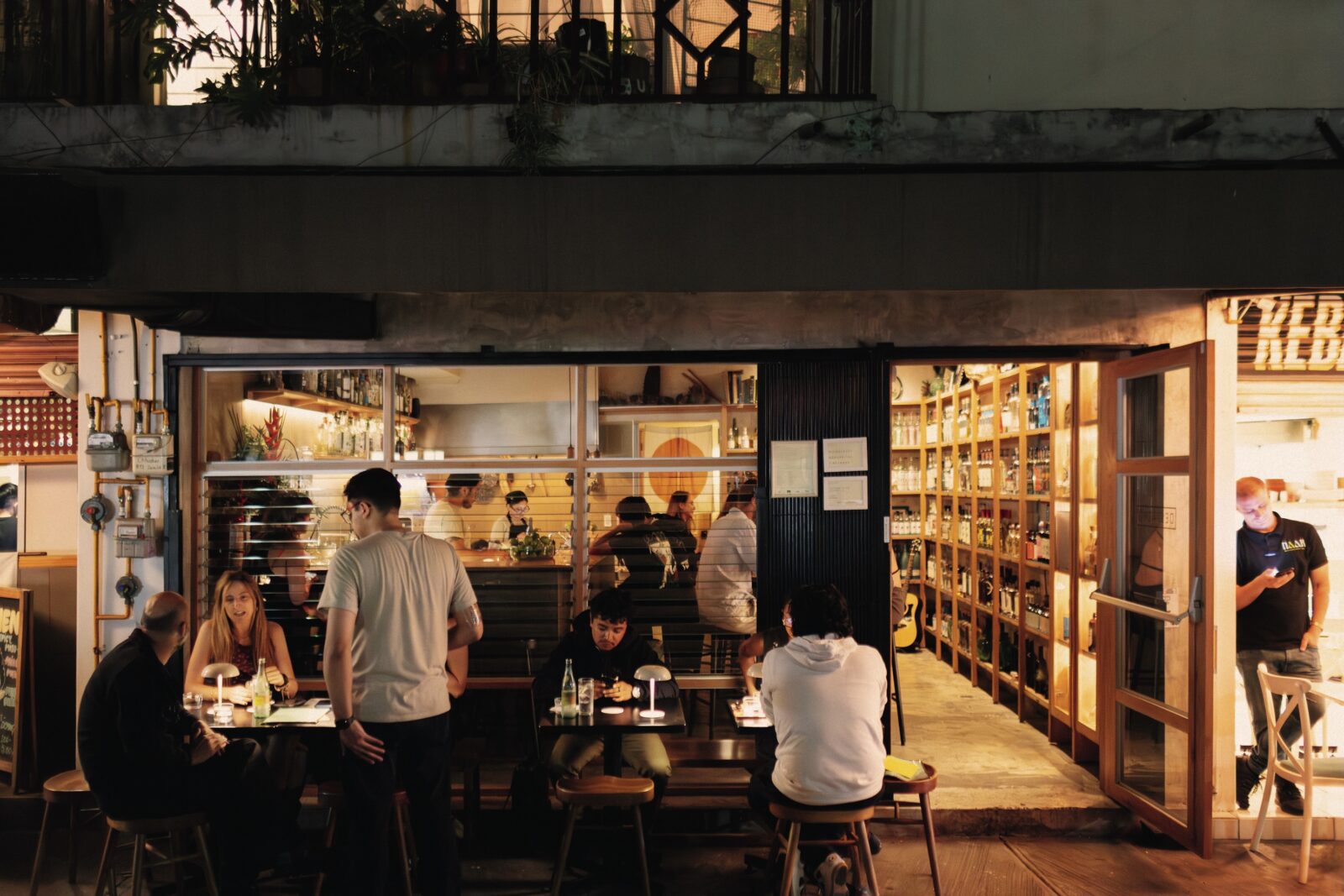
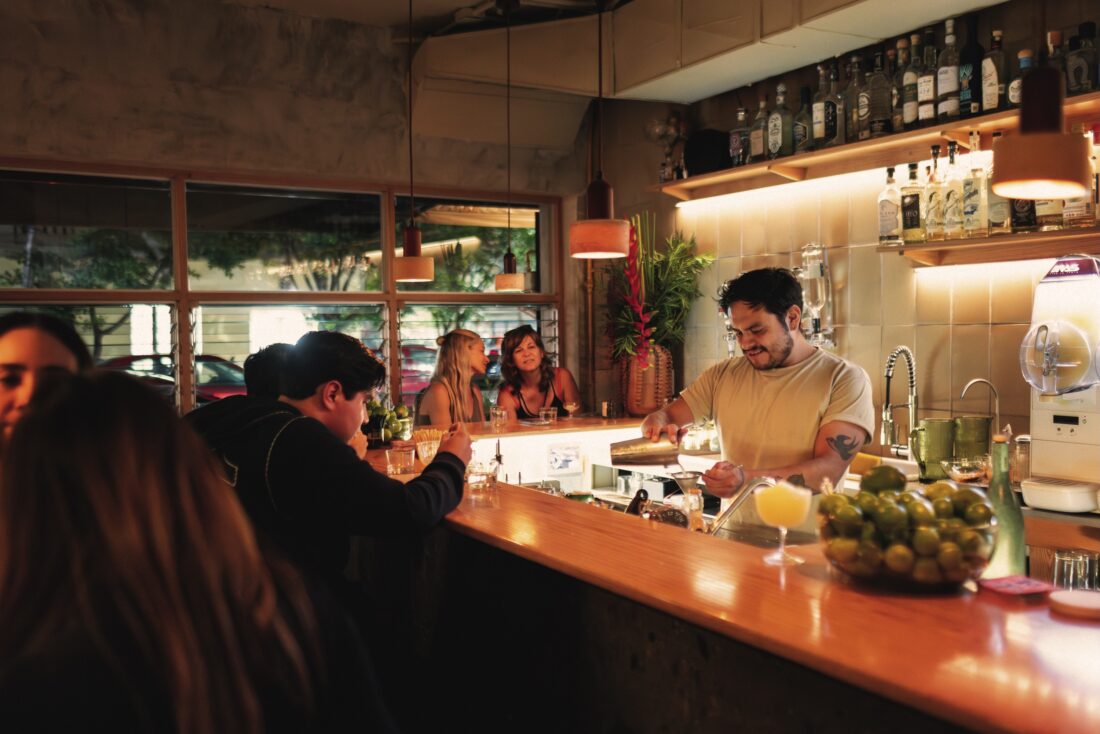
I’m sitting on a barstool at Despacho Margarita, a trendy new bar in Mexico City’s Roma Norte neighborhood. I’ve just ordered a spicy margarita. I’m not especially proud of this.
A few years ago, the trend-tracking website InsideHook titled a post “The Margarita Is Boring,” and I don’t disagree. The drink is too familiar, too commonly ordered, too often served as a slushy, salt-rimmed cliché—basically the Bud Light of mixed drinks.
There’s also the argument that the margarita isn’t truly Mexican, despite its association with tequila, a spirit that must be made in Mexico. It’s the drink of American chain restaurants, coastal resorts, and questionable happy hours. The spicy margarita, with its Tajín rim applied like sloppy lipstick, can feel like a more desperate younger sibling.
But Oscar Valle, the bar’s cofounder, told me to order one. And after a little time here, I’ve decided to trust him.
I’m in Mexico City for a week, and spending much of it chasing margaritas. For those who know the drink’s muddled history, this might seem foolish. This is one of the world’s great food cities, and its cocktail scene has become a destination in its own right—this year, it took up seven spots on the North American 50 Best Bars list.
Yet here the margarita is undergoing a quiet rebirth. Somewhere in its nearly century-long history, it became an “open-source” cocktail, claimed and modified by bars and cultures everywhere. That makes Mexico City a revealing place to order one. The city’s skilled bartenders are reclaiming the drink, asking what it might mean if its ingredients and assumptions were treated with the same seriousness as a Manhattan or an old-fashioned.
“So much of the margarita’s story has been shaped outside of Mexico,” Valle tells me. He opened Despacho Margarita last October with partners from Licorería Limantour and Baltra Bar, both fixtures on the 50 Best list. “For us, Despacho Margarita was a way to bring the conversation home.”
As the author and drinks historian David Wondrich notes in The Oxford Companion to Spirits and Cocktails, “The precise origins of the margarita are one of cocktail history’s most notorious swamps.” At least six claims exist, with possible birthplaces including Ciudad Juárez, Acapulco, Los Angeles, and Galveston, Texas. What is clear is that Americans fully embraced the drink in the mid-twentieth century. Jimmy Buffett’s 1977 hit “Margaritaville” did nothing to slow its ascent. The appeal is obvious: When made well, the margarita offers a beguiling mix of flavors, balancing sour, sweet, salty, and a touch of bitter in a single sip.
Walking through the neighborhoods of Roma Norte and Condesa, I see margaritas advertised everywhere—chalkboards outside bars and restaurants, each promising a slight variation. This reflects two overlapping trends: the neighborhoods’ increasingly international character, influenced in part by American expats, and Mexico City’s craft cocktail revival. Bartenders are taking on the margarita as a challenge—like a chef transforming an unlikely ingredient into something remarkable.
“Leading bartenders have embraced the margarita as a canvas for creativity while still honoring the classic formula,” confirms Steffin Oghene, vice president of international sales for El Tequileño, a brand founded in 1959. “We’re seeing a shift toward high-quality ingredients, fresh citrus, and premium tequilas.”
One of the pleasures of wandering Mexico’s capital is stepping into a bar and finding yourself suddenly a world apart from the clamor of the streets. Over the week, I approach the city as if it were a human-sized margarita Advent calendar, getting surprised and often dazzled by what’s behind every door I open.
At Licorería Limantour, part of the first wave of modern cocktail bars here when it opened fifteen years ago, I order a forebear of the current revival: the Al Pastor Margarita. Created by former partner Benjamín Padrón Novoa, it captures the flavors of late-night tacos al pastor—a mix of smoky pork, pineapple, cilantro, chiles, and lime. In the drink, the lime recedes, and more vegetal tastes take center stage.
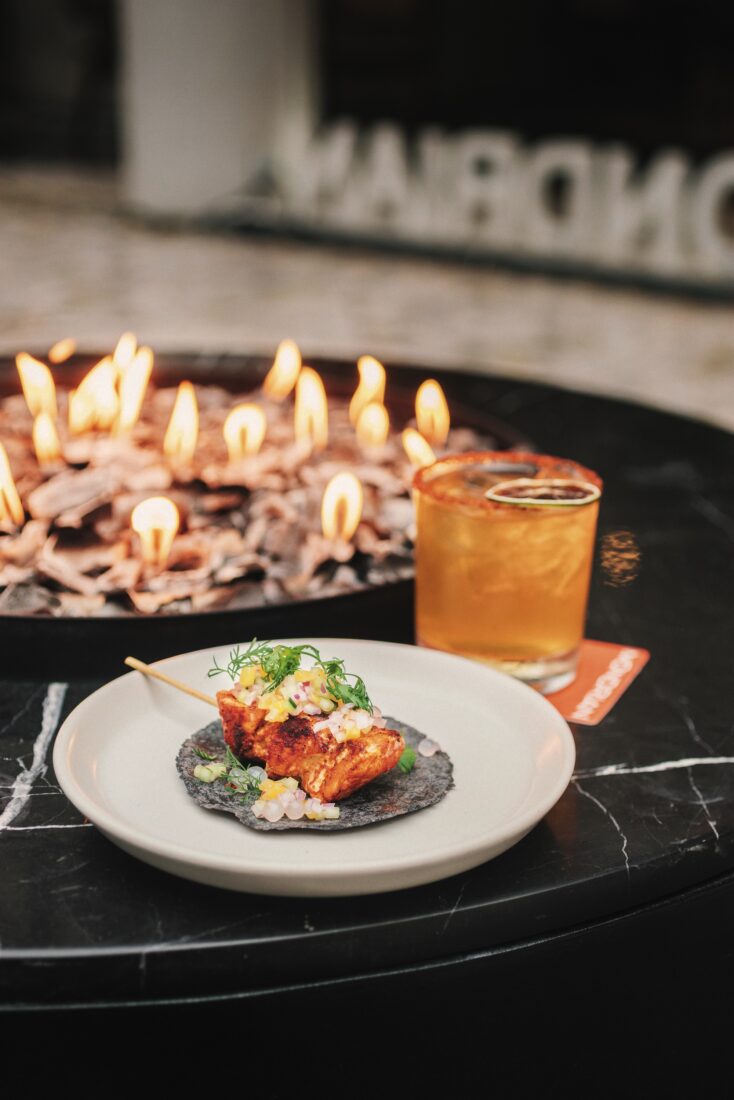
Elsewhere, bartenders weave Mexican ingredients into more subtle riffs. At La Terraza in the Mondrian hotel, I try a spicy cucumber margarita featuring Ancho Reyes, a chile liqueur from Puebla. The bartender notes that while margaritas have been driven by foreign visitors and expats, more Mexican customers are beginning to explore them with curiosity.
At Zagaz, a cocktail bar with a Brooklyn vibe but a firmly Mexican foundation, margaritas get shaken with oversize ice cubes that crack like small detonations. The one I order includes Licor de Axiote, which might be described as a Mexican Chartreuse, lending the drink a pleasing edge. At Chow-Chow House, a hip spot with a Chinese takeout theme, my spicy margarita incorporates yuzu and green pepper and arrives garnished with a chicharron doused with hot sauce.
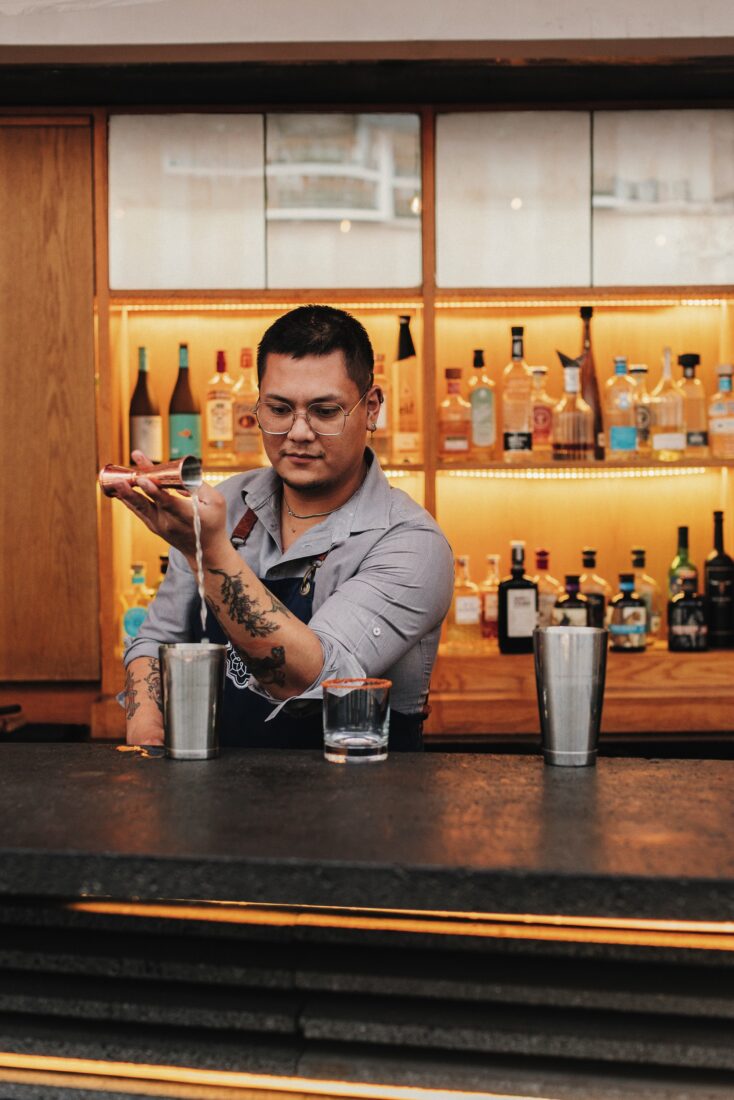
Bartenders in the United States usually ask if you’d like the rim salted. In Mexico City, not so much—it invariably comes thickly encrusted with salt (or Tajín) by default. Occasionally, though, a bar surprises.
At the high-concept FO+MA, the menu doesn’t list a margarita—I imagine this would be like listing a peanut butter and jelly sandwich at a three-Michelin-star restaurant. I ask for one anyway, and it arrives in an elegant rocks glass with a lightly pocked ice sphere and the most delicate salt rim I’ve ever seen: a faint, translucent film, like dried seawater on skin after a swim. The bar had evidently conscripted its cocktail lab, set behind a glass wall, to take the drink from the past into the future.
Despacho Margarita, meanwhile, embodies a kind of shrine to agave’s present. Shelves line one wall with bottles of tequila and related spirits for sale. (“Mostly nonadditive, noncommercial brands,” Valle says.) The menu offers six classic margaritas, each made the same save for the tequila. It’s a way to taste how technique, time, and terroir affect a spirit—the version made with Calle 23 Blanco subtly different from one with Tapatio Reposado.
The spicy margarita that Valle recommended turns out to be surprisingly layered. “We love the classic margarita, and we try to respect the ingredients,” he says. “But the spicy one we can really play with.” It incorporates a Yucatán orange liqueur and a mix of five chiles: serrano-infused cucumber cordial, habanero-laced agave syrup, and a rim dusted with smoked Oaxacan chiles plus two others. Each sip feels like descending into a new register of flavor.
It is, without question, excellent. But I encounter the most definitive margarita of the trip a twenty-minute drive south, at the San Ángel Inn. Set in a former hacienda on an estate that dates to 1616, it’s been a restaurant since 1963. I settle in the bar—a dusky room just off the meticulously tended garden and patio. The beams are heavy and dark, the sconces candle shaped, the mood sedate.
I order a classic margarita. The server, dressed in formal attire reminiscent of nineteenth-century European dining rooms, delivers it in a martini glass with a modestly salted rim. The pour is small—three or four ounces—with the remainder resting in a chilled sidecar nestled in ice, to be employed as needed. This is how it should be: the last sip as cold as the first.
It is also delicious—a perfect balance of salty, sour, and sweet, with the tang of a raspy tequila keeping me grounded in place. At this moment, at this place, it feels like the perfect homecoming.
Still thirsty? Keep reading:
>> For Love of Agave: Five Southern Bars Putting Mexican Spirits Front and Center
>> Spicy Serrano and Cucumber Margarita
Wayne Curtis is the author of And a Bottle of Rum: A History of the New World in Ten Cocktails and has written frequently about cocktails, spirits, travel, and history for many publications, including the Atlantic, the New York Times, Imbibe, Punch, the Daily Beast, Sunset, the Wall Street Journal, and Garden & Gun. He lives on the Gulf Coast.
Garden & Gun has an affiliate partnership with Bookshop.org and may receive a portion of sales when a reader clicks to buy a book. All books are independently selected by the G&G editorial team.