

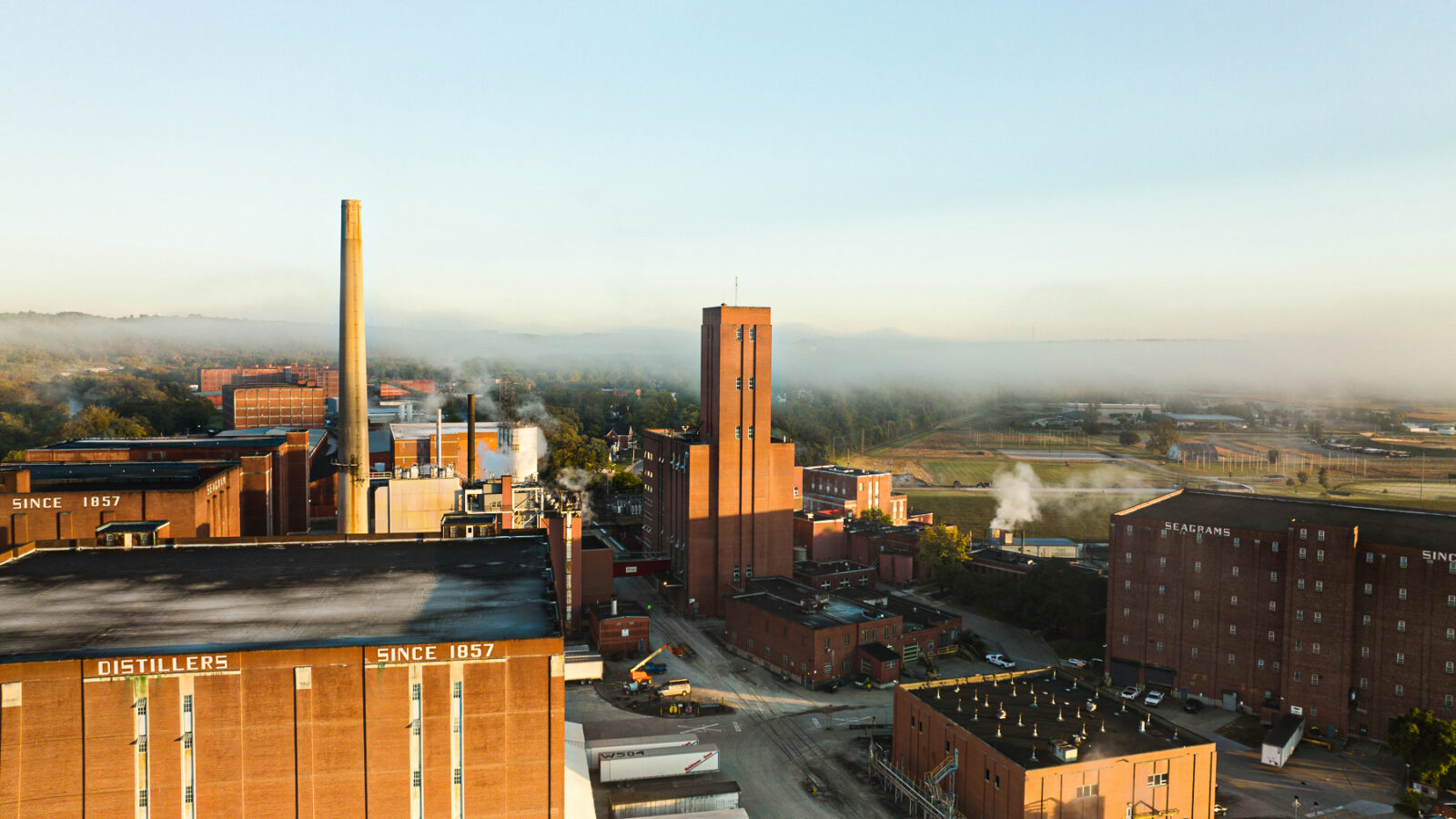
For eagle-eyed whiskey drinkers, the words “Distilled in Indiana” printed in small type on a bottle have long offered a clue to what’s inside. There’s a good chance that whiskey came from MGP (Midwest Grain Products), the sprawling distillery in Lawrenceburg, Indiana, that for more than a decade has quietly produced bourbon and rye for bulk sale to other companies. Once something of an open secret, many upstart whiskey brands essentially built their reputations around barrels sourced from the distillery, especially its distinctive rye whiskey.
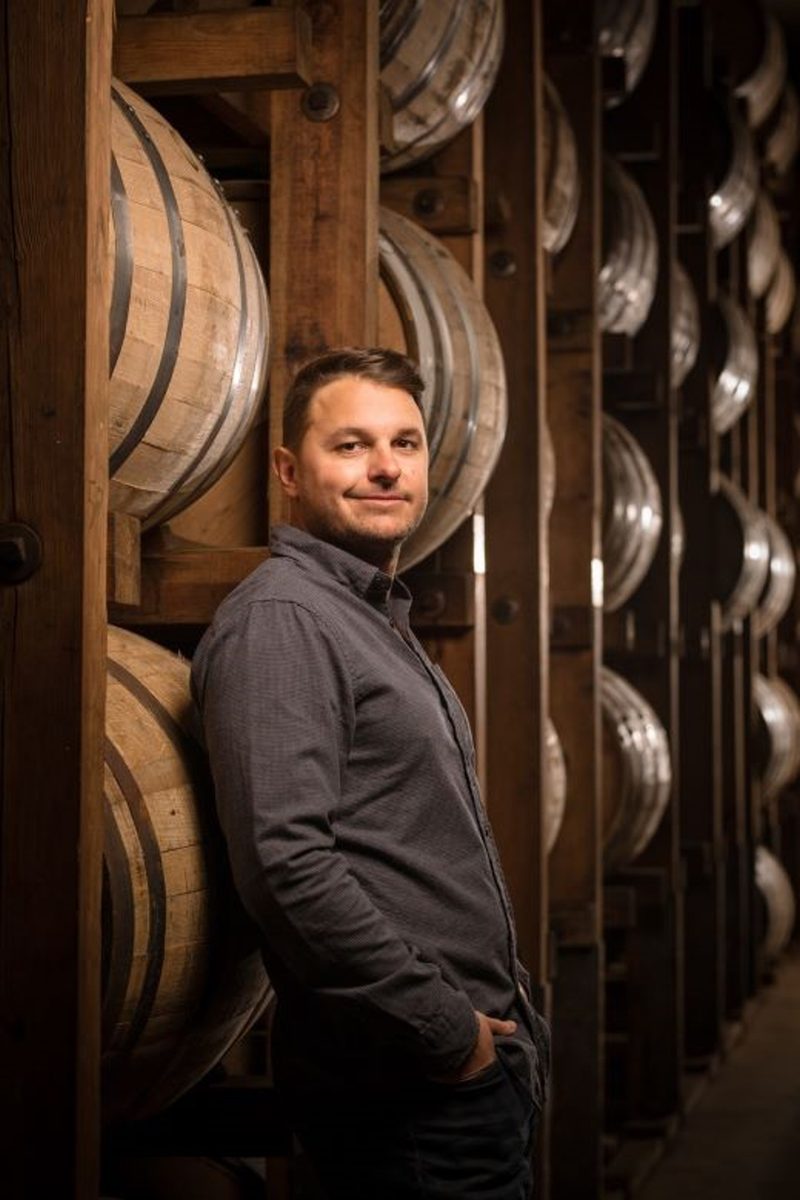
“It went from a thing that nobody talked about to now, for most of our customers, it’s kind of a badge of honor,” says Ian Stirsman, master distiller at the Lawrenceburg facility. “The MGP name carries so much weight with people in the industry and with enthusiasts, but your everyday consumer doesn’t necessarily know that name.”
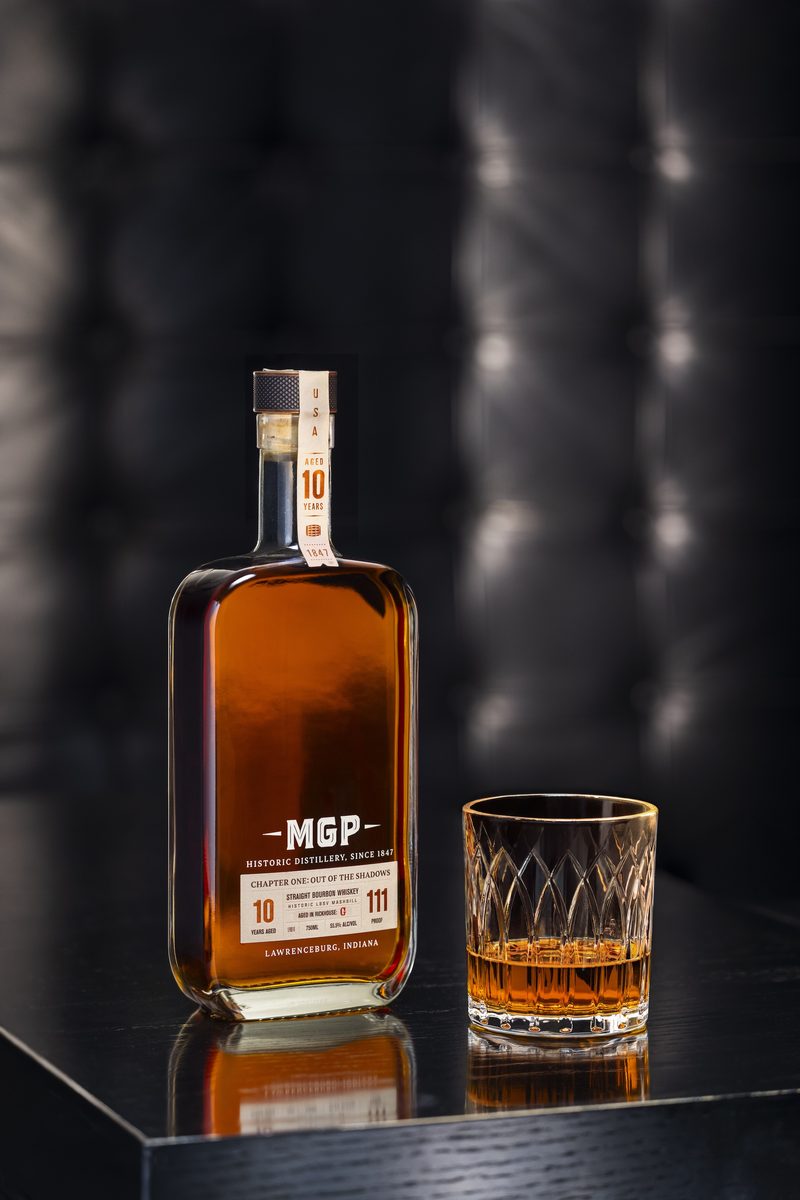
Now, for the first time, the company is putting its own name front and center with the launch of MGP Chapter One: Out of the Shadows. The ten-year-old, 111-proof bourbon ($70) debuted at last weekend’s Kentucky Bourbon Festival in Bardstown, with a wider release beginning in early October. At the same time, the Lawrenceburg facility, renamed in 2021 as Ross & Squibb Distillery, is becoming MGP Distillery once again. The tagline on the new bottle speaks volumes: “The distillery behind the curtain is revealed.”
“This is the first thing that’s just us shouting ‘This is from us’ and putting the MGP name actually on the label,” Stirsman says.
Recently, I joined Stirsman and a small group for a rare behind-the-scenes look at what is likely the largest American distillery many people have never heard of (and to try out the new bourbon). As I cross over the Ohio River near Cincinnati, the distillery rises from the surrounding trees like its own industrial cityscape. The campus stretches for about a mile along Tanners Creek, which flows into the river just downstream. Once through the gates, we move between hulking brick buildings. A network of pipes crosses overhead, moving liquid from one step in the production process to the next. The complex includes sixteen active stills and has the capacity to make not only bourbon and rye, but also gin, vodka, and neutral spirits. “We’re by far the most versatile of the big guys,” Stirsman says.
That capability has been built over several generations. Distillation on the site dates to 1847 and the Rossville Distillery, followed later by Squibb. Much of the present-day facility owes its scale and setup to spirits giant Seagram, which arrived in 1933 and rebuilt and expanded it primarily to produce its Seagram’s Seven Crown whiskey, which is blended from multiple components. “That’s why we’re so versatile,” Stirsman says. At its peak in the 1970s, Seven Crown was one of the best-selling spirit brands in America, moving millions of cases annually.
The distillery sits above the vast Great Miami aquifer, which supplies water at a constant 56 degrees that’s used throughout the distillation process, including for cooling. “We pull about 8.5 million gallons out of the ground every day, and we don’t ever touch the water table,” Stirsman says. Corn, most of it grown within a hundred miles, arrives via a choreographed succession of tractor-trailers and is stored in towering silos before being milled and cooked.
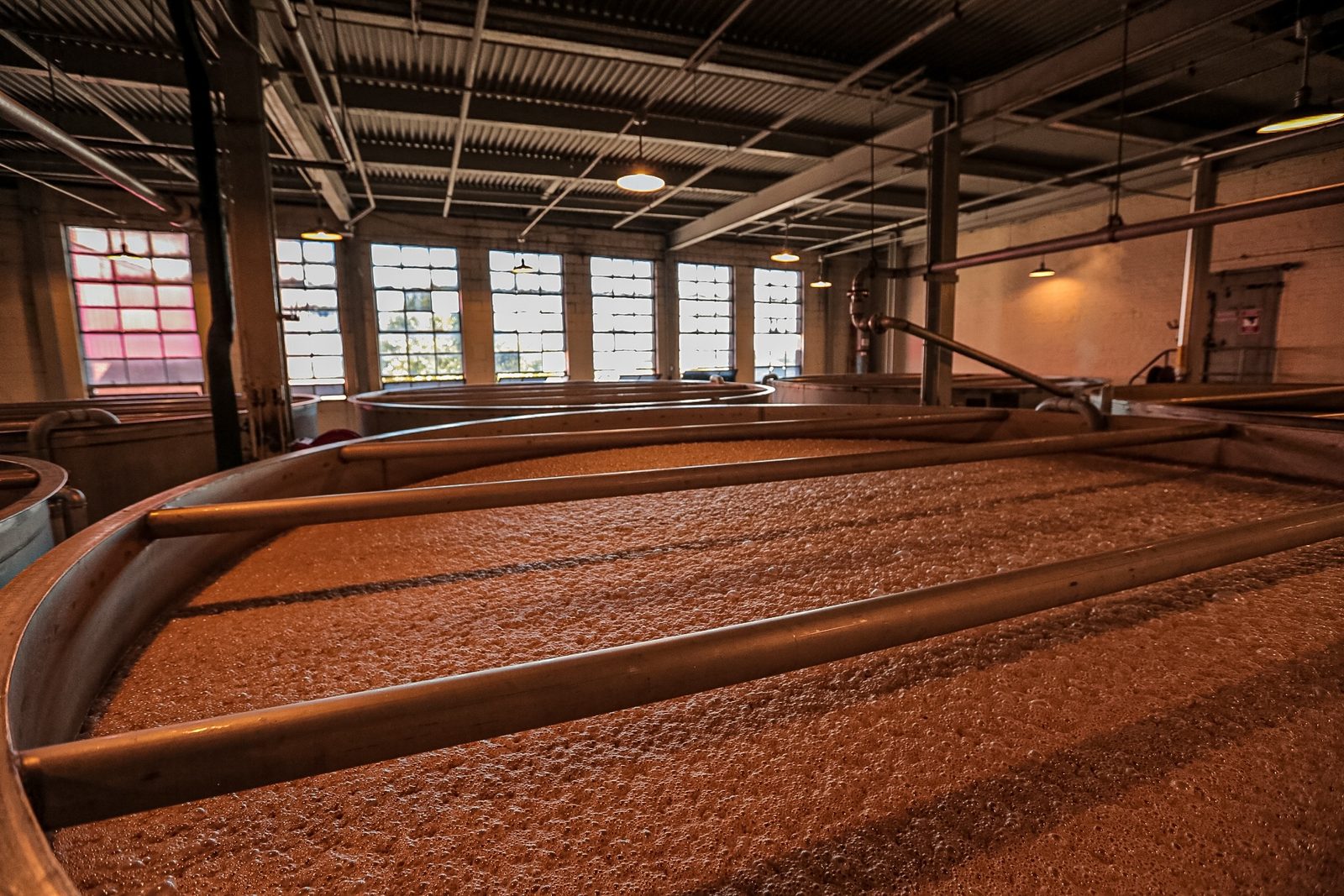
Stirsman explains that despite MGP’s reputation for a few famous recipes, the distillery makes more than forty different whiskey mash bills in a typical year. One critical ingredient ties much of that production back to the Seagram’s era: its house yeast strain, originally cultivated in the 1940s. Beyond producing alcohol during fermentation, yeast plays a significant role in shaping a whiskey’s aroma and flavor. The company stores samples in several offsite locations, and technicians painstakingly propagate an almost imperceptible amount to inoculate the distillery’s massive fermenters. “Just that tiny bit of yeast will end up making enough for about fifteen 50,000-gallon fermenters,” Stirsman says.
The scale becomes easier to comprehend, if no less impressive, inside one of the fermentation rooms. Stirsman leads us across a metal-grate floor set near the tops of several rows of stainless-steel fermenters, allowing us to peer into the two-story-tall tanks. At nearly 28,000-gallons each, these are considered the small ones. Just outside, operators oversee the process from banks of screens in a control room that looks more like something at NASA than a whiskey distillery.
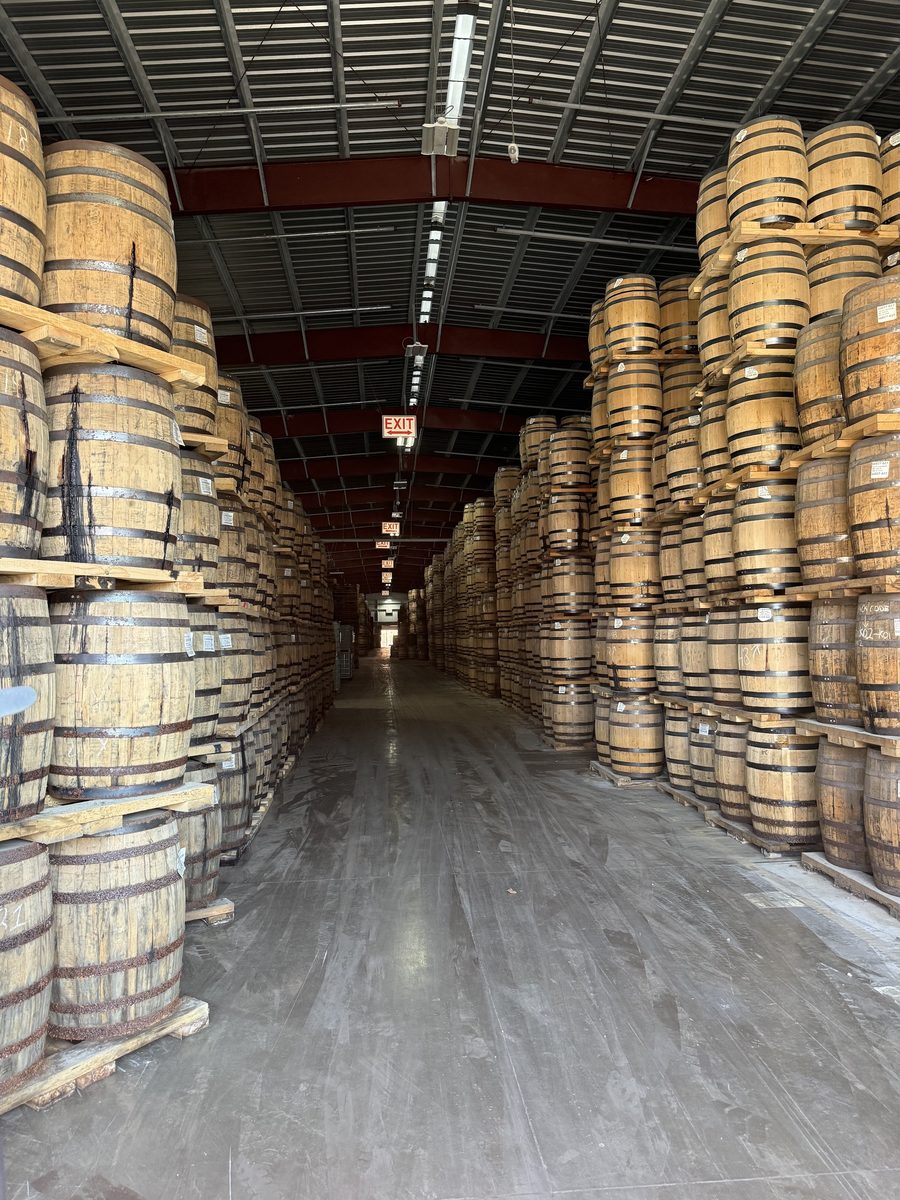
Once barreled, the whiskey is aged in historic brick and concrete warehouses that ring portions of the campus, many dating to earlier eras of the distillery. Their different construction, locations, and microclimates each create distinct environments. Several even have basements, where barrels mature below ground in cooler conditions.
Finally, we end up back in a conference room, where a bottle of Chapter One sits on the table. The bourbon is intended as the beginning of an ongoing series, with future releases likely to follow annually. Stirsman pours the whiskey, made from MGP’s classic high-rye bourbon mash bill of 60 percent corn, 36 percent rye, and 4 percent malted barley, and aged for a decade in Warehouse G. “There’s nothing more quintessentially MGP than that,” he says.
Delicate aromas of wild honey and marshmallow fluff waft from the glass. I take a sip and am reminded of rich, creamy custard and caramelized sugar, with just enough peppery bite to temper the sweetness. It’s a well-composed whiskey, mature without tasting overly oaked, and impressively lively and nuanced, especially for a ten-year-old bourbon at $70. “It has that cherry-cola note, and all those things people think of when they think of MGP bourbon,” Stirsman says. “I think this is a good example of the best of what we do.”
Tom Wilmes is a journalist based in central Kentucky who covers bourbon and other spirits, travel, and food. A contributor to Garden & Gun, he has also written for Whisky Advocate, The Local Palate, Southbound, and other publications. A Kentucky Colonel and Certified Executive Bourbon Steward, he has spent years reporting on—and indulging in—the culture he covers, a responsibility he doesn’t take lightly. Follow him on Instagram @americadistilled.