

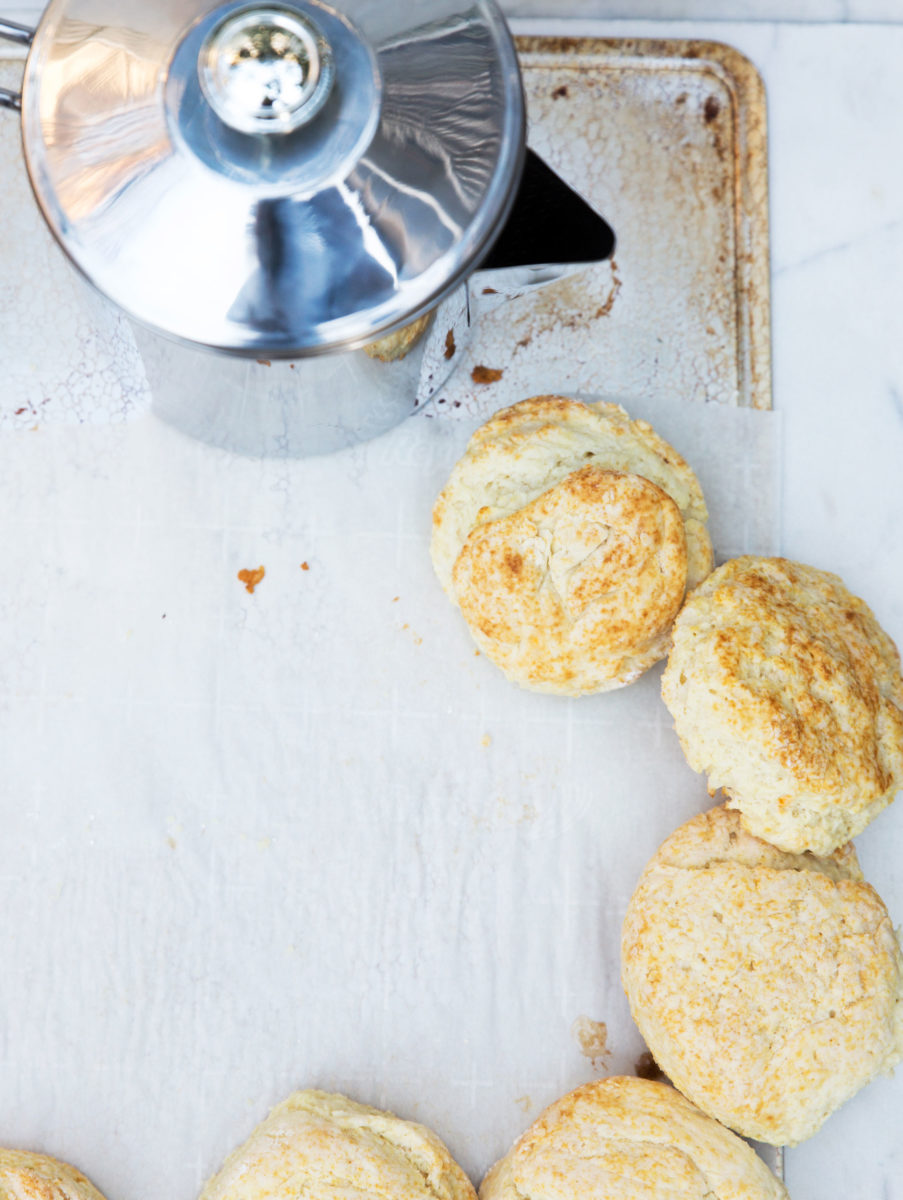
Butter is 20 percent water, give or take a few percentage points depending on the type. Bacon grease, like lard, is 99.5 percent pure fat—little to no water. When substituted for butter in equal measure in a biscuit, bacon grease causes a couple of things happen—or, more accurately, prevents things from happening. First, it retards the development of gluten, the protein that helps dough become stretchy. This is a good thing; less gluten makes for a more tender biscuit. Second, with hardly any water, less steam is created when the butter melts in a hot oven, so bacon grease biscuits will be flatter than biscuits made with butter. (To get more rise, add a little more baking powder—a teaspoon or two.) Finally, butter contains milk solids that brown when baked. Bacon grease doesn’t, and so the biscuits will appear paler—more white than yellow. You can brush the tops with melted butter for a more traditional appearance.
Bacon-Fat Biscuits
Yield: Makes 6-8 biscuits
Ingredients
2 cups all-purpose flour
4 tsp. baking powder
¼ tsp. baking soda
1 tsp. salt
1 tsp. sugar
4 tbsp. cold bacon grease
¾ to 1 cup cold whole buttermilk
2 tbsp. butter, melted for brushing (optional)
Preparation
- Preheat oven to 450 degrees.
- Sift the flour, baking powder, baking soda, salt, and sugar together in a large bowl. Blend the bacon grease into the flour with your hands until the mixture resembles coarse meal with flakes of bacons grease dispersed throughout. Make a well in the center of the flour mixture, then slowly pour in the buttermilk, stirring until a dough forms (if this happens with ¾ cup, stop; if not, keep slowly adding remaining butter milk until dough forms).
- Turn the dough out onto a floured surface and knead a few times, then roll or pat the dough to ½ inch thick. Using a biscuit cutter, cut out as many rounds as possible. Reroll scraps and cut to get more biscuits. Transfer to a baking sheet, arranging biscuits on the pan so that each one just touches its neighbor; they’ll “climb” each other as they bake. Optional: Brush tops with melted butter.
- Bake for 10 to 12 minutes, until the biscuits have risen and the tops have begun to brown. Serve warm.