

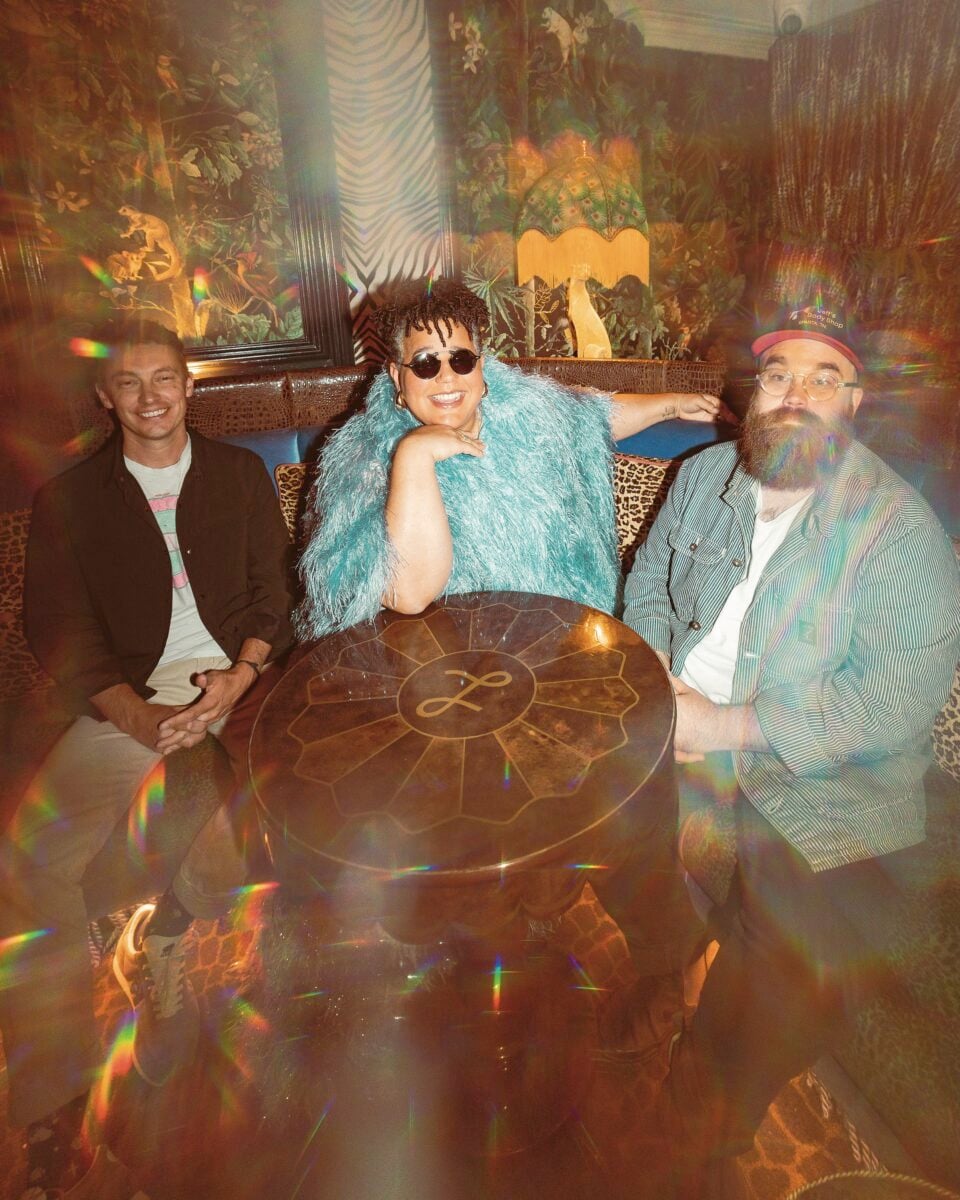
Brittany Howard needed a change. After spending most of the 2010s on the studio-tour-repeat cycle that followed Alabama Shakes’ breakthrough, “I didn’t want the industry and how things are supposed to go to strangle my love for music and creating,” she says. “I felt like it was getting toward being a job.”

It’s been eight years since Howard stepped away from the band. Now Alabama Shakes are back with I Must Be Dreaming, the group’s first album since 2015’s Sound & Color, and it was worth the wait. Continuing the Shakes’ evolution from their early garage blues sound, the record is a sprawling mix of 1960s rock, latter-era Beatles psychedelia, and Radiohead guitar skronk, filtered through the soul sounds of North Alabama. It exists because Howard, who wanted to stretch out creatively with her two solo records—2019’s Jaime and the 2024 follow-up, What Now— started wondering: What are the boys up to?
“I don’t think there was a plan to get back together at the time we parted,” guitarist Heath Fogg says. Bassist Zac Cockrell signed on with Howard’s solo touring band. Fogg holed up outside the Shakes’ hometown of Athens, Alabama, doing session work and being a dad to his two kids (Cockrell also has two children).
Then, in 2024, Howard agreed to play a benefit in Tuscaloosa for a longtime friend whose brewery was struggling after COVID. “I thought, it’d be crazy if the Shakes got back together for this thing,” she says. She played two solo songs, told the crowd she’d forgotten her electric guitar backstage, and walked back out with Cockrell and Fogg in tow. The room came undone.
“What if we did a secret show?” Fogg remembers her floating beforehand. “That’s the sort of stuff we used to do in Tuscaloosa anyway.” A run of performances followed, and then a recording session. The plan was a single, maybe an EP. “I think we did six, seven songs on the first session,” Cockrell recalls. “It was like, well, we might as well try and do a record at this point.”
I Must Be Dreaming came together, in Howard’s words, by working backward. Cockrell would bring in instrumental parts that were sometimes only twenty or thirty seconds long, and Howard would write her way into them. “For Sound & Color,” she says, “I had demos, I knew what I wanted to hear. For this one, everything was open. I needed to find a story within me that fit this.” For the hazy funk of “Tea Time,” Howard traded her powerhouse vocals for an ethereal coo. “It feels ancestral,” she says. “Like it’s some sort of twelfth-century song somebody had forgotten.” The slow, sensual soul of “Garden” and “Easy” is the band at its dreamiest, while “Time” started as a fifteen-minute jam that, as Cockrell puts it, “had some Black Sabbath in there. But we took that part out.”
At shows, the crowds have surprised everyone, and Fogg says he’s even noticed teenagers, who were small kids when their parents played Sound & Color in the car. Howard, who once roared through early hits like “Hold On” as if she were breaking down a door, has found herself stepping back from the mic mid-song, overcome.
“It’s been greater than my greatest expectations,” she says. “I did not expect people to show up like they have.” She pauses. “We don’t take it for granted.”
Matt Hendrickson has been a contributing editor for Garden & Gun since 2008. A former staff writer at Rolling Stone, he’s also written for Fast Company and the New York Times and currently moonlights as a content producer for Ohio University’s Voinovich School of Leadership and Public Service in Athens, Ohio.