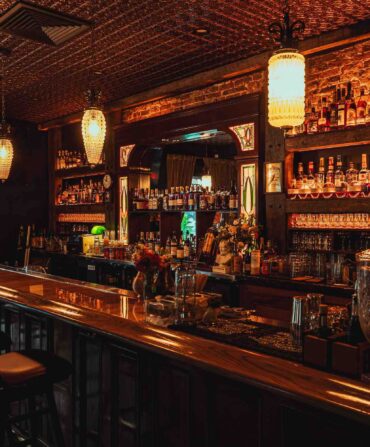
Though he’d never acknowledge it, Larry Rice helped put Louisville’s bourbon scene on the map with the Silver Dollar, the acclaimed whiskey bar and restaurant he opened in 2011. The Dollar, as fans lovingly called it, was as well known for its welcome to aspiring bourbon drinkers as it was for pouring some of the most expertly selected—and just flat delicious—American whiskeys available. The bar never recovered post-pandemic, though, and closed last year.
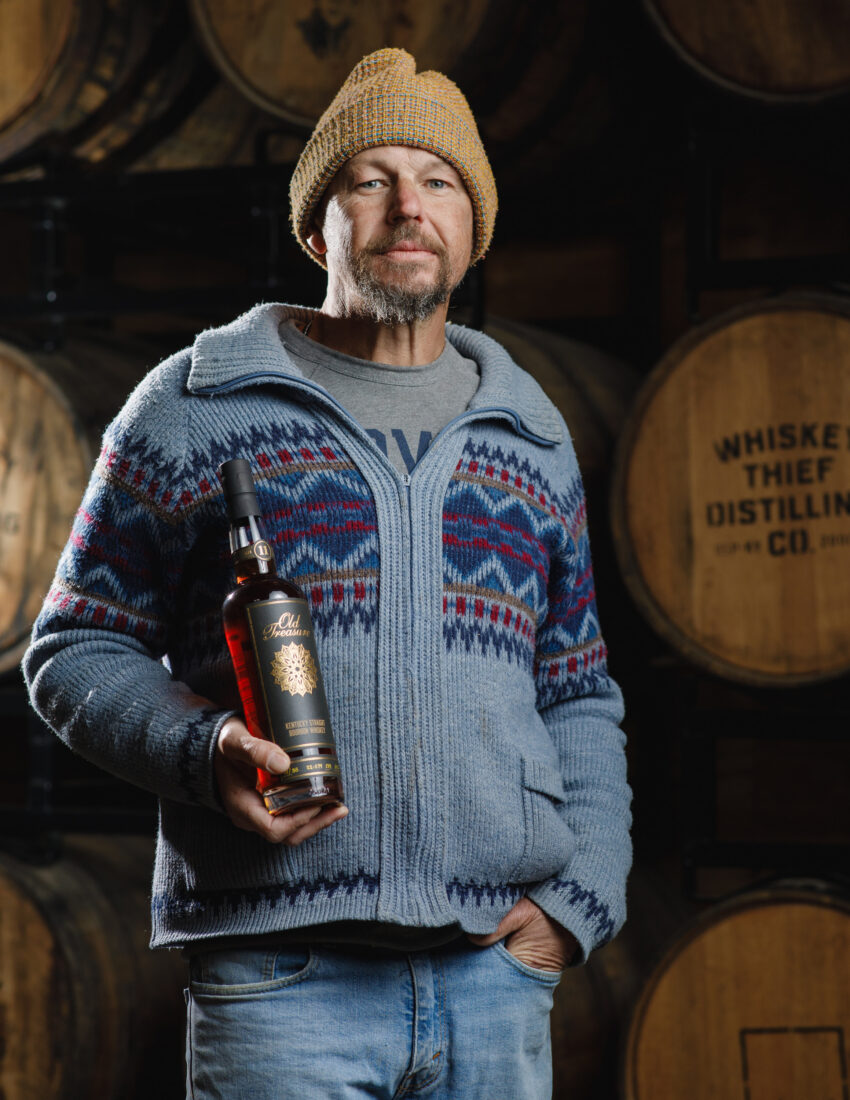
Along with opening other ventures along the way—including what many Louisvillians would tell you may be the city’s best neighborhood bar, the Pearl of Germantown—Rice quietly built a following who’d line up to buy his single-barrel picks. But he never took the step of putting his name on a brand…until now.
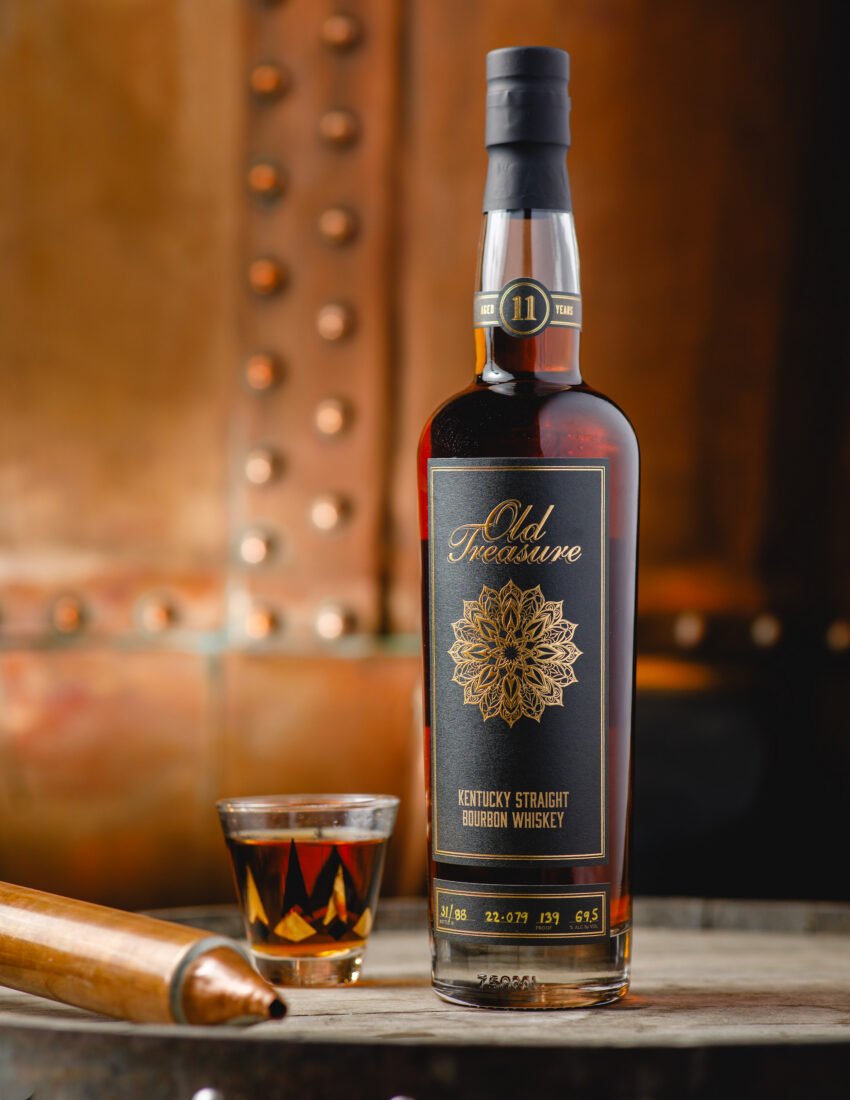
I joined Rice in late February at the first bottling of Old Treasure, his premium line of barrel selections, to learn more about the industry veteran’s new venture, what turned him off about the bourbon boom, and why now is the right time to get his hands on special barrels again. The eleven-year, 139-proof bourbon in the first barrel from his initial lot of four filled just eighty-eight bottles (barely—bottlers tipped the machine to get every last drop) with a beautiful, deep-mahogany-hued bourbon from a high-corn, no-wheat mash bill.
He’s selling direct to consumers (the first barrel is priced at $234 a bottle), and for those who don’t score the first round, more finds are in store, Rice says. “Everything that we put into a bottle we will love, or we won’t do it.”
A lot of us are still a little heartbroken that the Dollar was never the same after COVID. What made the bar special to you in its heyday?
I’m fortunate that even before, with 732 Social [the cocktail-forward French restaurant Rice helped open in 2008] and within the bar and cocktail scene, I got a lot of nice national attention, so I’m pretty well connected in most bourbon groups. 732 Social was pretty high-end, and I had this moment when I realized my mom hadn’t been in. She was like, “I don’t know if I’d be very comfortable. I don’t understand the menu.” I insisted that she come in, and I would walk her through the menu. But it clocked that not every Midwestern middle-class mother is going to get this level of attention.
So when we opened the Silver Dollar, I really wanted to have a space where everyone would feel comfortable—complete whiskey geeks or foodies or whatever, but I wanted people who weren’t that to also have a great time. That was a very organic and personal thing for me, but it became very on trend around the same time. Louisville was getting a lot of attention. Bourbon was starting to become hot among bartenders. So it was just a perfect storm.
What got lost in the industry once bourbon became so hot?
It was so much fun back in the day when even the big distilleries wanted support, so you could hit them up and do fun stuff. And nowadays, it’s like when places do really well on the hospitality side, you’ll get one of two vibes when you hit the door, right? One is, “Oh, we’re so glad to have you here.” That’s why they’re doing well; their hospitality is top notch. The other vibe is, “I bet you’re glad to be here.” And that’s when I’m turned off. The bourbon world kind of did that.
Why did you start a bourbon brand now, in the midst of reports about an industry downturn?
When I was running the Silver Dollar, that was probably my height of popularity in the bourbon world, and people approached me about doing bourbon brands. I said to a friend, “That’s all the world needs right now is another f****** bourbon brand.”
When there was so much money in bourbon, everybody was coming out with a label. Most of their money went into marketing, and they were all producing like a four- and five-year-old whiskey coming out of the same stock. They were all “small batch” with an exclamation point, but there were hundreds of barrels being dumped to get a consistent flavor profile. And to be honest, it was a really expensive endeavor and a huge commitment. You’d have to always have it available. When that happens, you can’t be selective, especially if you’re not the producer.
What’s changed now is the people who did buy those huge lots of bourbon will let you come in and hand-pick just the really unique, special barrels, and then I can turn around and go direct to consumer.
What are you looking for in a barrel?
If I’m picking barrels from a distillery, I think, “If they didn’t have to dump a hundred barrels at a time, they would always want it to taste just like this.” It’s got the hard DNA of that brand. And I don’t think every whiskey should be barrel proof, because not all of them drink well, but if I can find a high-proof whiskey that is a sipper, that’s worth considering. The finish is important, too. I want to want another drink, even if I shouldn’t have one.
I also have a secret weapon. I buy my barrels with Susie Hoyt [the Pearl of Germantown’s current owner and longtime collaborator with Rice]. We’re not a couple anymore, but she lets me help her out around the Pearl, and I get her to taste with me. I have more confidence that if I love something, and so does she, a lot of people are going to love it. The two of us have been in the business for thirty years. We’ve experienced enough to know what we like. I tasted all the other stuff, the mediocre and the bad. And so when exceptional is put in front of me, I recognize it right away.
You picked four barrels from a hundred you tasted. What stopped you with this first one?
It was that balancing act with the heat. Not every whiskey gets to 139 proof, nor should every whiskey be drinking at 139. And the color, it’s just such a great, beautiful dark amber. It’s viscous. And then it had notes in it that you don’t get in every bourbon.
Susie and I came up with the same note, this strawberries and cream. It’s got this vanilla pudding to it. Aside from your traditional cinnamon and cloves, you also had almost a gingerbread in there. There’s sassafras and cherry cola. It’s a nice flow where you don’t really know where one of the notes starts or ends. All those nuanced notes would have been washed away with eighty other barrels. In my mind, we get to save that barrel and present it as it is.
Chuck Cowdery, aka “the dean of American whiskey journalism,” commented on one of your social posts that this is his favorite emerging trend in the industry. What does it mean to have his blessing?
One of the things I love about Chuck is that you know how he feels about everything. He’s a cantankerous guy in a beautiful way. He’s kind of a purist as well. People say I’ve been in the bourbon world since before it was popular, but he was in the bourbon world decades before I was, so it does mean a lot to me. When he has something positive to say, I feel like my approach is coming across.
Who’s this bourbon for?
An audience that appreciates the same things about bourbon that I do. I mean, I did keep a few for myself. It’s for folks who probably have a pretty good collection already. You know, if I was just starting in the bourbon world, it wouldn’t be the first bottle I’d buy. I’d want to grow into it. It’s for bourbon lovers who are looking for their new favorite bourbon. That’s what we’re doing when we’re tasting barrels.
You named the bourbon Old Treasure. What’s the significance?
I grew up going to flea markets and antique shops, and my mom would say, “What treasures are we going to find?” When you go antique shopping, you may come home with nothing, but you might find a treasure. And I’m kind of treating my barrel picks the same way. I may taste a bunch of barrels and come home with nothing. But if I come home with something, I came home with a treasure.
Dana McMahan is a Kentucky Colonel, certified Executive Bourbon Steward, duly sworn-in (one-time) KCBS barbecue judge, and longtime former Louisville Courier Journal dining and drinks columnist. Her writing has also appeared in Real Simple, Condé Nast Traveler, the Washington Post, and Esquire. Though her wanderer’s heart is as likely to land her in Kathmandu befriending street dogs as in the Arctic playing with sled dogs, she always comes home to the very best dog, her own Cassius Thunderpaws, in Louisville. Follow her @elleferafera.