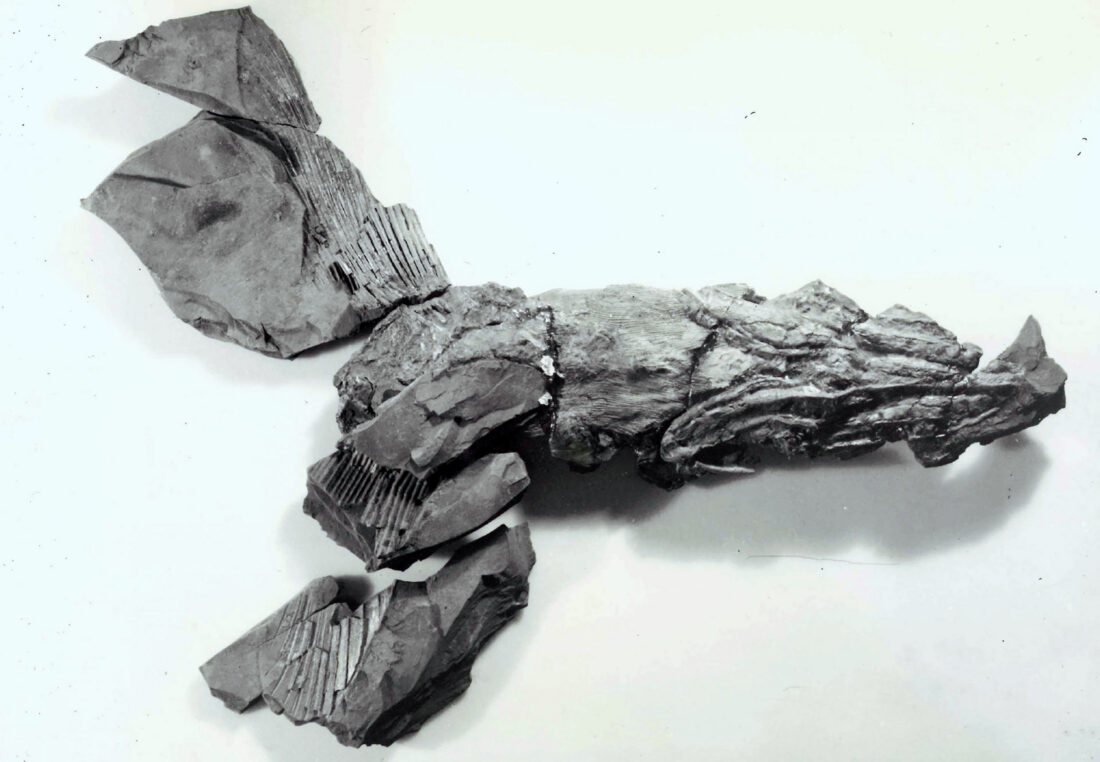
What we know of ancient sharks comes mostly from their teeth. Because the skeletons of these fascinating fish are made of cartilage instead of bone, teeth are the bits of them with the best chance of surviving the ravages of time. Except, that is, on an ancient seafloor nicknamed “Sharkansas,” aka the Fayetteville Shale, a geologic formation in northwestern Arkansas with a strange superpower for preserving shark cartilage.

The landlocked state of Arkansas might seem an unlikely home for a globally significant site for studying shark evolution. But some 326 million years ago, the Natural State wasn’t landlocked at all. It formed the coastline of a giant ocean whose levels rose and fell over time, where sharks and bony fish of all shapes and sizes swam, hunted, reproduced, and died. “Imagine that one of these sharks drifts down to the bottom and gets covered over with sediment, which we think happened relatively quickly in this system,” says Allison Bronson, a paleontologist at California State Polytechnic University Humboldt who works in the Fayetteville Shale. The blanket of mud created the perfect environment for resisting decomposition—low oxygen, high acidity from a cocktail of chemicals in the region’s unique geology. Minerals coated or replaced the cartilage, capturing it in three dimensions.
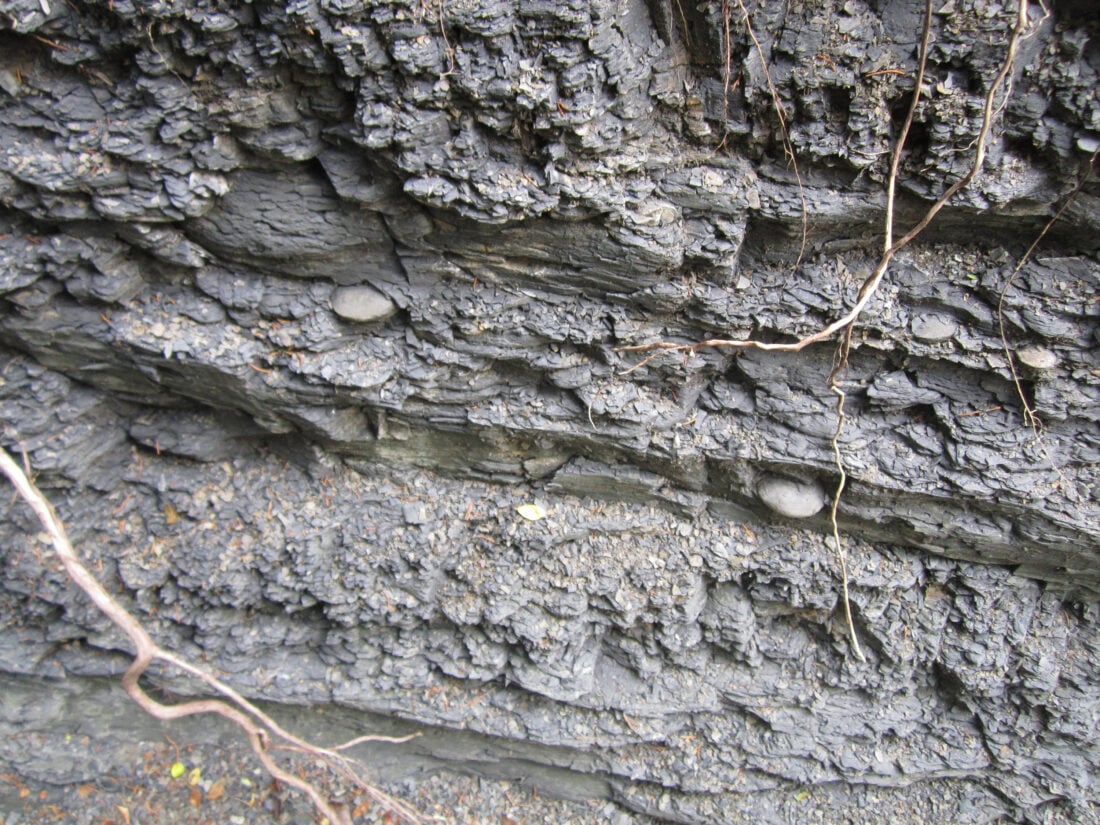
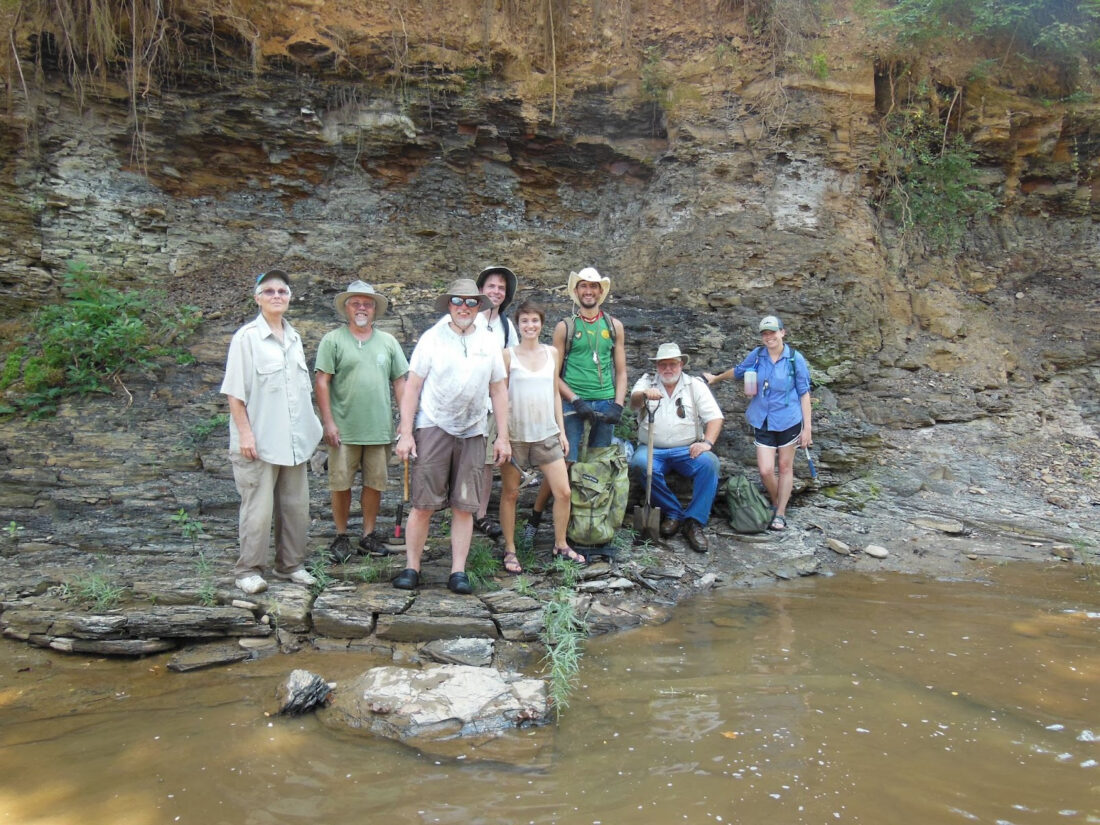
Fast-forward millions of years, and you might find Bronson and her colleagues walking the creekbeds at productive sites around the White River close to Fayetteville, or near the towns of Leslie and Marshall. The scientists look on the sides of the creeks for nodules that are rounded and lumpy, which might indicate that something hides within—and if they are lucky, they might actually see a bit of cartilage exposed to the air. “If you know what to look for, shark cartilage has a characteristic pattern,” Bronson explains. “Unlike the soft and floppy cartilage in our bodies, shark cartilage has minerals that have made it hard on the outside. These little mineralized parts of the cartilage look like little tiles; we call them tesserae.” Often, though, the team is simply collecting promising rock to take back and analyze in the lab.
Any tedium is worth it: The discoveries from the Fayetteville Shale have given invaluable insight into the fossil record. There’s Ozarcus, a medium-sized Paleozoic shark whose gill structures are preserved in astonishing detail, down to tiny, delicate projections frozen almost exactly as they looked in life. Cosmoselachus, also from 326 million years ago, has thin, fragile cartilage forming a gill cover, an anatomical feature scientists would never have gotten the chance to study otherwise. While these creatures’ teeth and jaws are clearly those of sharks, their gills resemble those of bony fish—a combination that suggests sharks evolved from bony ancestors. (In other words, a cartilaginous skeleton isn’t a primitive trait that worked and sharks never moved past—it’s a specialized adaptation that came later.) Another fossil contains a brain cavity and inner ear, giving researchers an unusually clear look at sensory structures in early sharks and how they evolved the ability to detect low-frequency sound on their way to becoming the impressive hunters we know today.
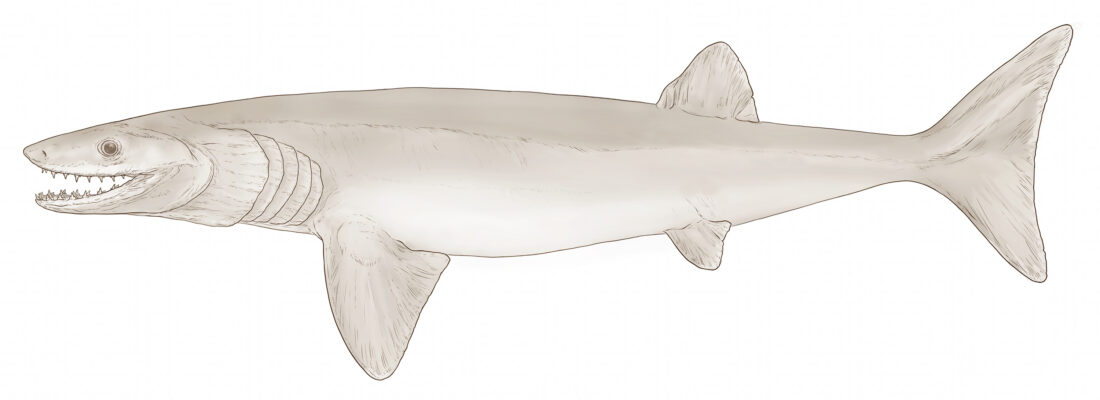
More broadly, the Fayetteville Shale offers a snapshot of life about 326 million years ago, in the wake of a mass extinction in the Devonian that wiped out up to 80 percent of fish species. Scientists can trace how shark lineages rebounded, diversified, and experimented with a wide range of body forms—many of which no longer exist today and don’t match up with our idea of a streamlined apex predator. Plus, the simple act of finding preserved shark cartilage might aid in identifying similar sites around the world.
Though Gene and Royal Mapes, two retired paleontologists who worked in the Fayetteville Shale for decades, donated a huge amount of fossils to the American Museum of Natural History in New York City, there are undoubtedly more to be found, and Bronson hopes to be back walking the riverbeds of northwestern Arkansas come fall. “Sometimes I can’t believe I get to be out there and open up one of these nodules and look at a fish that no one has ever seen, that has been sitting there for 326 million years,” she says. “It boggles my mind every time.”
Lindsey Liles joined Garden & Gun in 2020 after completing a master’s in literature in Scotland and a Fulbright grant in Brazil. The Arkansas native is G&G’s digital reporter, covering all aspects of the South, and she especially enjoys putting her biology background to use by writing about wildlife and conservation. She lives on Johns Island, South Carolina.