
While I was painstakingly plotting out a three-day itinerary on the Blue Ridge Parkway, an acquaintance gave me a piece of advice I only later came to appreciate as helpful: “Just get on there and drive.”
And so I did. Armed with a list of stops to guide me toward all manner of food, culture, and natural beauty along a North Carolina stretch of the 469-mile scenic highway, I start just outside of North Carolina: at milepost 213, the Blue Ridge Music Center in Galax, Virginia. It’s a worthy diversion. The center traces the roots of Appalachian music to its beginnings; its former longtime director, Richard Emmett, describes the 1925 Asheville sessions, nearly forgotten recordings that first captured Appalachian sound, as having “lit the fuse that led to the growth and development of country, bluegrass, and Americana music.” Those roots keep spreading through daily live performances at the center, I learn, and through Milepost Music, a concert series at spots along the parkway in summer and fall. I walk out with a soundtrack: the center’s Spotify playlist, peppered with artists like Steep Canyon Rangers and Chatham Rabbits.
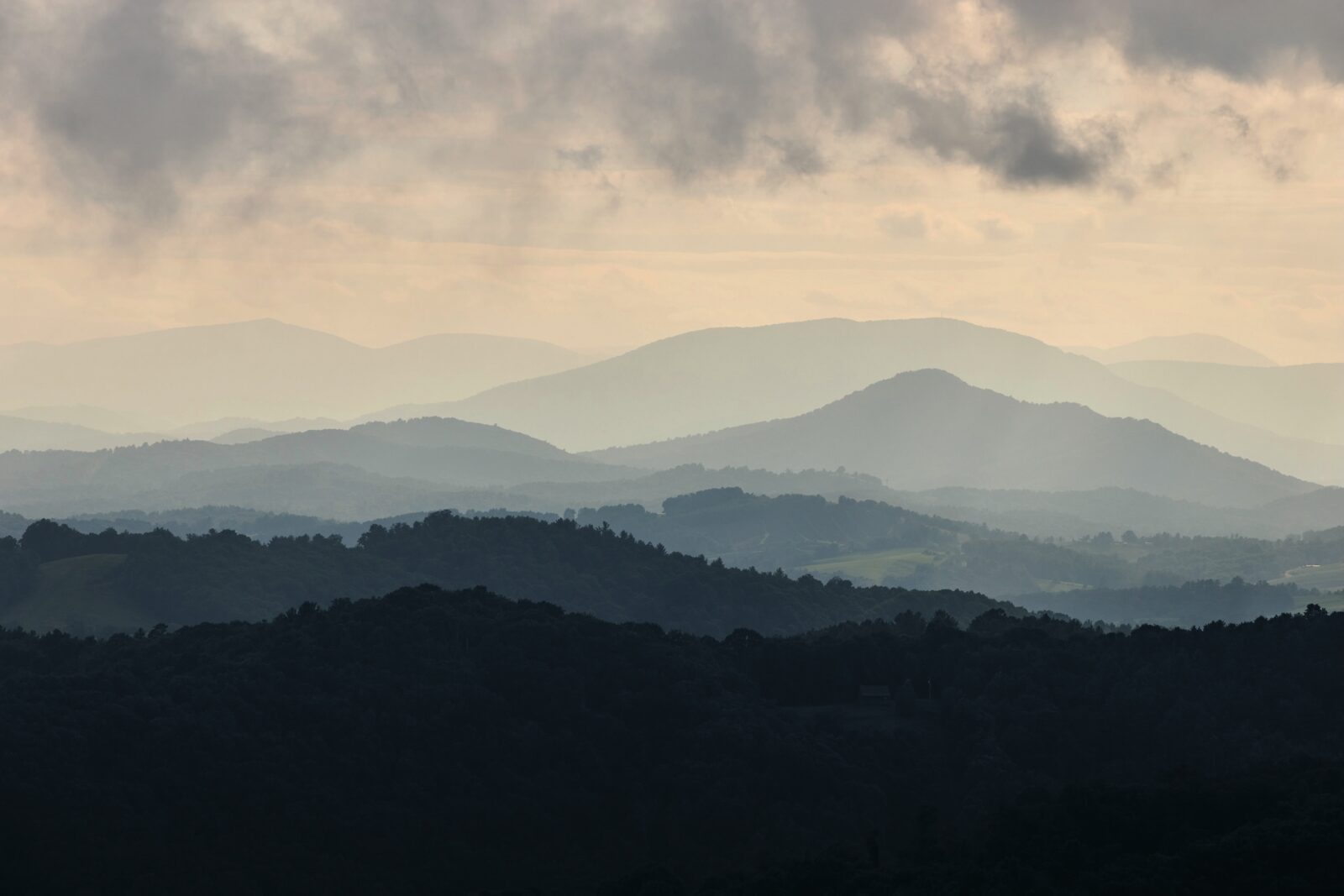
Setting out from the center, I’m keen not only for the next stop but also for the road in between, and I suspect this feeling is what the parkway is all about. It began as a Depression-era notion, a picturesque ribbon of two-lane connecting Shenandoah National Park in Virginia with Great Smoky Mountains National Park in North Carolina, a feat of engineering inviting travelers to see Appalachia for themselves. Construction started in 1935, and ninety-plus years later the parkway still showcases the region’s beauty and culture—mile after winding mile through deciduous forest that tumbles out into blue-tinged mountains and valleys, punctuated with stops that honor generations-old traditions, trails to surprise waterfalls, and towns that exemplify the region today.
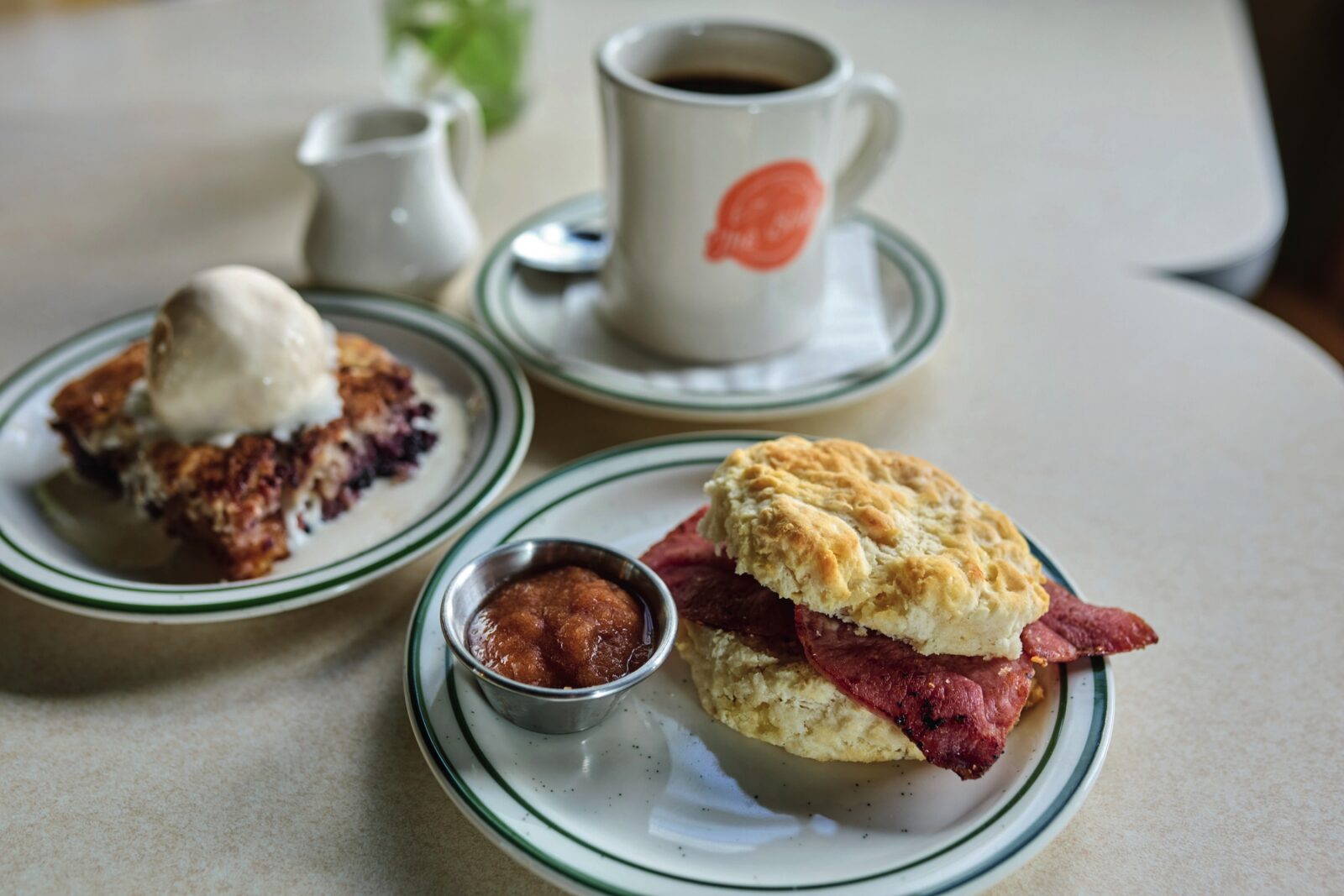
Crossing into North Carolina, I meander—slowly: the views!—to milepost 241. Here at Doughton Park I find another living example of preservation. The Bluffs Restaurant opened in 1949 as the parkway’s first diner, but closed in 2010, to local dismay. After a public funding campaign, the Blue Ridge Parkway Foundation reopened it five years ago, leaving its diner feel intact, right down to the checkerboard flooring and classic Southern fare. A gray-haired regular perched on a bar seat tells me he’s been coming for Sunday lunches for decades, and directs me to the fried chicken, a holdover from the original menu; the side of pinto beans tastes as if my grandma had cooked it. Back on the curving pavement, a light rain sets the landscape aglow, and it dawns on me that the main downside to driving the parkway is having to keep your eyes on the road.
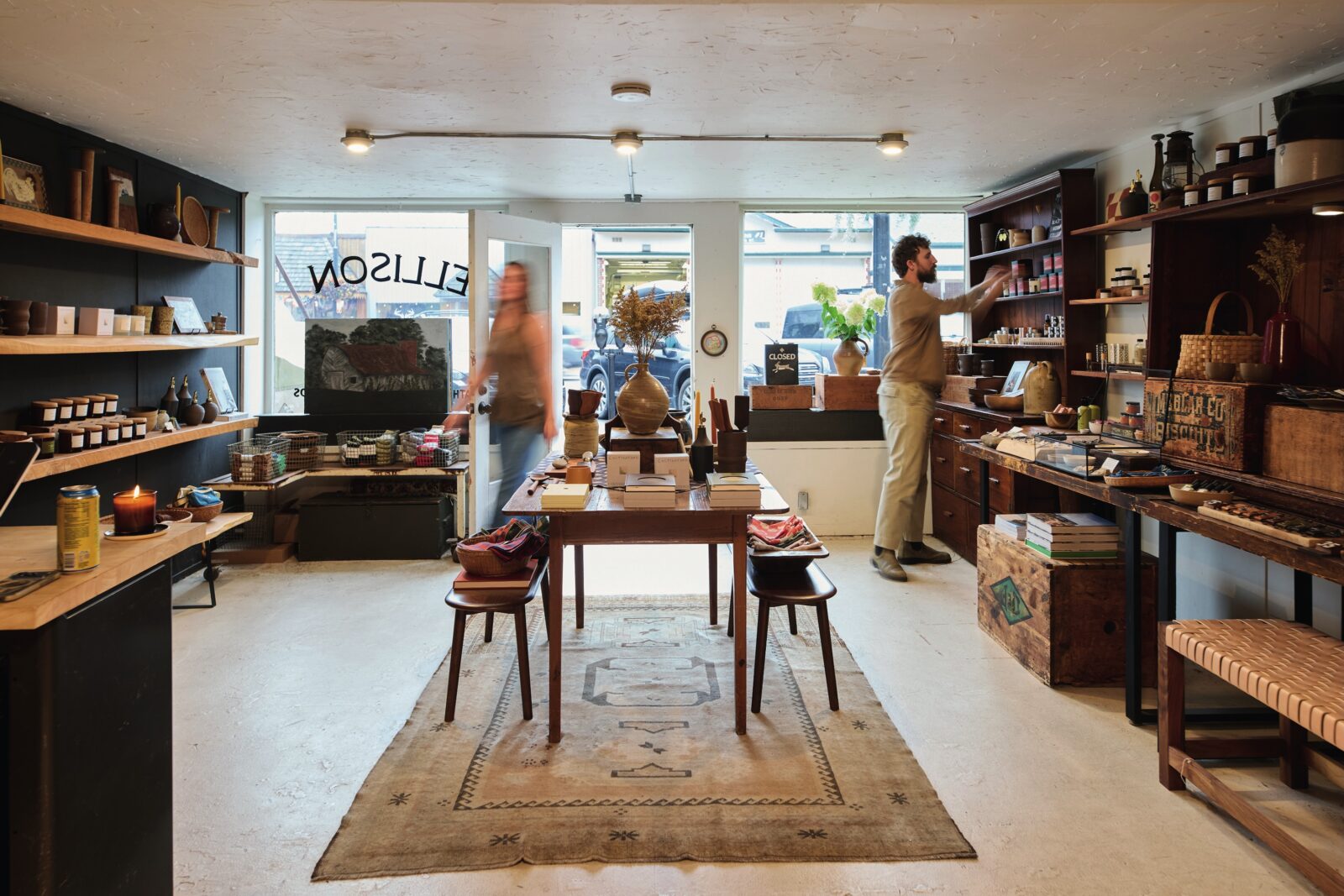
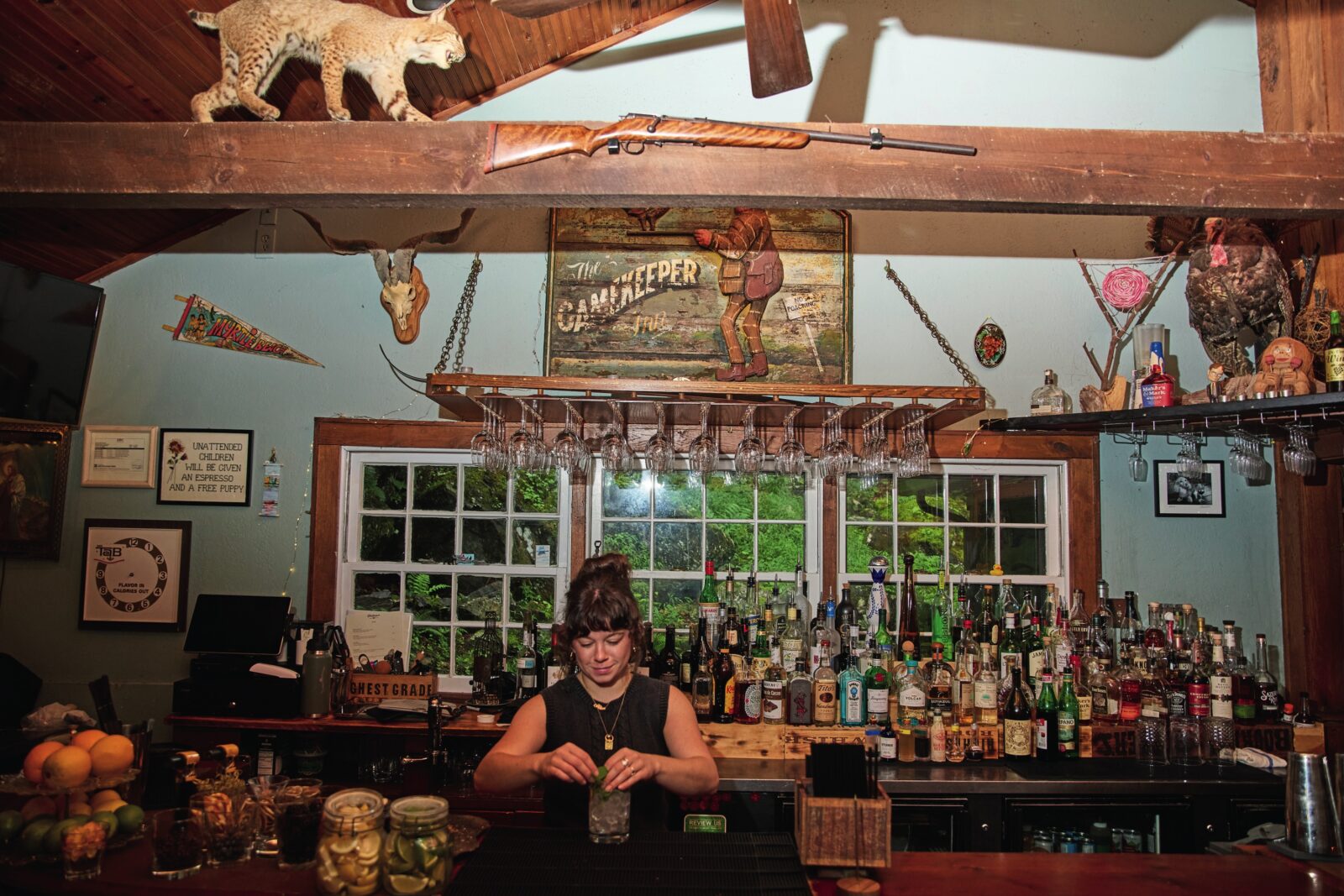
I’ve booked a room for the night at the Horton Hotel, with its rooftop firepit, in Boone’s walkable downtown. Wandering along the town’s King Street, I stop for a gooey treat baked fresh at Appalachia Cookie Company, peruse leather goods and ceramics at Ellison, and spend too long browsing an antique store’s vintage candelabras. Then comes dinner at the Gamekeeper, a cottage sprinkled in twinkle lights and built into ahillside strewn with mossy boulders and ferns—worth every curve of the steep, serpentine fifteen-minute drive from town. After I compliment the waiter on my starter of pickled quail eggs, he soon appears with the recipe, so I “can have them all the time”—presaging the hospitality and warmth I’ll receive at every stop. Ken Gordon, the quirky, easygoing chef and owner, shares with me his philosophy: “Coming to the mountains is an adventure. Driving up the road to get here is an adventure. Why not be adventurous in what you order, too?” I heed his advice and hit the jackpot with a melt-in-your-mouth Carolina bison short rib.
The next morning, I fuel up with multigrain pancakes at Melanie’s Food Fantasy, then head to Blowing Rock, whose brick, stone, and wood storefronts add up to a mountain-town postcard come to life. At Edgewood Cottage, adjacent to the Blowing Rock Art & History Museum, I meet an artist in residence who has painted scenes of nearby Moses Cone Manor and Bass Lake. He relates the history behind his inspiration: The estate sprawls around a white Colonial Revival mansion that belonged to a textile entrepreneur nicknamed the Denim King, and the loop around the lake is a favorite walk. Back on the parkway, at milepost 294, I see the scenes for myself, and find that the house now hosts the Southern Highland Craft Guild. After a damp stroll around the mist-draped lake, I press on toward Asheville. Though most of the parkway has reopened since Hurricane Helene devastated Western North Carolina in 2024, a few closures remain along this stretch of roughly ninety miles. (A word to the wise: Google Maps is not your friend here, and cell-phone service will not play the savior. Get yourself a real map.)
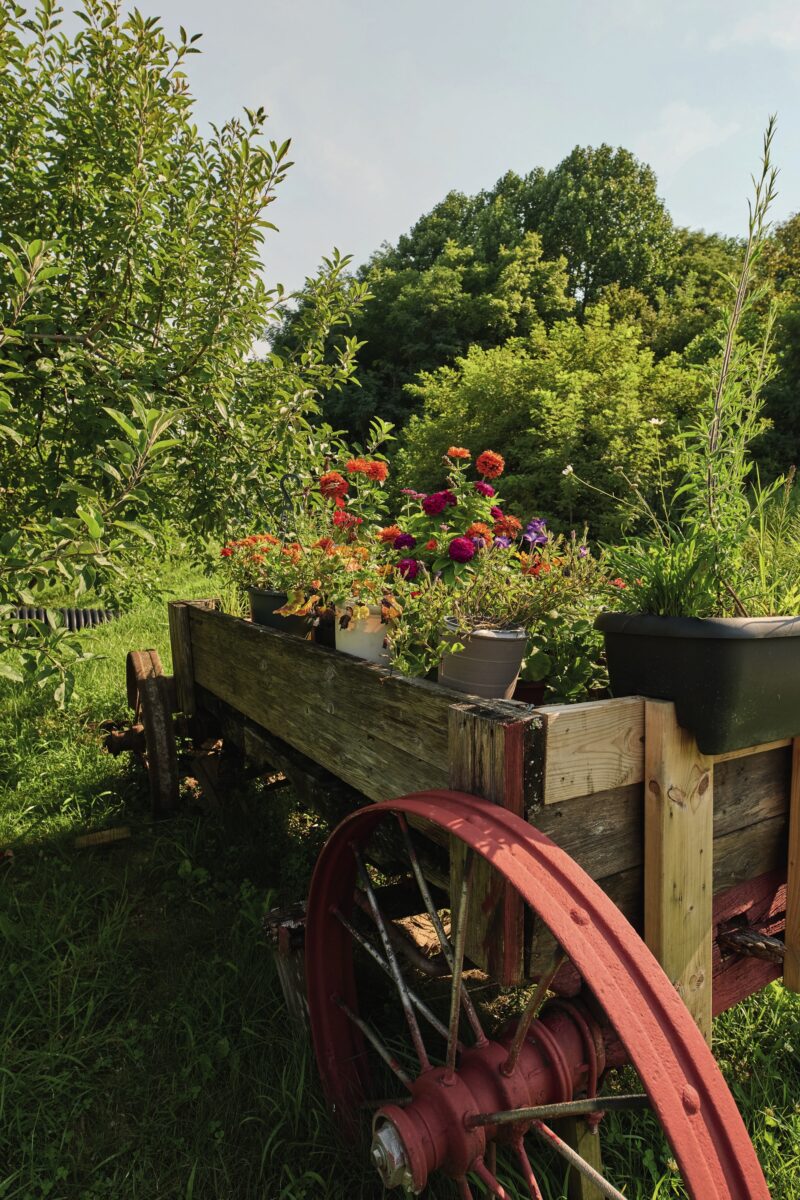
Since driving in a hurry on the parkway would most likely send you flying off a mountain, it’s impossible to blow past any stops, and I discover a true gem in the Orchard at Altapass, a nonprofit about an hour northeast of Asheville that preserves dozens of heirloom apple varieties, including Virginia Beauties and York Imperials. I order a warm slice of apple pie with the obligatory scoop of vanilla and dream about returning in the fall to pick from the gnarled trees myself.
Stays in Asheville abound, but Zelda Dearest serves me well this time. The concierge shows me around the hotel’s four restored turn-of-the-century homes, which house twenty rooms inspired by Zelda Fitz-gerald, Roaring Twenties icon, author, and talented but troubled wife of F. Scott. Character quirks like turrets, curved ceilings, and even a solarium in one room only enhance the cozy comfort. I sip a Jazz Age–inspired cocktail at the bar before heading to Neng Jr’s to witness something Asheville has long known: Appalachia is enriched by its diversity.
Chef Silver Iocovozzi and his husband, Cherry, welcome guests for a meal that feels like a private dinner invite. Sitting at the bar, I watch Iocovozzi plate masterful oysters, served with a jammy cured quail egg yolk tucked into the shell and adobo mignonette. The brief menu is a love letter to the chef’s native Philippines, and he applies Filipino cooking techniques to local ingredients to marvelous effect: smoky adobo chicken, grilled tilefish piled on greens, all washed down with crisp Virginia cider, fermented with foraged crab apples.
Bright and early, I hit Owl Bakery for breakfast pastries to go and steer back toward the parkway, eager to let it show me what it will. I’m only just finishing my almond rose croissant when a tempting stop materializes: the North Carolina Arboretum. The 434-acre mosaic of gardens, trails, and forest turns forty this year, and I’m told I can’t miss the bonsai garden, with its miniature representation of Mount Mitchell, the highest peak east of the Mississippi, complete with white spruce and woolly yarrow. The whole place is a celebration of Southern Appalachian flora, and worth a stroll much longer than the hour I give it. Once again heading south, I hardly skip an overlook. Clouds are making their wispy way across the morning sky over the mountains, and it’s simply too pretty to miss.
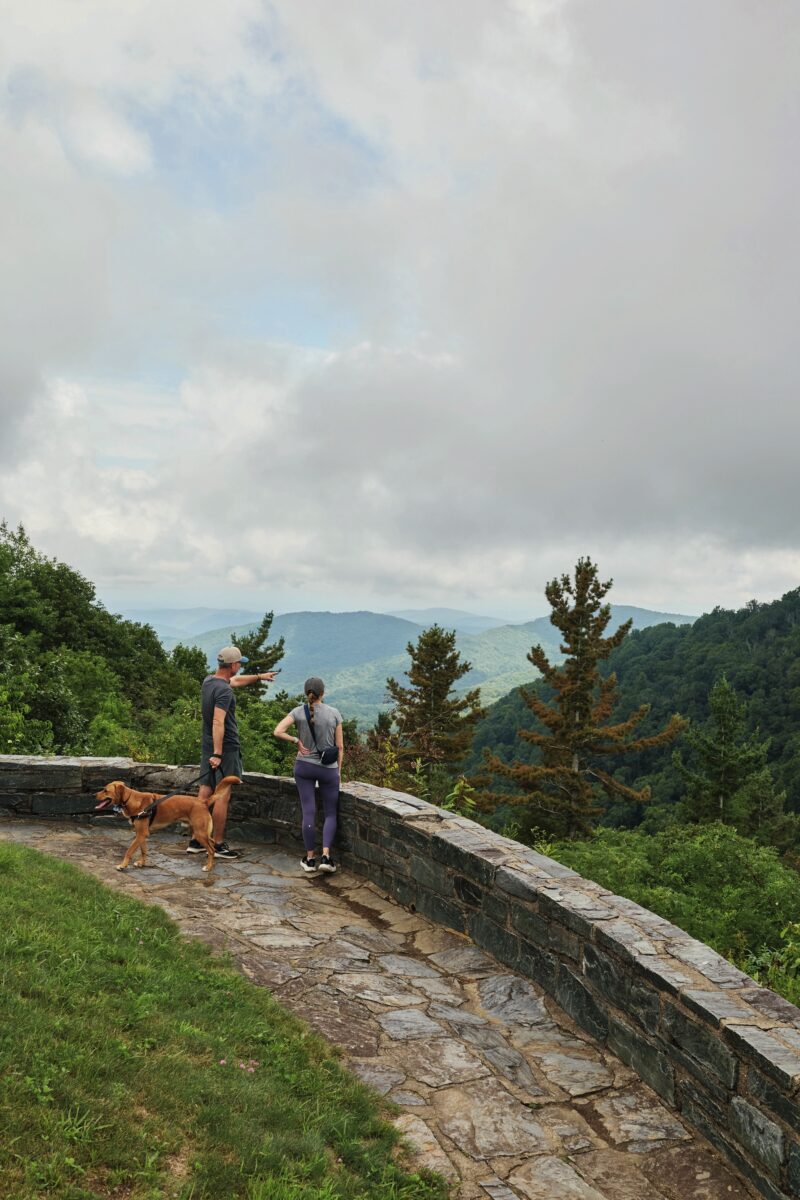
At Black Balsam Knob, milepost 420, I’m ready to get out into the beauty, so I start up the Art Loeb Trail. Balsam fir and red spruce lend the air a cool, minty bite. At the trail’s highest point, 6,214 feet, I absorb the panoramic views and imagine what these mountains might have looked like before generations of logging claimed the ancient, huge trees that once grew here. Still, the parkway’s relatively young trees harbor a wealth of biodiversity, and I rest on a rock, wondering at all the life, from warblers to lungless salamanders to black bears, as tiny cars snake along the silvery ribbon of highway below.
About thirty miles of parkway remain before I’ll cut out for my last overnight stop and my trip’s end point, Cataloochee Ranch, a historic mountain resort floating above Maggie Valley and so close to Great Smoky Mountains National Park, you could literally trip and fall into it. I alternate between rolling down the windows to let in the scent of spruce, and closing them to savor my playlist. I pause only to wait for a turkey to strut by, to admire a fat groundhog poking its head up by the roadside, and to yield to the butterflies flitting along the pavement.
It’s hard to describe Cataloochee Ranch, and easier to just say go there—for the views, the firepits, a horseback ride, the glorious local trout with crispy skin your waiter recommends for dinner at the on-site restaurant. The owners, Annie and David Colquitt, have created a haven that feels rustic but also utterly luxurious. Simple cabins with stone chimneys and tin roofs hide heated bathroom floors, giant soaking tubs, and plush king beds. When checkout time arrives, I sip coffee on the back porch, wishing to stay longer.
Driving away, I find it hard to pinpoint my favorite element of the trip. I loved letting local advice guide my days, and seeing firsthand how, in food, music, and art, Appalachia honors its heritage but also looks ahead. But the best parts may have been the in-between bits—just driving along among the clouds with no cell signal or concept of time, reveling in simple things: the sudden patter of afternoon rain, the stone tunnels funneling me through the ridges, toward the next bend and the next discovery.
I put on one last song, first recorded in those original Asheville sessions, that nods to the next excursion I’m already plotting: “I’m Going Back to North Carolina.”
Lindsey Liles joined Garden & Gun in 2020 after completing a master’s in literature in Scotland and a Fulbright grant in Brazil. The Arkansas native is G&G’s digital reporter, covering all aspects of the South, and she especially enjoys putting her biology background to use by writing about wildlife and conservation. She lives on Johns Island, South Carolina.