

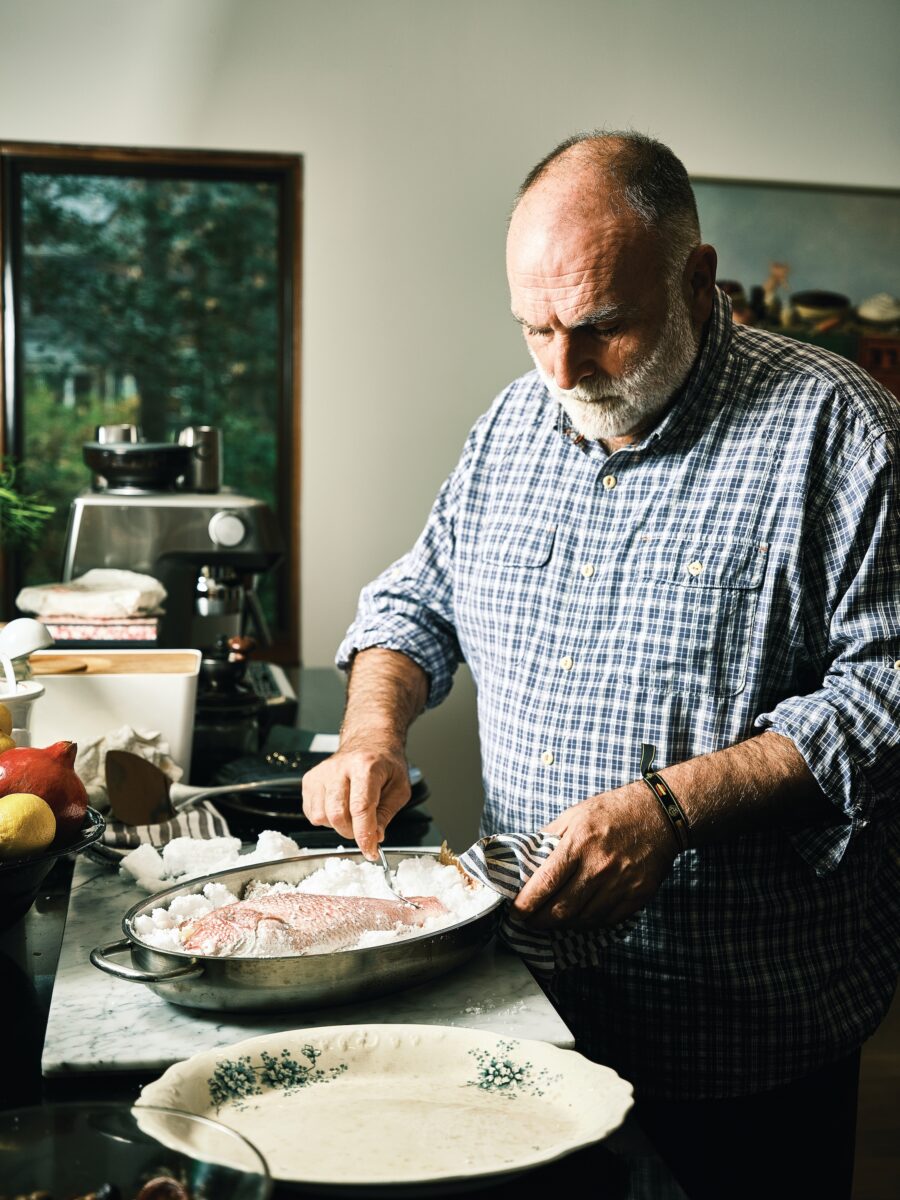
“Spain is where I learned to cook, learned to eat, and most importantly, learned to love food,” writes José Andrés in the introduction to his new cookbook, out this spring, Spain My Way: Eat, Drink, and Cook Like a Spaniard. Andrés was born in Mieres, Asturias, and raised just outside of Barcelona, and he honed his culinary chops working under chef Ferran Adrià at elBulli in the Costa Brava town of Roses. At twenty-one he arrived in New York and soon after moved to Washington, D.C., where he made his name at the tapas restaurant Jaleo and launched an empire that now encompasses over forty restaurants worldwide. But his name is perhaps most familiar as the founder of the disaster relief nonprofit World Central Kitchen, which provides chef-prepared meals to communities impacted by natural disasters and humanitarian emergencies.
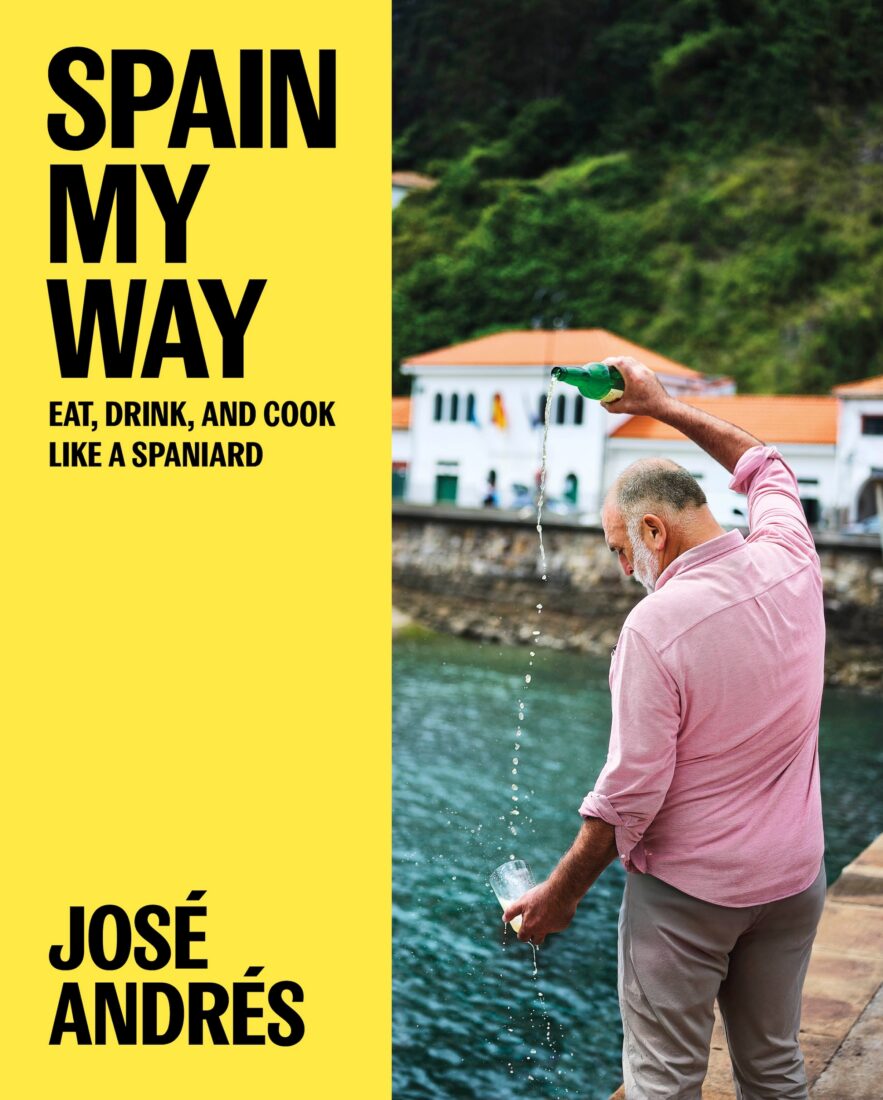
In Spain My Way, Andrés returns to his roots, offering a very personal journey through his favorite dishes from his home country. The book also serves as a lesson in the long history of Spanish cooking and a roadmap through Spain’s many regions and styles. The first section is dedicated to the salsas madres, or mother sauces, including sofrito and various broths. Then there are tapas galore, from patatas bravas and tortilla to ham croquettes and olives. Another section tackles the heartier fare of paella and slow-cooked rices; one takes on seafood, including this simple salt-baked fish, drizzled in olive oil and sherry vinegar, and these fisherman-style mussels cooked with garlic and white wine. There are soups like gazpacho, plenty of breads, and a whole section on desserts: Basque-style cheesecake, Galician almond cake, caramelized custard from Catalonia. And of course there’s a guide to Spanish wines, ciders, and vermouths.
As Andrés writes, “Maybe we’re sitting around the paella pan, spoons in hand scraping the very last bits of crunchy rice, the soccaratt, off the bottom of the pan. Or we’re standing up at a tapas bar, very cold beers in front of us, with small plates of this and that, tinned fish and chips and olives. Or we’re in the kitchen, as stew cooks slowly on the stove, drinking a glass of wine and snacking on jamón carved straight off the leg. Here is my invitation to join me around the table, to see the world as I do for a little while.”
Below, Andrés shares some of that worldview—including his love for Catalonian tomatoes and the joy of a slow meal—with G&G.
What were some of your favorite dishes growing up in Spain?
My parents were both nurses and I had three brothers, and we ate well but very simply…we didn’t have a lot of extra money, so it was good simple food. One of my favorite dishes as a boy was arroz a la Cubana, a dish you’ll see in every home in Spain but never at a restaurant. Rice, fried eggs, tomato sauce, maybe some sausages or bacon, sometimes with banana. A good, filling breakfast for growing boys. I also loved my mom’s croquetas and of course was always happy when my dad would make big pans of paella or other rices in the mountains with friends and family.

I have a Spanish friend who taught me to make tortilla. My first one ended up on the floor when I tried to flip it. A total tragedy.
Yes, it can be a challenge, but you should try using a plate to flip it—put the plate on top of the pan when the first side is cooked, flip it onto the plate, and slide it back into the pan. Give it another try if you want to erase the tragedy from your memory. And if you want a tortilla you don’t have to flip, look for the tortilla vaga in the style of my friend, the brilliant chef Sacha Hormaechea in Madrid. He calls it a “lazy tortilla” because you only cook it on one side, leaving the top a little underdone, which makes a perfect creamy sauce.
Pan con tomate in Barcelona changed my life. Why are Catalonian tomatoes so good? It plays into what you say about Spanish products being top-notch.
In Catalonia we love pa amb tomàquet, or pan con tomate, so much that we have a specific kind of tomato, called tomàquets de penjar, or “hanging tomatoes.” They’ve got thick skins with a very juicy inside, which make them the perfect tomato for rubbing on crispy bread. They’re harvested late in the summer and can be stored hanging on their vines for months and months, so we can have the best pan con tomate even out of season!
Time is an ingredient in Spain. I love that concept. What do Americans have to learn from Spaniards about the beauty of not rushing?
I know it’s not always practical for everyone—we are all busy with our lives—but even if it’s once a week or once a month, pick a dish that takes some time and try to focus on it. Put on some music, open a bottle of wine, and really take the time it needs…If you’re starting with a sofrito, as so many Spanish dishes do, cook the onions slowly in lots of olive oil and really let them caramelize. This isn’t a process you can rush. When they are sweet and golden, that’s when you add the tomatoes and keep cooking. The sofrito will be talking to you—“not ready yet, José, not ready yet…and then, I’m done!” It’s this beautiful, deep rust-red color, and the oil has separated. Try it once and you’ll see—and taste—why Spaniards love the ingredient of time in their cooking.
Lindsey Liles joined Garden & Gun in 2020 after completing a master’s in literature in Scotland and a Fulbright grant in Brazil. The Arkansas native is G&G’s digital reporter, covering all aspects of the South, and she especially enjoys putting her biology background to use by writing about wildlife and conservation. She lives on Johns Island, South Carolina.
Garden & Gun has an affiliate partnership with Bookshop.org and may receive a portion of sales when a reader clicks to buy a book. All books are independently selected by the G&G editorial team.