

At Herons, the Michelin-recognized restaurant at the Umstead Hotel and Spa in Cary, North Carolina, diners tend to pause when the grits arrive—a moment of recognition for a dish whose comfort-food origins belie the precision required to make it. The grits come layered with a brunoise of smoky Benton’s ham, finely sliced sweet Carolina shrimp, and sautéed maitake and shiitake mushrooms. It’s all topped with a silky-yolked poached egg and finished with a tableside pour of rich chicken jus.
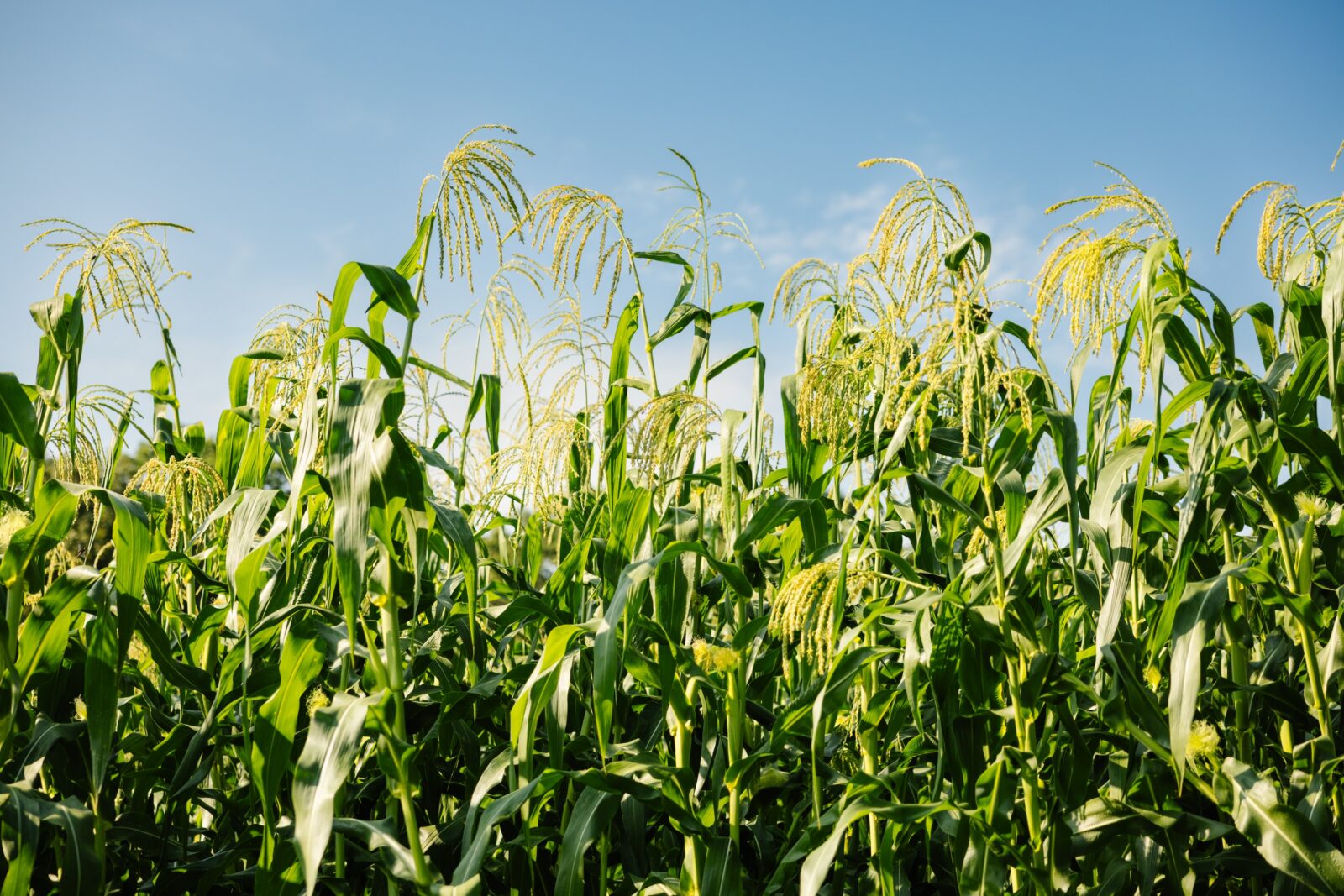
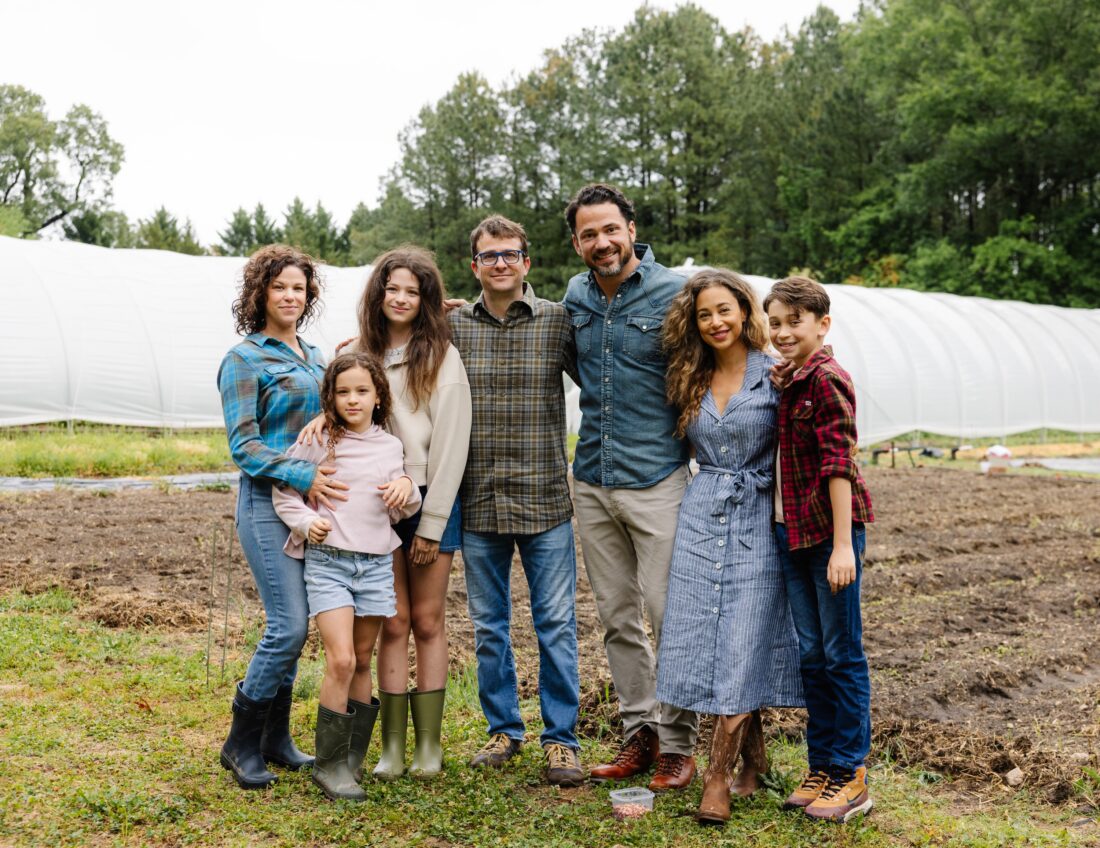
And yet, for such a many-splendored composition, this may be one of the few times the porridge outshines its rarefied fixings. For the past decade, executive chef Steven Devereaux Greene, five-time James Beard Award semifinalist for Best Chef: Southeast, and chef de cuisine Spencer Thomson have grown their own corn. John Haulk is the name of the heirloom dent variety with a hard kernel that they tend at One Oak Farm, the restaurant’s three-acre culinary Eden brimming with such herb and vegetable varieties as shiso, komatsuna, wasabina, opal basil, Buddha’s hand citrus, calamansi, pea tendrils, mulberries, Jerusalem artichokes, elderflower, and plenty more. Each spring, the chefs plant the corn with the help of their families—Greene’s wife, Kristin, and their son Jaxon, age ten; Thomson’s wife, Karen, and their daughters Norah, fourteen, and Pembrooke, eight—for one purpose: sumptuous, storied grits, ground fresh from estate grain.
Growing corn you can’t eat right off the cob might be unusual for a restaurant, but Greene knows corn that was meant to be dried and milled has a long history in the South. He grew up in Ninety Six, South Carolina, a small town that developed around an eighteenth-century trading post, where, during the Revolutionary War, food had to last through lean months. “You couldn’t depend on fresh ingredients, so preservation wasn’t a choice—it was a system. Now it’s our tradition.”
Greene and Thomson have been cooking together since 1999, when they met at the Charleston, South Carolina, restaurant 82 Queen. (Or as Norah dryly sums up their history, “The lore is rich.”) Years later, Thomson introduced Greene to John Haulk corn over a dish of grits with milk-braised veal. “That’s when I knew we’d be growing this corn ourselves someday,” says Greene, who describes the flavor as “super corny” with a deep umami note. At Herons, the team mills the cornmeal from kernels frozen in liquid nitrogen so friction doesn’t heat the grain and dull its flavor. Then they cook it slowly over low heat with cream and butter, the patient act of dépouillage in full effect, skimming away impurities for maximum refinement. “We cook these grits the same way we cook any grits, but this corn is naturally extra custardy,” adds Thomson.
Traditional Southern ingredients anchor Greene’s cooking, which he often filters through a Japanese lens; for instance, he serves ramen with handmade noodles in mushroom dashi topped with fried black bass, a nod to his grandmother’s fried fish, or tuna toro sashimi with pickled green tomato and kumquat kosho to echo the flavors of chowchow. In the grits, that approach takes the form of the onsen-style egg and, on occasion, a buttery, briny lobe of uni (sea urchin)—a real gilder the likes of which Southern grits have rarely seen. “And I’ve eaten a lot of grits,” Greene says.
On a Sunday morning in late April, the weather was cool and overcast—welcome, but not required. Torrential rain had pelted overnight, but precipitation wouldn’t halt the annual ritual. (If planting slips into May because of rain delays, the belated harvest—hundreds of stalks reaching fifteen feet, with two ears of corn each—would be vulnerable to the gale-force winds that blow through August, knocking the cobs against one another, damaging kernels or dislodging them altogether. “We’ve lost roughly a third of our crop that way before,” Thomson says.) Last year, rain fell on the scheduled date, so Thomson’s wife, Karen, dug through the car for the disposable ponchos they’d been carting around since a long-ago family trip to Disney World. Donning the bright cloaks made the day’s swelter even stickier. “There’s no getting out of planting,” she says.
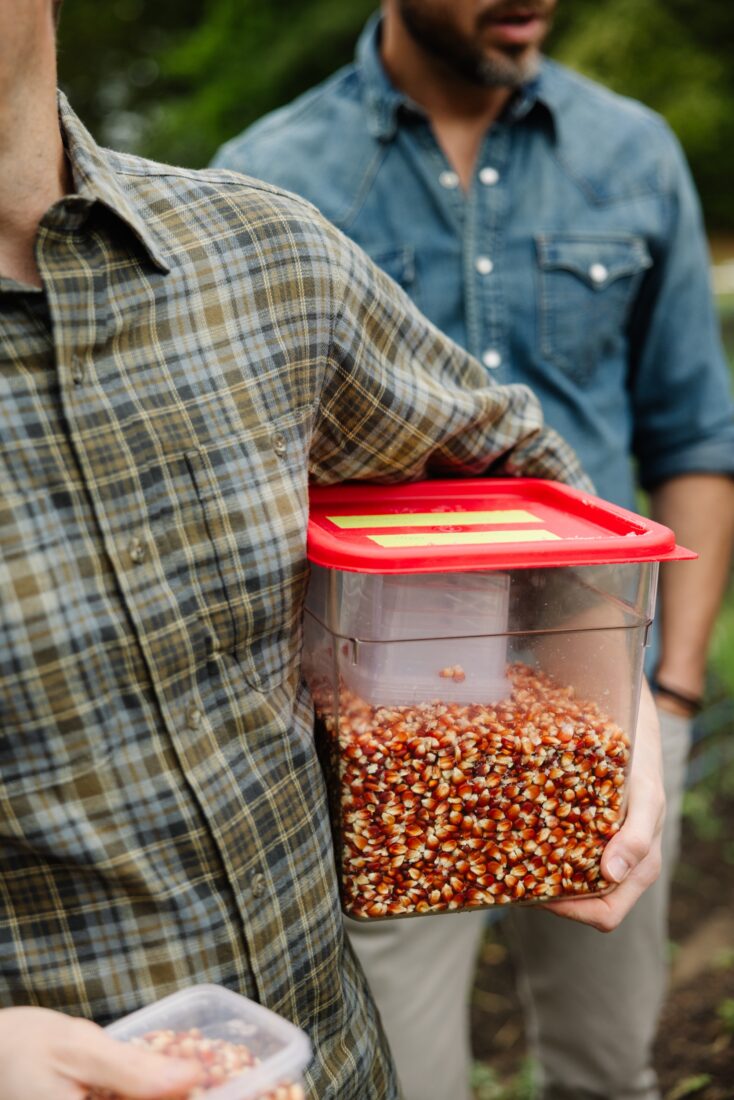
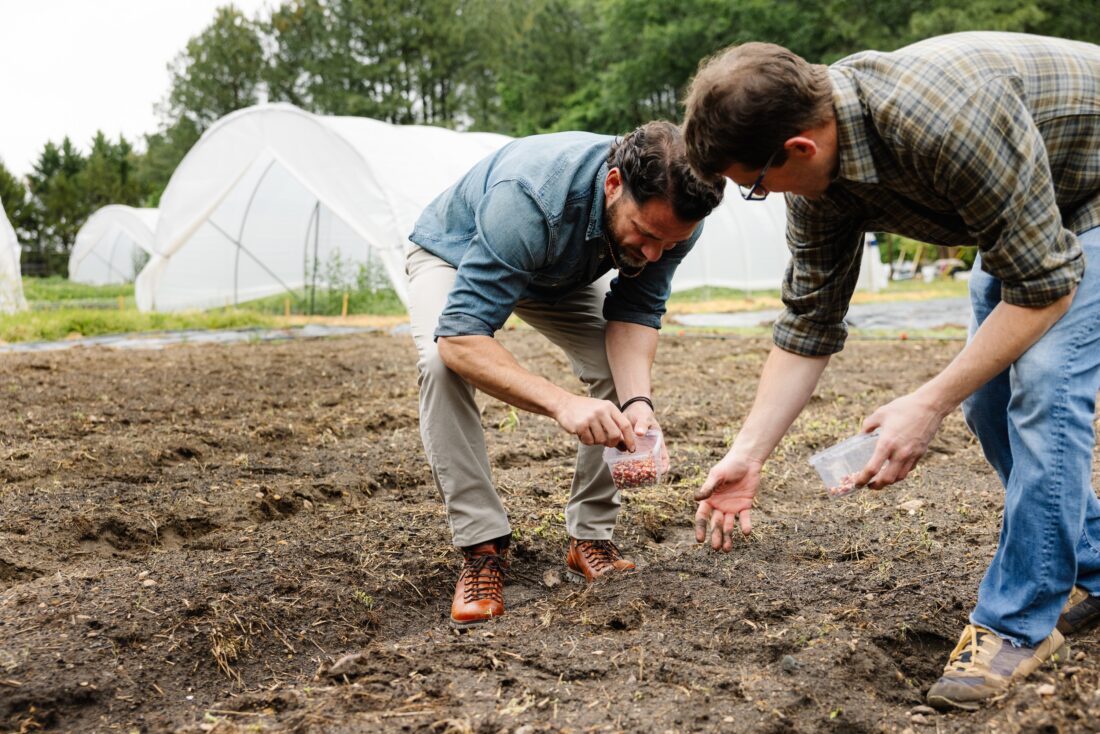
The best seeds—in this case, whole corn kernels—for sowing are garnet-hued with a golden cap, yielding a red-flecked cornmeal. The first time Thomson saw John Haulk corn was when Glenn Roberts, founder of the South Carolina–based grain empire Anson Mills, unveiled a chest freezer full of seeds as striking as rubies. “He told me, ‘If you’re from here, this is the corn you need to be growing,’” recalls the chef. After all, the Appalachian provenance of John Haulk corn dates back to the 1850s, when it was known to make some of the “finest cornbread and mush,” according to historic records. Passed from grower to grower for more than a century, the heirloom variety never entered the hybrid seed economy of uniform, high-yield crops that took hold in the early twentieth century, remaining instead in small, local plantings before being donated to the Clemson University Botanical Garden seed collection in 1992—a safeguard against extinction that makes each new planting feel like cultural stewardship.
At One Oak Farm, Thomson and Greene and their families plant the seeds in holes burrowed with their index fingers, as deep as the middle knuckle, although Karen and Greene have adopted bits of farm tack—a wooden picket and a length of wire, respectively—to perforate the soil. Easier on the knees, but harder on the back, as Greene’s periodic wincing suggests. With seven people planting the quarter-acre site, they finish the task in about an hour. Come early fall, the larder at Herons will be replenished with about three hundred pounds of John Haulk kernels—grits for an entire year.
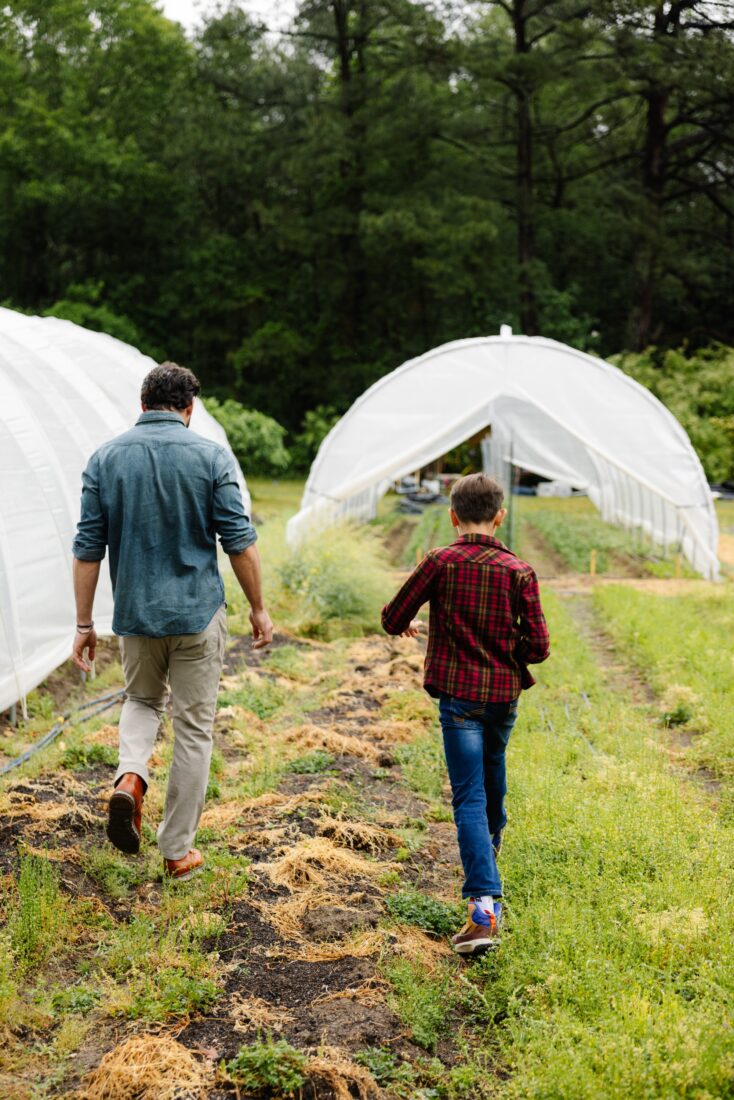
As miraculous as preservation is, it can’t hold everything in place—least of all kids who are growing up. The annual planting tends to bring out the sentimental dad in both chefs. Thomson tracks his daughters’ growth each year by measuring their heights against the cornstalks, while Greene reminisces about how the kids would run around the farm, picking strawberries from the berry patch and peas off the vine, then veering off to crouch over ant holes in googly-eyed wonder. “This year, they’ve matured enough to help us see the planting through to the end,” Greene says, a bit wistfully. “That means we were really efficient—but I still wish I could turn back the clock.” The lore is still being written.
Get the recipe for Herons’s cornmeal pancakes with brown butter and warm maple syrup here.
Anson Mills sells coarse grits made from heirloom dent corn, including John Haulk.