

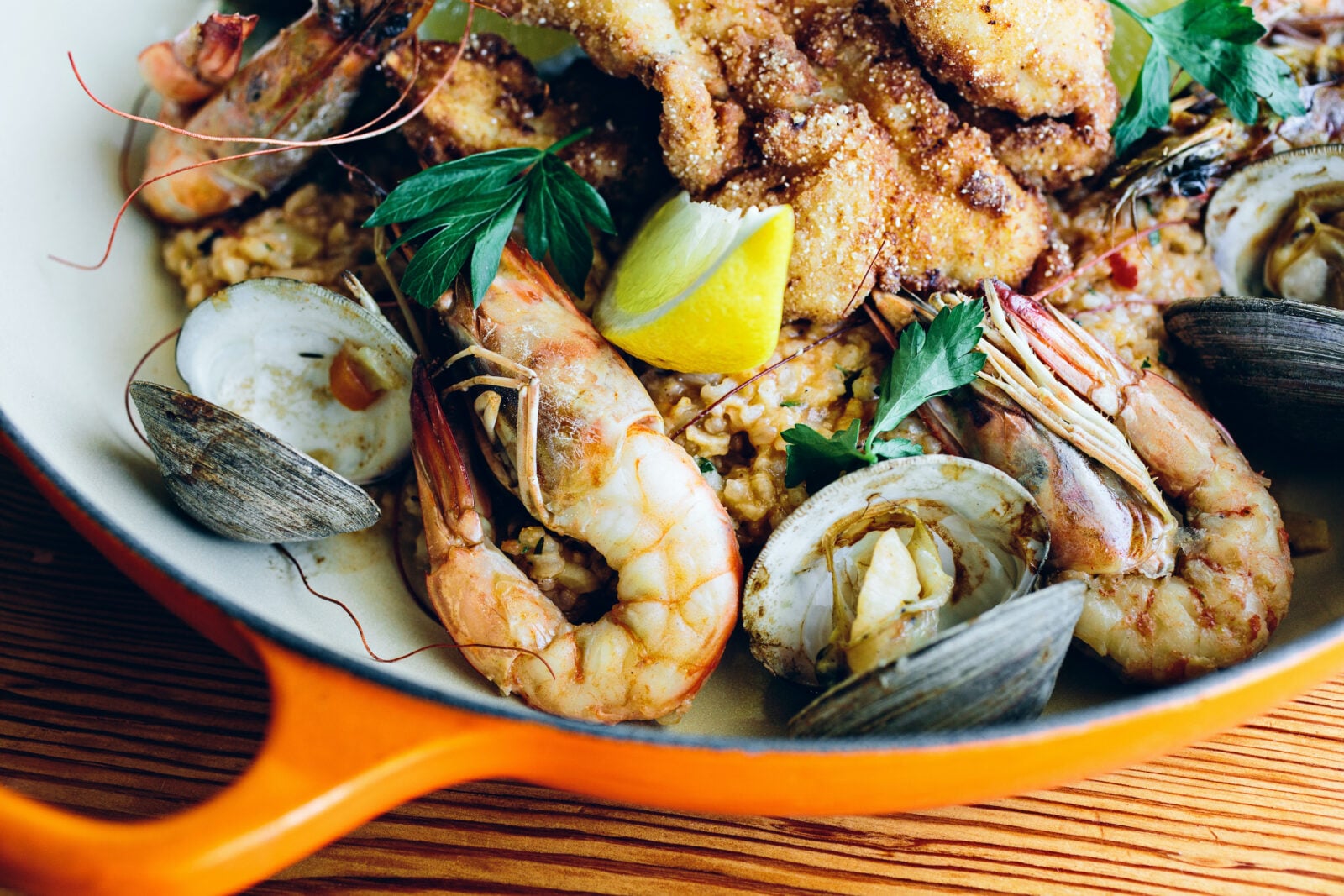
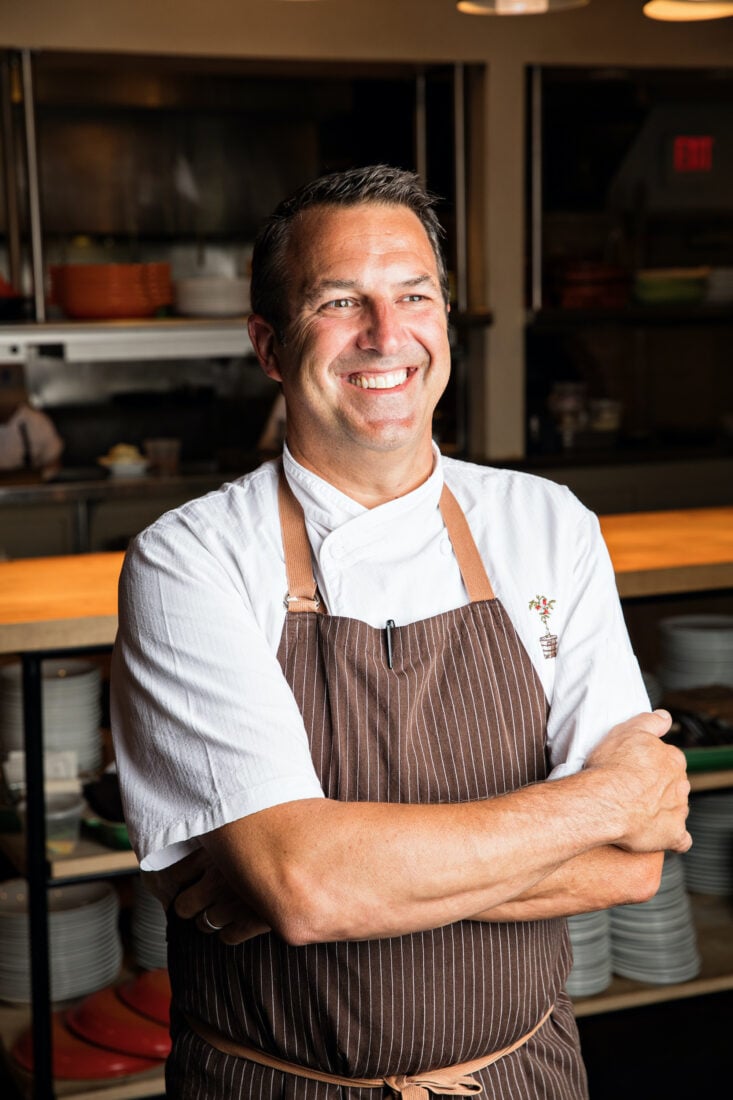
In 2011, chef Kevin Johnson and his wife, Susan, moved to Charleston, South Carolina, and opened the Grocery, an elevated but cozy neighborhood restaurant that let Lowcountry ingredients shine. Today, the downtown spot on Cannon Street still sees a steady stream of locals and visitors, some of whom come for a full dinner and others who drop by for happy hour (and its beloved five-dollar green tomato martini). And though Johnson is forever making tweaks, some dishes have remained constant throughout the Grocery’s fifteen-year run.

Besides that green tomato martini, the menu will always feature churros, fried oysters served with deviled egg sauce, and a returning seasonal cast of favorites. (In summer, that includes a green tomato carpaccio along with wood-roasted peaches, shishito peppers, and tasso ham.) All of them showcase local bounty; Johnson sources shrimp from Tarvin Seafood, mushrooms from Raven Farm, and greens from King Tides Farm, to name a few providers.
And then there’s the seafood pilau, a popular dish offered year-round. “Pilau is a Lowcountry staple,” Johnson explains; Charleston’s version of the savory one-pot rice dish—pronounced “perloh” or “perloo”—has its roots in Gullah Geechee cooking and usually highlights seafood. (It’s not unlike a Cajun jamabalya or another Carolina rice dish, chicken bog.) At the Grocery, he cooks Carolina gold rice in a broth made with shrimp stock, white wine, and aromatics. For the seafood, he draws on shrimp, clams, and whatever local fish is on hand—the shrimp and clams roasted in the wood oven, the fish fried crispy to add a little texture.
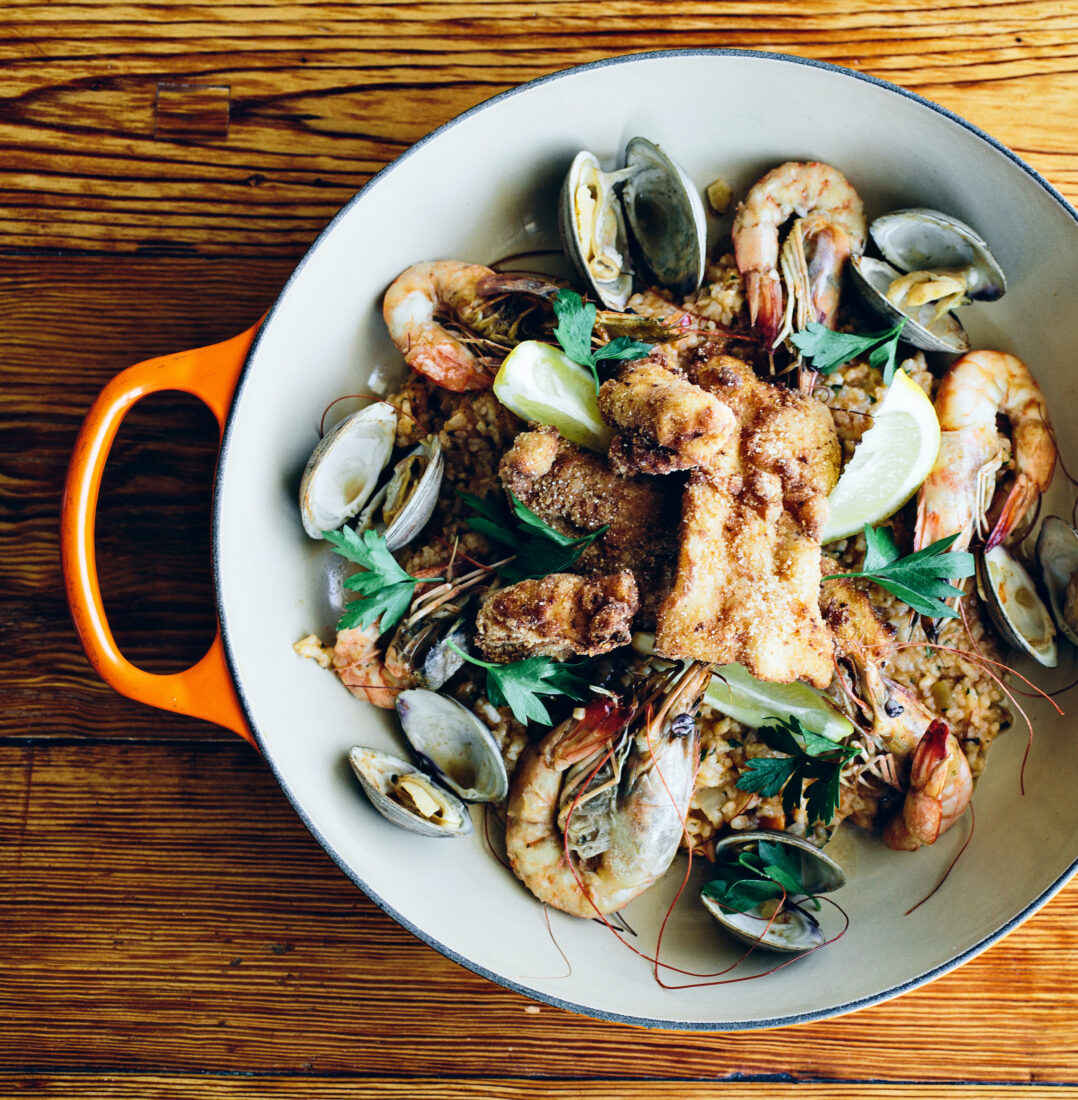
“We want it to feel like a snapshot of what our waters have to offer,” Johnson says. And the result reflects what he has always loved about the city’s restaurant scene in general: “All of us in the industry have a common goal here of celebrating our purveyors and our ingredients, and telling the story of Charleston.”
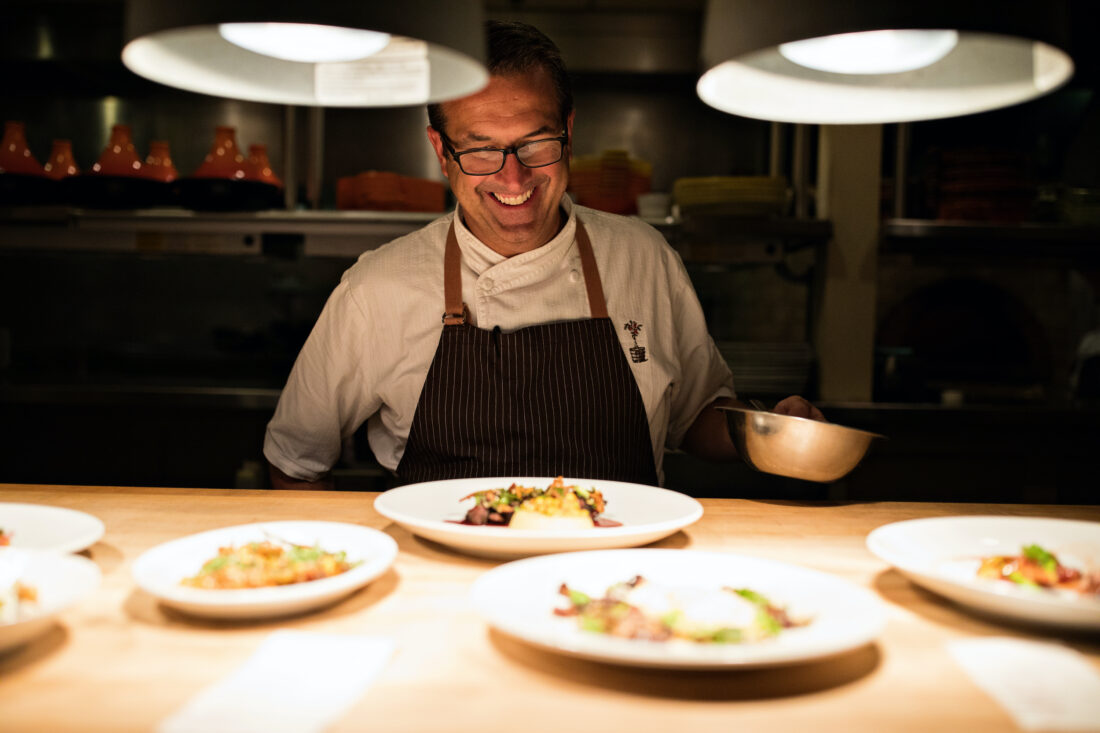
Below, find Johnson’s tips for making your own pilau—and really any one-pot rice dish—at home.
Go for Carolina Gold.
“A great pilau relies on two things: great rice as the canvas, and great ingredients to be showcased,” Johnson says. For the rice, he recommends Carolina Gold, which is easy to order online and widely celebrated for its rich texture, nutty flavor, and unique starch balance. “There really isn’t any substitute,” he says.
Amp up your base.
“A flavorful stock is certainly a difference maker, and this can seem a bit time-consuming for the home cook,” Johnson says. If you haven’t got a freezer of ready-made stocks, something as simple as simmering your shrimp shells in a bit of water for half an hour will still go a very long way.
Take care with cooking the rice.
You won’t want to skip washing it until the water runs clear, as you might with a supermarket rice of lesser quality, and excessive stirring will cause a starchy paste on the surface. “The rice is delicate and must be cooked carefully so that it retains its structure,” Johnson says. That also means being careful not to overcook it. (Check out Marsh Hen Mill’s guide to perfect Carolina Gold.)
Pick whatever you’re excited about for the main ingredients.
“Pilau is a dish to showcase what you’re inspired by, and what is at its best seasonally. Seafood, poultry, and vegetables are all up for the starring role.” If you’re after something vegetarian, foraged mushrooms like chanterelles work well with a vegetable stock. At summer’s peak, try a pilau starring okra, like this recipe. Whatever you go with on your flavor profile and main ingredients, Johnson says, “keep it focused!”
Lindsey Liles joined Garden & Gun in 2020 after completing a master’s in literature in Scotland and a Fulbright grant in Brazil. The Arkansas native is G&G’s digital reporter, covering all aspects of the South, and she especially enjoys putting her biology background to use by writing about wildlife and conservation. She lives on Johns Island, South Carolina.