

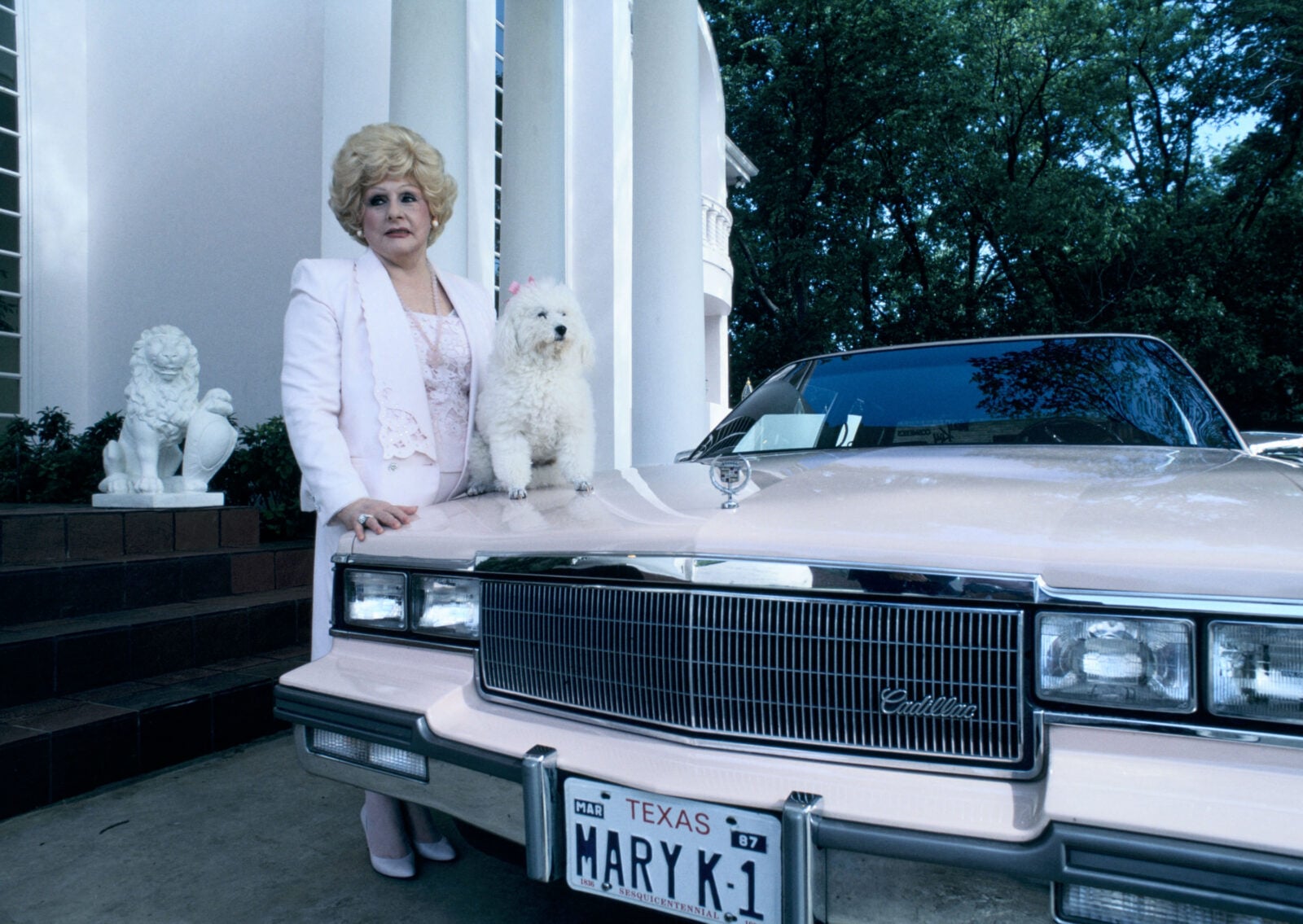
In July of 1992, while researching a book on the beauty industry, writer Mary Lisa Gavenas attended the annual Mary Kay Seminar—a massive convention for the company’s nationwide network of independent beauty consultants, focusing on education, recognition, and motivation. “It was fascinating,” she remembers. “I realized that these women are not really selling a way to make yourself look better; the product is almost incidental. They were there having the time of their lives.”

A three-decade interest was piqued, and now, Gavenas’s meticulously reported new biography, Selling Opportunity: The Story of Mary Kay, gives the full account of the woman who grew up during the Depression, raised two children, and in 1963 set up a company in Dallas that in a few short years would see her recruiting thousands upon thousands of women, handing out keys to pink Cadillacs, and becoming the first woman to chair a company on the New York Stock Exchange.
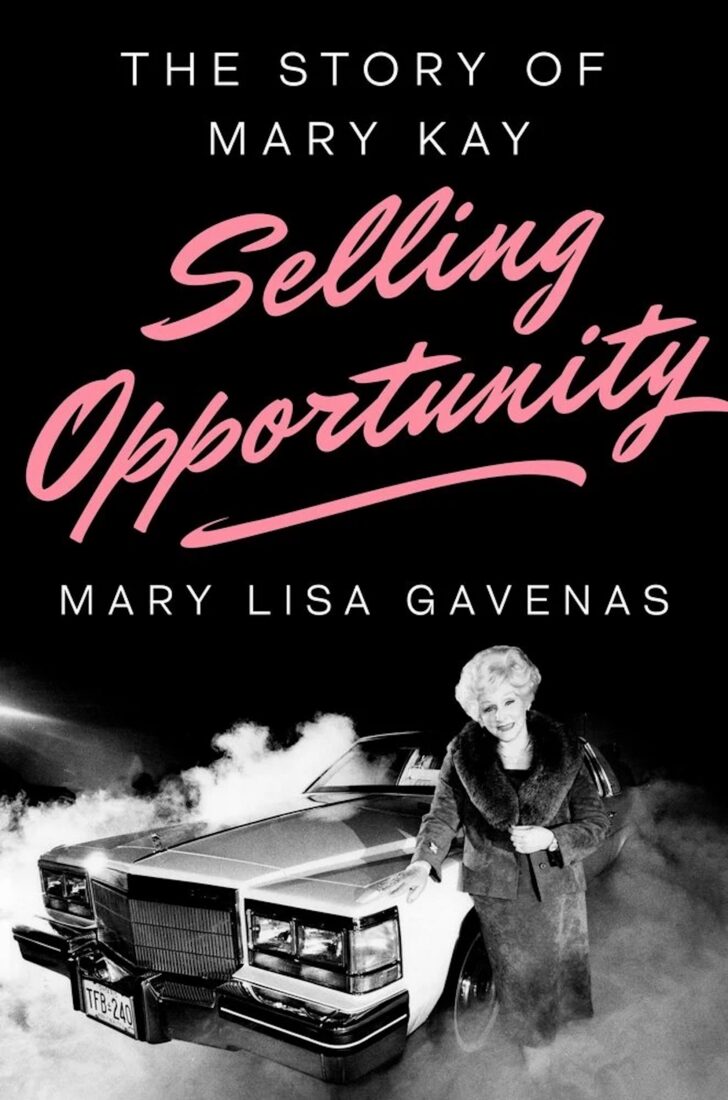
“The more I researched, the more I realized that a lot had been written about her and her company, but most of it was snarky and most of it was wrong,” Gavenas says. In tracing Mary Kay’s life, from her scrappy early years selling brooms to her time with Stanley Home Products, the forgotten mother of the direct sales industry, to her heyday as the most famous salesperson the world, Selling Opportunity paints a portrait not just of Mary Kay and the many women who bought into her dream, but of an industry and a unique cultural moment in mid–twentieth century America.
Below, we chatted with Gavenas about preconceived notions about direct sales, Mary Kay’s beginnings, and the real secret to her success.
You reported this book over more than a decade. What were some of the challenges?
A lot of the salespeople were not willing to talk to a reporter because they’ve been burned so many times by condescending and nasty stories. That was one thing. The second thing was that so much about the direct selling industry just hadn’t ever been documented. So I had to go back and report an entire industry starting from the 1890s onward. It was a lot of old-fashioned reporting—going through piles of undigitized, dusty, boring documents. Sometimes I’d go through five or six sources just to get one crummy little clause. A third thing was reporting this aspect of women’s history. A lot of these people were blue-collar women who were rural or women who aspired to just have a nice house and a nice husband and nice kids and make some money and go on vacation, so they were considered beneath the consideration of most academic feminists.
Let’s talk about perceptions of the whole direct sales industry.
Now, people really look down their noses at it. Often the facts get twisted to make huge claims like, This is the evil that sank American society. That doesn’t align with the facts. For example, to belong to the Direct Selling Association, a company has to agree to take 90 percent of unsold product back if nobody has messed with it. There’s also a huge aftermarket in selling products that are old. People build a narrative about the industry on the experience of that one person who’s bought $50,000 worth of stuff and it didn’t work out for them and they say they went back to their director and got pressured to buy more. Well, it is sales and there is always pressure in sales.
It’s a whole different story to report the why behind people still going for this model. What is it that they’re not getting? That’s a more subtle cultural thing that takes a lot of reporting, and that’s what I was trying to do with this book. I’m not for anything; I’m not against anything. But the fact is that MLMs are an ongoing current in American culture. So I’m trying to show what put it there: the education, the aspirations, the job opportunities, or the lack of job opportunities. Why is it still around?
You call this a contextual biography—how would Mary Kay have viewed direct sales?
To me, the whole pleasure of a biography is trying to get into somebody else’s skin and figure out what their triggers were and be transported back to another time. I want people to be able to understand the differences in how people thought. Mary Kay’s mindset was the more you do good for others, the more it will come back and be good for you in the long run. She would have said, “Of course it’s going to do good for me because I’m doing good for them.” To her, that would be utterly logical. And now a lot of people say that it was all just self-serving and evil. Like it was a bad thing for her to be in business and to want to make money. To me, her company was based on things that she wishes people had done for her, which is part of the reason I document so many of her failures along the way and the things that happened to her before she started her company.
What about the idea that direct sales offered women economic opportunity at a time when that was hard to come by?
There’s this myth that direct sales offered that. Yes, certain companies [before Mary Kay] allowed women to do certain things. But women were only allowed to sell things where they couldn’t possibly support themselves. That was what worked for the companies. Those women couldn’t move up in management and no matter how much they were working, they couldn’t support themselves. Stanley Home Products—who gave rise to Home Interiors and Mary Kay and Amway and Tupperware, everybody learned the model from them—didn’t admit women until the end of 1939, and that was because they were desperate.
That’s where Mary Kay got her start.
She got married at sixteen. She had two babies by the time she was eighteen. She wanted to go to college, but that just was not really available to women and especially to her at the time. There was not much of a way for her to make money and her husband, who she had been hoping would be a big show business star, most definitely was not. She was always on the lookout for things she could do to make a little extra. One day somebody came knocking at her door selling these really chintzy books about child psychology. The woman used a salesperson’s trick and said, “Why don’t I just leave these with you over the weekend and I’ll come back and pick them up on Monday.” As she’s walking out the door, she says, “You know, if you can sell ten sets for me, I could let you keep this one for free.” Mary Kay had always been competitive and loved a challenge. Over the weekend, she sold all ten sets. She was very proud of herself, and that was the beginning of her sales career. So she sold different things for a while until Stanley Home Products came to Texas. Once she got into Stanley, she just really went at it line and sinker. A really big moment for her was going to the first sales convention and seeing that there were prizes—to her that was really glamorous.
How do you see her as a mentor and empowerer? I’m thinking about two women in particular who were important early on in the company’s founding, Jackie Brown and Dalene White.
She had these two really smart, dynamic women working for her who were competing against each other. And she wanted to ignite the competition because she herself was a very competitive person, going back to selling those ten sets of books. If there was a prize, she wanted to win it. She understood the symbolism too: It was more than just the money. It was the fact that somebody’s acknowledging you. Somebody’s making a big fuss over you. She had this phrase about praising people forward to success. She would go on and on praising someone and that just really gave women a belief in themselves. I think a lot of people became addicted to it. It wasn’t about the prizes or the promise of money. People were only making probably $1,000 a year, but they are there at seminars and those seminars are packed because they’re hearing that they’re beautiful, that they can do anything, that they can change their life—things they weren’t hearing anywhere else. I think Mary Kay understood the emotional power of praise and recognition. A lot of these women had not had any recognition or public praise since they graduated from high school.
That became kind of the whole culture.
Yes. People don’t understand the emotional triggers of her management style. There was a reason she gave constant encouragement and personal recognition. The woman had two knee replacements because essentially she stood in line in high heels for hours and hours and hours all the time because she wanted her people to know that she recognized them, even if she was just shaking hands and looking them in the eye for a moment. She understood the tremendous power that had. Everybody I interviewed told me she’d always say, “Next year you can do even better.”
She also was agile and could turn her company on a dime. Pink was working, so she painted everything, even her factories, pink. Pink Cadillacs worked. She really leaned into that. She had this Southern eccentricity and ingenuity and resiliency, and that’s what I think made her company so distinctive.
There are also some very colorful characters along the way, like the Arkansas tanner who provides the secret ingredient to her night cream.
This guy was back in a holler somewhere up in the Ozarks. In the ’40s and ’50s it was very fashionable to have a miracle ingredient that somebody discovered, and the wackier it was the better. So he had discovered this formula and his daughter brewed it up and she started selling it when she moved to Dallas. Then the daughter died and nobody knew how to monetize it but swore by the product. So Mary Kay bought the formula with this great backstory…and Arkansas became a stronghold of recruits.
Talk about this as an essentially Southern story.
Mary Kay was a strong Southern Baptist, which has this sort of glitzy style. There’s the elaborate niceness and etiquette and friendliness and generosity and hospitality of Southern culture. This is very much what I’d think of as a Texan tall tale, too, a story of second chances and opportunity and larger-than-life stuff you can’t believe happened. I brought a three-chords-and-the-truth approach to the book, because it’s just such a great, great story.
Lindsey Liles joined Garden & Gun in 2020 after completing a master’s in literature in Scotland and a Fulbright grant in Brazil. The Arkansas native is G&G’s digital reporter, covering all aspects of the South, and she especially enjoys putting her biology background to use by writing about wildlife and conservation. She lives on Johns Island, South Carolina.
Garden & Gun has an affiliate partnership with Bookshop.org and may receive a portion of sales when a reader clicks to buy a book. All books are independently selected by the G&G editorial team.