

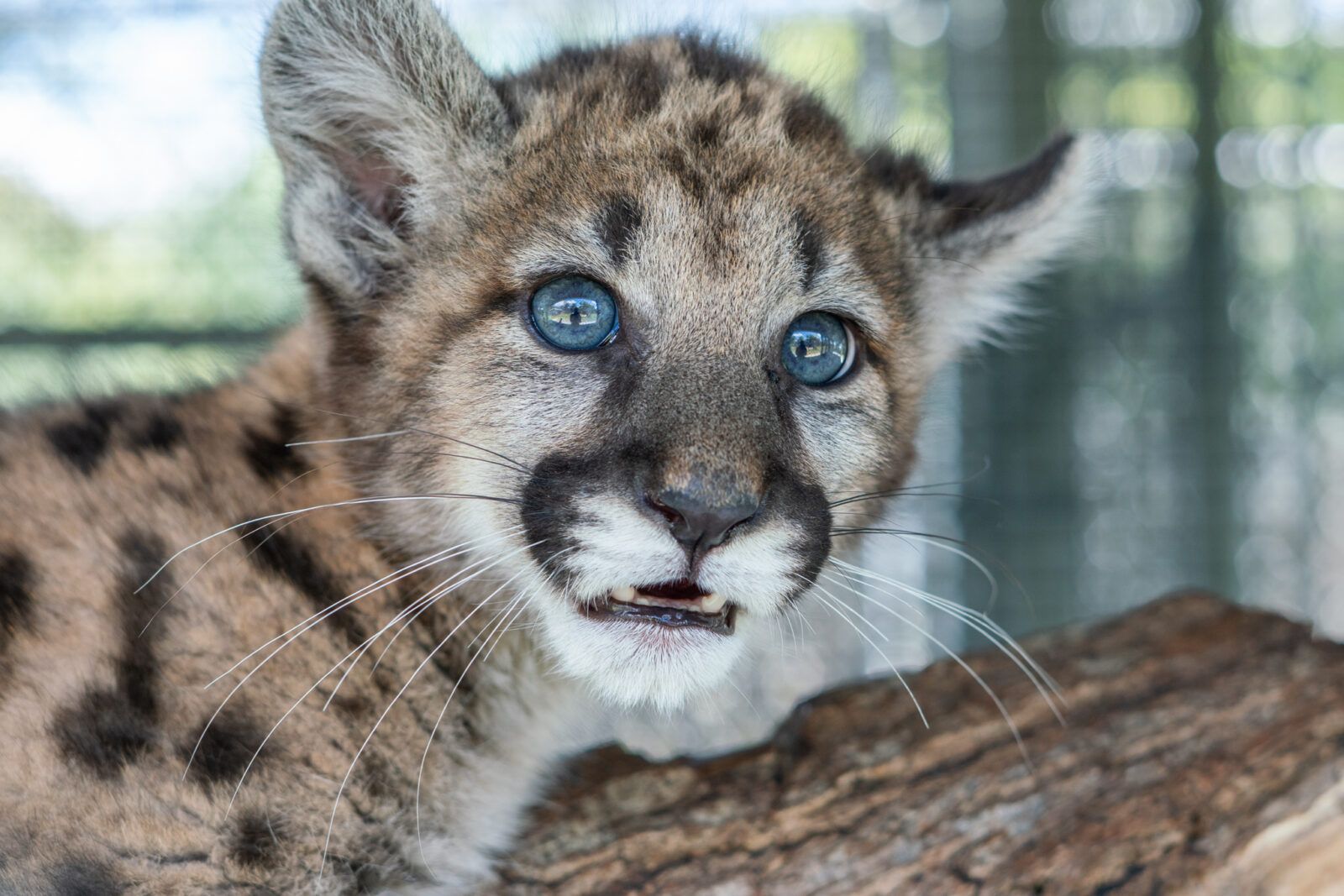
“Don’t let the cute pictures fool you,” says veterinarian Kelsie Stovall. “Peppercorn is a total spitfire.” Stovall would know; she’s in charge of caring for the residents of Florida’s Naples Zoo, including a surprise new addition: a panther kitten who arrived in March after being found abandoned in the Florida Panther National Wildlife Refuge in the Big Cypress Basin.
Now six months old, the little panther has already been through a lot in her short life. Back in January, biologists caught, collared, and released her wild mother, FP277. (Panthers once roamed the whole state of Florida, but due to historic hunting and continued habitat loss, only about two hundred remain, and studying the endangered cats’ movements helps inform conservation efforts.) Whenever they collar a female, biologists hope kittens won’t be far behind. Sure enough, soon after releasing FP277, they noticed her GPS points clustering around the same place—a sign she had a den.
As usual, the mother panther had selected a difficult-to-find spot. “Typically they pick a palmetto thicket, habitat that provides shelter from the sun and rain for the kittens and hides the kittens from potential predators,” says Carol Rizkalla, one of the panther biologists with the Florida Fish and Wildlife Conservation Commission who ventured into the den and performed the kitten work-up protocol: deworming, inserting a a transponder similar to a microchip, and taking a genetic sample. “You’re on your hands and knees, looking for the eye shine of the kittens,” she says. In this case, the biologists found just a single kitten, sporting the characteristic spots that give the animal camouflage.
Unfortunately, a few weeks after that initial encounter, FP277 stopped coming back to the den. The cause of a specific kitten abandonment is usually a mystery, but it might have been injury, illness, insufficient milk production, or disturbance from people or other animals. For a panther—or any animal—in the wild, the margins for survival are razor-thin. Investing in a kitten costs precious energy that sometimes just isn’t sustainable for any number of reasons.
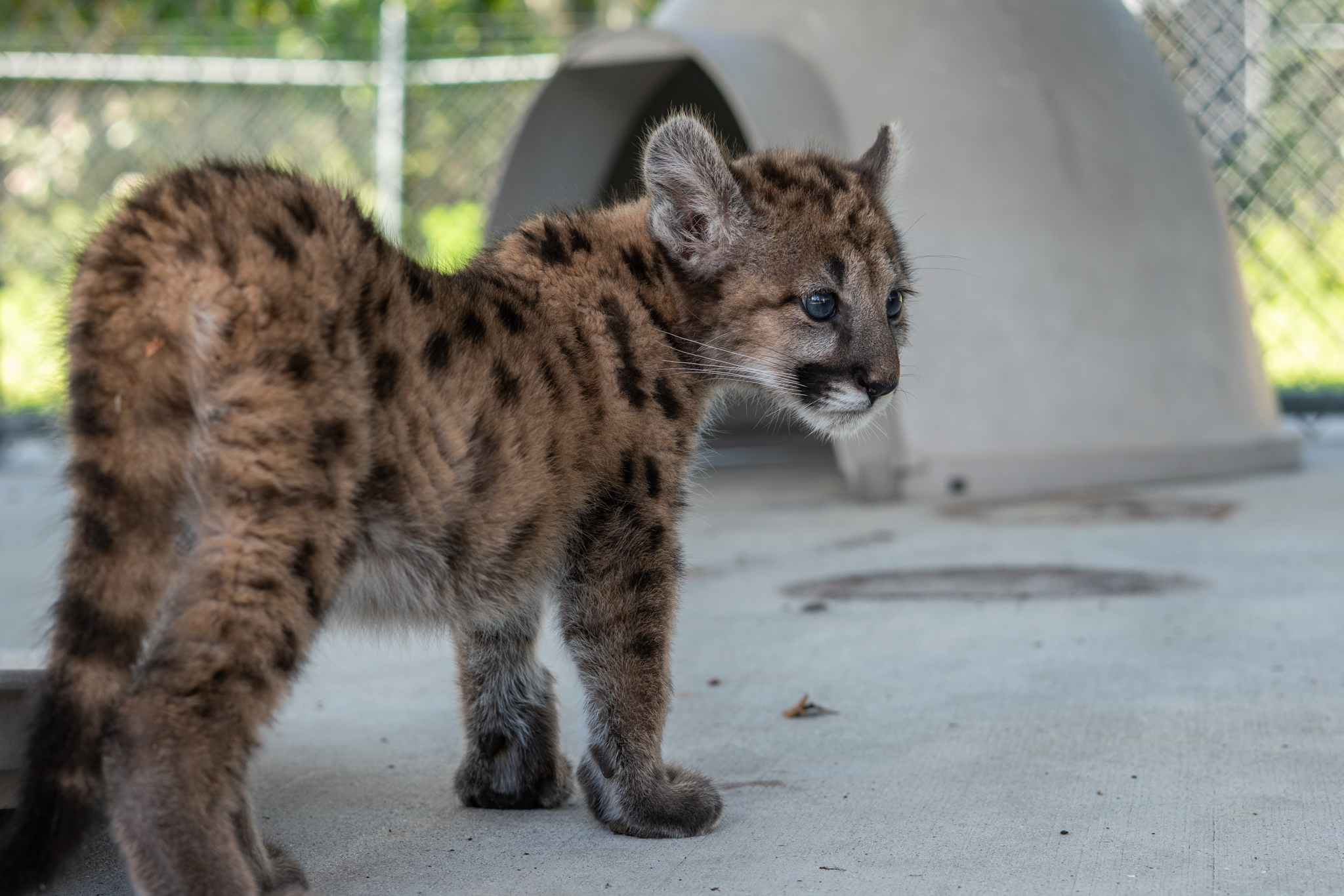
“We waited as long as we could, because we wanted to give mom every chance to come back,” Rizkalla says. Eventually the biologists made the difficult call to pull the kitten from the wild. The Naples Zoo agreed to rehabilitate her, and when their new charge arrived in March at around eight weeks old, she was in critical condition—dehydrated, malnourished, and tiny for her age, weighing in at just three and a half pounds. The zoo’s veterinarian team designed a strict diet plan to nourish her, taking care not to overfeed.
In the wild, panther kittens learn everything from their mother, who stays with them for up to two years, teaching them to climb, hide, and hunt. This one “hadn’t ever even left the den; she hadn’t seen a hunt; she hadn’t explored the landscape,” Rizkalla says. “There’s just absolutely no way she could ever be released.” So the Naples Zoo team named her Peppercorn in honor of her spots (and her feisty attitude) and set about habituating her to humans. At first Peppercorn was nervous, but now she’s used to eating from humans through a fence, loves chasing the feathers and cat toys her caretakers bring during daily playtimes, and has gained confidence in climbing and jumping in perches and branches in her enclosure.
After learning the ropes at the Naples Zoo, Peppercorn will eventually transfer to another facility where the public can see her. “Given that this is such an endangered species, it’s especially heartbreaking that she had to be pulled from the wild, and of course we wish she could have stayed with her mother,” Stovall says. “But she’s going to be an ambassador for her species.”
With so few Florida panthers left in the wild, that’s an important role. Though conservation efforts pulled the big cat through a time when as few as twenty were left, their future very much hangs in the balance. Now, the biggest obstacle—and ticket—to their recovery is habitat; vehicle strikes are the top cause of death, and ranches and private lands can provide key habitat connectivity in a state with an exploding human population.
Panthers are a symbol of the Florida Wildlife Corridor, and of wild Florida—and Peppercorn will offer a rare chance for Floridians and visitors to the Sunshine State to see a member of the elusive native species up close. “Even though a life in captivity is not the same as a life in the wild, it’s still a good life,” Rizkalla says. “She will be a wonderful educational ambassador and help raise money and awareness. She’ll tell the story of the Florida panther.”
Lindsey Liles joined Garden & Gun in 2020 after completing a master’s in literature in Scotland and a Fulbright grant in Brazil. The Arkansas native is G&G’s digital reporter, covering all aspects of the South, and she especially enjoys putting her biology background to use by writing about wildlife and conservation. She lives on Johns Island, South Carolina.