
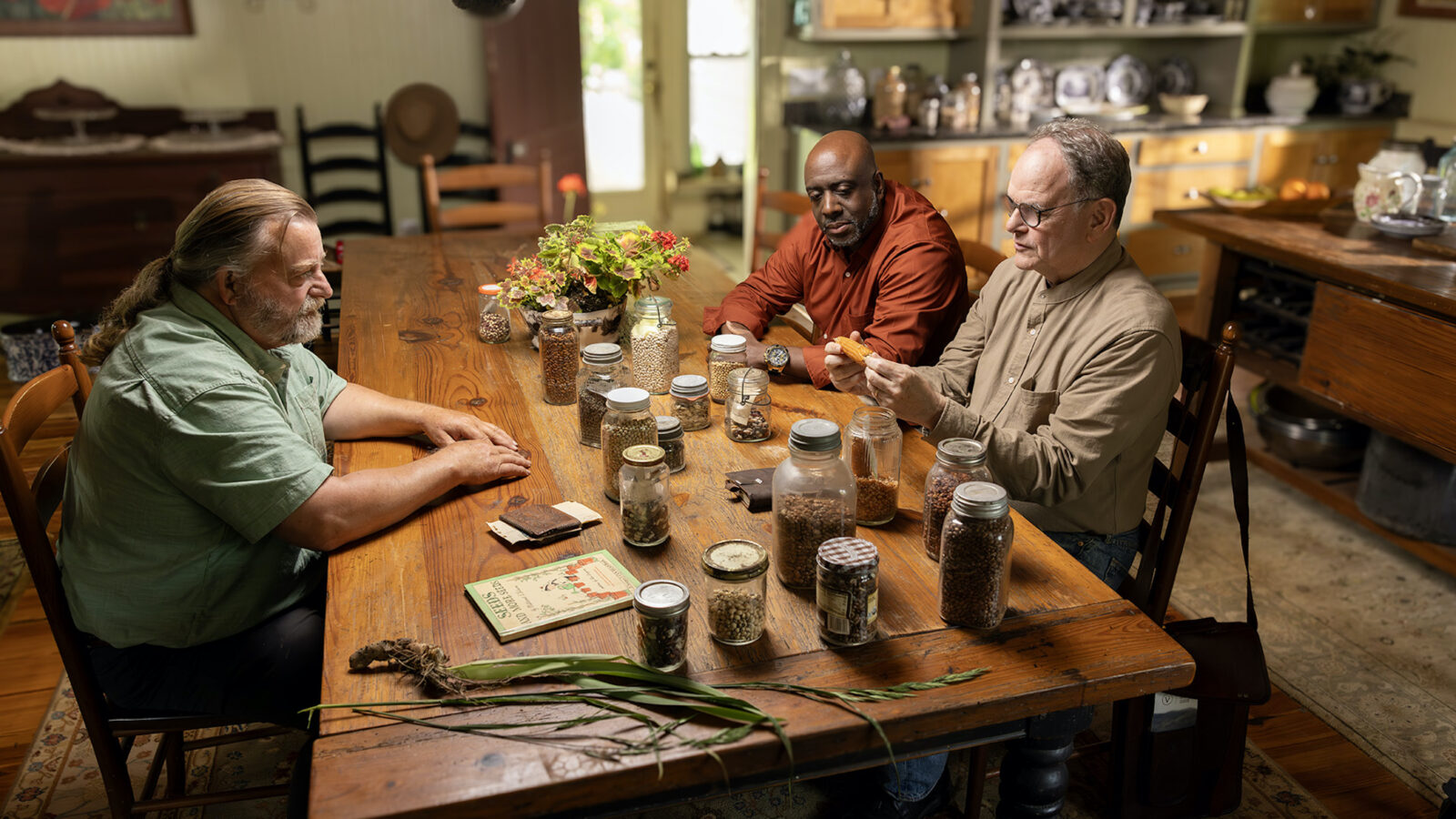
A chef and a food historian walk into a field…There’s no punchline, but that’s the setup for just about every episode of The Savers of Flavor, a new PBS series set to debut May 4. And it pays off in a memorable dish by the time the credits roll. Along the way, David Shields, professor emeritus at the University of South Carolina, and Kevin Mitchell, a chef in Charleston, South Carolina, travel the South to tell the stories of once-beloved plant varietals that faded nearly to extinction, and of the people who thankfully have preserved them.
Intrigued, we asked Shields to tell us more about that delicious mission.
Why focus The Savers of Flavor on ingredients that largely have been displaced?
There are a lot of food shows on public television and television in general. We wanted to deal with the agricultural end of things. In particular, there is a huge legacy of classic ingredients that got marginalized over the last century by modern agronomics. There was this world of vegetables and grains that had flavor in the foremost. A number of important ones should be recognized and restored.
Are seed savers your secret weapon?
Precisely. Each show features someone who is a guardian of a particular thing. Like Dan Dutton, an artist in Somerset, Kentucky, whose family farm holds the remaining grove of Dyehouse sour cherry trees. The Dyehouse was once the only cherry in the South that mattered for making pies because it didn’t require as many cold hours to grow as other cherries. Then, after World War II, Michigan monopolized sour cherry production and it vanished.
The show has a measured pace and rhythm. Was that a conscious choice to match the philosophy of the slow-food movement?
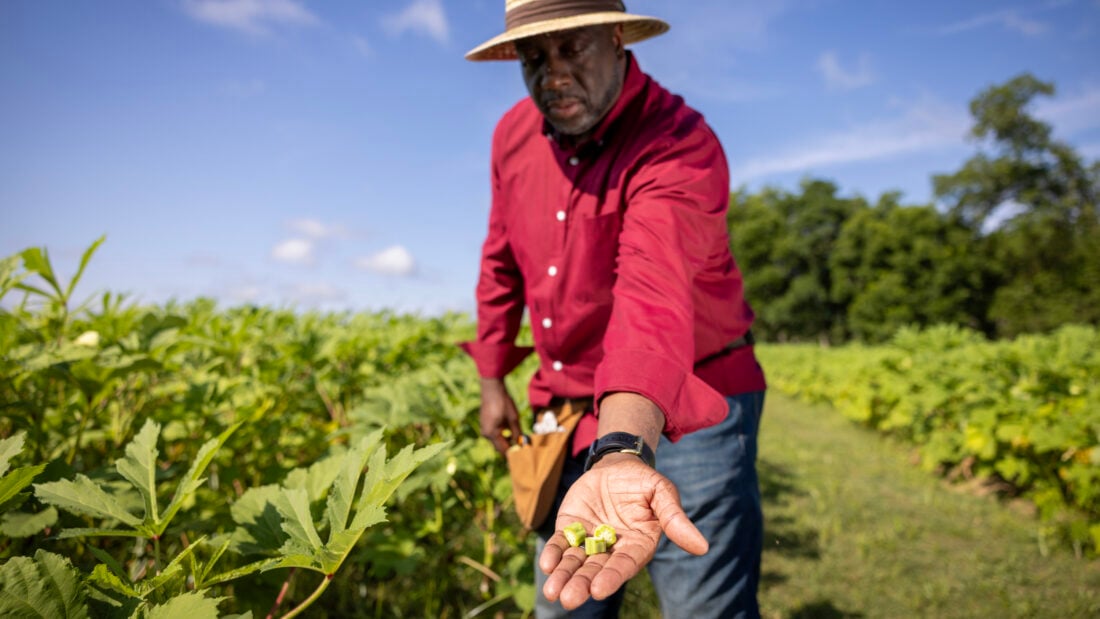
I chair Slow Food USA’s Ark of Taste committee for the Southeast, so yes. There are certain shows that ask you to turn off the distractions of the present moment and consider that something might be valuable in a more meditative kind of way. Ideas get introduced, like the episode that asks if we’re eating the wrong part of the okra when we’re eating just the pods. Motherland Okra, which originated in Africa, is also eaten for its enormous leaves, like collards. They’re slick, but not slimy, so eaters from the Northeast might not freak out.
Besides wonderful food, what does your cohost Kevin Mitchell bring to the table?
Kevin is a trained chef and also a food scholar. He’s extraordinarily sensitive to how ingredients from certain cultures developed their own preparations. For the okra episode, for instance, cooking the leaves with pork wouldn’t have been done in Africa, so he used smoked catfish for flavor. That’s the sort of interesting dimension he brings to what we’re doing together.
You and Kevin arrive at your destinations in vehicles that are pretty rare, too.
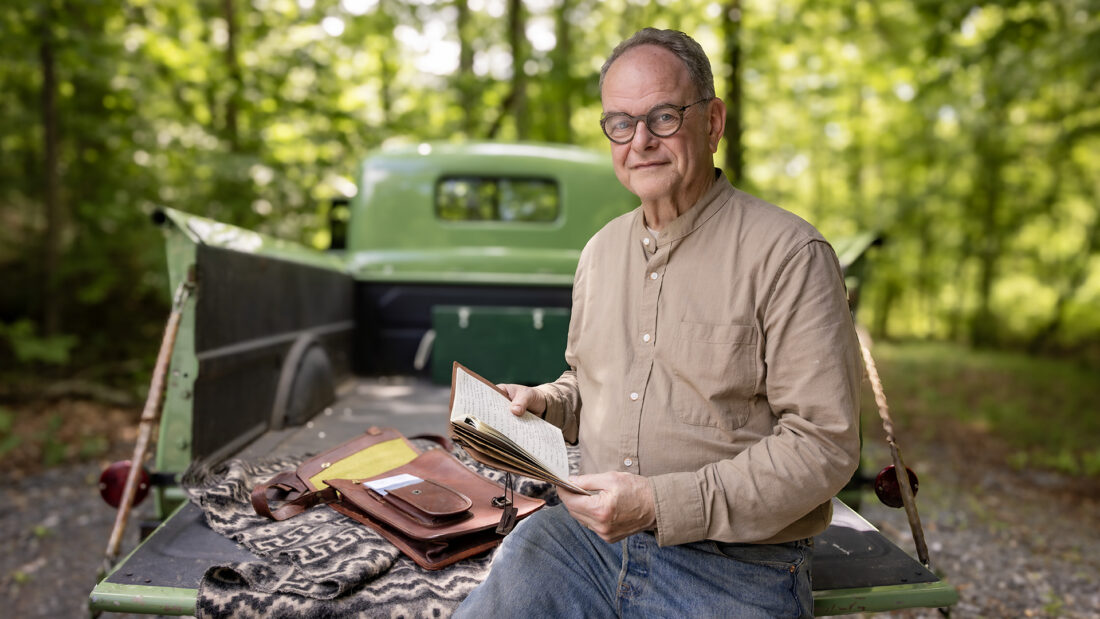
Our producer, Ginger Cassell, worked with Alton Brown, and that sense of quirky visual interest has stayed with her. We film the episode introductions while driving classic cars and trucks, and she tries to procure vehicles that match the color of the ingredient we’re showcasing, like the green Dodge truck for the peas episode. I have to say that the red ’57 Chevy Bel Air for the cherry episode was a bear. A ton and a half of American steel with no power steering really works the pecs.
Your work has included the revitalization of several old-time staples, including Carolina Gold Rice. Have you encountered anything new to you while doing the show?
In the episode on the early frame peas loved by Thomas Jefferson, I knew that once there had been two varieties, but I didn’t know which one had survived. When we got to Monticello and looked at the plants in the gardens there, I realized it was the double-blossomed variety, which makes sense because it would have been more productive with double the pods.
Are there more lost Southern ingredients you still hope to find someday?
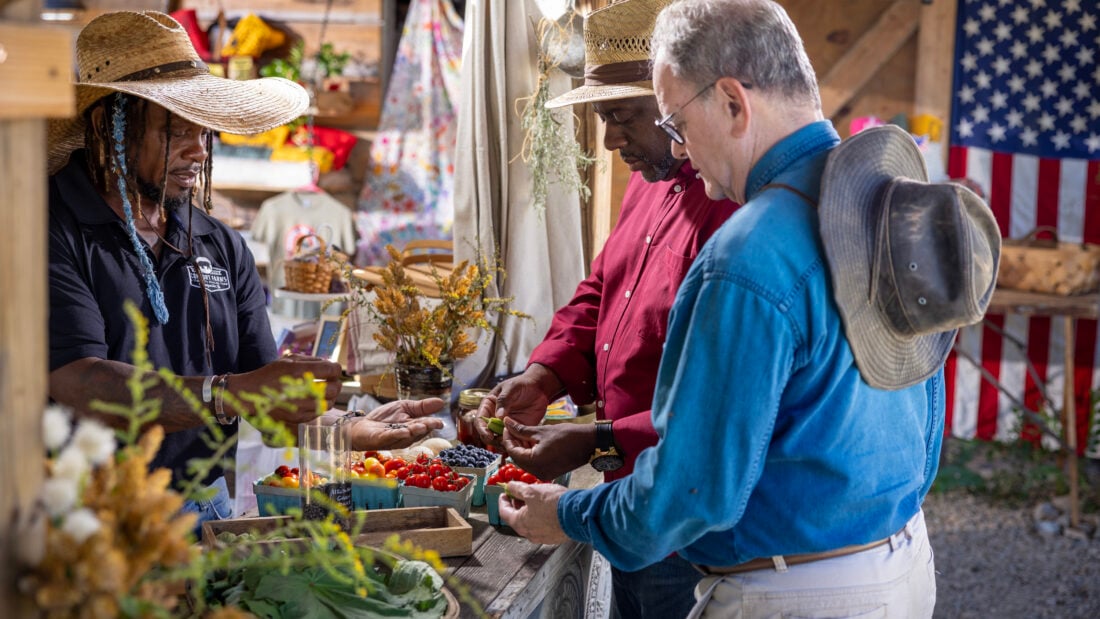
Several. There is the Santa Fe apricot from Florida, which was extremely heat tolerant and seems to have vanished from the face of the Earth. And Egyptian or white mammoth rye, used for making whiskey. It stopped being grown here during Prohibition, but was grown in the upper Midwest and Canada until the 1990s. I’m sure there are seeds in some freezer up in Canada.
The Savers of Flavor premieres May 4 on PBS Passport, Amazon Prime, and Apple TV. Various PBS broadcast stations will air the episodes as fits their local schedules.
Steve Russell is a Garden & Gun contributing editor who also has written for Men’s Journal, Life, Rolling Stone, and Playboy. Born in Mississippi and raised in Tennessee, he resided in New Orleans and New York City before settling down in Charlottesville, Virginia, because it’s far enough south that biscuits are an expected component of a good breakfast.