

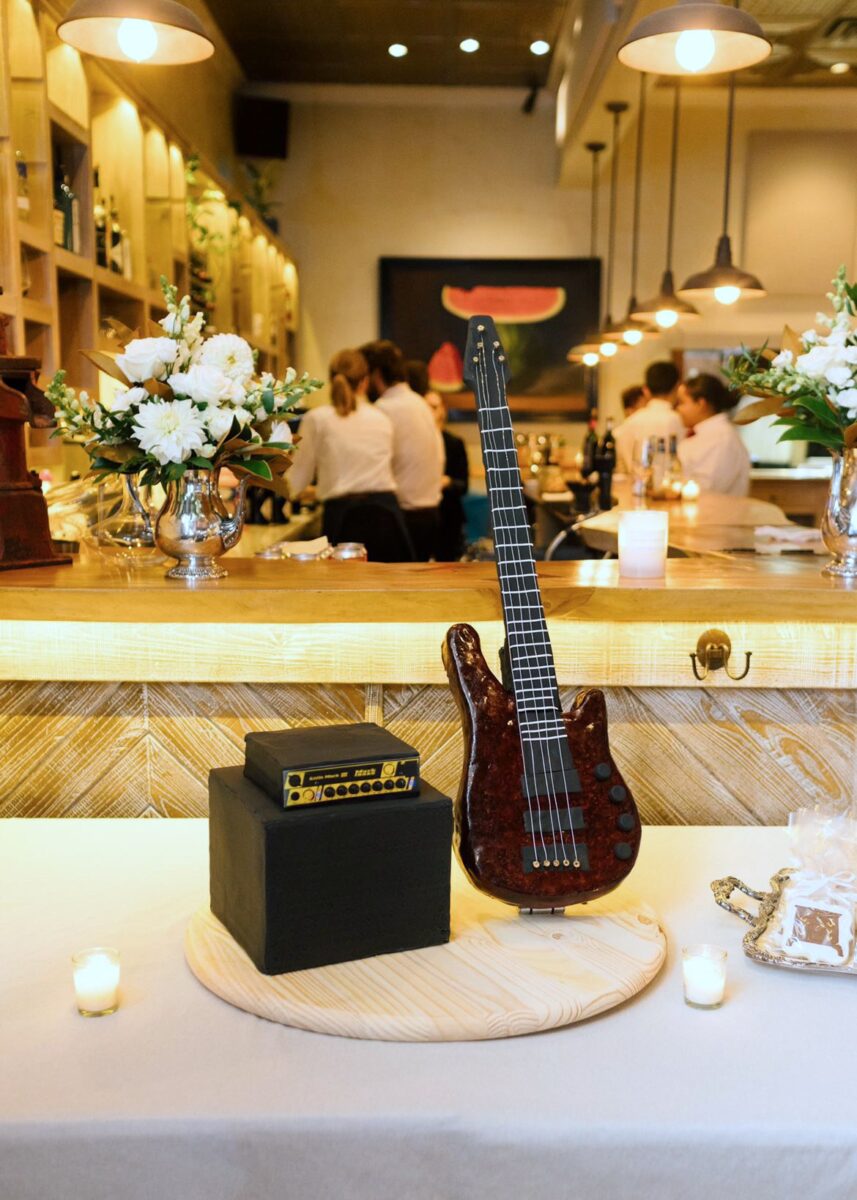
Though Anita Gupta built her Charlottesville, Virginia, company, Maliha Cakery, on elegant spins on traditional wedding cakes—think multi-tiered, flower-draped, larger-than-life showpieces—one scroll through her Instagram profile shows that her imagination and skill take on a whole new meaning in her groom’s cakes. Armed with batter, icing, and fondant, she’s built mansions, constructed cars, carved out guitars, and filled stadiums, and there’s truly no limit to what she’s willing to take on.
The groom’s cake tradition began in Victorian England as a heartier, “more masculine” dessert option for the men in attendance at a wedding; it often included richer flavors such as chocolate, nuts, or spices and typically came laced with liquor. The notion made its way to the American South, where it’s remained a tradition—skyrocketing in popularity after the 1989 classic film Steel Magnolias featured a red-velvet groom’s cake in the shape of an armadillo. (Which, yes, Gupta has recreated for a couple.)
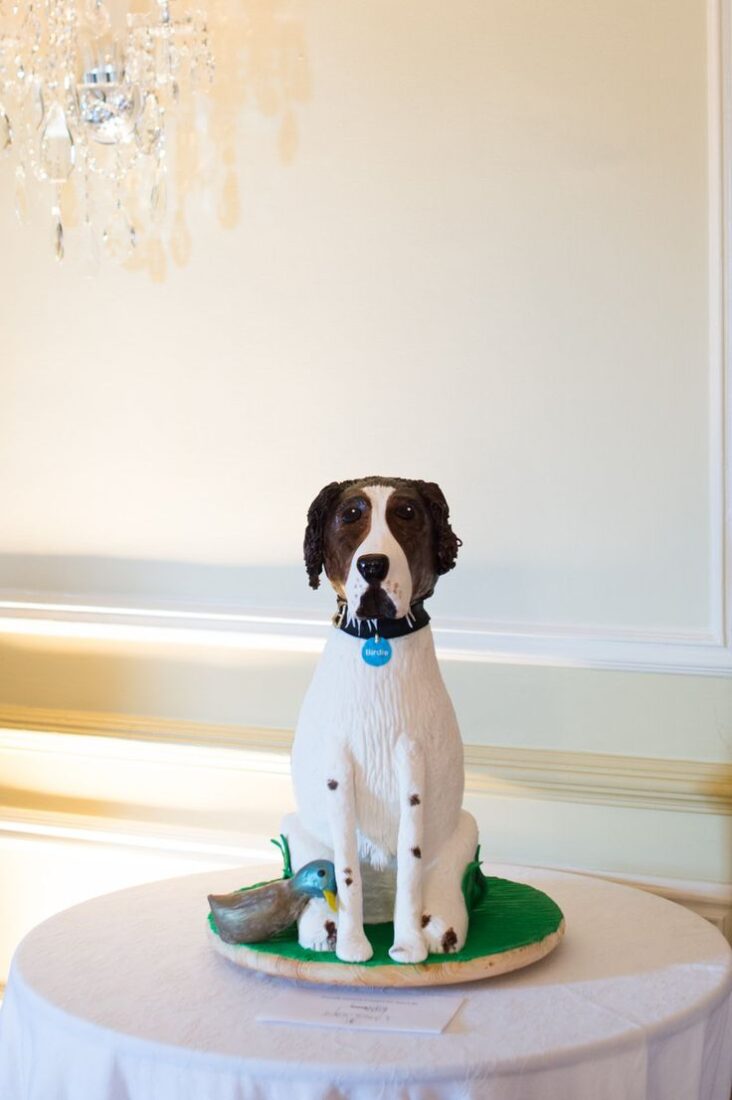
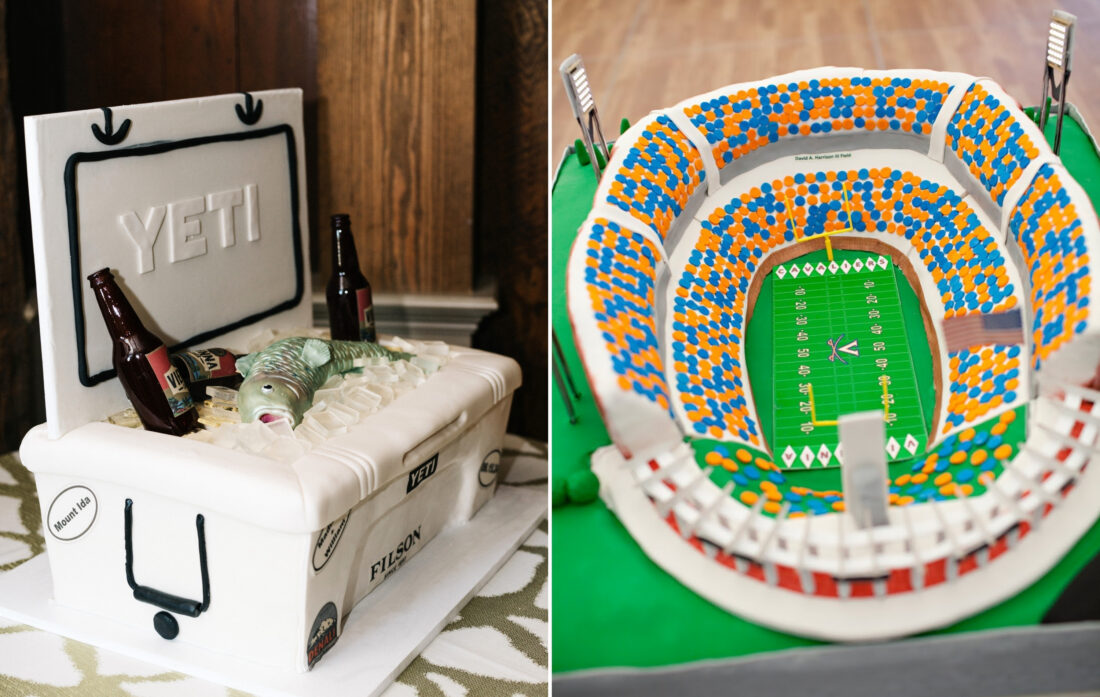
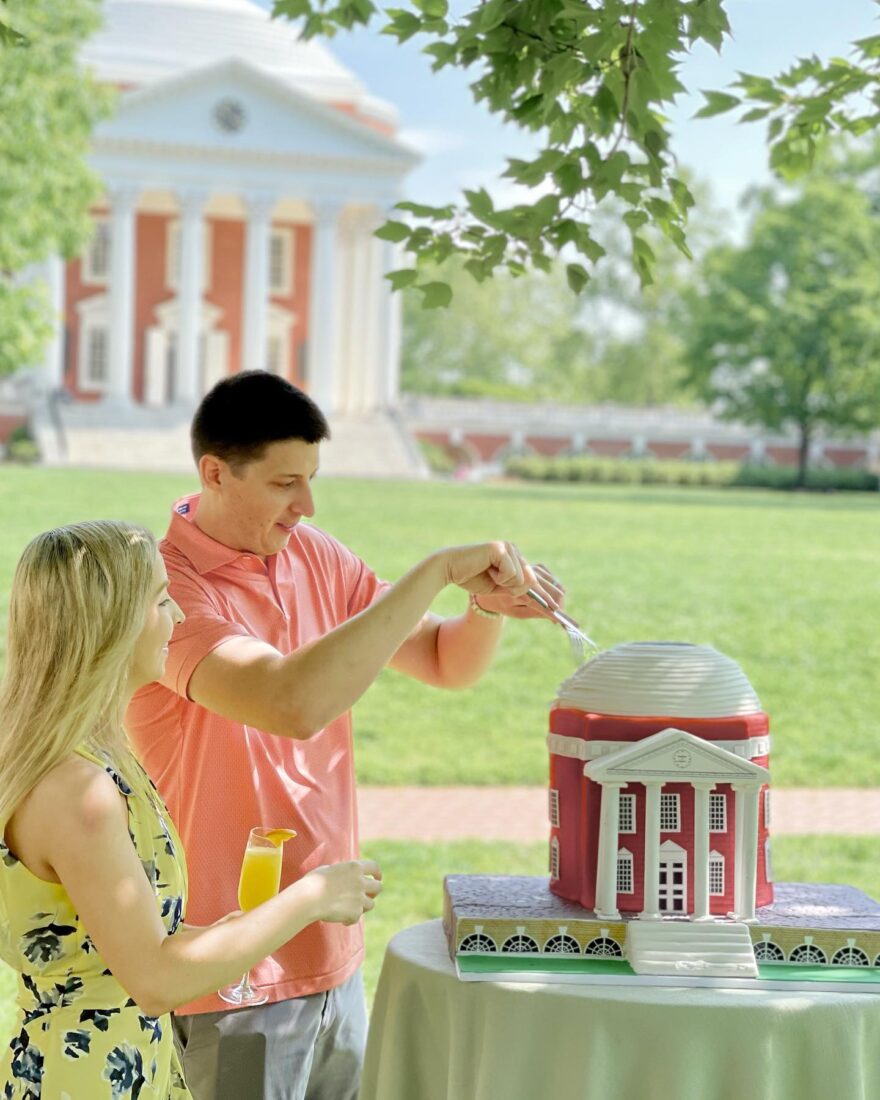
“These days, it’s usually a surprise from one person to the other—their way of acknowledging the other person for all their help planning,” Gupta says. Sometimes, though, a groom will choose the cake for himself, coming in with a clear vision. “The cakes usually have to do with a hobby—I’ve done chess boards and Yeti coolers; a sports team; or a place that’s special to the couple,” Gupta says. “I make a ton of the [University of Virginia] Rotunda every year. And I’ve done the White House for a couple who met while working there.”
The architecture is often the hardest part, since Gupta aims to build each cake to scale. “For the Rotunda, we got the blueprints from UVA and shrunk it down to miniature,” she says. She also builds special stands for each cake, constructing them around metal rods for stability. “Structure is important—we want to make sure it doesn’t fall over. But in the end, it still has to be delicious. After all, it’s going to be dessert.”
Caroline Sanders Clements is the senior editor at Garden & Gun and oversees the magazine’s annual Made in the South Awards. Since joining G&G’s editorial team in 2017, the Athens, Georgia, native has written and edited stories about artists, architects, historians, musicians, tomato farmers, James Beard Award winners, and one mixed martial artist. She lives in North Charleston, South Carolina, with her husband, Sam, and dog, Bucket.