
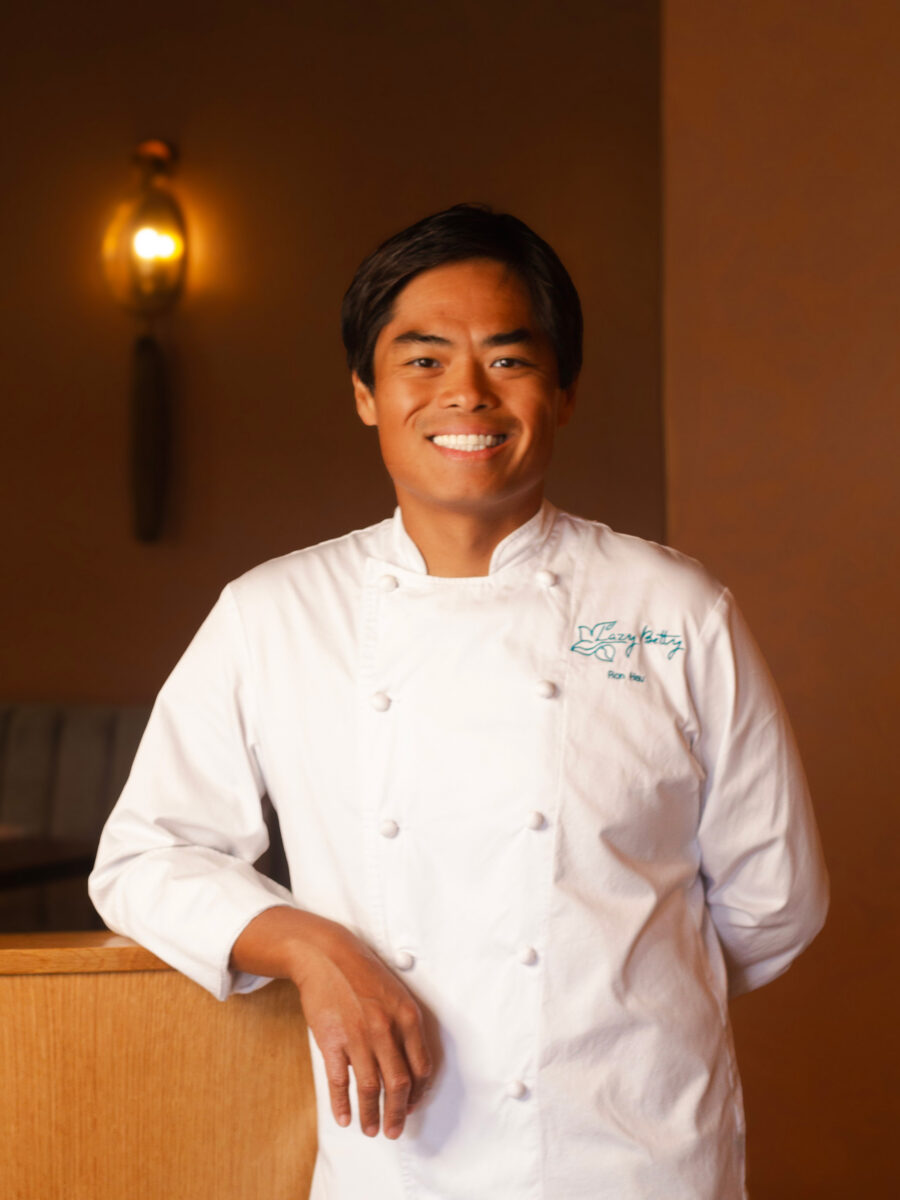
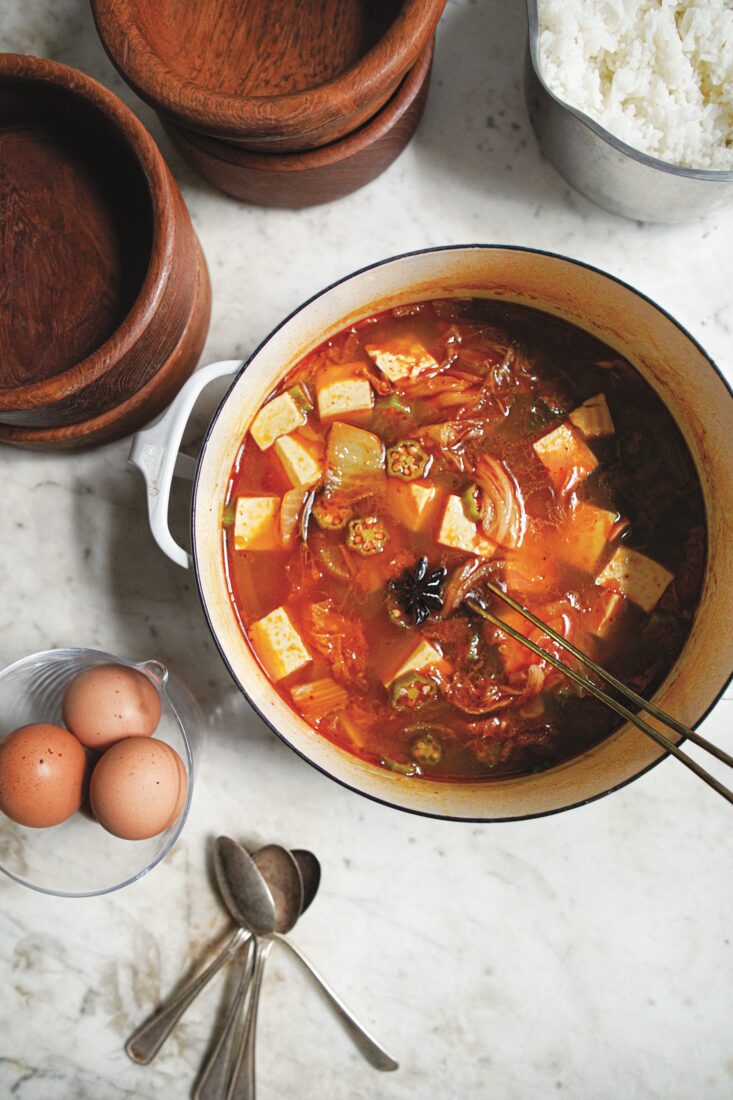
Pimento cheese wontons. Stir-fried okra. Collard green fried rice. Lemon pepper ramen. Chef Ron Hsu, the Georgia-born, Atlanta-based chef with Chinese roots, delivers the best of Asian and Southern cuisines in mouthwatering combinations in his new cookbook, Down South + East, out this month.
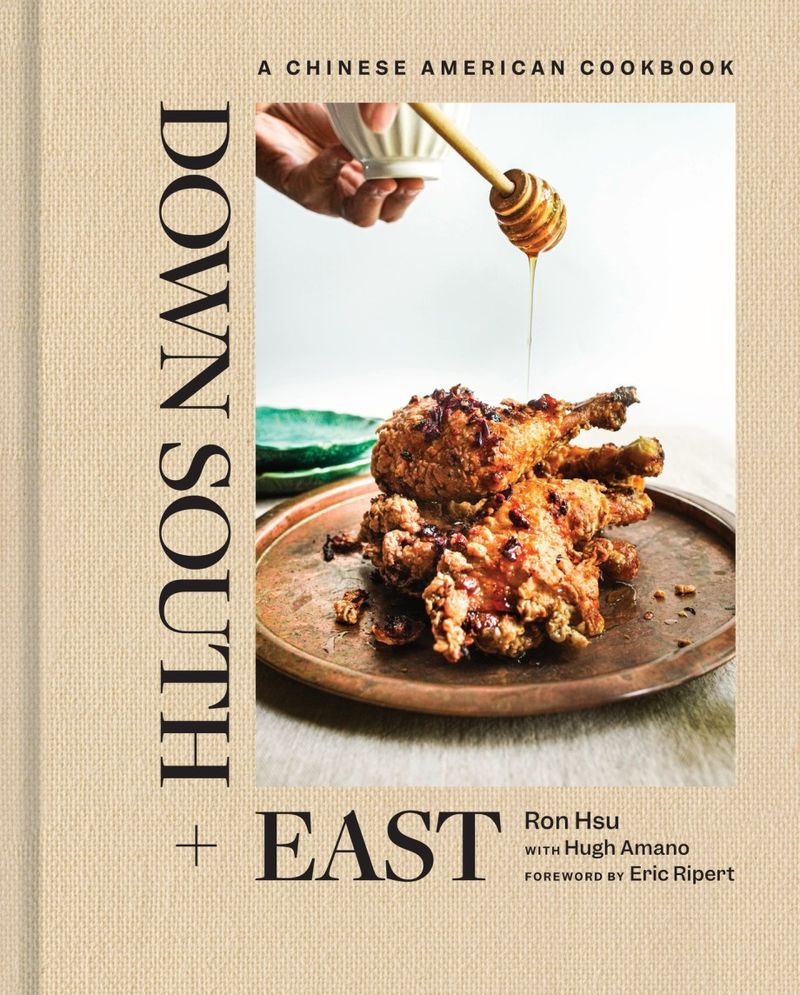
After growing up a “restaurant kid” in Stockbridge, Georgia, where his parents operated a set of Chinese eateries, Hsu went on to culinary school and worked in the kitchen of New York’s renowned Le Bernardin before opening the Michelin-starred Lazy Betty in Atlanta. His debut cookbook celebrates his mother’s Taiwanese heritage and his own home state, starting with a list of must-have pantry items that mingles Szechuan peppercorns and fermented black beans with sorghum syrup and ham hocks (not to mention divulges his own Holy Trinity of fresh ginger, green onion, and garlic).
“A lot of children of immigrants are now putting their generation’s stamp on the food of their homeland, creating new branches of cuisine,” Hsu writes in the introduction. “My story is very much an American one, and I hope my cooking style speaks to this current moment. Just as you can now find hoisin sauce, miso paste, and sriracha in the local Piggly Wiggly that once carried no ingredient more exotic than soy sauce, I want this cookbook to build on our growing exposure to different cultures.”

Below, we chatted with the chef about where he’s eating in Atlanta, how his mother inspired his recipes, and how Southern and Chinese cooking—and hospitality—are aligned. He also shared his recipes for char sui glazed baby back ribs, pimento cheese wontons, and rice pudding with peaches.
Tell us about the inspiration behind this project.
At first I didn’t want to pigeonhole myself as being a Southern Asian chef, because Lazy Betty really is what got me on the map, and we’re not a Southern Asian restaurant. But as I reflected, I realized it is who I am. I just had to think about my past experiences, my environment, my community, and foods that I loved.
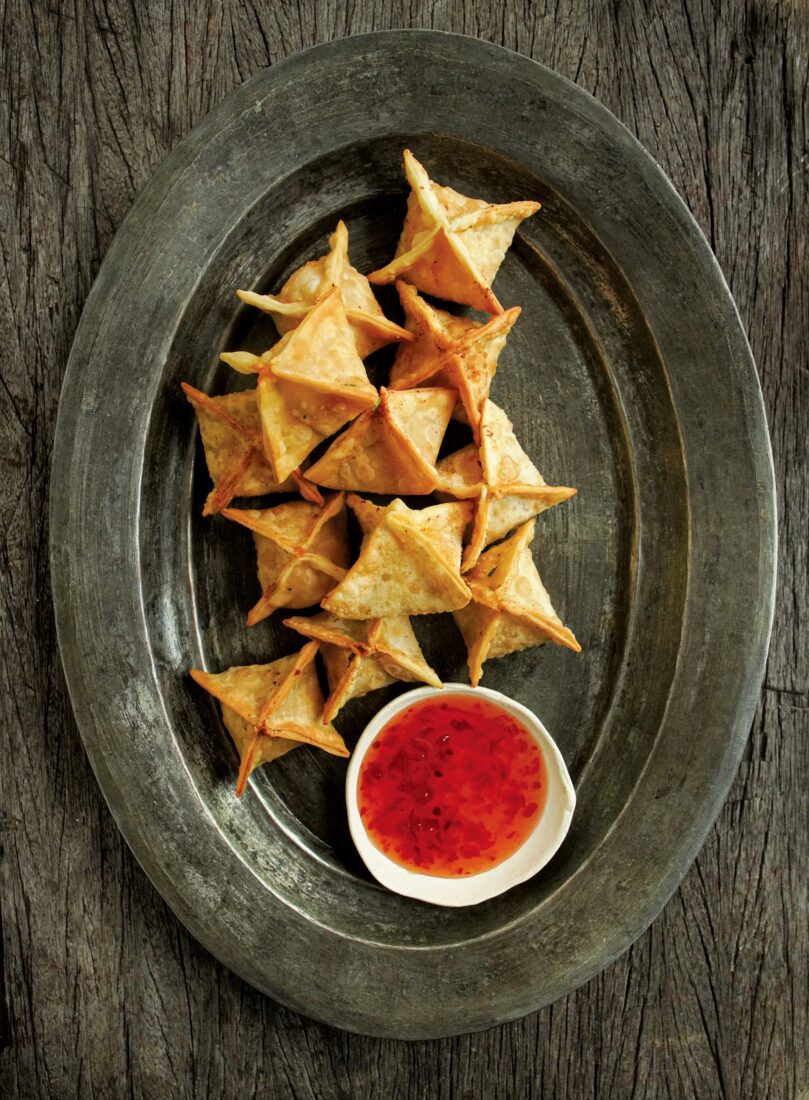
Pimento cheese wontons…enough said.
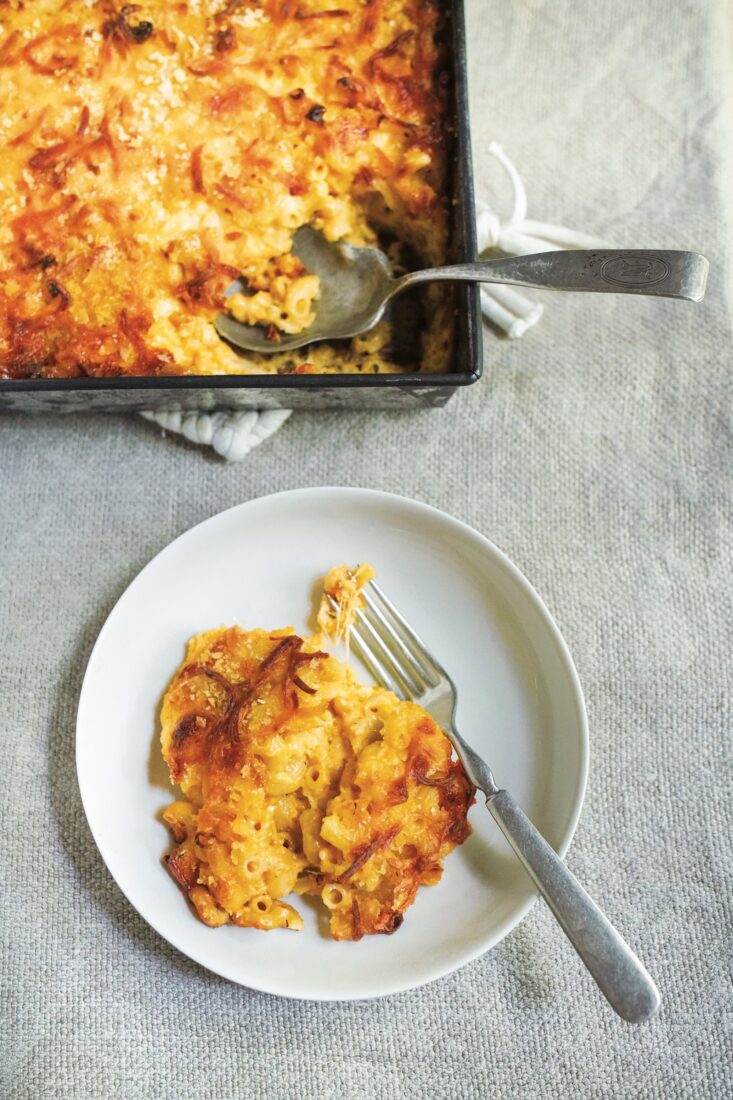
Oh, they’re good. Who from the South doesn’t know about pimento cheese? And I made probably thousands of crab rangoons—a cheesy, creamy mixture with crab— growing up. Why not consider putting pimento cheese in a wonton? My siblings actually have a pimento cheese wonton on their menu at their restaurant, so I adopted their recipe and modified it. It’s very easy to make. If you want to cut corners and buy your favorite pimento cheese to do it, please do.
One discovery in the cookbook that I loved is that your favorite cornbread is made by adding in a little lap cheong (Chinese sausage).
There was this barbecue restaurant in Atlanta called Harold’s Barbecue. If you talk to locals and natives, they know this spot. My favorite thing I used to get from there was their cracklin’ cornbread with Brunswick stew. As I was developing recipes I was like, you know what? Let me try to do this with lap cheong [instead of cracklings], and it came out spectacular.
These char sui glazed ribs sound like another winning combination.
This is a low effort, high payoff dish. You just have to devote a couple hours and just keep brushing a marinade on pork ribs. It’s not very technical; it just takes patience. They’re salty, sweet, with a lot of umami. You get the savoriness from the pork and the richness from the ribs, and it smacks you on the top of your tongue. You get a little element of ginger and garlic and spices from the variety of spices and five-spice powder.
Moving between Southern ingredients and Asian ingredients must feel very natural to you.
My mother was a big inspiration. She migrated here from Taiwan via Malaysia, settled in San Francisco, then moved to Georgia. I grew up eating things like stir-fried lo mein with Thanksgiving dinner. She would also do Salisbury steak, but instead of gravy make a stir-fried soy sauce. It was just so cool to be able to dig deep and relive those memories and find new things.
I know she passed away a few years back. What do you think she would think about this cookbook?
I think she would probably be like, “This recipe doesn’t sound very good. You should have done this or that, you shouldn’t have used this ingredient.” My mom was always pushing me, but deep down she would have been very proud.
I have to ask what she thought of you naming your restaurant, Lazy Betty, after her.
She loved it. And of course, my mother was not lazy at all. She moved to the U.S with only $20 in her pocket, barely knowing any English. She saved up enough to eventually move to Georgia to start her restaurant empire. My mom was very short, maybe four-foot-ten, but had the personality of a giant. At Lazy Betty she would just go up to people and say, “I am lazy Betty” and point at herself with so much vigor and tenacity.
Talk a little bit about how Southern and Chinese cooking match up.
Southern food and Southern hospitality are predicated on bringing people together in warmth and sharing food together. Chinese food at its core is all family-style—it’s the same. You’re trying to bring people together and share experiences and develop relationships. That’s what I love about both cuisines.
Where are you eating in Atlanta these days?
I value easygoing comfort food. I love Nam Phuong on Buford Highway, a Vietnamese restaurant. I also love this little Korean grocery store for kimchi and rice cakes, run by this Korean grandmother named Grace. She’s the sweetest person on the planet. I feel more Southern hospitality there than I have felt in any restaurant in Atlanta, including my own.
When people go through this cookbook, what do you hope they come away with?
I want them to realize that love is what we should focus on. Food is just the mechanism we use to express our love or our curiosity about one another. I’ve experienced a lot of racism in my life. And the one thing that always seems to serve as an avenue to bring down people’s defenses or preconceived thoughts about other people is food. That’s what I want for people.
For example, one of the recipes is for collard greens and fried rice. Generally, if you think of collard greens in the South, you think of something that’s cooked in a liquid and been braised for hours. But you can actually throw collard greens in fried rice at the very last minute and just slightly wilt it and it has a little crunch, and it’s still delicious. I’m combining Chinese-style fried rice with a Southern staple and it creates something amazing. Food gets past surface differences. You find harmony on a plate and you can apply that to life.
Lindsey Liles joined Garden & Gun in 2020 after completing a master’s in literature in Scotland and a Fulbright grant in Brazil. The Arkansas native is G&G’s digital reporter, covering all aspects of the South, and she especially enjoys putting her biology background to use by writing about wildlife and conservation. She lives on Johns Island, South Carolina.
Garden & Gun has an affiliate partnership with Bookshop.org and may receive a portion of sales when a reader clicks to buy a book. All books are independently selected by the G&G editorial team.