
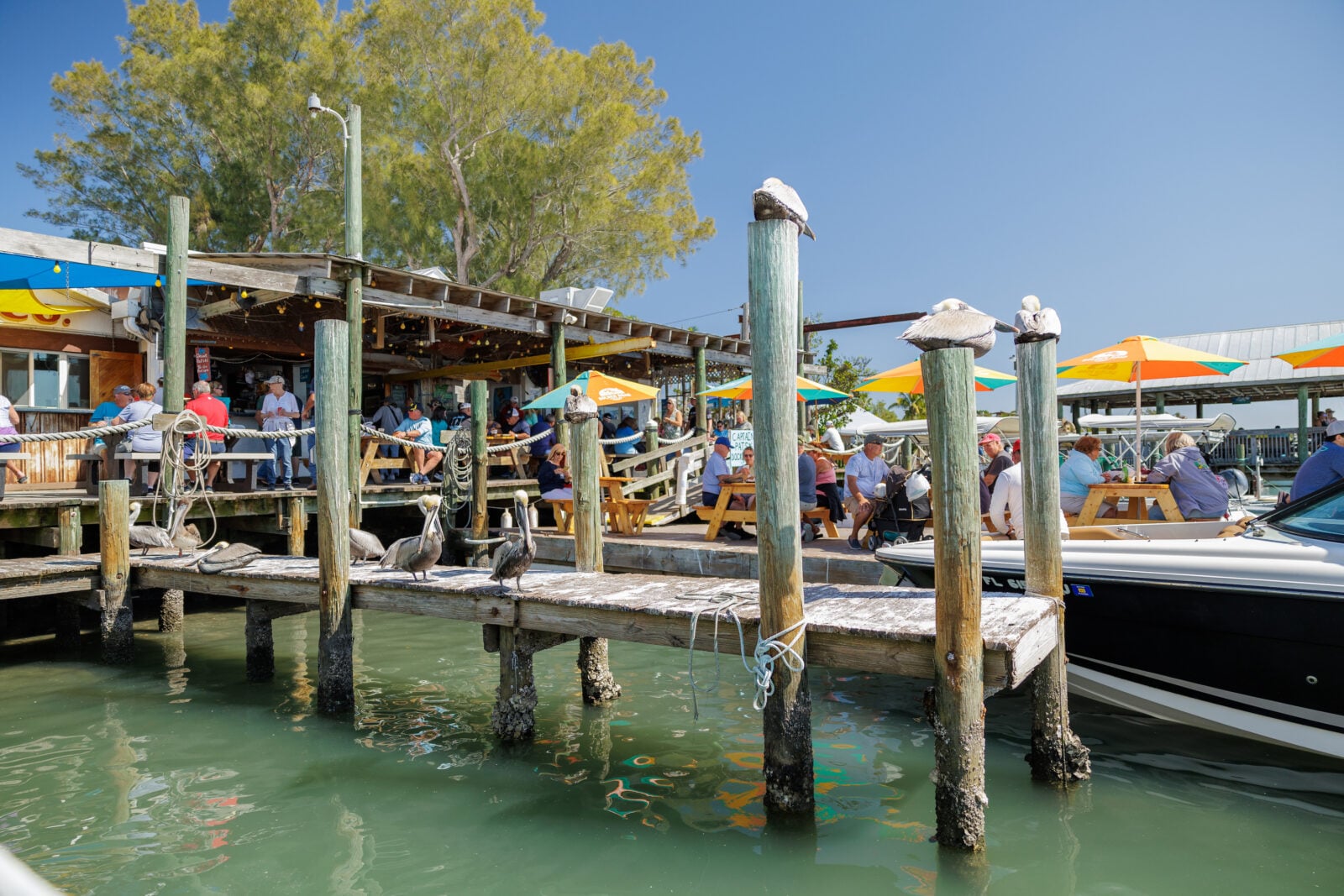
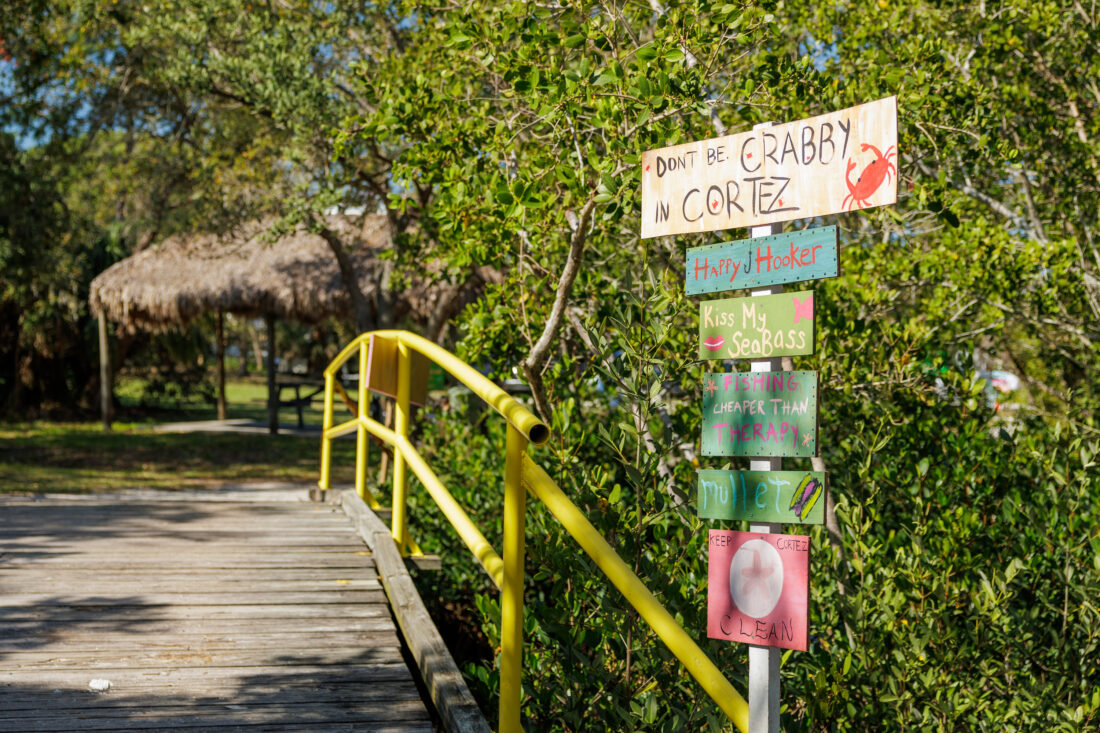
Two things built the small town of Cortez, Florida, according to third-generation resident Karen Bell: North Carolinians and mullet. Tucked behind a string of barrier islands along the Gulf between St. Pete and Sarasota, the village was settled in the late 1800s by Carolina families looking for fairer fishing grounds. Nearly 150 years later, the abundant fish known for its flavorful white meat is as foundational to the quaint community as ever, but in new forms.
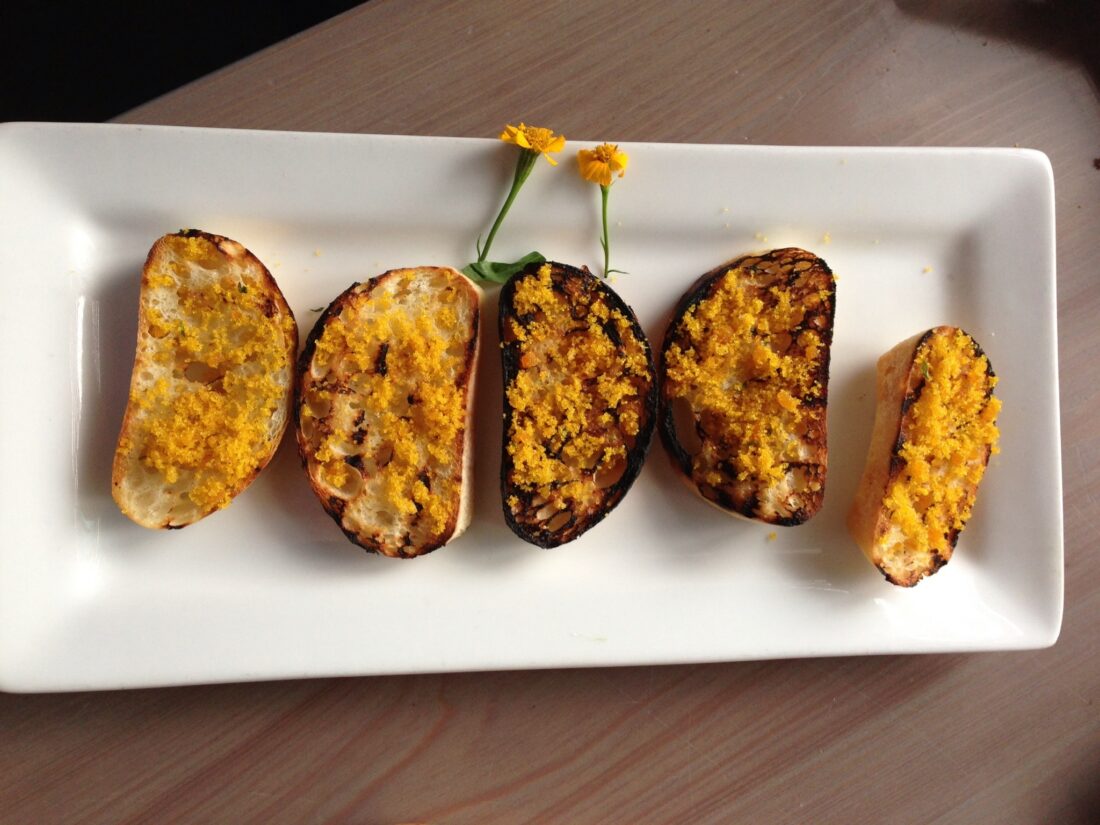
Mullet may have helped build Cortez, but mullet roe, aka Southern caviar, is what keeps it alive.
At A.P. Bell Fish Co., mullet eggs are harvested, frozen by the sac, and shipped to destinations far beyond the Gulf. “Most of the roe leaves to go to Europe or Taiwan,” says Bell, whose family has operated in Cortez for 103 years. “There’s one place in New York that buys two to four thousand pounds a year. That’s going into high-end New York restaurants. In Atlanta, there’s one company that buys five hundred pounds a year. There’s someone in Tampa who gets about one thousand pounds a year.”
Also known as bottarga, mullet roe is something of a novelty to Northerners, but it’s hardly a new trend in and around Cortez. “Southerners would dry the roe on their roof,” Bell explains. “They’d stick it up during the day on the hot metal roof, bring it in at night, and put it back up there during the day. But the true sale of it started in the late seventies.”
The product’s growing popularity has created a new market and lifeline for the town, which has contended with the pressure of fishing regulations, rapid development, and hurricanes. In 1994 Florida residents voted for a net ban, which eliminated the use of large entangling nets and thus decreased the killing of unintended species, also known as bycatch. It was an environmental win, but many of the Cortez’s fish houses felt the strain. “They just couldn’t stay afloat with the cut in production,” Bell says. For those who could, “a lot of people had to take on a second or a third job to keep fishing,” says Cindy Rodgers, president of the Cortez Village Historical Society.
Developers also swept in, seeking to turn vacant seafood shacks into condominiums and unoccupied coast into marinas. In some cases residents resisted, as when they banded together in 2000 to purchase and protect a nearly one-hundred-acre plot of environmentally sensitive estuary.
Those metaphorical storms have been compounded by real ones. In 2024 Hurricane Helene slammed into the village, flooding homes and ripping off the roofs once used to sun-dry the roe. “I never lived through anything like that,” Bell says. “Winds were howling, there was mud everywhere. I’m thinking, ‘I’ll just mop it up, and it’ll be fine.’ And it finally got to right below my knees.”
When Bell woke up the next morning, some of the newer developments in Cortez were nearly leveled, but most of the original ones, derived from the architectural styles of Carteret County in North Carolina, were still standing.
Over a year later, there’s still rebuilding to do. “At A.P. Bell, our roof is still a temporary roof,” Bell says. But the coastal community knows a thing or two about adapting. “Whether the net ban or gentrification, people picked themselves up and dusted themselves off,” she says. “There’s always been a resilience here.”
Or as Rodgers says, “People are really committed to keeping Cortez Cortez.”
Helen Bradshaw, Garden & Gun’s social media editor, is a born-and-raised Floridian. As such, she has an aptitude for finding alligators and an affinity for the weird and wonderful stories of the South. She graduated from Northwestern University with a focus in environmental journalism.