
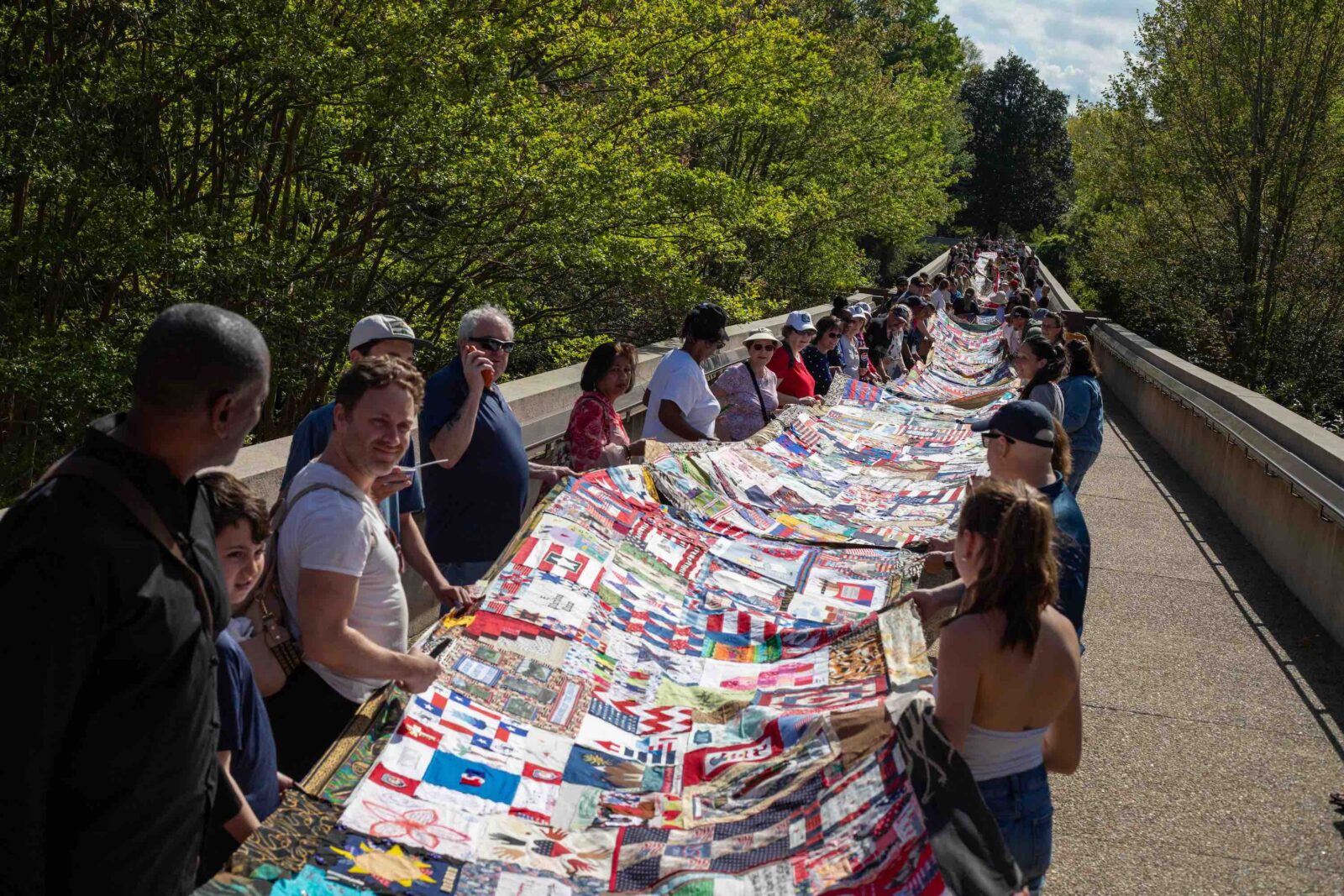
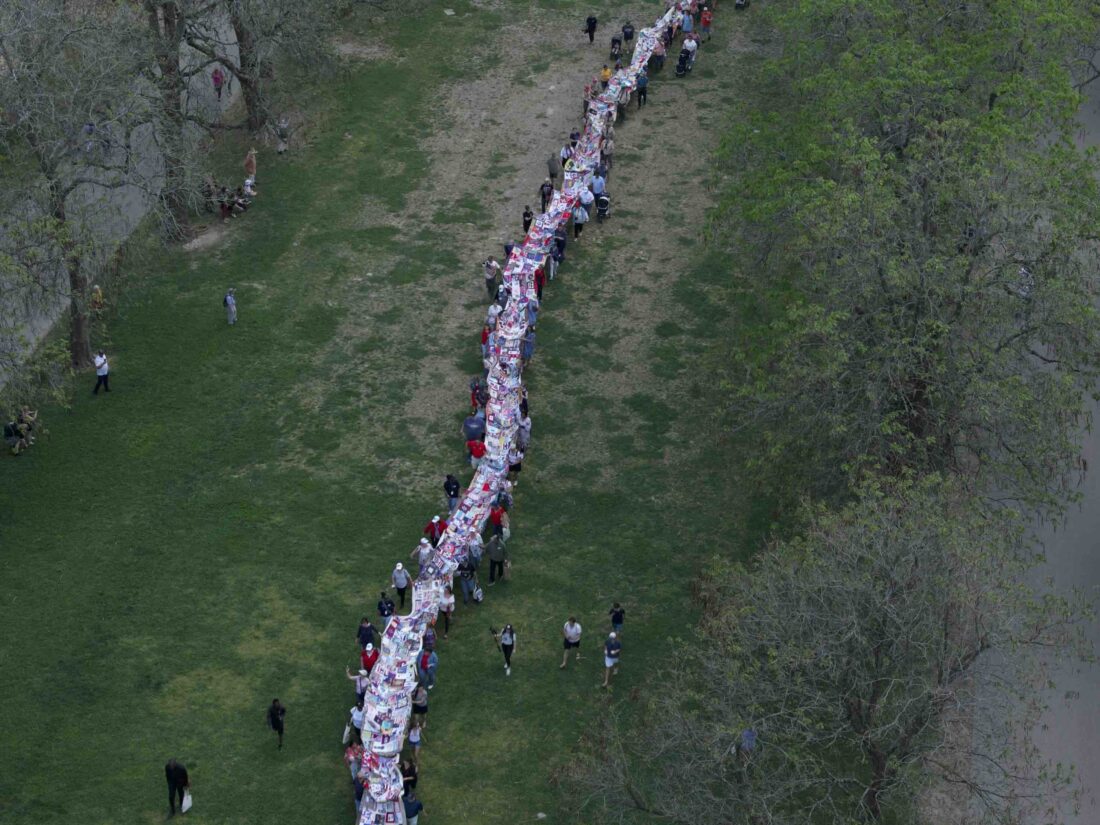
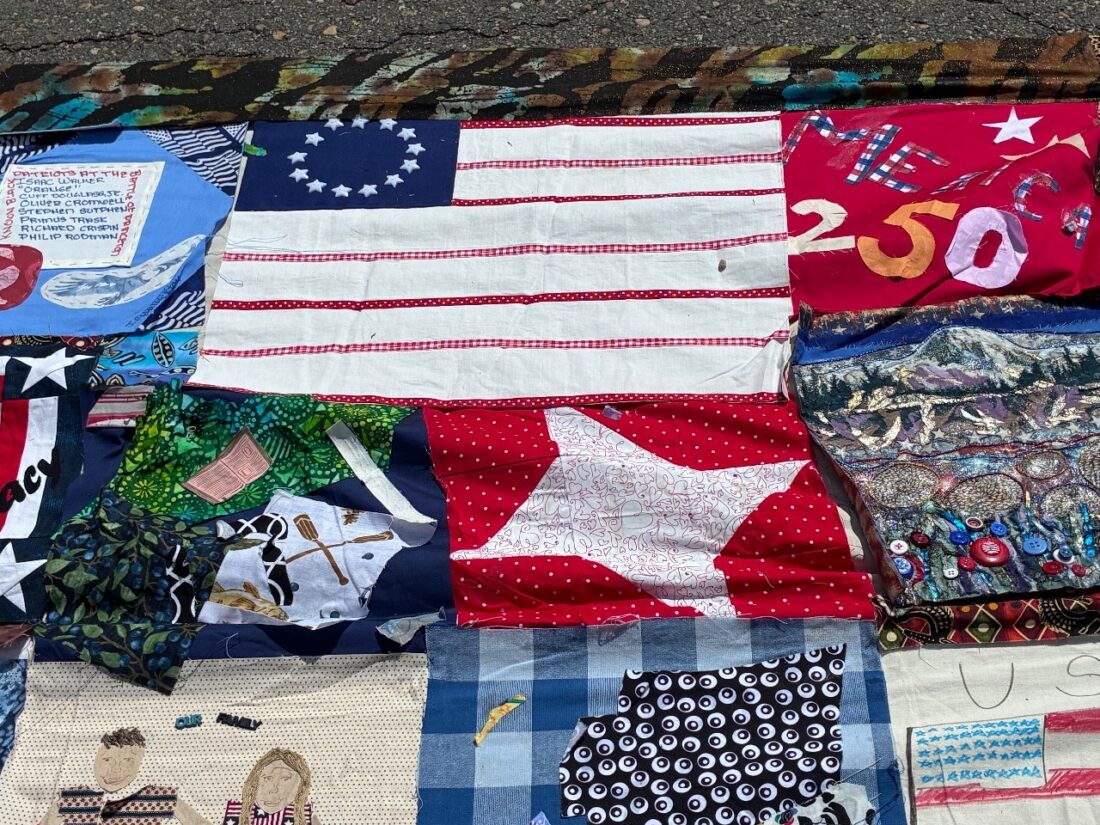
A casual visitor to Colonial Williamsburg in Virginia this past Saturday may have wondered what was going on when a crowd parted to let a patchwork quilt unroll—and unroll and unroll—across Merchants Square. In the end, the quilt measured five feet wide by an impressive 550 feet long, stitched together from some 2,500 blocks of fabric.
The Great American Birthday Quilt, a project of Visit Williamsburg and Steve Prince, distinguished artist in residence at the College of William & Mary’s Muscarelle Museum of Art, kicked off last July 4. The original goal of 250 feet—to line up with the celebration of America’s 250th anniversary—was blown past after blocks poured in from individuals and groups from all walks of life in all fifty states.
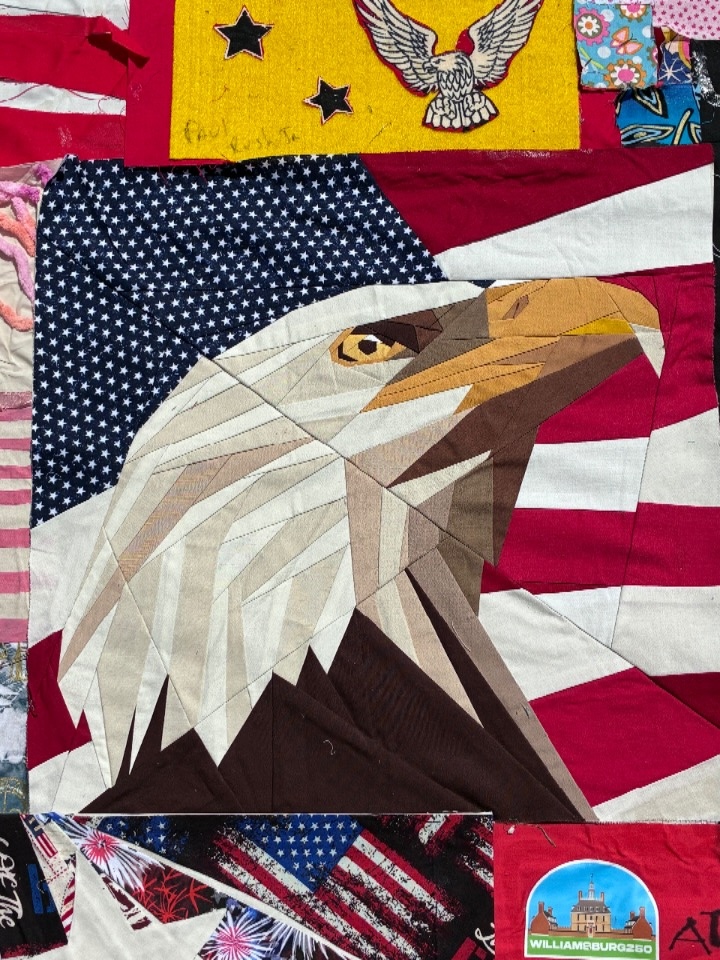
Walking the quilt’s length revealed a striking diversity of media and message. In fabric, ribbons, buttons, sequins, doilies, paint, military insignia, and blue jeans pockets, individual blocks depict founding fathers, monuments, mountains, flowers, rainbows, dogs, sports teams, covered wagons, Bible verses, peace symbols, Rosie the Riveter, a few Disney princesses, and at least one SpongeBob SquarePants.
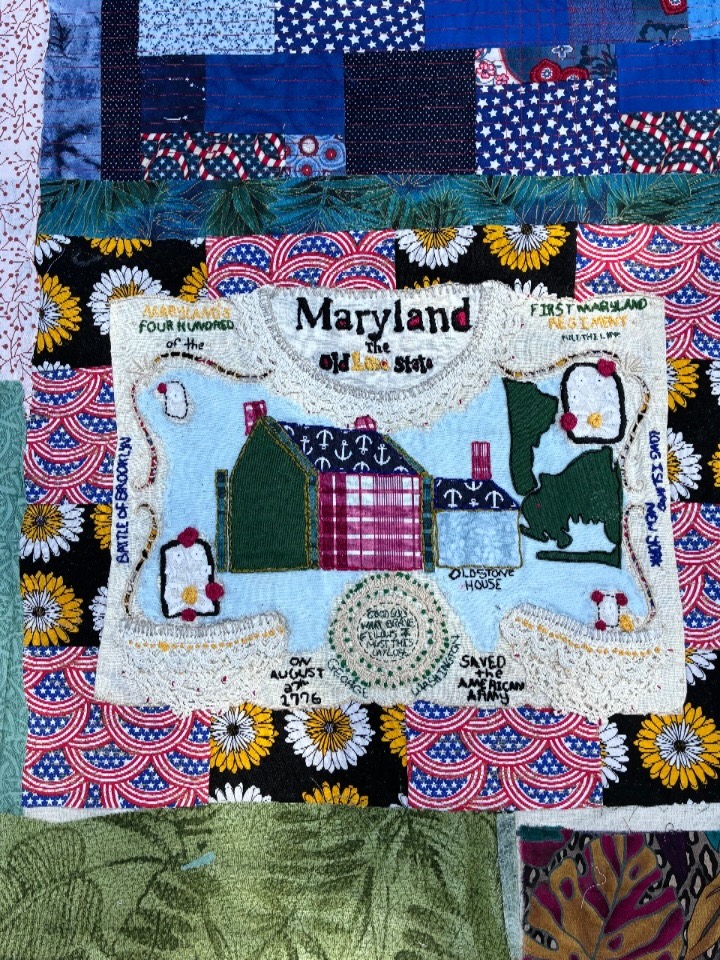
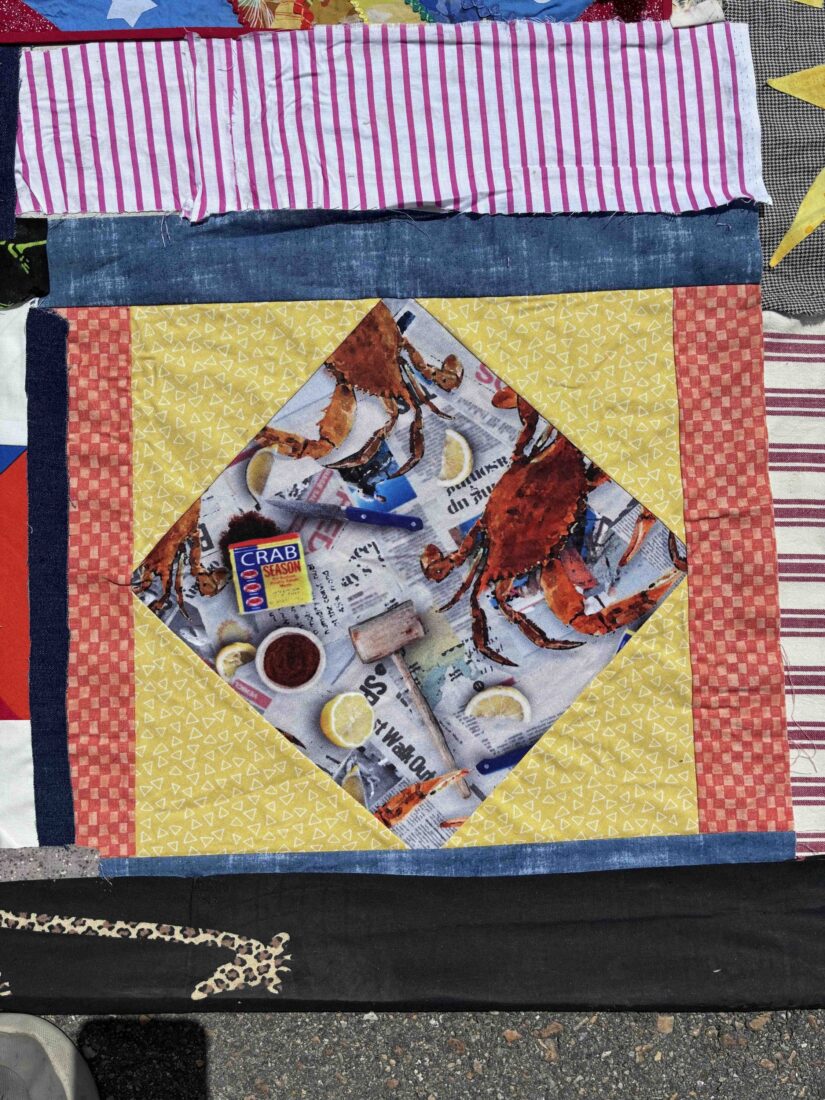
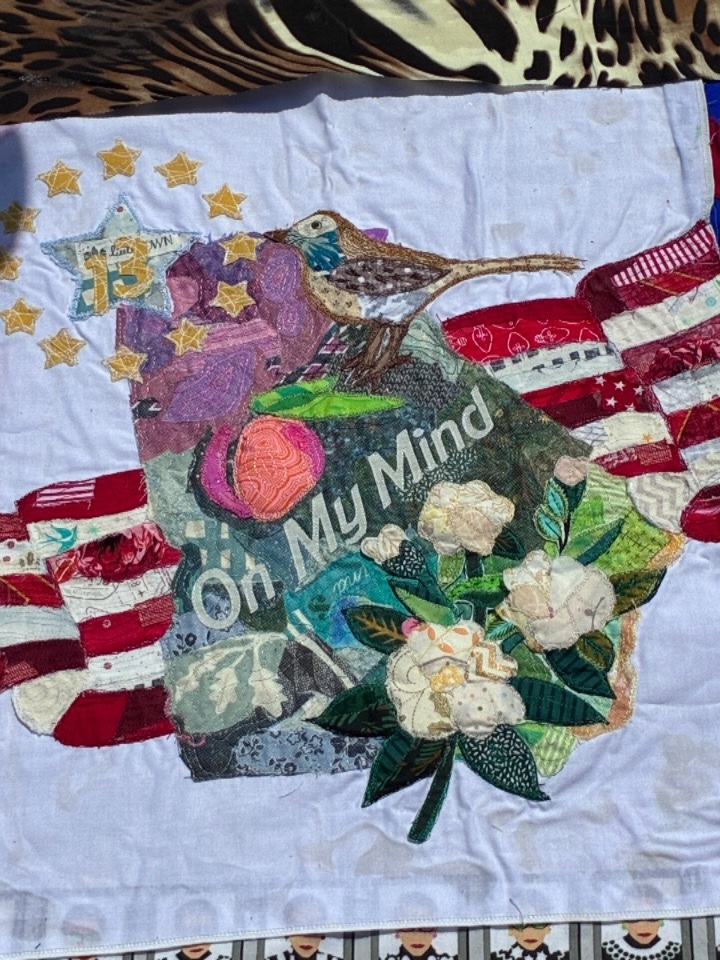
Not too surprisingly, Virginia accounts for the most blocks, and the South makes its contributions known every few feet. There are maps of Tennessee and Georgia rendered in patriotic colors. A green satin 4-H logo from West Virginia and a needlepoint of North Carolina’s Cape Hatteras lighthouse. Philippe Wahoff drove in from Wilmington, North Carolina, to find the turkey she sewed with thirteen feathers to represent the original colonies. And smart money says the depiction of crabs dusted in Old Bay came from Maryland.
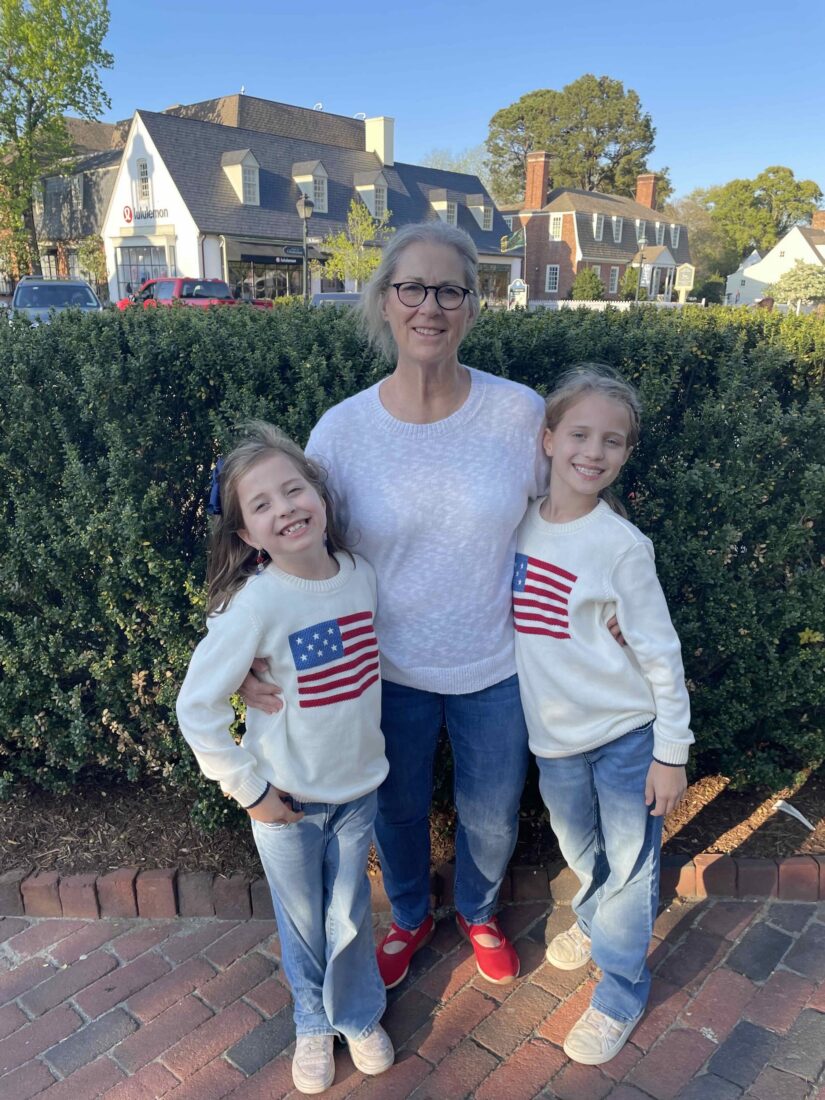
Among the most enthused (and adorable) contributors were ten-year-old Auden Butkus and seven-year-old June Butkus, who traveled from Houston with their mother, Molly Butkus, and grandmother, Terry Tucker, to see their American flag blocks on display. Fittingly, they’re eleventh-generation descendants of famous Revolutionary War flag seamstress Betsy Ross, as ascertained by amateur genealogist Tucker, who also gathered the scrap fabric and sewing supplies used by the girls. (The party was rounded out by Felicity, a hand-me-down American Girl doll who represents life in Williamsburg during the Revolutionary War era.)
“I cut out the white muslin to the right size, sewed on red ribbons for the stripes and blue felt and star buttons in the corner,” Auden said. “I wanted to celebrate my country’s 250th birthday. This is the most special thing I’ve ever done.”
Not to be outdone, June switched media to paint stripes and iron stars onto her muslin block. “I painted because my hands got tired from the sewing,” she explained, adding that she and her sister missed two softball games for the trip.
“I wanted my granddaughters to be able to remember this fifty years from now—doing something special with grandma,” Tucker said.
Following the quilt reveal, a sizable squad of volunteers led by a costumed fife and drum corps carried the quilt at full length through Palace Green to the nearby Colonial Williamsburg visitor center, where it will be on display through the end of the year.
Steve Russell is a Garden & Gun contributing editor who also has written for Men’s Journal, Life, Rolling Stone, and Playboy. Born in Mississippi and raised in Tennessee, he resided in New Orleans and New York City before settling down in Charlottesville, Virginia, because it’s far enough south that biscuits are an expected component of a good breakfast.