
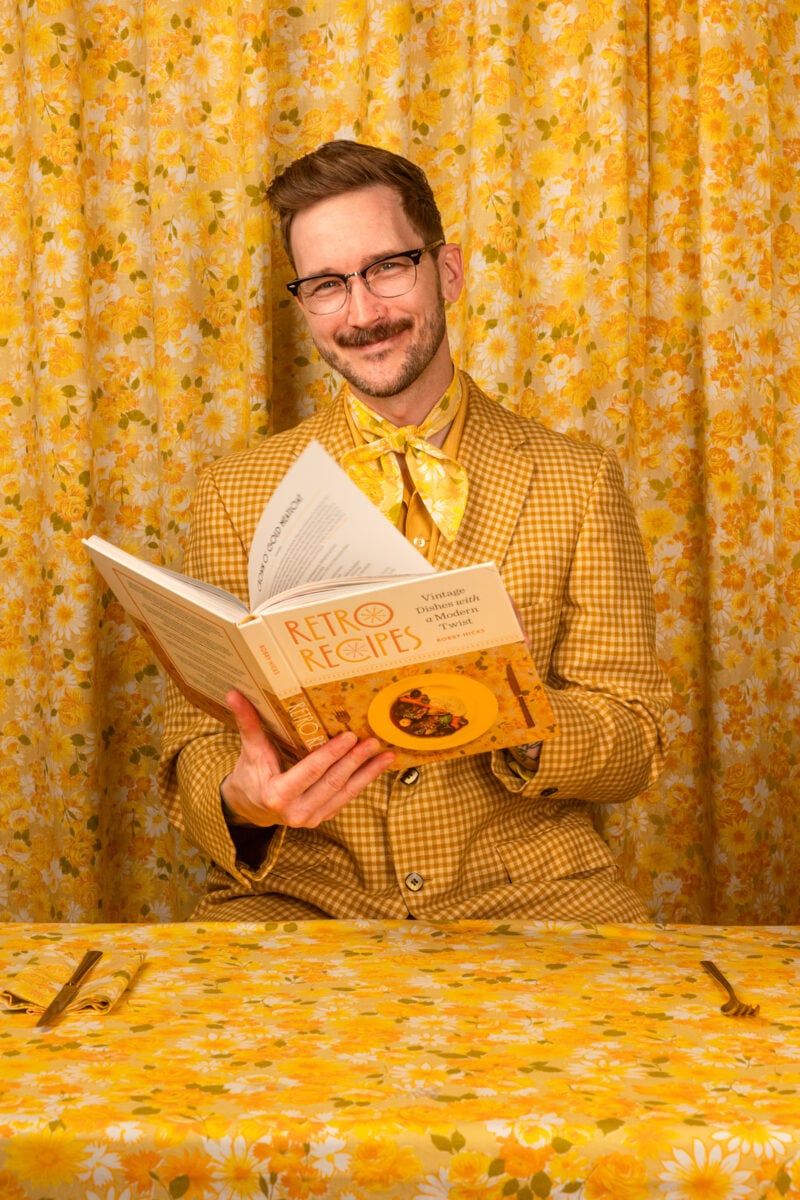
Bobby Hicks is something of a jack-of-all-trades: private chef, reality TV show contender, content creator with a fervid following. And now, the South Floridian can add “published author” and “accidental food historian” to his resume. Out June 2, Hicks’s debut cookbook, Retro Recipes, is a self-described “obsessive” deep dive into the wild culinary traditions of his grandparents’ generation. While filming the fourth season of Ramsay’s Next Level Chef in Ireland, Hicks crammed his suitcase full of vintage cookbooks and used every opportunity behind the cameras to read, study, and test thousands of old recipes. One hundred playful, comforting, and colorful dishes made the final cut.
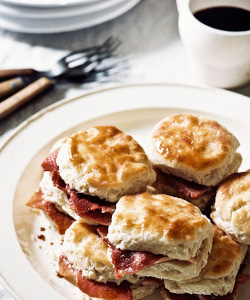
“For the last five or more years, I have said that my brand isn’t recreating weird or silly dishes—my brand is recreating nostalgia,” he writes in the cookbook’s introduction. Below, he cracks open his research process and turns his backward glance to the future. He also shared three recipes from the cookbook: biscuits and sorghum, copycat Cheez-It crackers, and butterscotch bread pudding.
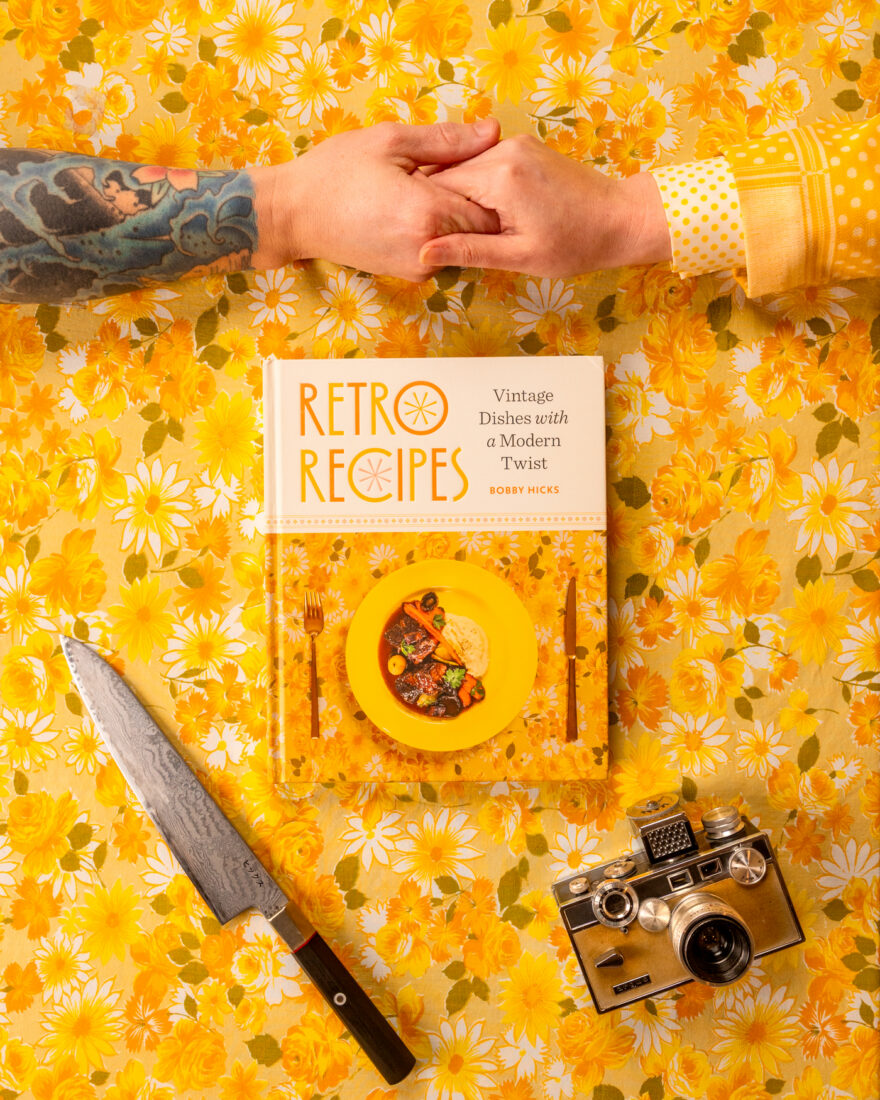
Tell us a bit about Retro Recipes Kitchen on social media, and how you came to love digital content creation.
There was really no linear path to get into content creation—I got into this by accident. My partner, Keiko, has been a social media influencer longer than “blog” has been a term. Before we moved to South Florida, we lived in Brooklyn for nearly fifteen years, where I worked a wide range of food and beverage jobs and she developed an audience through her site. When I transitioned from back-of-house, kitchen jobs to my first front-of-house bartender position, I found that I really enjoyed socializing and getting feedback from customers.
Learning this about myself piqued my interest in content creation, and the timing worked out well, as the COVID lockdown was just beginning. It didn’t take long for me to fall in love with the process of video production and editing. I wanted to tie in old-timey recipes and nostalgia with the type of short-form video content booming online, making them silly and tongue-in-cheek. I made one after another, and they suddenly took off. My second video is still my most-viewed. It’s for a chicken buffet in aspic, which of course made the book! That was definitely a breakthrough moment; I saw there was an interest in this style of content. While Retro Recipes Kitchen is a food account, it’s meant to be based in nostalgia, taking inspiration from old-timey advertisements, bringing something unique to the table.
Is there something specific about Southern food in particular that inspired you, having grown up in Florida?
Southerners do a great job of utilizing ingredients in the height of their seasons. And Southerners know how to make something they grew last longer. They’re always experimenting with pickling, preserving, and salting things. When I was researching for this book, I found that in the 1950s and ’60s, the food industry was relying on selling the product and canning things rather than preserving them. But in the South, the emphasis on preserving didn’t stop! People here are still focused on growing things and locality. Take an heirloom tomato: You can really taste the difference between one grown in the South versus one bought at a grocery store in any other part of the country. The South also nurtures a sense of community. It’s all about sharing your knowledge and food among your people. Because of that, I’ve always felt hospitality is inherently in my DNA.
Having studied food history to create this book, what do you think was the most impactful decade or era in terms of what we eat today?
The post–World War II era is a really fascinating period. Soldiers were returning from abroad, where many of them were able to try new things and experience different cultures. They basically took foreign recipes and ways of cooking back to the U.S., where they asked their wives to replicate them. Most of the time though, they didn’t really have the right recipes, so they were winging it. This period of experimentation was critical to the “American diet” we know today. In a sense, it was our way of showing love to our allies abroad. And on top of all the people returning to the States, immigration was booming during this era, which naturally brought in new dishes like pierogies. I believe we wouldn’t have the “melting pot” reputation if it weren’t for this post-war period.
There seem to be a lot of aspic and gelatin-heavy recipes in this book. Do you think that trend has a chance at coming back?
I really hope it doesn’t come back! There’s a misunderstanding with gelatin—people think any recipe that requires a Jell-O of sorts is for dessert. But these aspic recipes that were so popular are savory. Aspic is basically a soup that can stand up. And displaying aspic on your table was a sign of wealth, as you needed an icebox to make it. Making aspic requires a lot of patience. It’s fun if you enjoy slowing down and being deliberate in the kitchen. Some of the gelatin recipes in this book, like my beet salad or sunset salad, are very tasty and fun to make. But it’s useful to note that aspic was always meant to be more of a tablescape than an appetizing dish.
Any tips for re-creating your biscuits and sorghum recipe?
I recommend pairing these biscuits and sorghum with butter, a pinch of salt, fresh thyme leaves, and a jam. This might seem like a lot, but they work very nicely together, creating something that is equal parts sweet, salty, and savory. The biscuits work well for any time of day, sort of like cornbread. They’re a wonderful breakfast option, but there’s never a bad time to have a sweet biscuit!
When cooking the biscuits, remember that less is more. Bring the dough together very carefully without overmixing. When cutting the dough, don’t saw at it—cut straight down into rectangles. That way you’re not wasting the dough, and it also creates a better shape, better rise, and better yield.
What about your DIY Cheez-Its?
This is a perfect recipe for anyone wanting to throw a gathering. Think of these as a more fun substitute for a charcuterie board. Put them out before the main dinner, and watch people be intrigued by their originality but resemblance to a familiar snack.
Avoid using pre-shredded cheeses, as they often contain added cornstarch. And grating the cheese yourself adds a purer flavor. When putting the dough in the refrigerator, layer the small pieces of dough between parchment paper or plastic wrap. It will keep everything contained but not messy, and when you’re ready to cut, the parchment paper will make it easier to roll the dough out. Let the dough get as cold as possible, as it gives you the best opportunity to really work with it.
You also shared a bread pudding recipe with us. Talk us through that one.
I personally love using brioche or challah for the bread. King’s Hawaiian rolls can work too. You can really use anything; the appeal is getting creative with leftovers. I don’t recommend iodized salt for this dish. The best salt to reach for is the Diamond Crystal Kosher Salt.
When you’re making the butterscotch, be mindful that you’re cooking a sugar. Be patient, as it will take seemingly forever, but keep it at that medium heat level. Make your whipped cream by hand. It’s easy to accidentally overwhip it and make butter if you use a machine.
What do you hope people will take from your book?
I want people to get back into cooking as a hobby again. Social media, TikTok in particular, has gotten generations excited about food who used to never be. I’ve found that, recently, people want to prepare their own food, take care of themselves, and save money. My book spans roughly a century. At the beginning of this time frame, people were cooking out of necessity. After World War II, that all changed. I believe that where we are right now, we are closer to repeating this cycle than we’re willing to admit. Although people are getting excited again, we’re also re-entering an age of necessity. The basics are coming back. I see this book as a love letter to silly, absurd dishes of the nineteenth and twentieth centuries. And hey, in fifty years, people will probably make a book dedicated to the ridiculous recipes circulating TikTok today.
From working in various NYC restaurants, to competing on Next Level Chef, to building a social media presence, to writing your first cookbook, you’ve been incredibly busy. What are you hoping for in the future?
This is an interesting time for me because I never expected to add “author” to the bio. All of a sudden I now feel able to be a contributing writer, editor, or consultant with this experience. I never wanted to just do social media. It was great for the pandemic period, but it was never going to be my be-all, end-all. Doing more competitive television could be a lot of fun.
A quiet part of me loves the idea of opening a bed and breakfast—not anytime soon though. I’ve been inspired by this idea since visiting a town on the Florida–Georgia border called St. Marys. I’d love to be an old man that cooks for people staying in his charming hotel in a small town. Opening a B&B specifically, not a restaurant, is now a bucket list goal of mine. It encompasses what I love: hospitality and taking care of people. I don’t want to truly ever retire.
Frances O’Shea, a 2026 intern at Garden & Gun, grew up in Charleston and graduated from Furman University, where she studied English, French, and film.
Garden & Gun has an affiliate partnership with Bookshop.org and may receive a portion of sales when a reader clicks to buy a book. All books are independently selected by the G&G editorial team.