

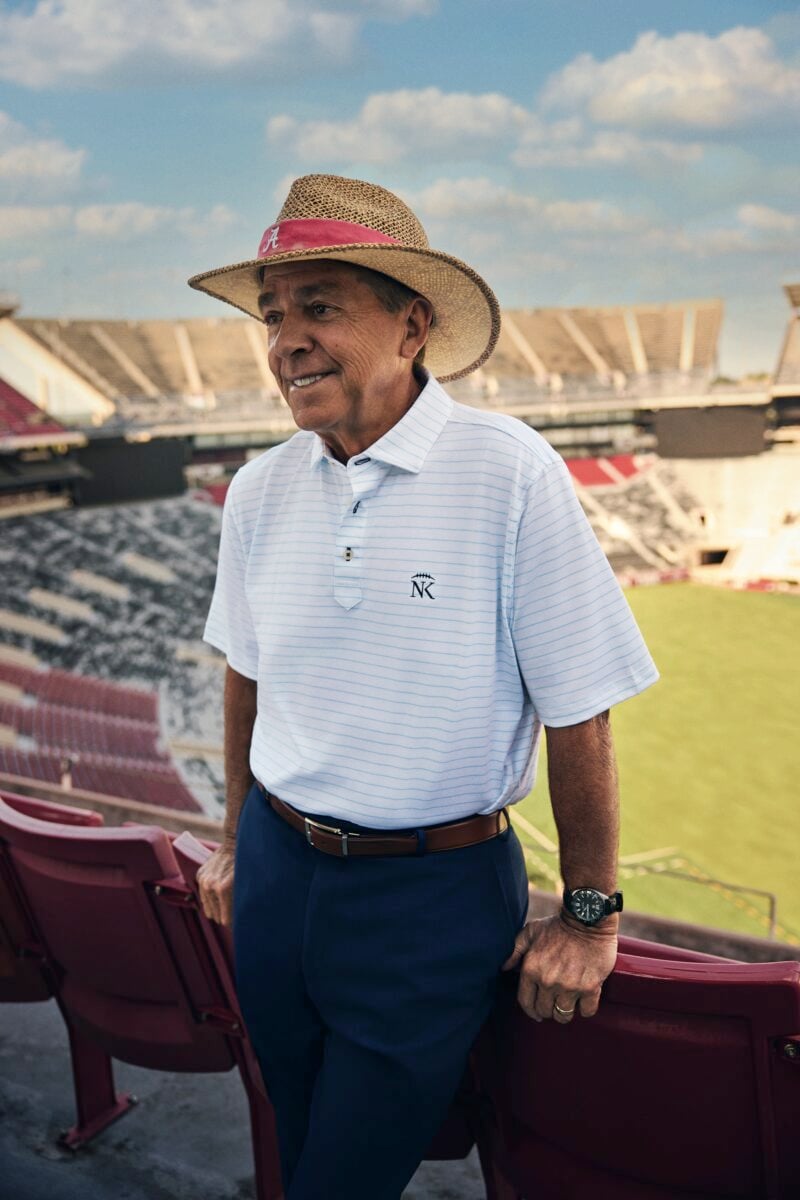
Nick Saban doesn’t like having a lot of free time. So much so that when the legendary football coach arrived home at 3:00 p.m. recently, his wife, Terry, asked him what he was doing there. “She doesn’t want you bored at the house?” I ask him. “Apparently not,” he replies, laughing. “She’s not used to me being around after fifty years of coaching.” Since retiring after seventeen seasons at the University of Alabama, the College Football Hall of Famer now spends his days hanging with family, playing golf, and doing the one thing that might shock his shy younger self: appearing to great acclaim on TV as an ESPN analyst, including on College GameDay.

One of your childhood friends, former senator Joe Manchin, calls you Brother. Where did that come from?
I had a sister two years older than me. She called me Brother. So everybody in the neighborhood did. When I went to college and people called me Nick, it was like, “Is that really my name?”
What else from your West Virginia upbringing shaped you?
Three things: I worked at my dad’s service station from the time I was eleven, and my parents were big on having compassion for other people. Treat people nicely on the way up—you might meet them on the way down. The second was accountability. I don’t care what the task was, there was always a reckoning in terms of how you performed. My dad [had a] saying, “If you don’t have the time to do it right the first time, how you gonna find the time to do it over?” The last thing, which was probably most important, was, it was never about beating the other guy. It was about, “Did you do as well as you could do?”
There’s this thing called relief syndrome, where when we accomplish something of significance, society promotes the fact that you should be able to rest on your laurels. That’s something I never learned how to do growing up. I mean we won, like, twenty-six games in a row when I was in peewee, and it was never good enough. Then we lost one game in high school, then we won about thirty more games, and it was never good enough. We won a state championship. That was really never good enough. I finally asked my mom, “Why is it never good enough?” And she said, “Well, it’s not really about beating the other guy. It’s about, did you do as well as you’re capable of doing?” That’s one of the things that helped me deal with success, because, if we won a game, it wasn’t like, okay, that’s the end of it. It was just the beginning of a new horizon.
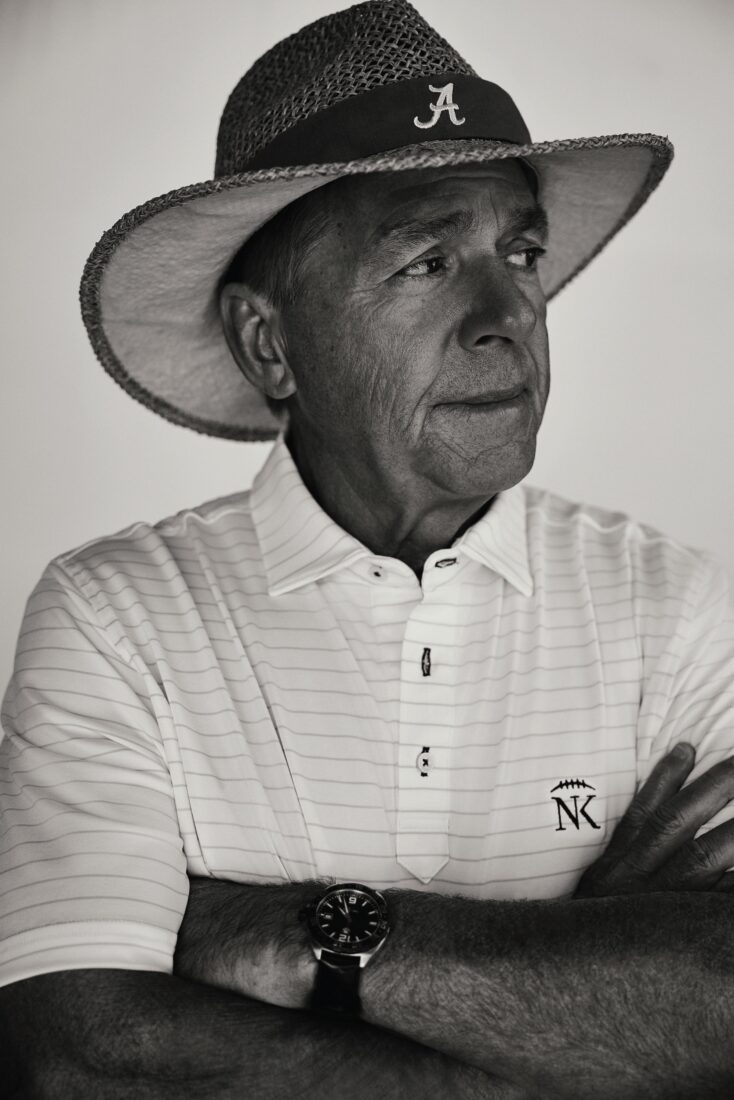
How is your golf game these days?
[Smiles.] Sometimes good, sometimes bad, with no explanation or ability to understand why. I do think golf is a metaphor for life. You have to be able to deal with a good shot. You also have to be able to deal with a bad shot. You have to be very process oriented and focus on: Be where your feet are. This is what you have to do on this putt, this chip, this drive, or you’re gonna get punished.
Did you ever imagine you’d go into broadcasting?
No. [Laughs.] I was so shy. I got a D in music because I wouldn’t get up and sing in eighth grade. It’s the only D I ever got. Speaking to a team, and eventually having to deal with the media, as a head coach, were all learning opportunities.
How do you prep for College GameDay?
I do it almost like when I was coaching. I look at film. If they give me a project about a player, I’ll try to develop a story and pull out some plays that tell that story. I’m teaching something about football, hopefully, in a way fans can understand. The biggest difference is, when you’re coaching, you look at everything through a straw: at your team and who you’re playing that week. On GameDay, you’re looking at everything from a thousand feet. You develop an appreciation for players all over the country.
Do fans treat you differently?
It’s a lot more positive. Don’t get booed when you get off the bus. [Laughs.] I have a lot of admiration and respect for the passion people have. You never see the outside of the stadium when you’re coaching. You get off the bus, you walk through a tunnel, you go in the locker room. Now I see what happens outside. It’s a lot more fun sometimes than what’s happening inside. [Laughs.]
You wore a fedora at a Notre Dame GameDay. Everyone was calling you Indiana Jones, Alabama Jones.
I was just trying to stay warm. I had a lot of haberdasheries send me hats after that. I got a whole bunch of them now. I can choose which one I like the best.
What do you and Terry do in the offseason?
She’s my best friend. We just had the kids and grandkids at our place in Florida. We’ll go to the lake in a couple days, and spend time there over the summer. We have a lot of good friends we cherish. And we spend a significant amount of time trying to help other people. Whether it’s our Nick’s Kids Foundation, or this Children’s Learning Center we’re building in Tuscaloosa, which will be a state-of-the-art STEM hub for teachers all over Alabama, career development for young people, a lot of things.
ESPN will release a documentary called Saban this fall. In it, Bill Belichick says people get the wrong impression of you. Do you agree?
Maybe. I think the intensity that they see, and how the media portrays that, doesn’t reflect the compassion you have for the players, how much you care about the players’ development personally, academically, and athletically. When you see somebody throwing a headset, it doesn’t necessarily reflect who you are.
What was making the documentary like?
I tried not to talk about myself, really. But [it allows you] to reflect on experiences and relationships and mentors who contributed to your development, and lessons you learned that helped you be successful, that might help other people be successful. My hope is that this documentary is more of a tribute to all the people who contributed to the success. And that it would show that we were really more concerned about helping people be more successful in life than just about how many games you won.
Are you hopeful about college football’s future?
Yeah. Football will sustain itself regardless. Then you have other [college] sports that create tremendous opportunities—develop people for the Olympics, give them an opportunity to play for championships—but don’t create revenue. These things are at risk if we don’t have some controls on the revenue sports. I’m all for players making money, but not at the expense of losing all the other opportunities. We need enough guidelines that players can have a good quality of life and make money, but still support all the other opportunities that college athletics create.
Kaitlan Collins is CNN’s chief White House correspondent and anchor of her own show, “The Source with Kaitlan Collins.” But the fact that Collins hails from Prattville, Alabama, and graduated from the University of Alabama is what really prepped her to chat with the legendary retired Crimson Tide football coach Nick Saban.“Coach Saban is such a fount of wisdom and has a way of turning lessons about sports into lessons about life,” Collins says. “I have a tremendous amount of respect for him.” She adds that she approached the interview “through the lens of sitting down with someone fascinating, and how they’re approaching this next chapter of their life.” When she’s not reporting, the Emmy Award–winning journalist enjoys cocktails with friends and keeping an eye on Alabama football’s depth chart.