

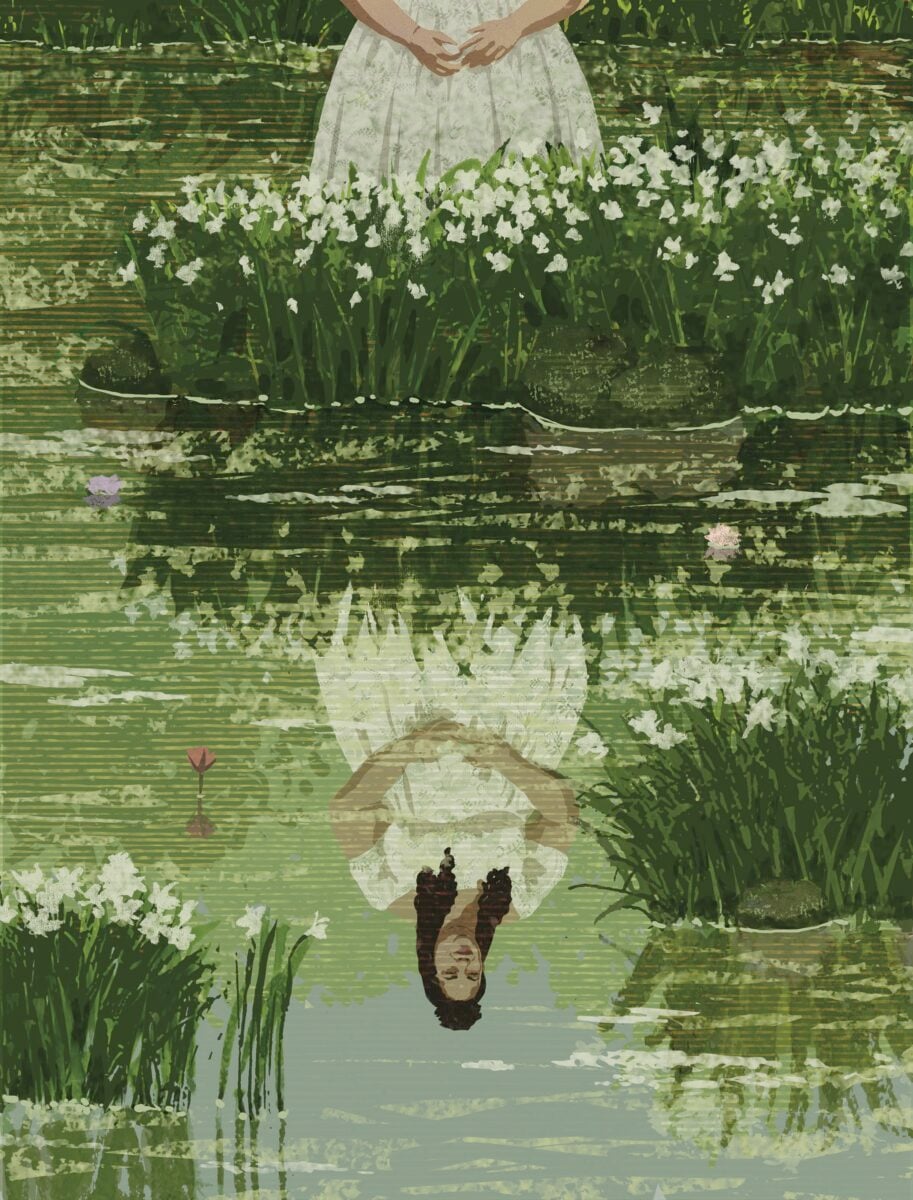
When my younger brother was in town earlier this year, I got what the old folks used to call a wild hair. “Let’s go on an adventure,” I said. Thirty minutes later, we were in the car on the way to South Carolina’s Landsford Canal State Park to see the rocky shoals spider lilies, a rare species found along the sandbars of the Catawba River for only four to six weeks each spring.
When we arrived two hours later, it was clear the drought had done a number on the landscape. Still, the lilies thrived, waving from their perches in the sediment as the current rippled around them. Each flower’s six thin petals curl backward from a cone-shaped crown; the wispy stamens, topped by tufts of pollen, make them look even more whimsical. Typically, the lilies open overnight, and the blooms, as big as my palm, last just a single day.
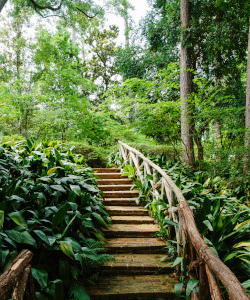
The flowers mark a shift barely perceptible to those out of sync with the seasons. But everybody living around here knows the opening of the lilies means we’re in that short window when the days have begun to get longer, but the heat hasn’t yet settled in to stay. The much anticipated dramatic display is so popular that the park even offers a Lily Watch link on its website.
Blink and you’ll miss it, I thought as I appreciated the lilies’ thick lemony scent. The late morning light gave them a shimmer, like sunshine bouncing off white silk. And who knows when you’ll get to see this again.
This reminder of nature’s fragility came to mind recently as I was contemplating my fortieth birthday, looming in August. My more-ambivalent-than-most attitude toward aging perhaps traces to the fact that I’ve spent much of my adult life believing I already had one foot in the grave. My daddy died relatively early, at sixty-two, and many writers whom I considered mentors—Randall Kenan and Valerie Boyd included—passed even younger. I have watched too many of my friends’ parents bury their children, creative women who did all the right things but didn’t make it this far.
Then there are the blues that have clung to me for decades. Mental health, much like money, is rarely discussed in the South. That’s why most wouldn’t guess that darkness often threatens to eclipse my days and turn everything I appreciate into gray ash.
All of this makes me consider on the cusp of forty: What have I made, and what will I make, of the time I get here? What will it look like to age?
I have led an untraditional life. Folks back in Silverstreet, the small South Carolina town where my daddy’s people are from, might even call me an odd bird. So most of the metrics people use to measure life don’t seem to apply to me. I’ve never married, and I don’t have children. Even internal goals, like learning to say no without feeling bad about it, and embracing that I am on my own timeline, never quite resonated.
When I was a little girl, I thought I understood what old was. Some of the women at the church we attended in Tennessee carried top-tier candy, like Werther’s Originals or orange and cream Creme Savers, in their pocketbooks. I loved Nips, nickel-sized caramels with flavorings inside, best. My favorites had chocolate filling.
“That old lady gave me candy!” I would squeal to my parents as we entered Edenwold Missionary Baptist. “You better hope you get to be this old,” the women would chide, lips pursed but amused. These women had been mill workers, tobacco sorters, peach pickers, and teachers during the civil rights movement and the death rattle of segregation. They had seen some things. But I was a kid, and I couldn’t grasp the concept of full years yet, only seasons, that dance of daylight patterns and temporal rhythms that ruled my school days.
Three decades on, I now think, I know what they mean. While I am by most people’s reckoning not that old, I’ve seen some shit. And I’m older than I ever thought I’d be. As I wrestle with how to recast what it means to have a birthday, to hit a milestone, I wish I could ask those women how they told the stories of their lives.
I decide I want to walk into my forties with a little less shame. And that means not measuring my meaning in the typical benchmarks, but instead by what my life has been rich with: experiences and adventures. Start with the number of books that have changed my perspective, like Take My Hand by Dolen Perkins-Valdez and Natasha Trethewey’s Memorial Drive. Add the catalogues from art exhibitions that have changed my life, as did 30 Americans at the Nelson-Atkins Museum of Art in Kansas City, Missouri. Then throw in the local coffee shops where I’ve become a treasured regular, such as the Pharmacy Coffee in Spartanburg, South Carolina, and Relic Coffee Company in Augusta, Georgia.
Food will forever be my love language. So I’ll include the times my yellow cake with chocolate icing comes out moist and light on the first try and my hibiscus punch prompts a drinker to ask for the recipe.
My daddy used to tell me, “Time is money.” But time is its own currency, the kind that inspires me to add every long goodbye to the count too. You know, that drawn-out process of parting from loved ones by continuing to talk to them as you put on your jacket, walk out to their porch, sit down in your car. That goes for spending time in the places I love, too. There is a strip mall, complete with a Chicken Salad Chick, where my childhood pecan grove used to be. No more free nuts for anyone willing to pick them up. “I remember when this used to be…” comes out of my mouth a lot now.
And yet.
And still.
There are wonders to behold.
As it happens, my fortieth birthday coincides with the fifth anniversary of this column. Reporting across the South and beyond for G&G has not only nudged me to examine my profound connections to family history, genealogy, and the landscape, but also added exponentially to this life tally. Take my collection of postcards and brochures from national parks (I have been to thirty of sixty-three) and their state counterparts (twenty-nine of the forty-seven South Carolina parks alone). I’ve taken in the view from Mount Mitchell, the highest peak east of the Mississippi River; clambered in some of the world’s longest cave systems, in Kentucky; and camped solo in the Dry Tortugas with a telescope in the hopes of seeing the Southern Cross constellation emerge over the horizon.
I’ve tramped through the desert in West Texas and served as a buffet for mosquitoes from the Great Dismal Swamp to the Everglades and many wetlands in between. I’ve found myself stuck in what seemed like quicksand in the Great Smoky Mountains and, mid-prayer, heard the exhale of a marsh dolphin while on a bluff in Beaufort, South Carolina. I have made my way across scrubland, to the edge of canyons, through balsam forests, and into tulip poplar groves. I’ve watched the sun set over the Rio Grande, the vivid hues swirling on the river’s surface as the mountains grew long and dark. Enjoyed a stolen afternoon with my brother, watching fleeting lilies and eating Ethiopian food in Charlotte afterward. And amid all of this, I might be proudest of something I haven’t done: gotten bored.
By the time you read this, Lord willing and the creek don’t rise, I’ll be forty. We have survived so much—individually and collectively. So consider doing something for me, and I promise it will be just as much a present for yourself: Get a wild hair. Go have a little adventure. Pick up some good food afterward. Find something to do that makes you say, “Time got away from me.”
And don’t forget to pack some Nips. The Ferrara candy company discontinued the chocolate parfait kind, but coffee, caramel, or butter rum work just fine.
Latria Graham is a Garden & Gun contributing editor from Spartanburg, South Carolina, and writes the magazine’s This Land column, which documents aspects of the natural world in the South. An assistant professor of creative writing at Augusta University and an instructor for the University of Georgia's Narrative Nonfiction MFA program, Graham shares her adventures on Instagram (@mslatriagraham) and her work at LatriaGraham.com.
Garden & Gun has an affiliate partnership with Bookshop.org and may receive a portion of sales when a reader clicks to buy a book. All books are independently selected by the G&G editorial team.