

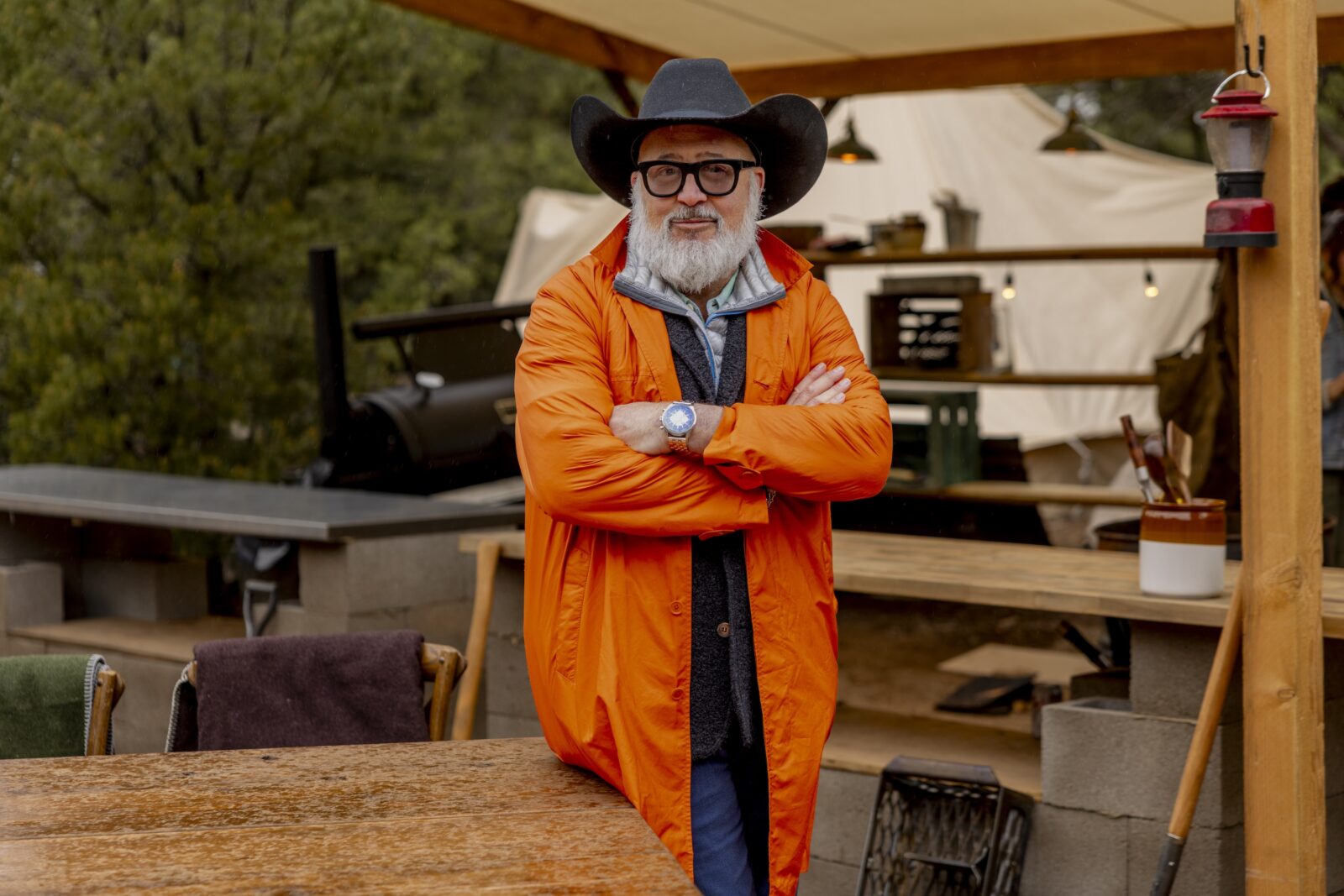
Keeping up with Andrew Zimmern has never been easy. The globe-trotting chef–turned–TV star, who rose to national prominence as the host of the Travel Channel’s Bizarre Foods with Andrew Zimmern, is always on the move, even decades into his career.
But if you’re into barbecue, or you just like watching seasoned professionals sweat through a series of stressful reality TV challenges, you don’t want to miss his latest show, Pitmasters.
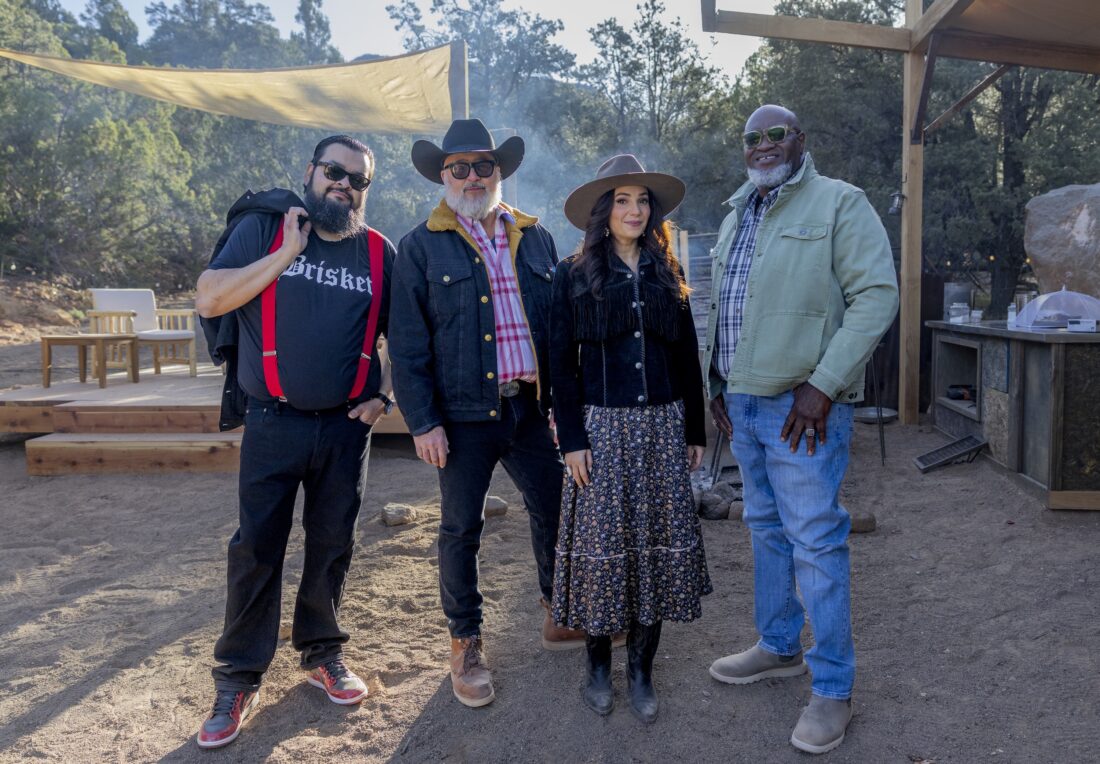
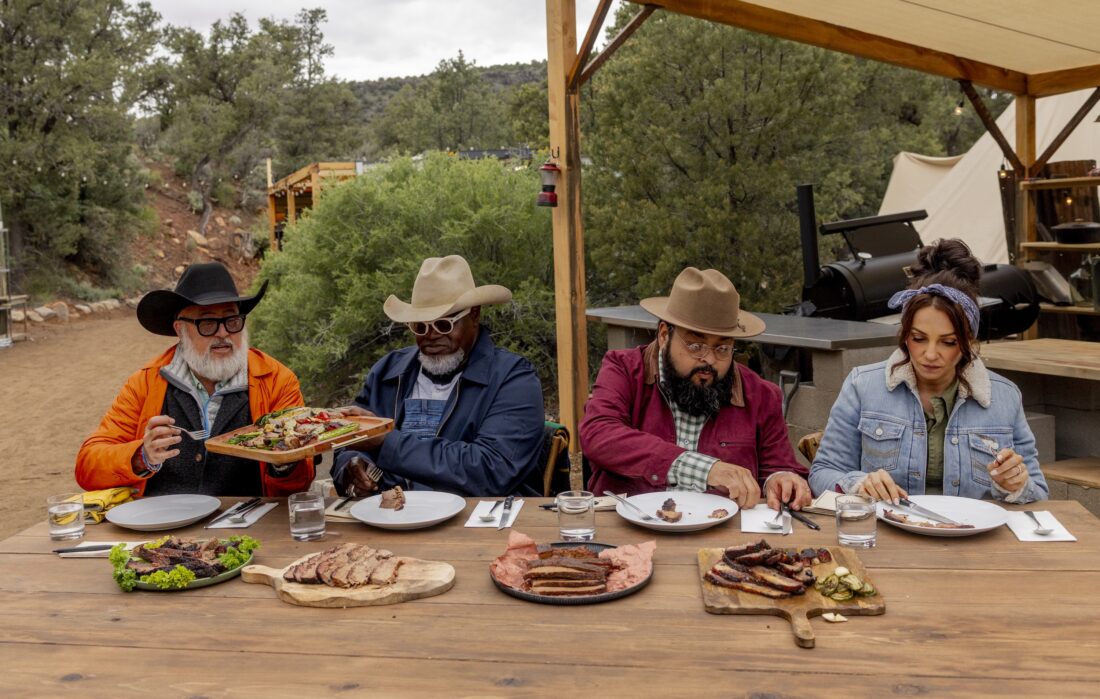
A grueling weeklong contest between live-fire cooks from across the U.S. and Canada, Pitmasters tests both the skills and the stamina required to become a barbecue champion. Zimmern is the host, supported by three judges who’ve already secured their hall-of-fame status: the pitmaster and restaurateur Ernest Servantes, the competition barbecue veteran Moe Cason, and the author and TV host Jess Pryles.
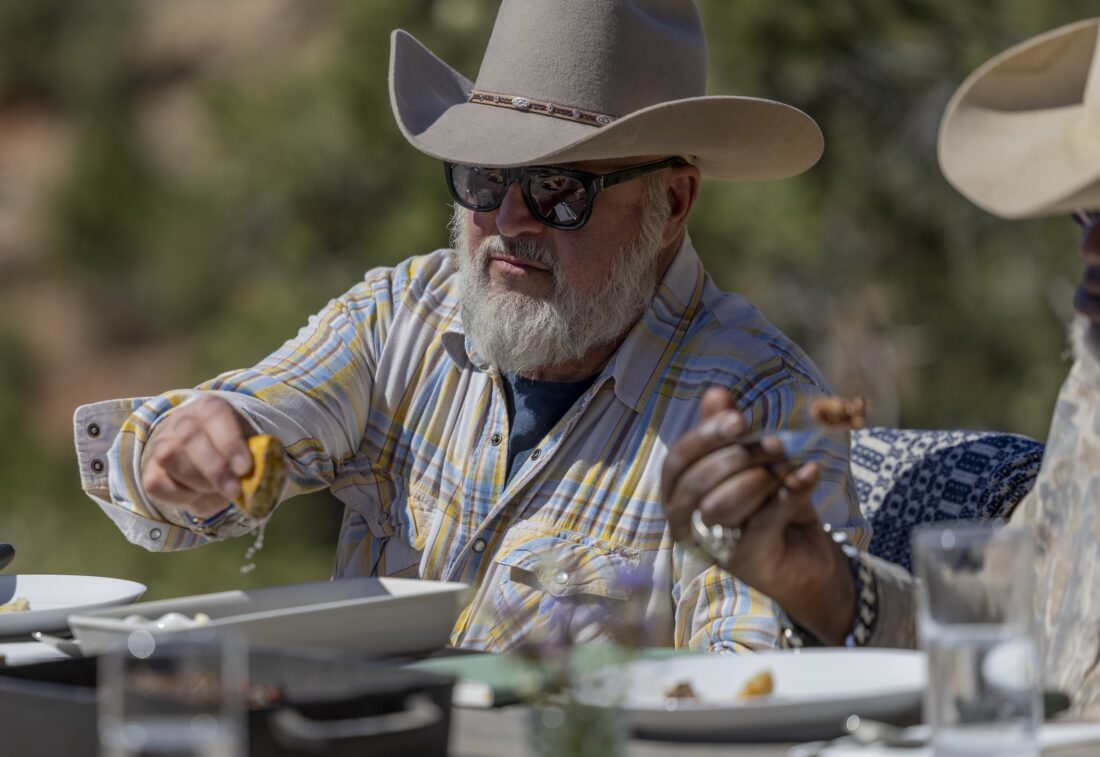
Midway through the first season, which airs on Food Network on Mondays and is available for streaming on HBO Max the next day, we called Zimmern for a conversation that covered his childhood grilling memories, his dream Southern barbecue plate, and the one smoked meat he considers an art form.
Because this is for a Southern audience, I have to get one question out of the way: What’s a New Yorker–turned–Minnesotan doing hosting a barbecue cook-off?
Well, barbecue is an equal-opportunity employer. When I was little—four, five, six years old—I already knew I wanted to be in food. When we’d go to the beach, my dad would surf cast and pull in a striped bass, or a bluefish, or something like that. We’d scale it, gut it, build a big fire, and grill it whole. We’d walk down to the jetty, my dad would lower me over the edge by my ankles, and I’d pull up ropes of wild mussels that had been growing all spring long, into the summer. We’d grill those next to the fish. My dad thought harvesting your own food was the most fun thing you could do, and he loved to cook with fire. And so I got addicted to it.
For a lot of my life, nobody wanted to let me do anything with wild game, live fire, or barbecue, but at home, it’s been my thing.
On the show, the term “barbecue” encompasses everything from ribs to sausage to fire-roasted squash. Let’s clear this up: How do you define barbecue?
I think we’ve realized how multifaceted barbecue can be over the last decade or so.
When I first started eating barbecue, a long time ago, it was what you’d see at a place like Kreuz Market or Black’s in Texas: brisket, sausage, ribs, turkey. You wouldn’t even see chicken unless you were in a certain part of the country. It wasn’t until I started traveling around the South that I came across mutton and ham on barbecue menus.
Now, you have fully fleshed-out barbecue dishes—it’s not just burnt ends anymore. Chefs are taking pieces of meat out of the smoker and getting creative with them. That’s the type of cooking that [Pitmasters judge] Ernest [Servantes] has made famous. Or, for an example in the city I live in, Minneapolis, that’s what you get from Jon Wipfli at Animales Barbeque. I was just there on Sunday night, eating some barbecue, and I had a duck liver pâté that’s so elegant, you’d think you were in a French restaurant. But you get a sleeve of Ritz crackers, and you’re just like, Yeah, I’m in a barbecue restaurant.
This is where it gets really interesting: Twenty years ago, if you asked me if potato salad was barbecue, I would have said no. But if it’s served with meats and vegetables that are cooked with fire and smoke, you bet your ass it’s barbecue. Barbecue is a culture. And it keeps growing and growing.
On Pitmasters, the contestants are cooking for a week straight. The fires never go out, as you say on the show. Anyone who’s ever pulled an all-nighter cooking a whole hog knows that making great barbecue takes commitment—and sometimes sleep deprivation. But what made you and the rest of the team decide not to stop the clock? Why is that the right format for a barbecue show?
Well, that keeps it real. I know that sounds like the biggest cliché of all time, but that’s it. As the show goes on, the cooks are getting more and more tired, and there’s less and less time to rest. There are fewer teams, and you’re competing against people who you know you’ve really got to bring it to. That’s how it works in real life.
In our very first episode, we had to say goodbye to a legendary Mississippi family that has defined barbecue in that part of the South for generations. People were stunned: Wow, they can lose that easily? Anyone can lose that easily. That’s keeping it real.
I think the audience responds to that. People who watch food TV cook. They know when something’s made up.
You’re talking with Garden & Gun, so there’s one more question I have to ask: What’s on your perfect Southern barbecue plate?
If you’d asked me this twenty years ago, I would have given you a real smart answer: brisket from this place, sausage from this place, this thing from this place…
But to me, that’s not really what it’s about. If a friend of mine is making it and they hand it to me—it doesn’t even have to be a friend of mine—I love it. It doesn’t have to come from a famous place. I would just as soon have a smoked hog ponce—that’s a stuffed pig’s stomach—at a Louisiana meat market with, you know, a wooden door with a screen on it and a fan blowing the other way so when someone comes in, flies don’t follow. I would just as soon be in a Cuban household in Florida eating blood sausage that they threw into their smoker the night before, when they were roasting a hog for a granddaughter’s tenth birthday.
I will say this: Lots of people cook brisket and ribs beautifully, but sausage and turkey don’t lie. Really good sausage is just perfect, even though I might only want two or three bites because it’s so rich. Really good turkey is an art form.