

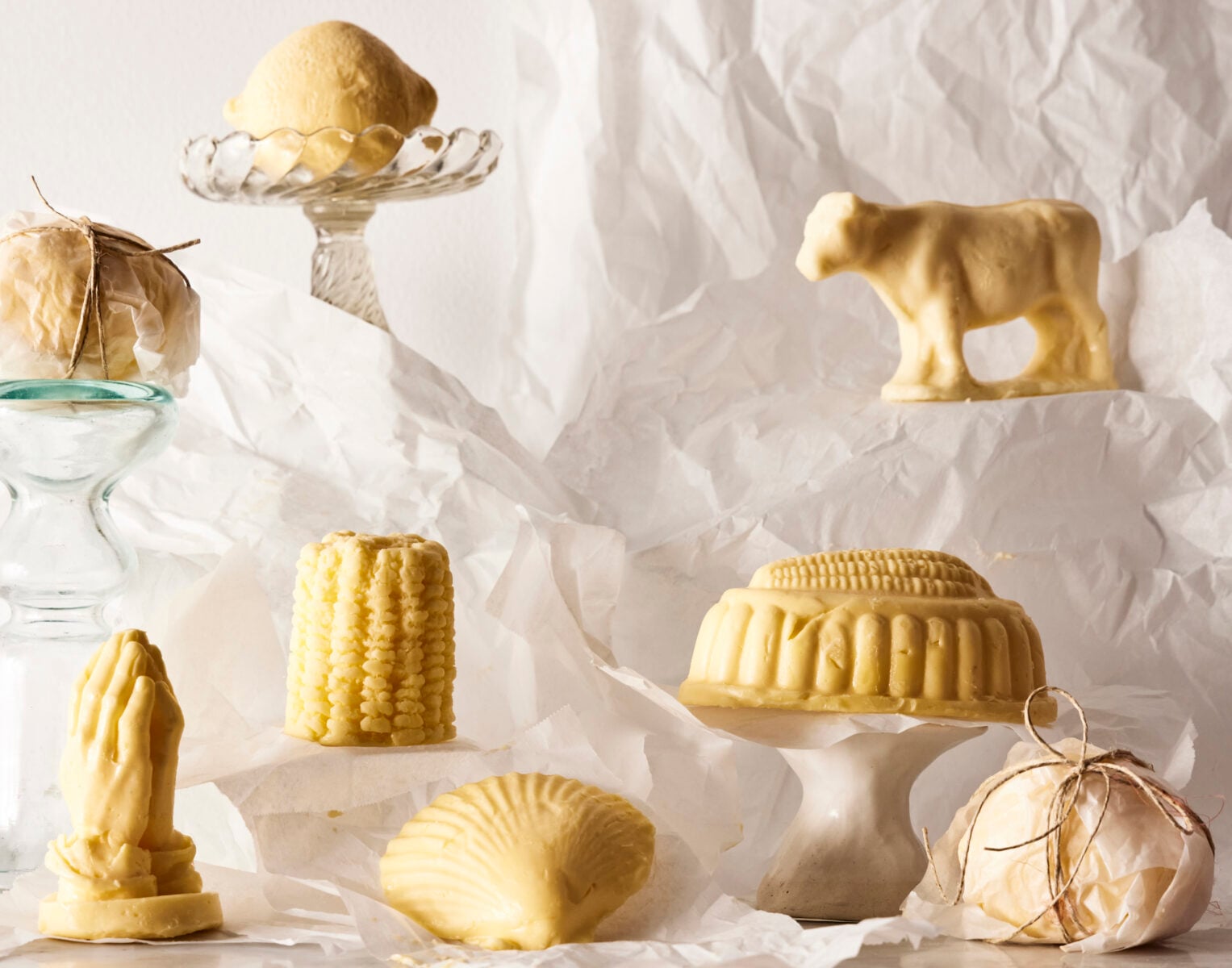
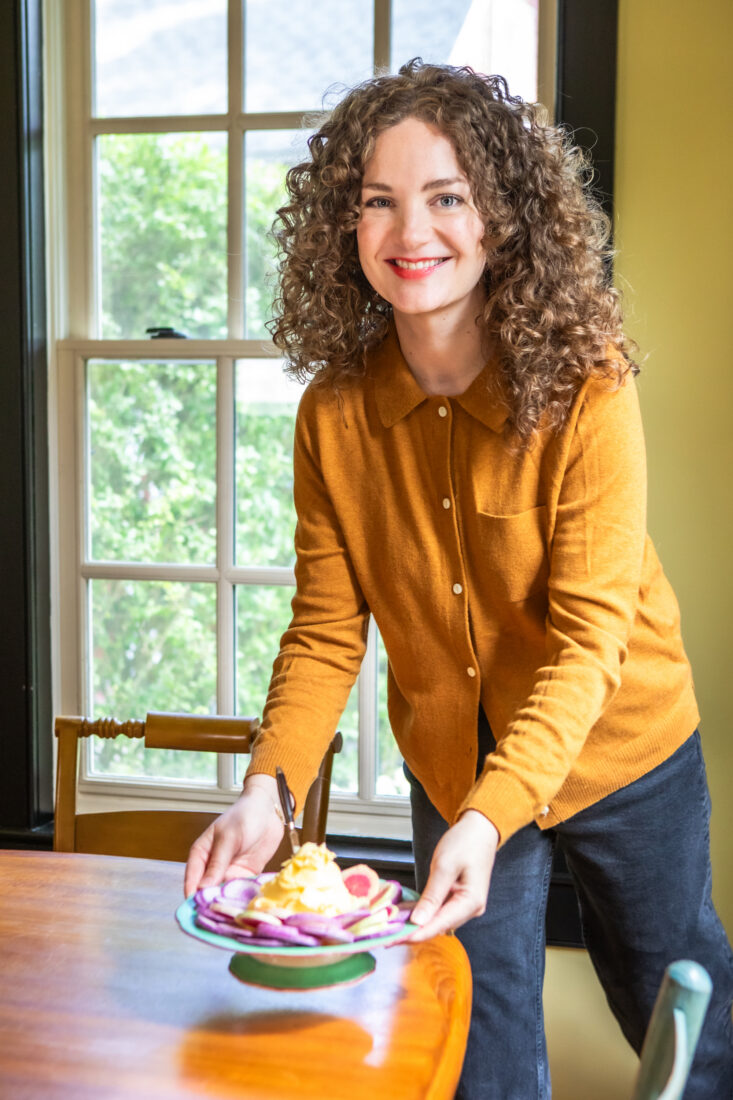
Anna Stockwell believes in butter—so much so that she wrote a whole book about it. “Butter is having a moment these days,” says the New York–based cookbook author, food stylist, recipe developer, and writer. “First there were butter boards, and now people are making butter sculptures…it’s a good time for butter.”
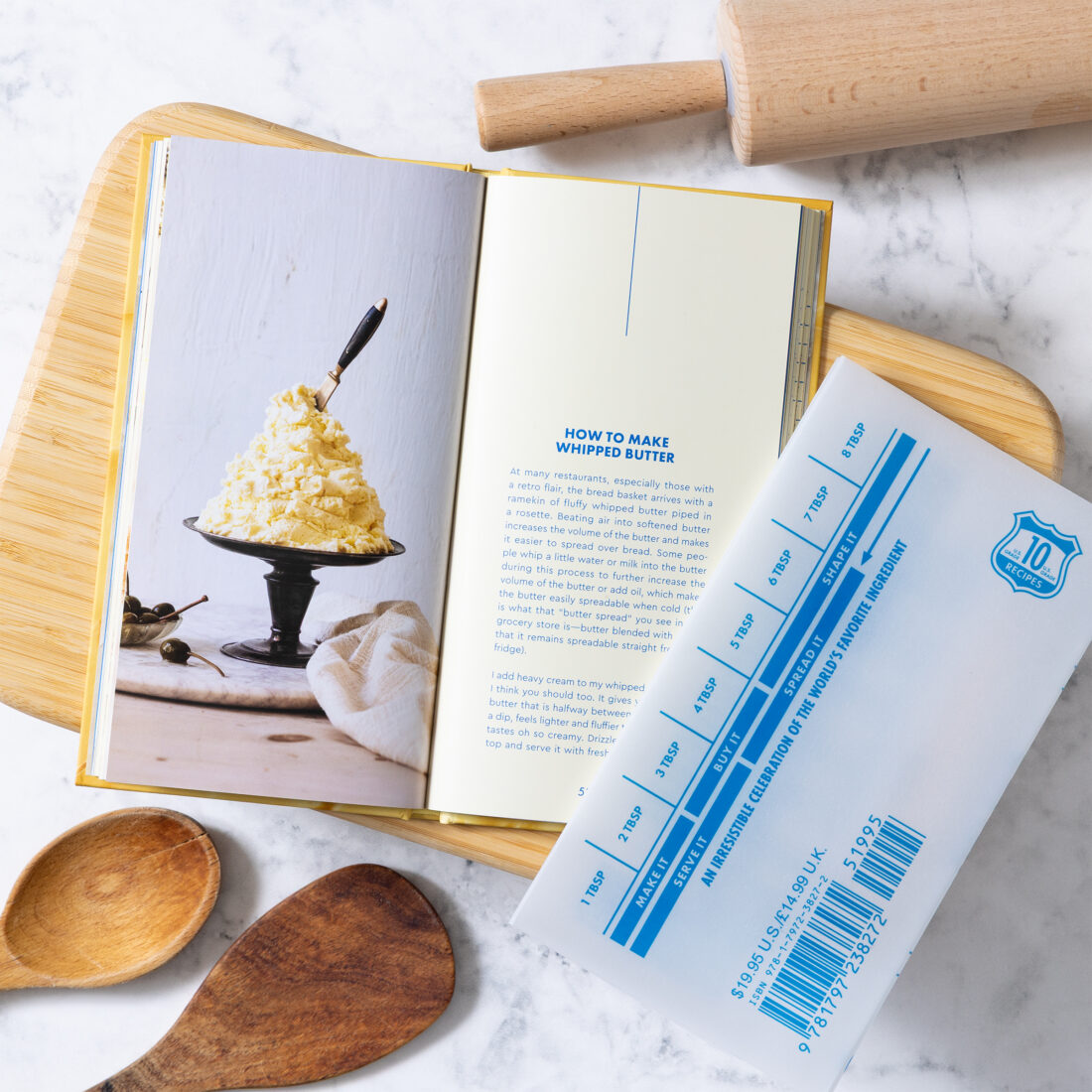
Is there ever a bad time? Besides the delightful fact that the book looks like an actual stick of butter, waxy yellow paper and all, The Butter Book, out March 17, dives into the history of butter, which has been around a good long while. It also gives a breakdown of must-have butter accessories that will have you scrambling for Etsy products (antique butter pats, three-dimensional butter molds, butter curlers, butter paddles…). Stockwell provides instructions on making your own butter (regular, clarified, whipped, and compound) and offers tips for buying, serving, and storing it.

As proof of concept, she created ten recipes that showcase the different roles butter can play in a dish—think scallops, shortbread, a “grown-up” version of buttered noodles, compound butter biscuits, and brown butter cupcakes.
Below, we caught up with Stockwell about making her own compound butter, why butter and its accessories make the perfect gift, the ingredient’s superpowers as a culinary tool, and her favorite brands to buy at the store.
First things first…butter sometimes gets a bad rap for being unhealthy.
I’m not a nutritionist, so I won’t speak to the exact science of it, but I feel like we understand now that certain fats are good for us. Butter is a natural fat that is good for you, in moderation of course. Plus, it’s delicious and it transforms food into even more delicious things. So why not use it? There’s also been a resurgence of people making cheeses and dairy products and butter in the more traditional way and realizing they taste better that way.
I love how you highlight all these butter accessories. What is your favorite?
When I started researching butter serving accessories, the first that I fell in love with is the French butter press. It’s a little round thing that you put a pat of butter in and you press it down and it makes this flower of butter. I found a vintage silver plated one on eBay and I got it for around thirty bucks, but you can find ones on Etsy that are way more expensive. They’re so fun, and it’s the perfect thing to do for the dinner table. I love to give them as gifts, too, for people who like to host. Pair it with a package of fancy imported butters and it’s the best gift ever.

I love the idea of butter as a gift.
Oh, yes. I really love bringing a nice butter as a host gift to somebody’s house when I go over for dinner.
What is your go-to brand for that?
There’s a French one that I love called Isigny Sainte-Mère. It’s a cultured butter seasoned with sea salt crystals. It has a really nice salty texture and flavor. It’s like $12 for a half pound. You can get it at most specialty grocery stores. Unfortunately, the expensive butters do just taste better.
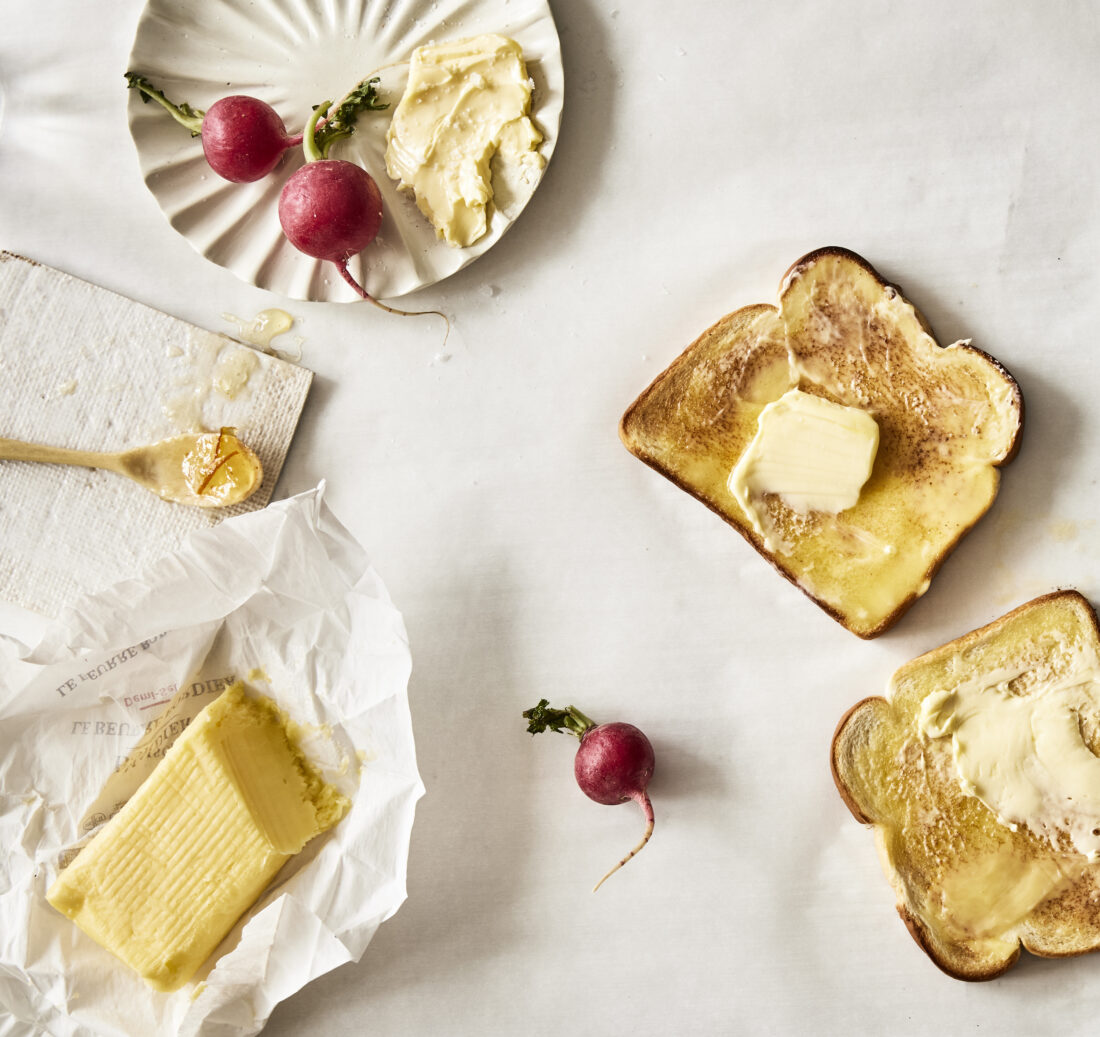
I also just love serving it, with radishes or with bread before dinner if I’m having a party, or if I just want to have really nice butter on my counter for a week. It’s my special-occasion butter.
What about a solid day-to-day butter?
If I want nice butter on my counter and I don’t want to spend $12, Vermont Creamery makes great traditional cultured butter. It has a higher fat percentage; it’s a European-style butter. I like using cultured butter as my “table butter,” for putting on bread or topping potatoes or things like that, because it has a more interesting flavor and a savory richness to it. Once you taste it, there’s no going back. I also love any Irish butter, like Kerrygold. It has that grass-fed flavor to it, which gives it the yellow color. It’s supposed to be healthier as well.
Of course, for baking, I’m just using a standard unsalted butter from the grocery store. I just buy an organic one. All the sugar and all of the flavorings of your baked goods are going to cover the butter flavor up because you just need it for the structure and texture. Any fresh one will do. But in the book, I do have a shortbread recipe using cultured butter because shortbread is so simple that you can really taste the butter.
Let’s talk more about the recipes in the book.
My goal was to make sure every recipe showed a different transformative power of butter. It’s meant to showcase recipes that celebrate the flavor of butter but also recipes that illustrate butter as a culinary tool. The adult buttered noodles illustrate how butter can emulsify—adding cold butter to warm liquid creates a creamy sauce. The scallop recipe demonstrates how you can use butter to baste protein, and how when you add butter halfway through the cooking process, it helps increase the browning and caramelization. With the baked goods, I wanted to make sure there was one that showcased how butter is a natural leavener when you fold cold butter into dough. I used biscuits for that one.
This adult buttered noodle recipe made me feel seen.
It’s my comfort dinner. I call it grown-up buttered pasta because of the anchovies in there. My husband doesn’t like anchovies, and you can do it without them and it’s still good and nice and buttery. But don’t fear the anchovies. It just gives it this nice, rich umami flavor; it doesn’t taste fishy.
And then there are these compound butters…cilantro lime, smoky garlic, green goddess. They sound amazing.
To make a compound butter, you just start with a standard unsalted butter. You’re adding so much flavor to it that it just needs to be fresh. I love the smoky garlic one on a roast chicken. The green goddess I like to dip radishes in. Radishes are crunchy and bitter, and butter is smooth and creamy, so it’s the perfect pairing.
Any closing thoughts that you hope people take away from the book?
I hope people learn that you should buy different types of butter for different purposes. Also, I want people to know that butter can be a main event. You can serve butter as your appetizer course, maybe as a butter board. Or using butter presses and molds, it can be a presentation stunner. Above all, butter is an ingredient to have fun with.
Lindsey Liles joined Garden & Gun in 2020 after completing a master’s in literature in Scotland and a Fulbright grant in Brazil. The Arkansas native is G&G’s digital reporter, covering all aspects of the South, and she especially enjoys putting her biology background to use by writing about wildlife and conservation. She lives on Johns Island, South Carolina.
Garden & Gun has an affiliate partnership with Bookshop.org and may receive a portion of sales when a reader clicks to buy a book. All books are independently selected by the G&G editorial team.