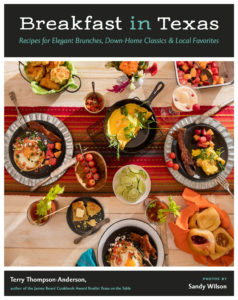
Terry Thompson-Anderson knows Texas. The author and chef has lived in Houston, Austin, and Fredericksburg, and has roamed the entire Lone Star State researching her ten cookbooks, including 2014’s James Beard Award–nominated Texas on the Table. While writing it, she found herself especially drawn to the first meal of the day. “I eat a lot of breakfasts on my travels, and I’m always struck by the diversity of ethnic and cultural styles in Texas,” she says. “I realized, wow, this goes way beyond bacon and eggs.” In her new cookbook, Breakfast in Texas: Recipes for Elegant Brunches, Down-Home Classics, and Local Favorites, Thompson-Anderson shares nearly one hundred recipes for everything from sweet Czech pastries to hearty, spicy Mexican casseroles. No matter the recipe’s heritage, though, the foods share a theme—they’re made for entertaining. (“I like what Anthony Bourdain asks: ‘What nicer thing can you do for somebody than make them breakfast?’” she says.) One tip that’s guaranteed to please a crowd: “Add a libation from the first chapter on drinks,” she says, “and start your brunch the Texas way.”
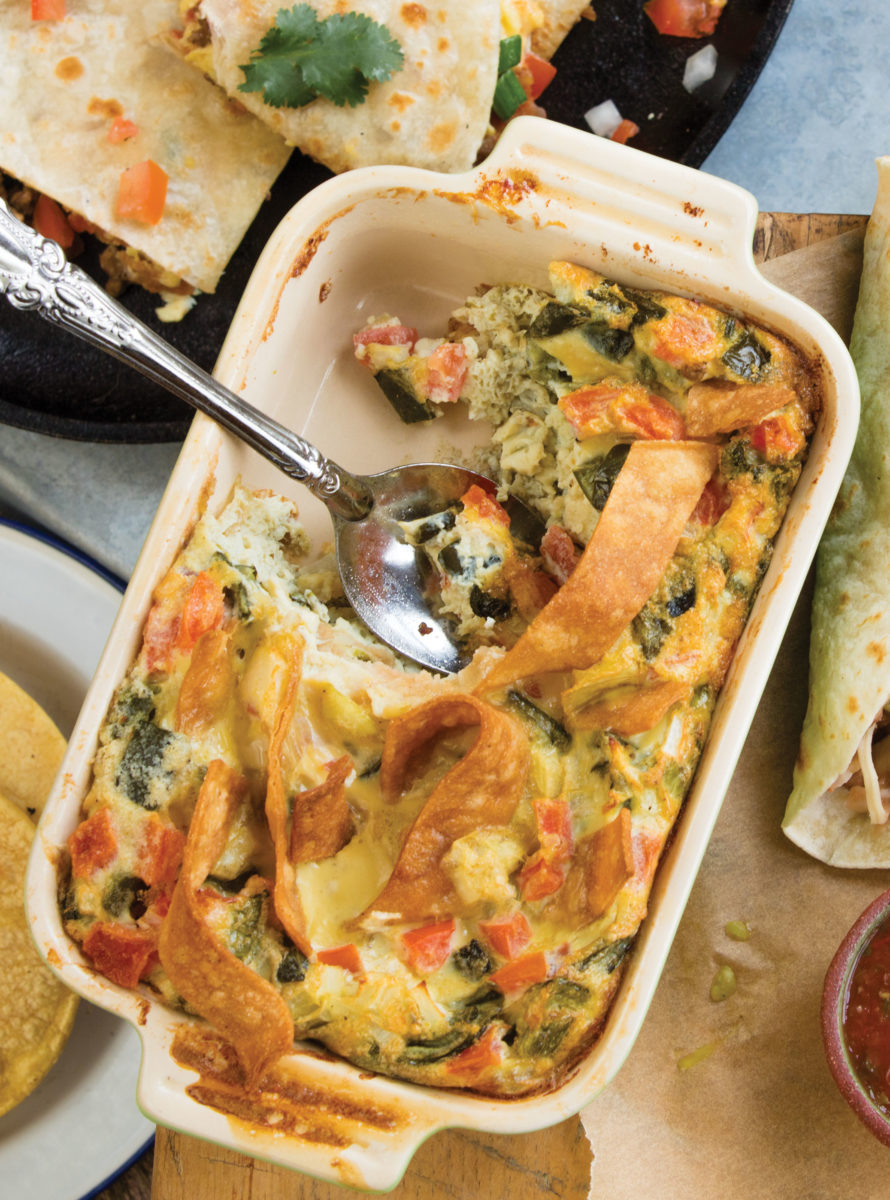
Huevos con Migas
Ingredients
Canola oil for pan frying
7 corn tortillas, cut in half, then into 1/2-inch-wide strips
12 eggs
1/3 cup medium-hot water
2 teaspoons kosher salt
1 teaspoon toasted, then ground cumin
2 large poblano chiles, blistered, peeled, seeded, and cut into 1 1/2-inch dice
1 medium white onion, cut into 1/4-inch dice
1 large homegrown tomato, peeled, seeded, and cut into 1/4-inch dice
1 1/2 cups (6 ounces) shredded Asadero cheese, or Monterey Jack cheese
Your favorite salsa or pico de gallo
Preparation
Preheat oven to 350 degrees; spray a 9 x 13-inch baking dish with nonstick spray; set aside. Heat the canola oil in a heavy-bottomed 10-inch skillet over medium heat. Fry the tortilla strips until they are light golden brown and crisp, about 3 to 4 minutes. Using a skimmer, remove the tortilla strips and drain them on a paper-towel-covered wire rack set over a baking sheet.
Break the eggs into a large bowl and whisk them with the hot water, salt, and ground cumin until very frothy. Add all remaining ingredients, including the tortilla strips, but not the salsa or pico de gallo. Turn the mixture out into prepared baking dish and bake in preheated oven for about 25 to 30 minutes, or until eggs are set to desired consistency. Stir the eggs every 5 minutes while they’re baking. Serve hot, passing the salsa or pico de gallo separately.

Recipe from Terry Thompson-Anderson, excerpted from Breakfast in Texas: Recipes for Elegant Brunches, Down-Home Classics, and Local Favorites
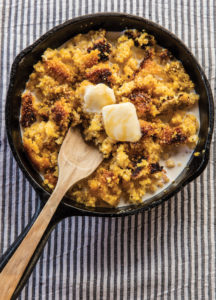
Cajun Coush-Coush
Ingredients
2 cups yellow cornmeal
1 1/2 teaspoons kosher salt
1 teaspoon freshly ground black pepper
2 teaspoons baking powder
1 tablespoon sugar
1/2 cup bacon drippings
1 1/2 cups boiling whole milk
Butter, cane syrup (such as Steen’s), or half-and-half for topping
Preparation
In a medium-sized bowl, combine the cornmeal, salt, pepper, baking powder, and sugar; toss with a fork to blend. In a 10-inch cast-iron skillet over medium-high heat, heat the bacon drippings until almost smoking. Pour the boiling milk into the cornmeal mixture and stir to form a smooth paste. Spoon the mixture into the hot fat and fry until a light crust forms on the bottom, about 10 minutes. Stir the mixture, breaking up the crust and distributing the browned bits throughout.
Reduce the heat to medium and continue to cook an additional 10 minutes, without stirring. To serve, scoop a portion of the coush-coush into individual bowls. Top with your choice of butter, cane syrup, or half-and-half. Serve hot.

Recipe from Terry Thompson-Anderson, excerpted from Breakfast in Texas: Recipes for Elegant Brunches, Down-Home Classics, and Local Favorites
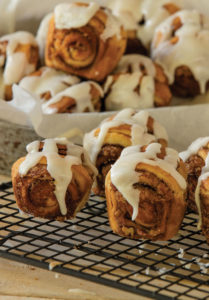
Pecan-Praline Rolls
Cream Pastry
2 cups all-purpose flour
4 teaspoons baking powder
1 tablespoon sugar
1 teaspoon kosher salt
3/4 to 1 cup whipping cream, room temperature
Filling
1/4 cup unsalted butter, softened
2/3 cup firmly packed light brown sugar
1/3 cup finely chopped pecans
1 teaspoon ground cinnamon
12 pecan halves
Praline Glaze
1 cup powdered sugar
1 tablespoon praline liqueur
1 tablespoon whipping cream
Preparation
Preheat oven to 425 degrees. Butter 12 muffin cups; set aside. To make the pastry dough, combine the flour, baking powder, sugar, and salt in a large bowl. Stir in enough cream to make a soft dough. Turn the dough out onto a lightly floured work surface and knead gently about 15 times until the dough comes together into a cohesive mass. Roll the dough out into an 18 x 12-inch rectangle. Spread the dough with the filling butter. In a small bowl, combine the brown sugar, chopped pecans, and cinnamon; reserve ¼ cup for topping. Scatter the filling ingredients evenly over the buttered dough. Beginning on the long side nearest you, roll up tightly, like a jelly roll. Pinch the seam to seal. Place the dough roll so that it’s seam side down and cut it into 24 slices, each about ¾ inch wide. Stand 2 slices, side by side, and on the edge, in each muffin cup. Gently spread the slices apart so that they form a “v” space in the center. Spoon 1 teaspoon of the reserved brown-sugar mixture in the center of each roll. Top each with a pecan half, pressing it lightly into the roll.
Bake in preheated oven for 15 to 20 minutes, or until the rolls are golden brown.

Recipe from Terry Thompson-Anderson, excerpted from Breakfast in Texas: Recipes for Elegant Brunches, Down-Home Classics, and Local Favorites
tags:
Related Stories:
Distilled
A conversation with Britt Kulsveen, the president and chief whiskey officer of one of Kentucky’s most intriguing bourbon producers
Distilled
Five worthy brands to try that bring bourbon’s signature notes to your smoke
Distilled
Tips and strategies for upping your chances of bringing home a coveted bottle
Trending Stories:
Land & Conservation
The future of conservation in the South just got a little bit brighter—and not just for salamanders
Land & Conservation
The mounds may look insignificant, but they’re the craftsmanship of local crustaceans called lawn lobsters
Arts & Culture
The drawls are receiving a lot of flak across the internet, but a North Carolina linguist argues they’re actually pretty accurate