

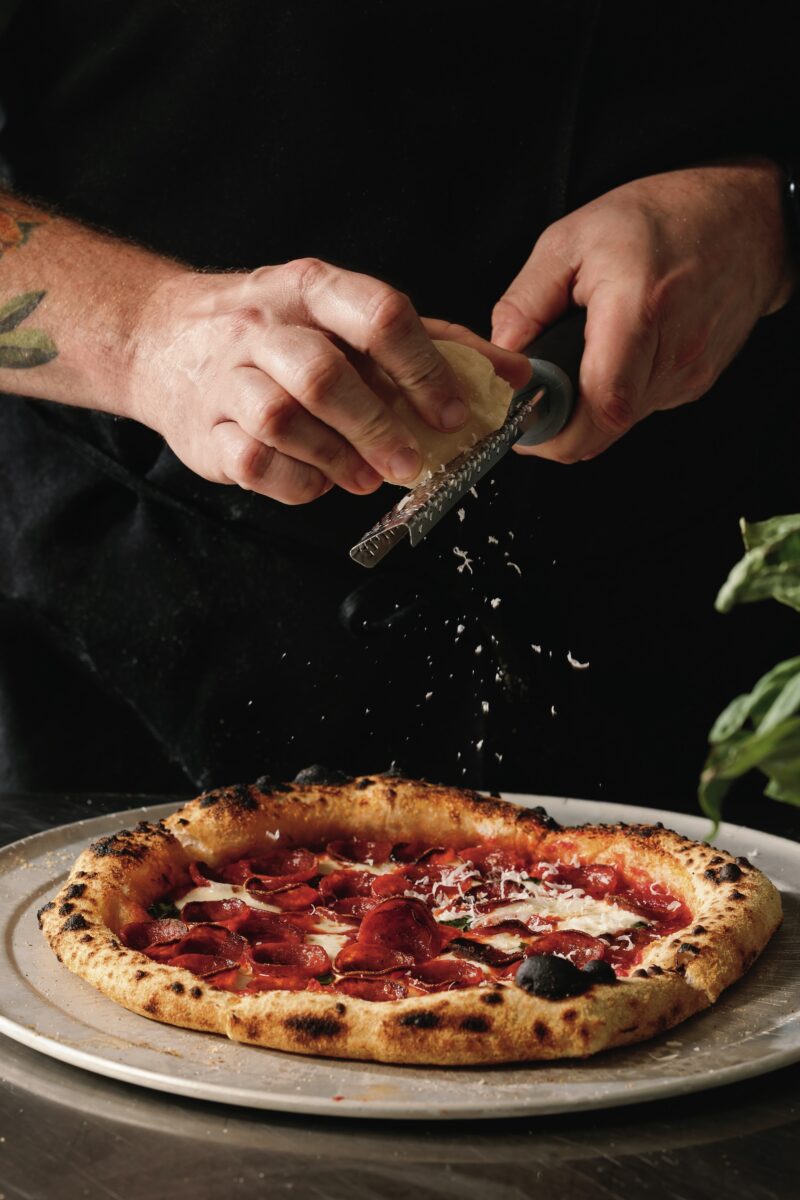
Sandwiches at Piccolina, Elana and Nathan Pearlman’s tiny and terrific lunch and dinner restaurant, open since September in Asheville’s River Arts District, begin with balls of dough baked in an 850°F pizza oven for ninety seconds until the crumb turns downy and the crust blackens and blisters. On a concise lunch menu of just ten savory dishes, six sandwiches are the marquee attractions—thoughtful, technique-driven reminders of the promise of everyday excellence.
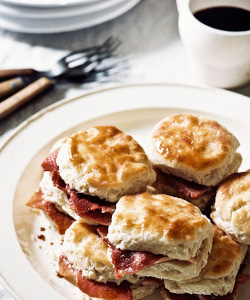
Order the porchetta and you get house-rolled pork roast, shaved into thin slices like deli cold cuts, layered with stracciatella cheese, tomato conserva, and arugula, and dressed with a lemon vinaigrette. That may sound baroque, but the sandwich tastes elemental, like a three-minute pop song, stripped of everything that doesn’t compound emotion and beg repetition.
The chicken sandwich of confited and pulled thigh meat, topped with a chopped relish like a muffuletta, reimagines the form. In a world where Chick-fil-A knockoffs are menu defaults, Piccolina serves a pipe bomb of a sandwich that explodes with flavor without requiring a run through fry grease. Later, when I call Nathan to ask what inspired him, he talks about the red meat and hot pepper blast of a Chicago Italian beef sandwich, soaked with gravy and topped with spicy giardiniera.
In the weeks that followed my two lunches and a dinner at Piccolina, I cornered friends at cocktail parties to talk about those sandwiches. And about the inexpensive and indulgent four-course dinners the Pearlmans serve on Friday and Saturday. Most of all, at a moment when many restaurants present like concepts developed to monetize trends and maximize profits, I longed to talk about the old-fashioned joy of dining in a wife-and-husband-run restaurant focused on the modest and important goal of delivering pleasure and hospitality to guests.
A pottery studio and two art galleries share the storefront. The dining room within is humble. Sunlight pours in the front windows, and, at night, moonlight beams down through a skylight above the cash register, giving the twenty-seat space the feel of a solarium. Servers work tables scattered about the concrete-floored room. A counter with wicker-backed stools runs along the front.
The vibe is very Asheville. Through the kitchen pass window, I glimpse a cook wearing a sleeveless blue jean jacket, printed with a fist holding a fork and a slogan in support of Asheville Food and Beverage United. One afternoon, I spot a woman studying a yoga manual while forking into a kale salad showered with toasted breadcrumbs. The next day, a couple in leather expedition hats recap their hike over a four-slice Margherita pizza with a high and poofy crown.
That pass window also allows a peek at the brick-lined pizza oven toward the rear of the kitchen. The fire that leaps from its mouth draws attention. But the real key to this kitchen is the Pearlmans’ commitment to technique, and to doing a dozen small things well to get the big thing right. Two Italian doughs inspired the bread for the sandwiches: puccia, born of Puglia in southern Italy; and the pizza dough used for panuozzo sandwiches, from Naples on the opposite coast. Nathan began researching those styles after a YouTube search for “Other things to do with a Neapolitan pizza oven.” Months of experiments followed. To dial in what he learned, he also called on the pizzeria job he worked back when he and Elana were studying at the Culinary Institute of America in Hyde Park, New York.
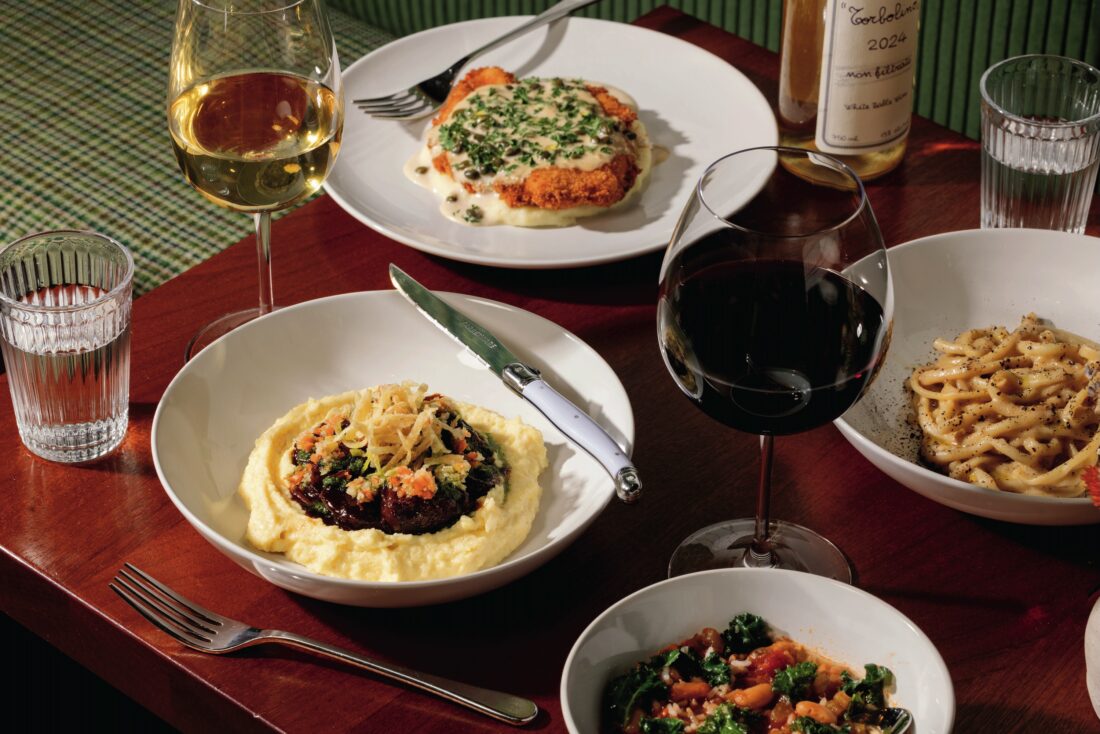
Italian American restaurants, like those the Pearlmans knew as children, are often celebrated for their glorious excesses. Open four days a week, this kitchen prides itself instead on restraint. At lunch, supplì, small fried balls of tomato-thickened risotto and fresh mozzarella, a Roman variation on the better-known Sicilian dish arancini, arrive atop a dollop of jewel-toned pesto, beneath a demure mane of shaved Parmesan. Dinner, a rotating roster of dishes served as a four-course prix fixe for a reasonable seventy-five dollars, begins with a simple and elegant minestrone soup of Carolina Gold rice, kale leaves, and cannellini beans. Pork ragù with stubby rigatoni, enriched with what taste like livers, still plays light and bright across the palate.
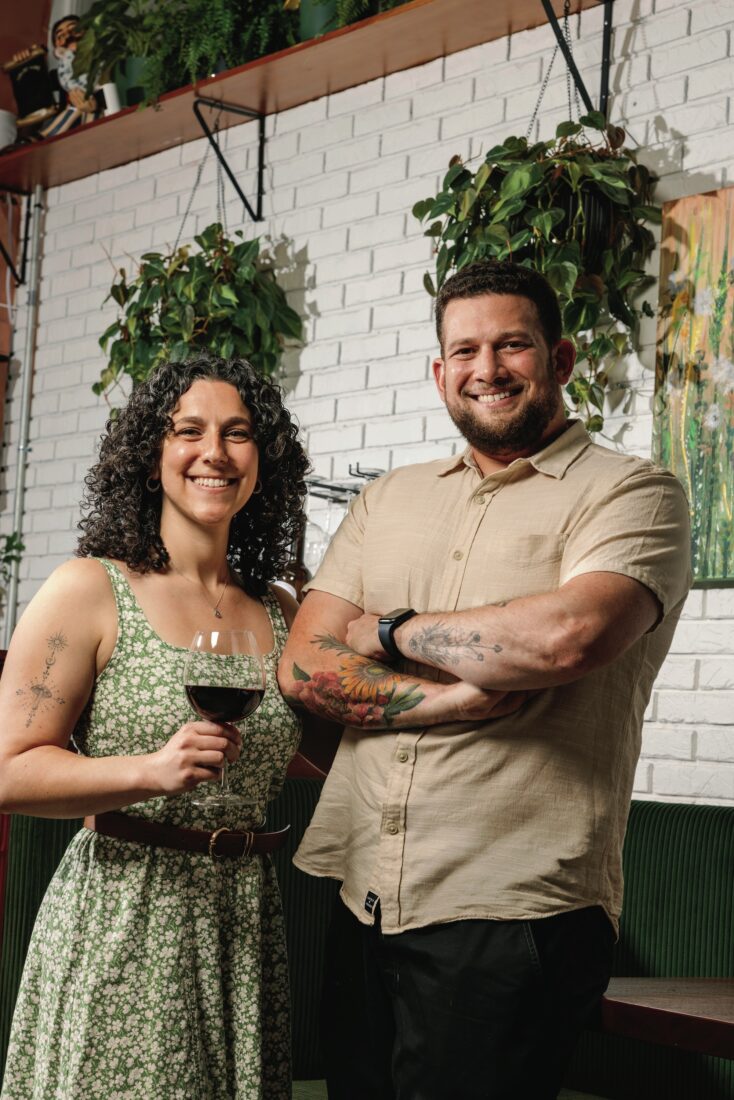
Nathan works the savory side. Elana directs service and makes the sweets. Both grew up Jewish, frequenting the Italian American communities of New York. Elana’s Brooklyn blackout cake is inspired by the Italian bakeries of the region. So are her pistachio cookies, thick with gooey and green pistachio marzipan. Thinking of traditional amaretti, Elana wanted to come up with a dessert that all of Asheville could enjoy, so they are gluten- and dairy-free.
The couple first visited Asheville in May 2024, on their way to the coast from Austin, Texas. After they graduated from the CIA, he’d cooked in some of Austin’s best restaurants, and she’d founded a wedding cake bakery. They had planned a new life in Savannah, but twenty-four hours into that Asheville stopover, the Pearlmans signed a lease on a house.
The next two years were a swirl: They survived Helene, opened an underground pizza business that got them in trouble with the health department, developed a business plan for Piccolina via a referral from the same health department, signed a lease on the restaurant in May 2025, and opened their doors four months later. All the while, they fell deeper in love with their new home.
This was the right time to open in Asheville,” Nathan says. “A moment when people are taking new chances.” Less than a year into their run, as the city is asking itself what it wants to become post-Helene, the Pearlmans are proving that Asheville could emerge as the rare food town where great food is affordable food, and pretense doesn’t overshadow excellence.
John T. Edge, writer and host of the television show TrueSouth, began contributing to Garden & Gun in its first year of publication. He is the author of The Potlikker Papers: A Food History of the Modern South and House of Smoke.