

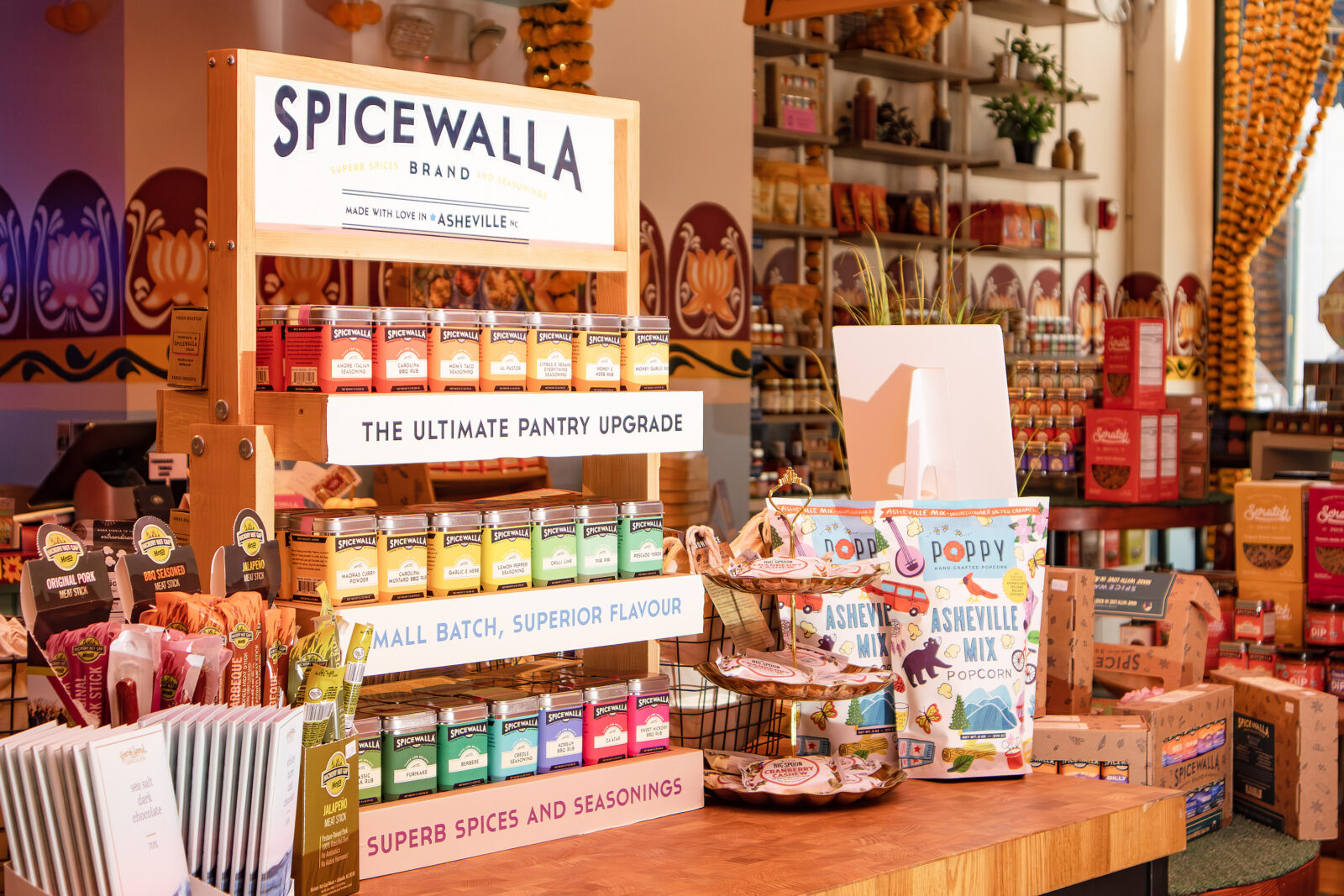
In an open room overlooking the dining area of Chai Pani, Mehrewan Irani’s beloved, James Beard Award–winning Indian restaurant in Asheville, giant containers of colorful spices are stacked high on a counter, towering halfway to the ceiling. Some may be familiar to American home cooks, like cayenne, cloves, dill; others perhaps less so, like Aleppo chili flakes, fenugreek leaves, tamari powder. Alyse Baca, the culinary director of Irani’s spice company, Spicewalla, greets us, her pupils for the next hour.
“Spices are storytellers,” she says. “They’ve been used as medicines, as currency. They’ve sparked wars and trade routes. Some spices have been worth more than gold.” In cooking, they wear many hats. They give color, like the yellow of turmeric, and texture, like pepper forming a crust on a seared steak. They impart flavor and also balance it. And when they’re mixed into a blend, they can do even more. That’s what our small group came to learn about today.
Here are five takeaways from Baca’s spice-blending class, which she started offering last year.
A spice blend can be contrasting or complementary.
“Starting off can be philosophical, with a basis in how you like to cook,” Baca says. “Do you like to go more simple?” If so, make a blend built on complementary flavors; for example, all of the ingredients in a garam masala mix lean into earthiness. If you like a more complex profile, you’ll want to embrace contrasting flavors, in the way a Korean barbecue rub incorporates sesame, which lends a nutty note, and chili, which gives heat. A complementary blend will come out more concentrated. A contrasting blend will come out layered.
Build a base.
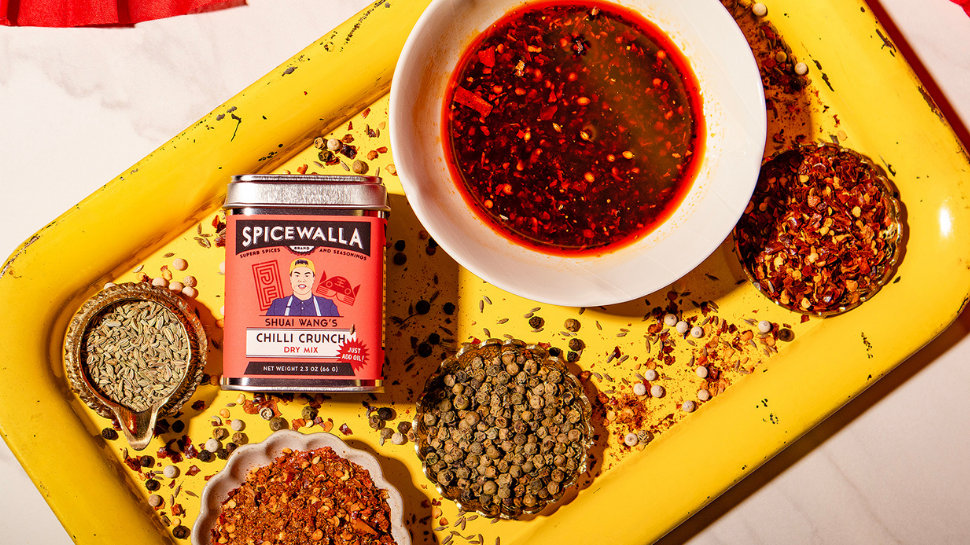
Pretty much every mix has the same basic elements: a mix of alliums, salt, and pepper. That’s not to say all bases are the same; within that formula you can use black pepper, white pepper, sea salt, pink salt, or regular table salt, and ground or flakes of garlic or onion.
Then add the accent flavors.
“Now, you get to have fun,” Baca says. Your base is a canvas of sorts. Want heat? What level? Consider cayenne or chili flakes. Earthy? Maybe cumin or smoked paprika. Warm? There’s cinnamon, allspice, ginger. Don’t get hung up on needing a certain number of ingredients. “Some of our blends have three ingredients,” Baca says. “Others have twenty-four.” It’s all about the flavor and the goal for the blend.
Taste, taste, taste.
First of all, you can taste each ingredient before you add it so you know what’s going into your mix. Then, starting with the base, taste your blend as you add every element, and make sure you’re mixing well so you’re getting an accurate picture. And if someone else is around, a second opinion never hurts.
Write it down.
It’s tempting to lean into your mad scientist or Southern grandma side and add a pinch of things here and there. But you’ll end up making something you really like and having no idea how you got there. If your spice blend is something you want to be able to reproduce or scale up, take the inconvenience hit and make notes as you go.
When in doubt, there’s Spicewalla.
The company sells spice blends of all bents, from ranch to Chai to Italian. Below, Baca shares the recipe for Spicewalla’s Carolina barbecue rub: a smoky, spicy, sweet mix built for pork, poultry, or roasted potatoes.
2 tbsp. mustard powder
2 tbsp. light chilli powder
1 tbsp. kosher salt
1 tbsp. black pepper
2 tbsp. brown sugar
1 ½ tbsp. smoked paprika
1 tsp. apple cider vinegar
½ tsp. granulated garlic
½ tsp. granulated onion
Tiny pinch of cayenne
Lindsey Liles joined Garden & Gun in 2020 after completing a master’s in literature in Scotland and a Fulbright grant in Brazil. The Arkansas native is G&G’s digital reporter, covering all aspects of the South, and she especially enjoys putting her biology background to use by writing about wildlife and conservation. She lives on Johns Island, South Carolina.