

Older doesn’t necessarily mean better when it comes to bourbon. Because bourbon must age in new, charred white oak barrels, there comes a point of diminishing returns, when the fresh wood begins to overwhelm the whiskey. Many connoisseurs—this writer included—consider eight to twelve years the sweet spot, when the barrel’s influence heightens balance, depth, and complexity without becoming overly tannic.
So when a bourbon boasts an age statement of twenty, twenty-five, or even thirty years—as several newer releases do—some skepticism is fair. Those numbers are more commonly associated with Scotch, which matures in temperate climates, often in used bourbon barrels. Most bourbons, especially those that have sweated through numerous Southern summers, would be palate puckering “oak bombs” by then—if there’s any liquid left in the barrel at all.
But there are exceptions. Each barrel ages differently, and the whiskey inside is ready in its own time, as distillers like to say. Still, producers use techniques throughout the process to coax and shape desired results, and when a particular barrel shows unusual promise, well, as gamblers say, “let it ride.”
Rolling out this month, Eagle Rare 30 marks the oldest-ever age-stated release from Buffalo Trace, distilled back when the first mobile flip phone was introduced. And it’s not the only ultra-aged bourbon trickling out to consumers of late.
“We’re in a moment where a lot of whiskey that was laid down years ago is reaching maturity,” says Tim Heuisler, global ambassador for the James B. Beam Distilling Co. “The industry invested heavily in production during the last big bourbon boom, and some of that inventory is now hitting those older age marks.” Rather than blending older barrels into much larger, younger batches—essentially diluting their influence—some producers are leaning into their age. “People are definitely gravitating toward older bourbons,” Heuisler says. “There’s something about the depth and complexity that comes with extra aging.”
With that in mind, here are five recently released bourbons reeling in the years, and how they got there.
Eagle Rare 30
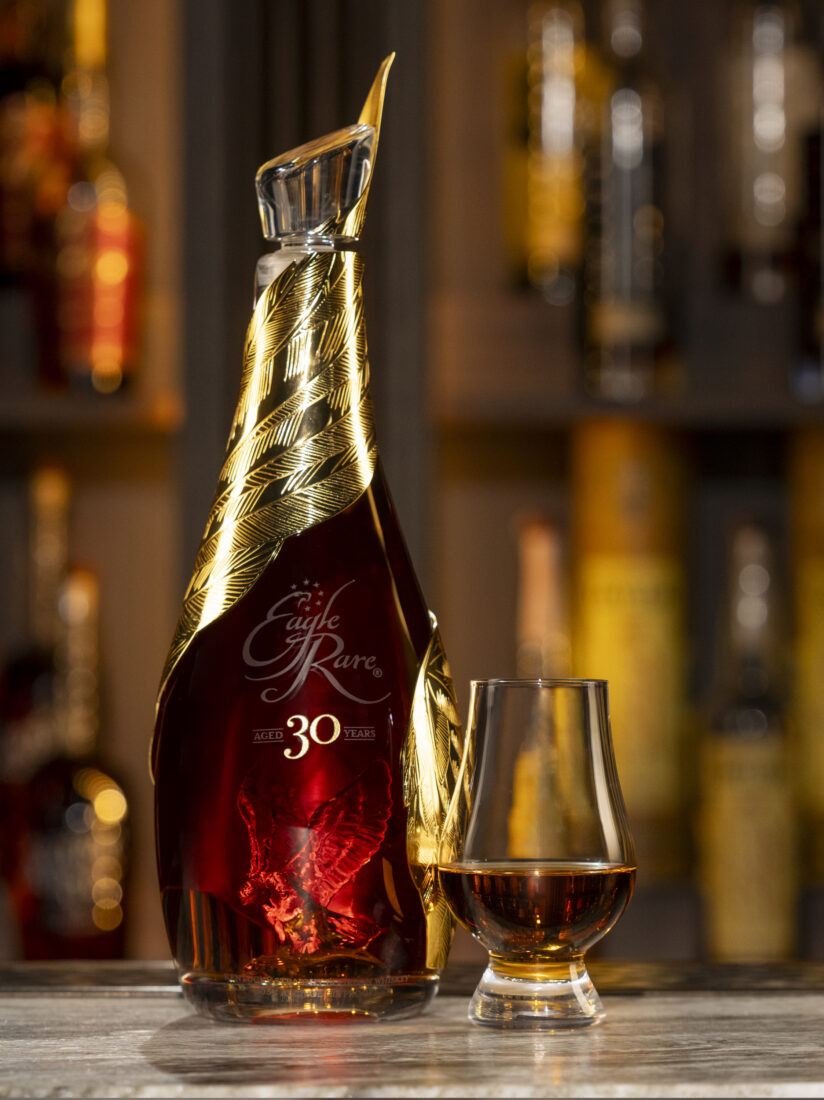
Buffalo Trace master distiller Harlen Wheatley says the Eagle Rare lineup is primarily focused on “innovating around age.” A twenty-five-year-old Eagle Rare debuted in 2023, the first release to spend time in the distillery’s climate-controlled Warehouse P, a technique also used for Eagle Rare 30.
“We’re used to aging and maturation being linked—as a whiskey ages, it also matures,” Wheatley says. “But maturation is not actually linked to time; it’s linked to how the whiskey interacts with the barrels.” Moving a traditionally aged barrel inside a cooler, humidity-controlled environment slows evaporation and limits wood extraction. With Eagle Rare 30 (priced at $12,500 a bottle), Wheatley says he noticed more sweetness returning to the whiskey around year twenty-five. Five additional years of controlled aging further amplifies that caramel richness, balancing notes of grassy rye and firm, grippy tannins with layered complexity that seems to linger endlessly.
Knob Creek 21 Year
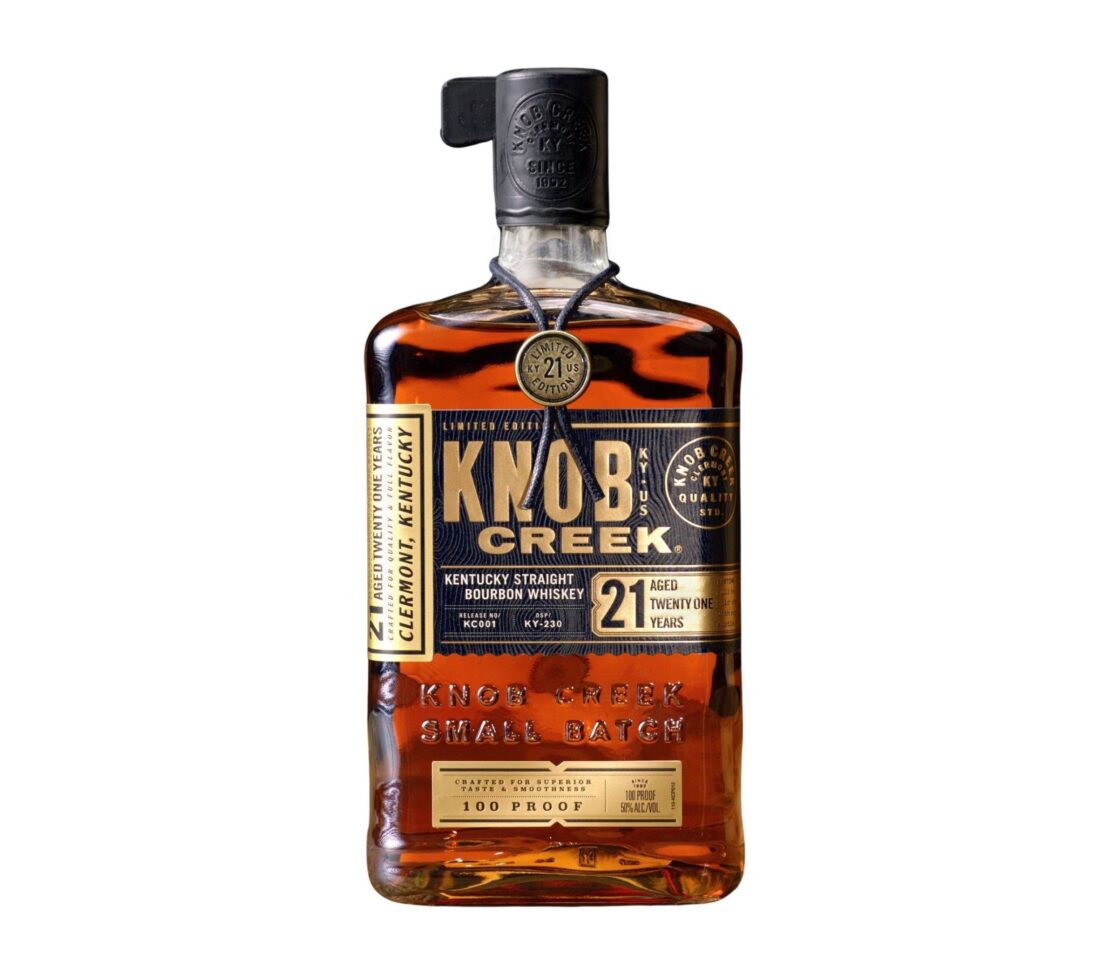
After dropping age statements entirely, Knob Creek, from the James B. Beam Distilling Co., reintroduced a nine-year statement on its flagship bourbon in 2020. A permanent twelve-year expression followed, along with limited-edition fifteen- and eighteen-year offerings. It’s oldest yet, at twenty-one years, arrived this past fall. “When those barrels were laid down back in 2004, we didn’t necessarily know they would become what they did,” Heuisler says. “Over time, though, it became clear the whiskey was developing into something special.”
Bottled at 100 proof, this extra-aged version has the assertive, rye-forward profile Knob Creek is known for, amplified and accentuated from top to bottom. There are strong oak undertones, swirling with stewed plum and concord grape with dashes of wintergreen, burnt caramel, and barrel-aged honey running throughout.
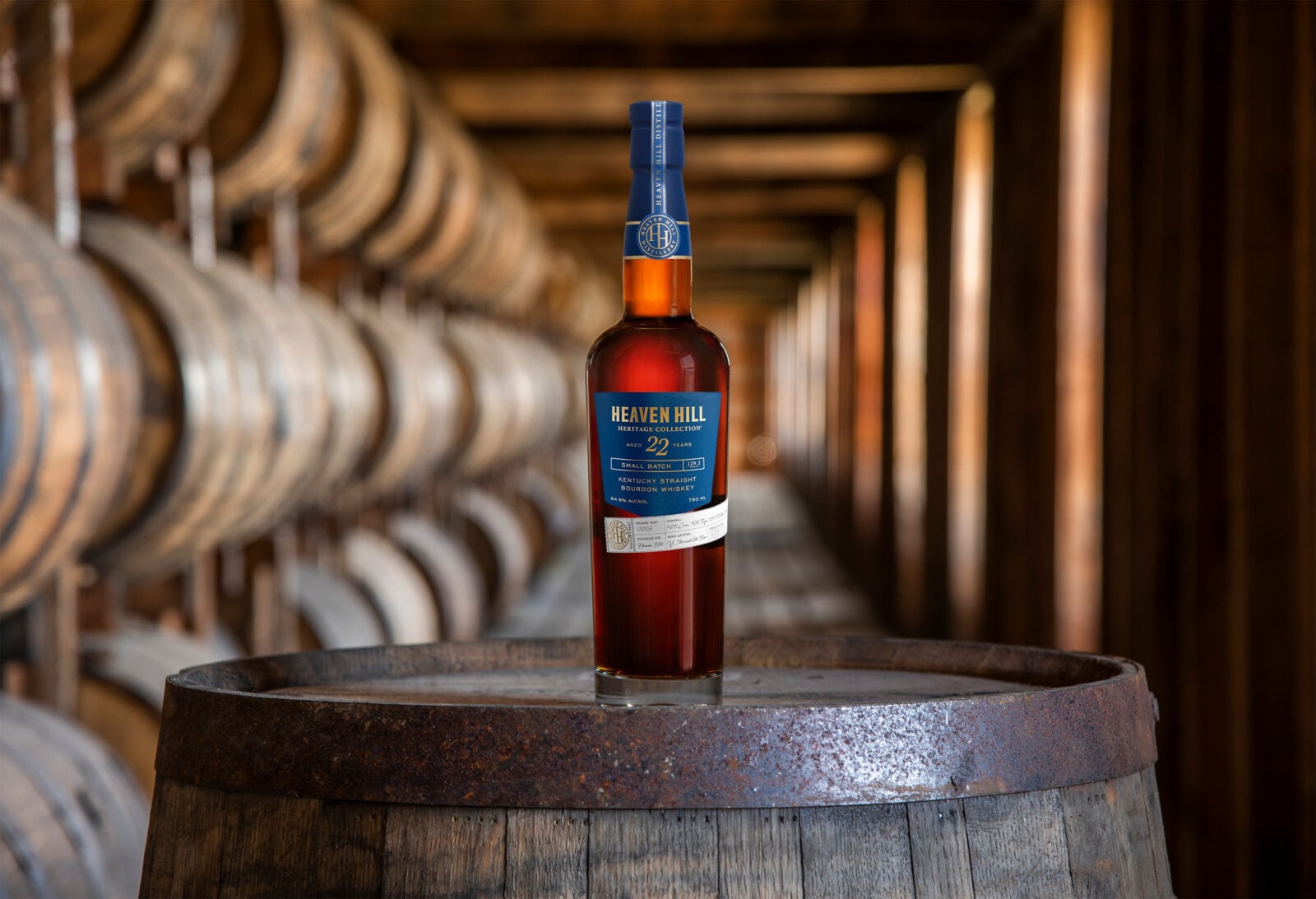
Heaven Hill Heritage Collection 22 Year
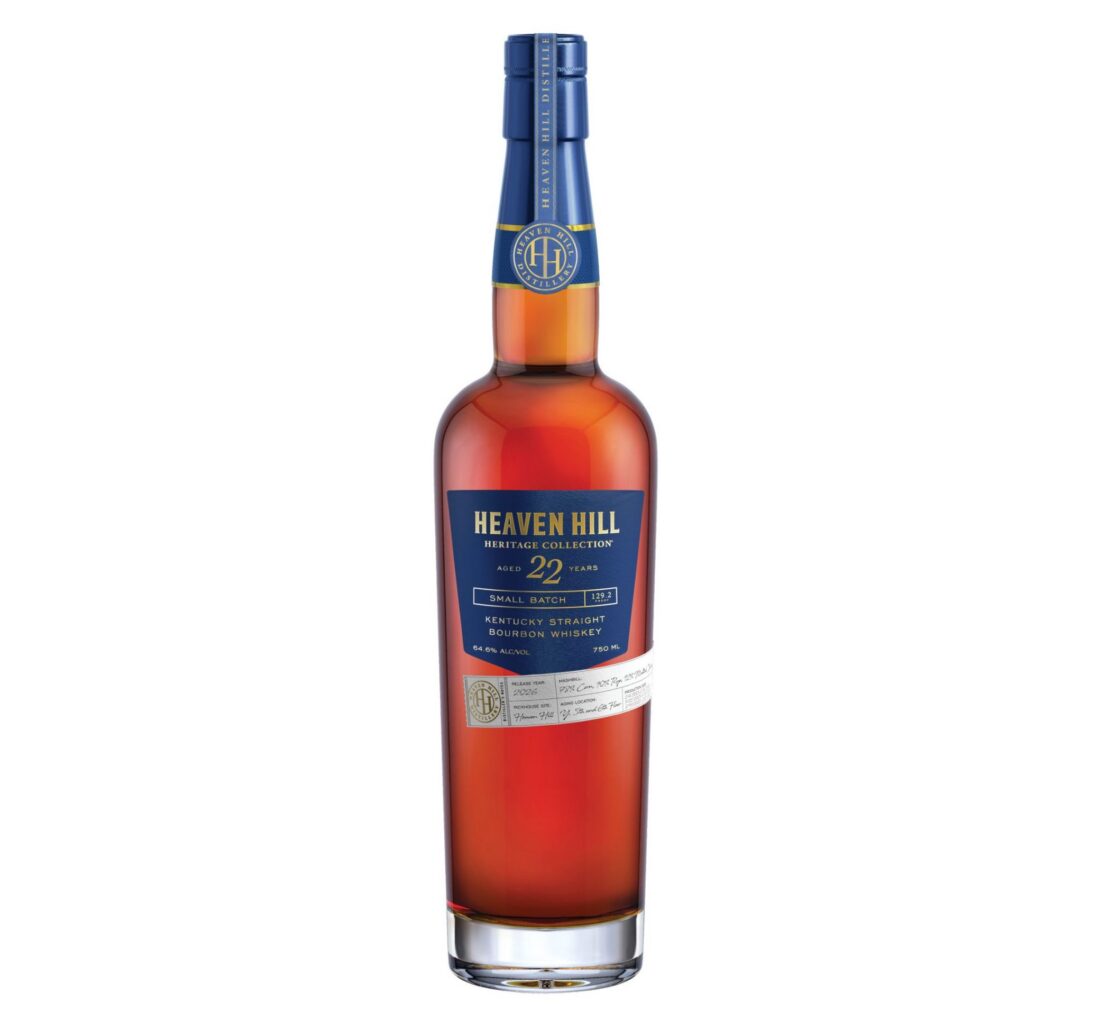
Heaven Hill claims to hold the “largest inventory of extra-aged barrels of any distillery” and has put those barrels to good use with several well-matured releases in recent years. Its latest, a twenty-two-year-old bourbon released in March as part of its Heritage Collection, is the oldest yet in a series designed to showcase some of its longest-aged barrels.
The 270 barrels used in this bourbon, bottled at 129.2 proof, spent more than two decades in the upper floors of rickhouse Y, built on the company’s Bardstown campus in the 1970s and known for its distinctive aging environment. The distillery’s team meticulously vets each barrel before it’s selected for the final blend, and master distiller Conor O’Driscoll says the heavily structured bourbon achieves a “remarkable balance of oak influence and preserved sweetness.”
Michter’s 20 Year
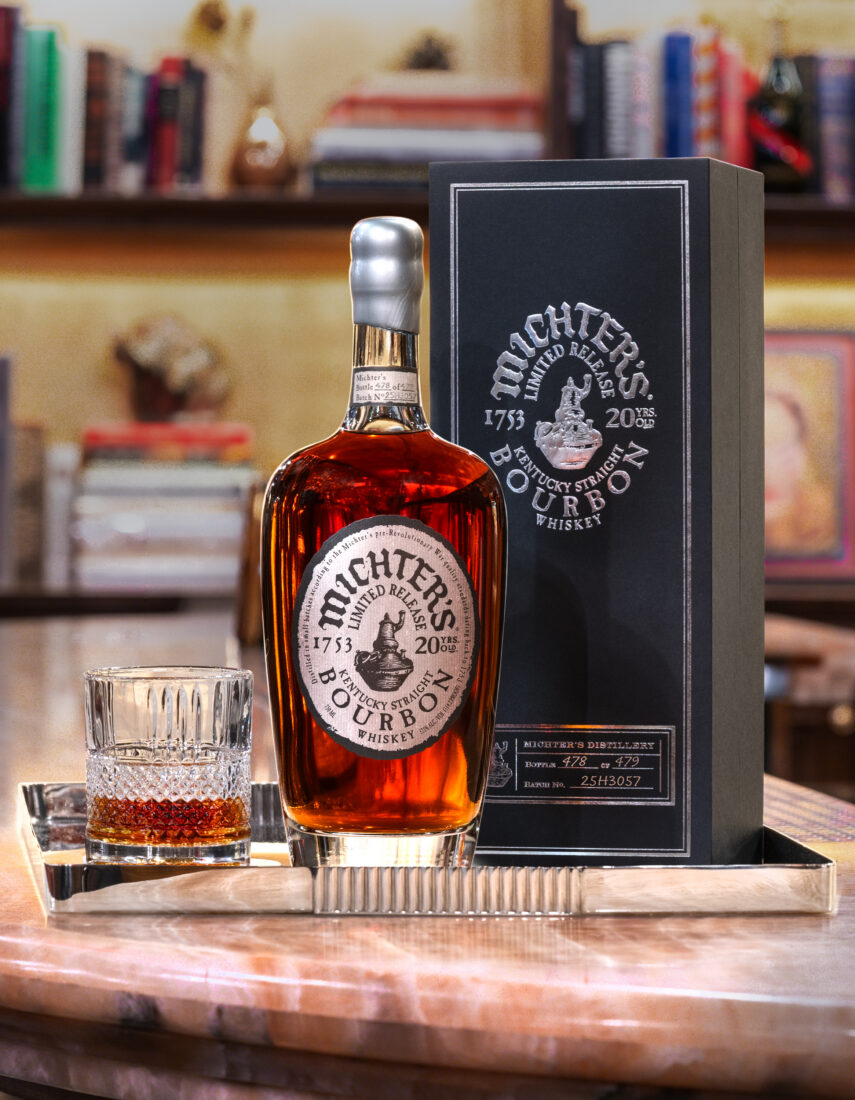
The Louisville-based Michter’s is famously picky about its older releases. The distillery’s 20 Year Kentucky Straight Bourbon has only been available a handful of times, with the latest batch arriving last November. “We allow quality to drive the decision when the whiskey is showcasing its beauty,” says Andrea Wilson, Michter’s master of maturation. “We have a lot of control, but it doesn’t always happen at the moment you would like it to.”
The distillery’s process begins with toasted and charred barrels made from wood that undergoes extended natural seasoning. The whiskey goes into barrels at a relatively low proof and with a higher proportion of water, which more readily dissolves wood sugars and other extractives, especially inside its heat-cycled aging facilities. “We don’t just stick barrels in a warehouse and hope for the best,” Wilson says. And when everything comes together exceptionally well, as with the recent 20 Year, Wilson describes it as an “elegant package of maturity,” like hearing a “full symphony” rather than a skilled soloist.
Blade and Bow 30
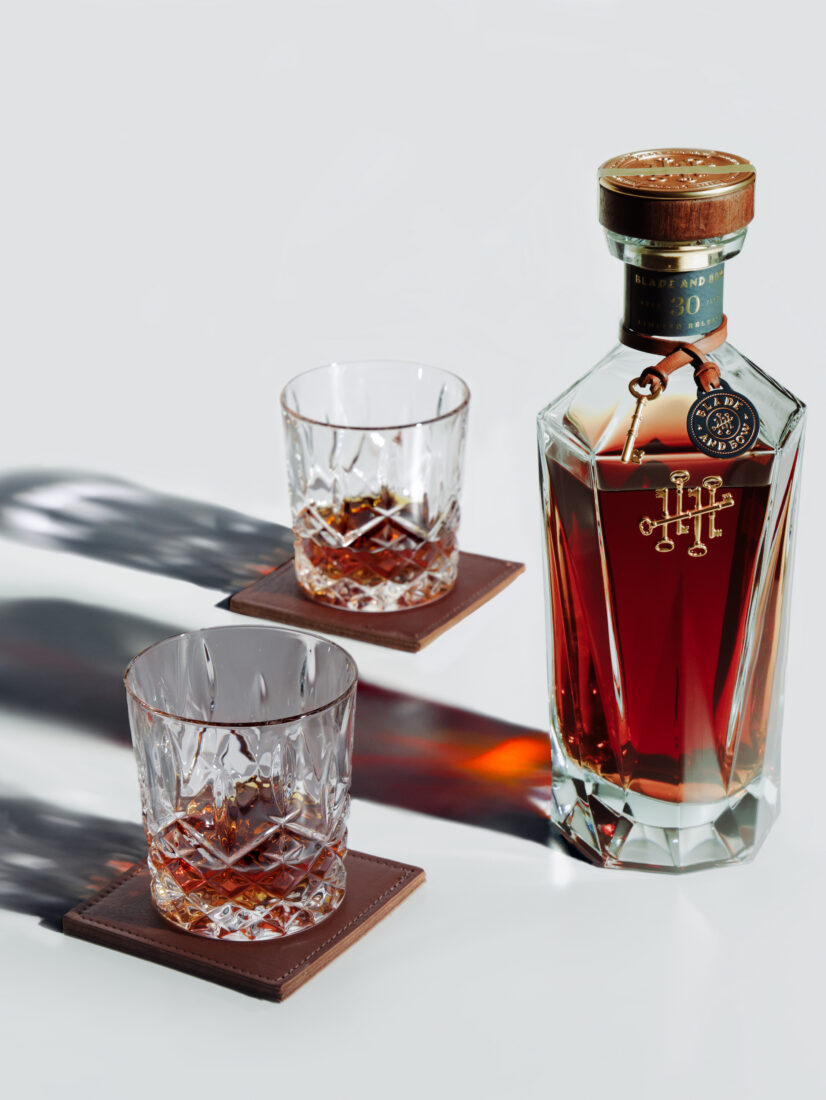
Nicole Austin, Diageo’s director of American whiskey development, expected to find “either empty barrels or something that tasted like chewing on a tree” when she checked on a stash of long-forgotten barrels laid down in 1993 and stored high in a rickhouse at Kentucky’s Stitzel-Weller Distillery. Many were indeed empty and crumbling, but, to her surprise, others held a substantial amount of liquid. “Which made me think maybe they were mislabeled,” she says. “This couldn’t possibly be thirty-year-old whiskey.”
Austin believes the barrels had likely been consolidated at some point, slowing what she calls the “snowball effect” of rapid evaporation when there is more oxygen in a barrel than whiskey. “I also believe the conditions in the rickhouse are what allowed it to reach this age and still be lovely,” she says. “The airflow helped preserve the structural integrity of the barrels.”
She used about forty of the ninety or so usable barrels to blend a thirty-year-old bourbon that, while redolent with soaked oak and rickhouse funk, retains a bright complexity and nuanced character. The whiskey she didn’t use was again consolidated. What those barrels will become, only time will tell.
Tom Wilmes is a journalist based in central Kentucky who covers bourbon and other spirits, travel, and food. A contributor to Garden & Gun, he has also written for Whisky Advocate, The Local Palate, Southbound, and other publications. A Kentucky Colonel and Certified Executive Bourbon Steward, he has spent years reporting on—and indulging in—the culture he covers, a responsibility he doesn’t take lightly. Follow him on Instagram @americadistilled.