
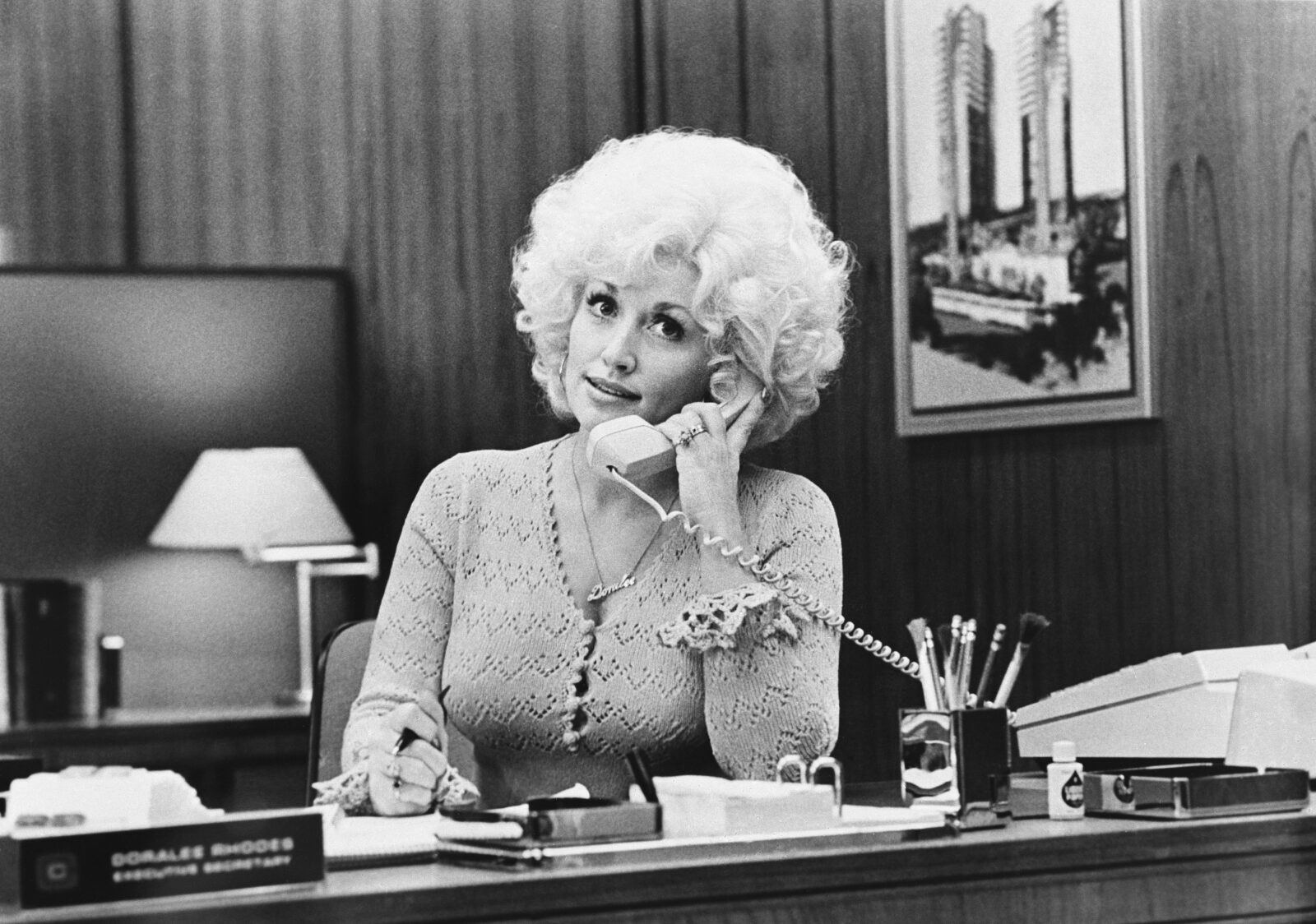
Dolly Parton has never fit a mold. As a singer, songwriter, multi-instrumentalist, philanthropist, businesswoman, actress, and all-around global icon, she’s won hearts across generations, geographies, and genres—as much for her personality and general outlook as for her prolific catalog and performances. To try to take stock of all the ways Parton changed our culture would be a losing game. She released forty-nine solo studio albums in her life (breakout Jolene didn’t even come along until number thirteen!) and spent seven decades in the public eye. Inevitably, any list of résumé highlights could double in length and still leave off plenty of accomplishments.
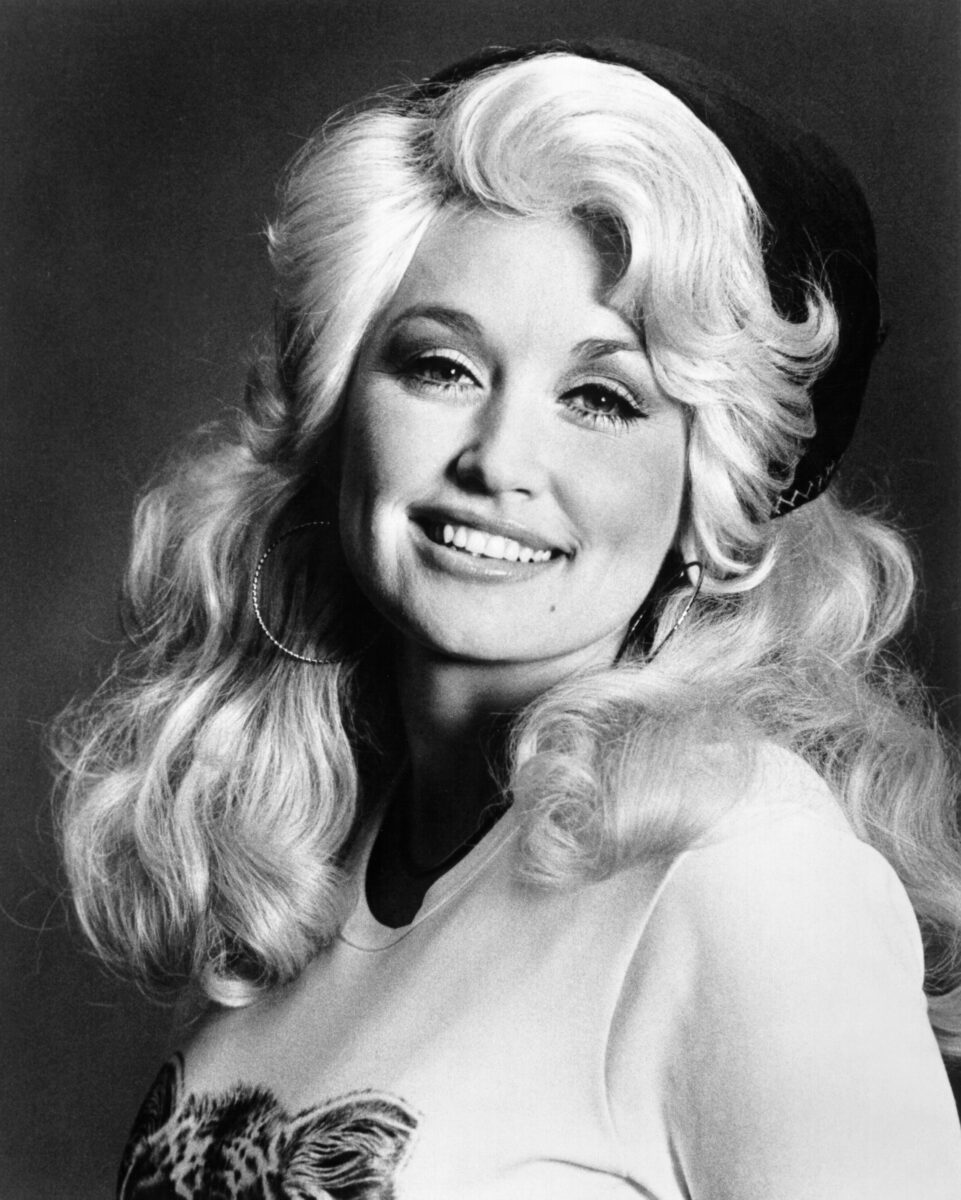
But several common themes do emerge: sharing your gifts with those who need them most; knowing your worth and never settling; ignoring convention and embracing your quirks; taking your work seriously, but never taking yourself seriously. Here, we look back at some of the most unforgettable Dolly moments over her long career.

She knew her worth and accepted nothing less—even from the King himself.
Parton founded her own publishing company at just twenty years old, controlling the rights to her songwriting catalog in full (and raking in the resulting revenue). When Elvis approached Parton in 1974 to record his take on her hit “I Will Always Love You,” she was thrilled—until his manager clarified that they’d record it only if she’d sign over half the publishing rights. She politely declined, and her faith in the value of her work ultimately paid off: Whitney Houston’s 1992 version of the song became the best-selling single of all time by a female solo artist.
She never left her hometown behind.
“I always thought that if I made it big or got successful at what I had started out to do, that I wanted to come back to my part of the country and do something great, something that would bring a lot of jobs into this area,” Parton told the Associated Press in 2010. She did just that in 1986 when she opened Dollywood, a theme park on the site of what had previously been the Silver Dollar Theme Park in Pigeon Forge, Tennessee. Nearly four decades later, in 2022, she announced that Dollywood would cover 100 percent of tuition, fees, and books for any employee who chooses to pursue further education. She gave back to the Tennessee community in other ways too. In the wake of the devastating Gatlinburg wildfires of 2016, she donated $1,000 per month for six months to each of the approximately nine hundred affected families, upping the sum to $5,000 in the final payment. And every year, the Dolly Parton Scholarship awards $15,000 to one student from each high school in Sevier County.
She showed that serious artists needn’t take themselves too seriously.
“I’m not offended by all the dumb blonde jokes,” Parton was known to have said, “because I know I’m not dumb, and I also know I’m not blond.” Whether she was cracking up a late-night host, sharing wild tales about her wigs, shutting down patronizing questions, or even keeping time with her acrylic nails, Parton’s quick wit and willingness to poke fun at herself gave her a one-of-a-kind charm.
She embraced collaboration over competition.
Parton recorded a staggering number of duets, sharing tracks with Kenny Rogers, Willie Nelson, Paul McCartney, and plenty of other legends. She recorded an entire album—1987’s Trio—with Linda Ronstadt and Emmylou Harris. (They would reprise the effort in 1999 with Trio II.) And she used her star power to embrace and lift up other artists, whether she was lending her voice to young guns like Miley Cyrus and Sabrina Carpenter or offering a glowing endorsement (and maybe a song) to cross-genre superstars like Beyoncé.
She used her massive fortune for good.
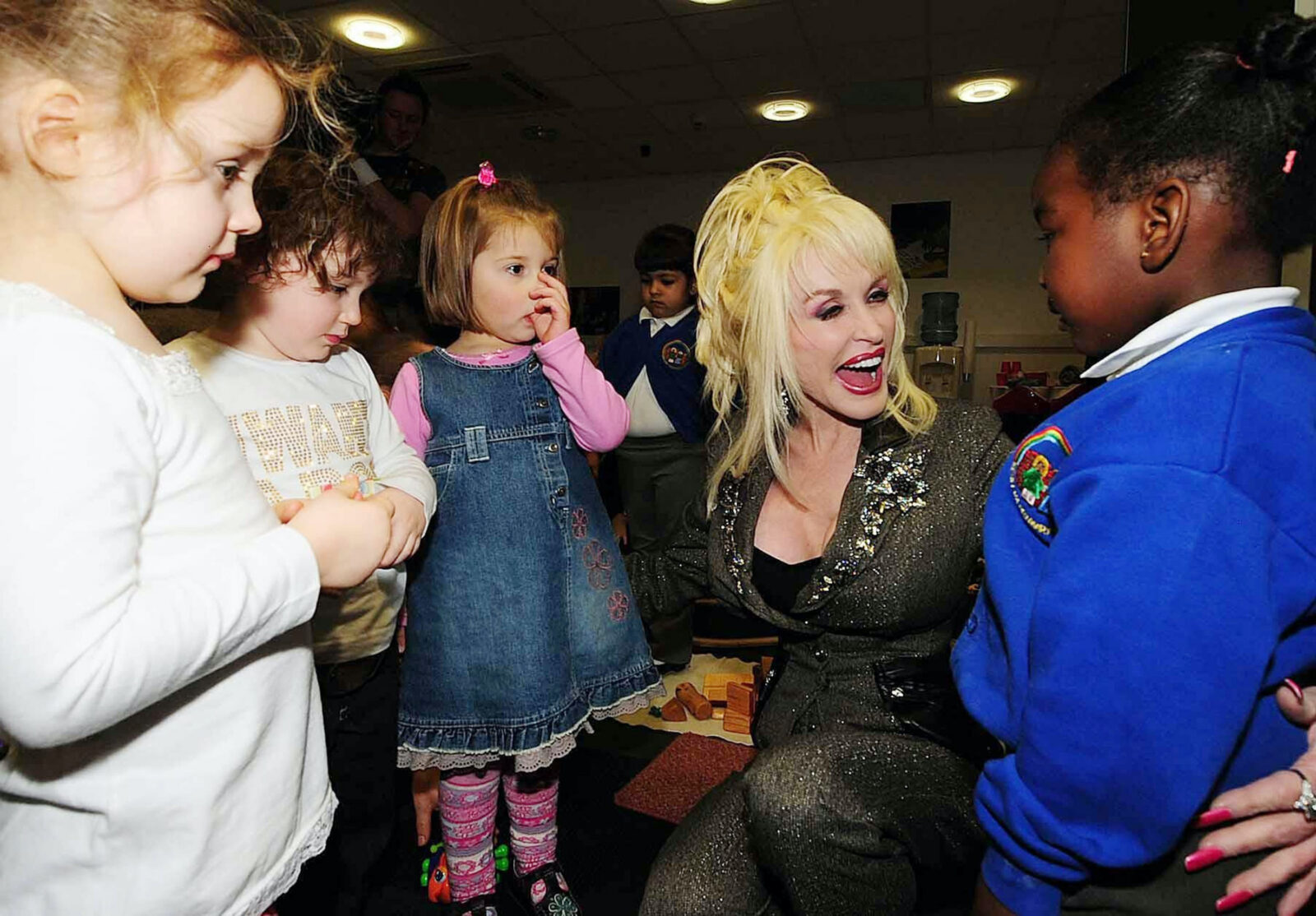
Parton’s philanthropy made countless headlines over the years. In addition to a seven-figure donation toward Moderna’s successful COVID vaccine research and to Vanderbilt University’s children’s hospital, she founded Dolly’s Imagination Library in 1995, a program that sends free books to children from birth until age five regardless of their family’s circumstances; that initiative now mails millions of books per month to kids around the world. “I created the Imagination Library as a tribute to my Daddy. He was the smartest man I have ever known, but I know in my heart his inability to read probably kept him from fulfilling all of his dreams,” Parton said. “Inspiring kids to love to read became my mission.”
Her on-screen talents made us laugh and cry.
Parton’s accolades extended beyond the stereo to the screen. She earned one Golden Globe nomination for her film debut in 9 to 5 in 1980, and another for The Best Little Whorehouse in Texas two years later. And who could forget her repartee-filled turn as Truvy in Steel Magnolias? From major movie roles to cameos on shows like Hannah Montana, she had a knack for drama.
She became the hottest headliner on the music festival circuit—in her late sixties.
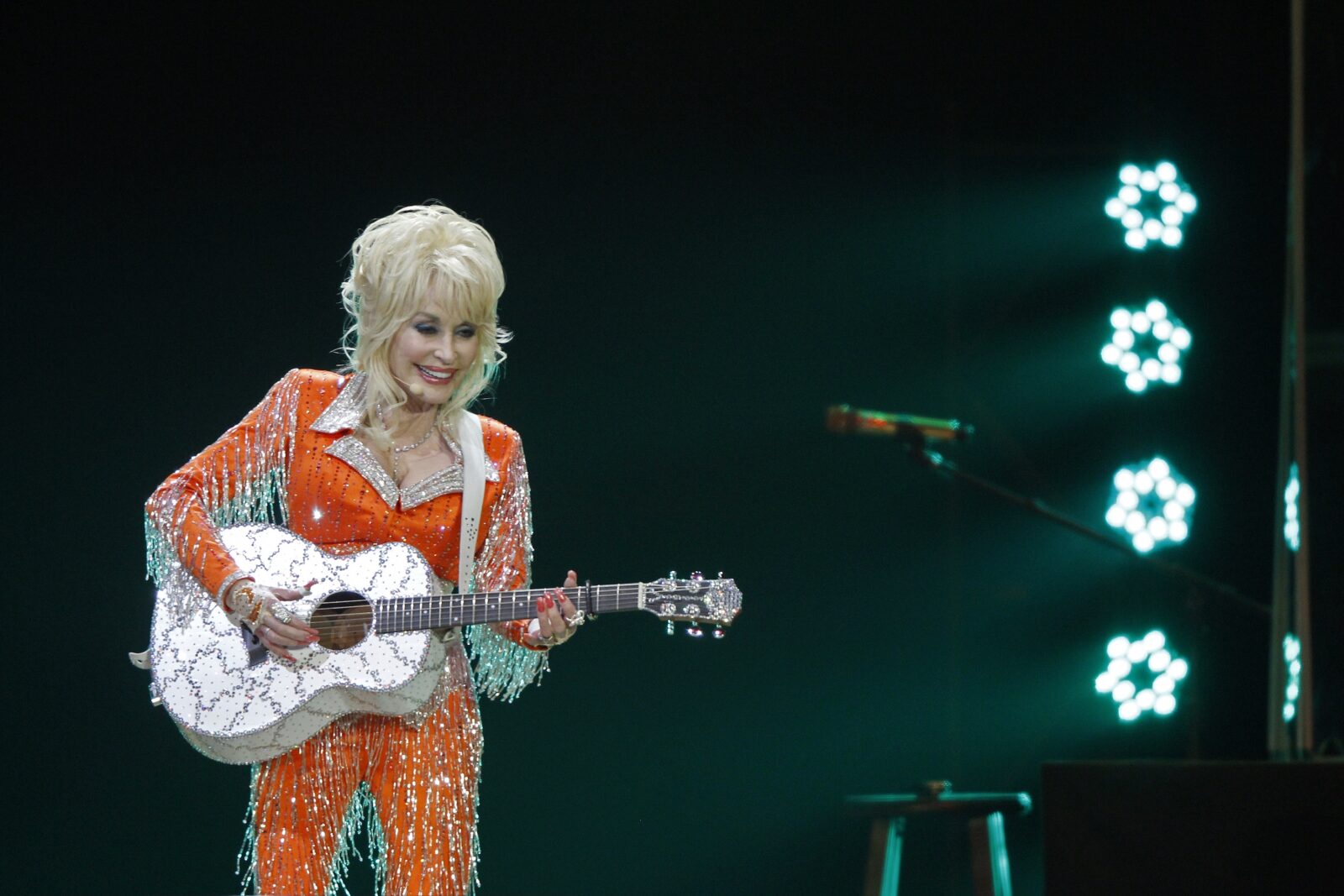
The finale at the legendary Newport Folk Festival has come to be known as an epic platform for collaboration, one where surprise guests abound and legends show up to sing with the next generation. But even festival veterans were floored in 2019 when Parton showed up as Brandi Carlile’s surprise guest of honor, taking time to sing her hits alongside the Highwomen, Yola, Maggie Rogers, Lucy Dacus, and more. It wasn’t Parton’s first or her largest headlining slot that decade: In 2014, she set a record at Glastonbury in the U.K. when she performed for more than 180,000 spectators.
Her romance with late husband Carl Dean spanned six decades, even as she kept it out of the spotlight.
Parton met Dean at the Wishy Washy laundromat on her first day in Nashville in 1964; they married two years later at the Ringgold First Baptist Church in Ringgold, Georgia. Dean preferred to keep a low profile but provided the inspiration for some of Parton’s most timeless love songs. After he died last March, she released the single “If You Hadn’t Been There,” singing: “Oh, you are my rock, a soft place to land / My wings, my confidence, you understand / Your willingness beyond compare / No, I wouldn’t be here if you hadn’t been there.”
She stayed true to herself—rhinestones and all.
“I would never stoop so low as to be fashionable,” Parton once said. “That’s the easiest thing in the world to do.” Instead, she dressed according to her own unique sense of style—sparkles, high heels, wigs, and all. Her 2023 book, Behind the Seams: My Life in Rhinestones, offers somewhat of a memoir by way of her many iconic looks. And while the coffee-table tome is filled with fascinating photos, the audiobook holds a special appeal too: It’s read by Parton herself.
She composed more than three thousand songs and delivered some of country music’s most iconic live performances.
From her early days on The Porter Wagoner Show to Grand Ole Opry slots, awards shows, and collaborations, Parton has given some of country music’s most memorable, enduring performances. Watch her 1973 rendition of “Jolene” or her appearance with Ronstadt and Harris on The Late Show in 1999 or her goosebump-inducing performance of “He’s Alive” in 1989.
Along the way, she snagged fifty Grammy nominations, taking home eleven trophies in total. She also clocked ten CMAs, fourteen ACMs, and twenty-five number one hits—the record for a female country artist. At every turn she made it look and sound effortless. “It’s my therapy, it’s my job, it’s my joy,” she once explained. “Everything’s a song to me.”
Read more from G&G about Dolly Parton through the years.
Dacey Orr Sivewright is a writer and editor based in Mount Pleasant, South Carolina. An Atlanta native, she was Garden & Gun’s digital editor from 2016 to 2021 and has spent the last decade and a half covering music, food, and culture for Billboard, The Village Voice, Stereogum, Apartment Therapy, and other outlets. When not writing, she’s probably making a mess in her kitchen or spending time outside with her husband and daughter.