

home & garden
How Colonial Williamsburg Decks the Halls, Eighteenth-Century Style
See the bounty of fruit-studded wreaths, handmade ornaments, and greenery-draped doorways galore
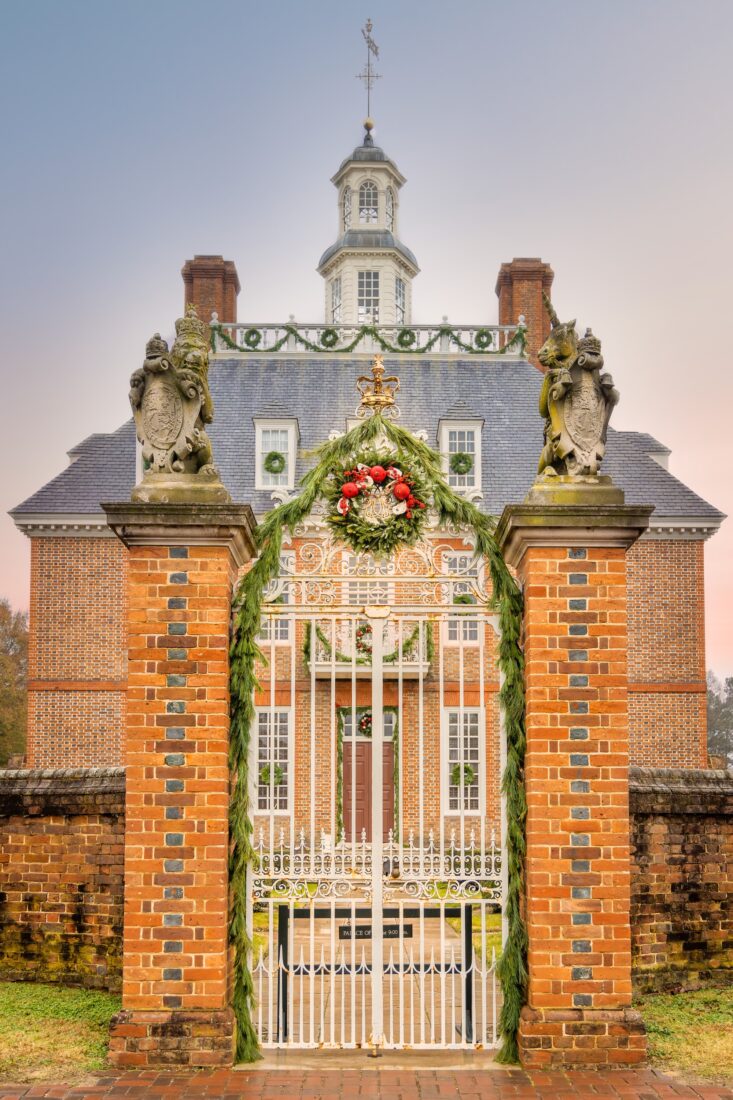
Photo: Jerry McCoy, The Colonial Williamsburg Foundation
“In Colonial Williamsburg, Christmas almost never stops for us,” says Joanne Chapman, director of landscape services for the historic Virginia village and one of the behind-the-scenes orchestrators of its holiday decor.
Springtime is for growing the greenery, fruits, and flowers in the on-site gardens for drying in the summer, and Chapman submits the order for wreath frames in July. Come September, it’s time to make a careful plan of attack and start putting out the first of the dried decorations. “We just amp it up from there,” she says. “It really begins to look like Christmas the week of Thanksgiving, when we start hanging the green wreaths and putting roping over the doorways. It’s magical.”

In total, some eight hundred wreaths, studded with such delights as wooden toys, fresh fruits, dried pomegranate blossoms, and yarrow, adorn the doorways of each historic building, alongside greenery swags, garlands, and looping ribbons. Some decorations stay the same year after year, like those on the Governor’s Palace or an apple fan that always hangs above the greenhouse door, but designers still take creative license—within the parameters of using only materials and tools that would have been available in the eighteenth century.
At the Abby Aldrich Rockefeller Folk Art Museum in Williamsburg, there’s the folk art tree, which displays hundreds of handmade ornaments. The tradition really took off in 1975 when First Lady Betty Ford requested that Colonial Williamsburg furnish the White House with traditional ornaments. “From newspaper clippings, it seems like everybody in Colonial Williamsburg came together and made about three thousand ornaments,” says Christina Westenberger, a manager at the Colonial Williamsburg Foundation and the resident ornament expert. “The Folk Art Museum completely embraced the idea.” After that display at the White House, the ornaments came back to Colonial Williamsburg, and every year, Westenberger helps unpack them to decorate the folk tree—plus she and her team make more, such as miniature quilts or needlepoint houses.
For both Chapman and Westenberger, the height of the magic arrives on Christmas Eve during the annual fife and drum ceremony. “There’s a nip to the air, and you can smell cider and gingerbread and fire,” Westenberger says. “I would never miss Christmas at Colonial Williamsburg.”
Below, see photos of the decked-out historic center.
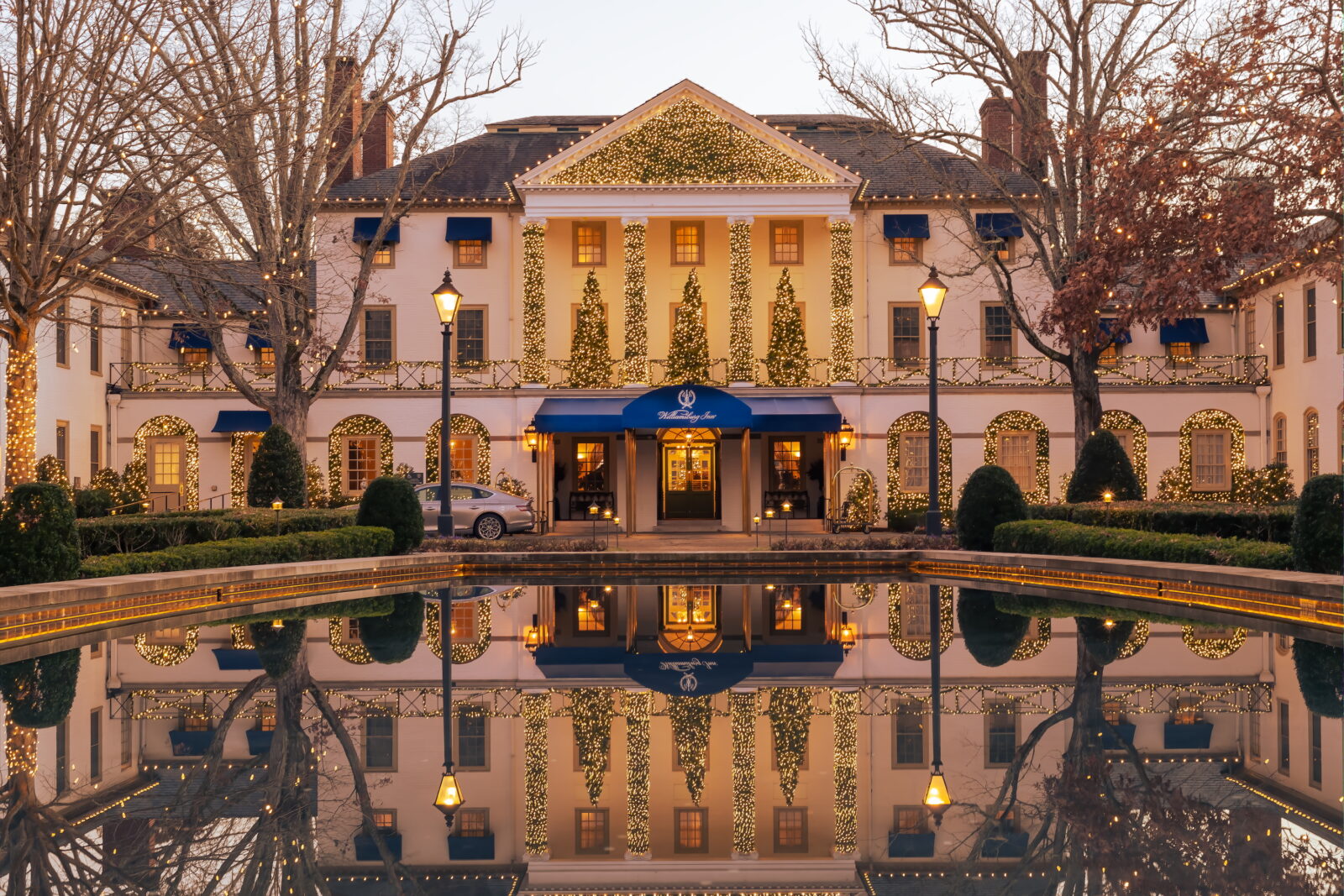
Photo: Jerry McCoy, The Colonial Williamsburg Foundation
The Williamsburg Inn shines with gold lights and three trees, reflected in the pool out front.
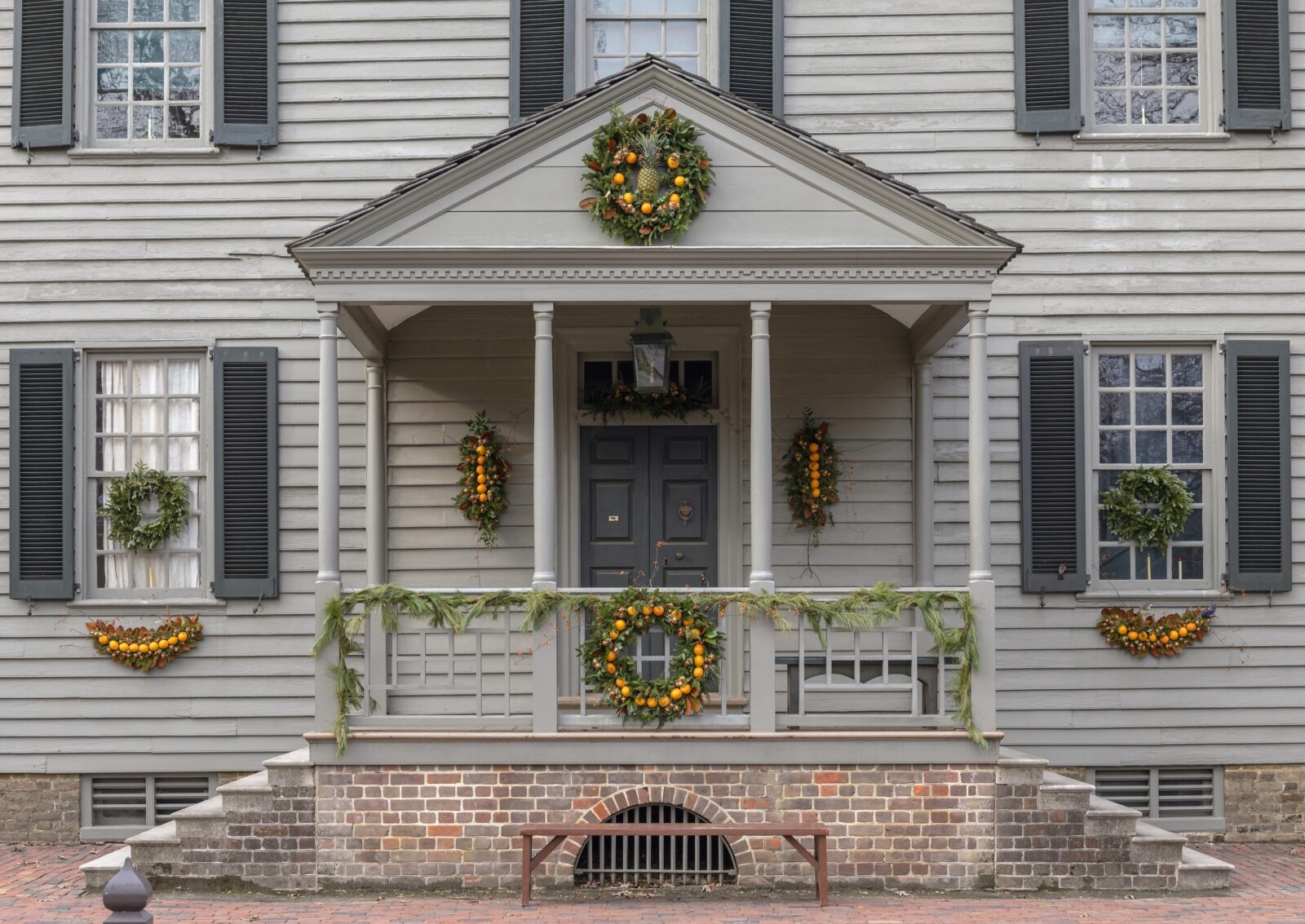
Photo: Wayne Reynolds, The Colonial Williamsburg Foundation
The Robert Carter House sports multiple wreaths with whole oranges and two matching swags on either side of the door.
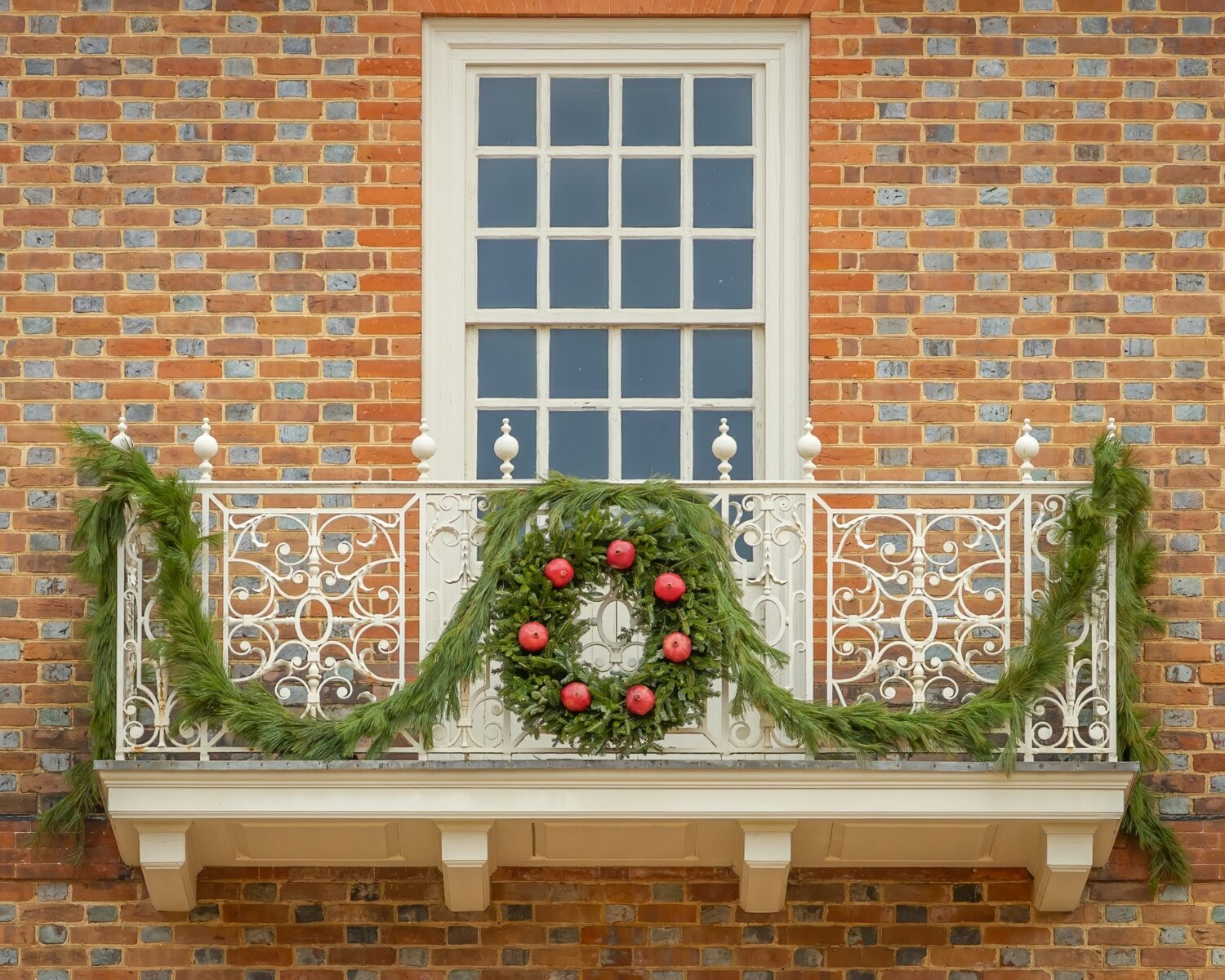
Photo: Jerry McCoy, The Colonial Williamsburg Foundation
At the Capitol building, a wreath featuring seven whole pomegranates blends with a draped garland on a balcony.
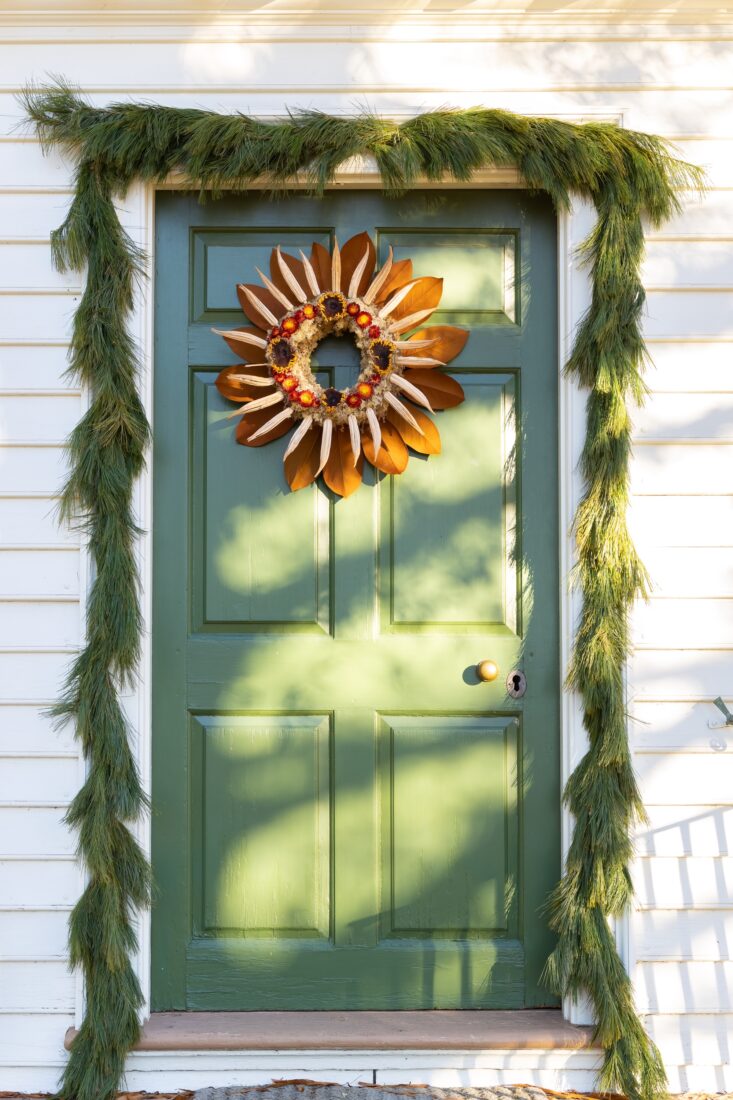
Photo: Jerry McCoy, The Colonial Williamsburg Foundation
A pine garland frames a doorway in the historic area. Chapman’s team used dried magnolia leaves, seed pods, and dried flowers to fashion the wreath.
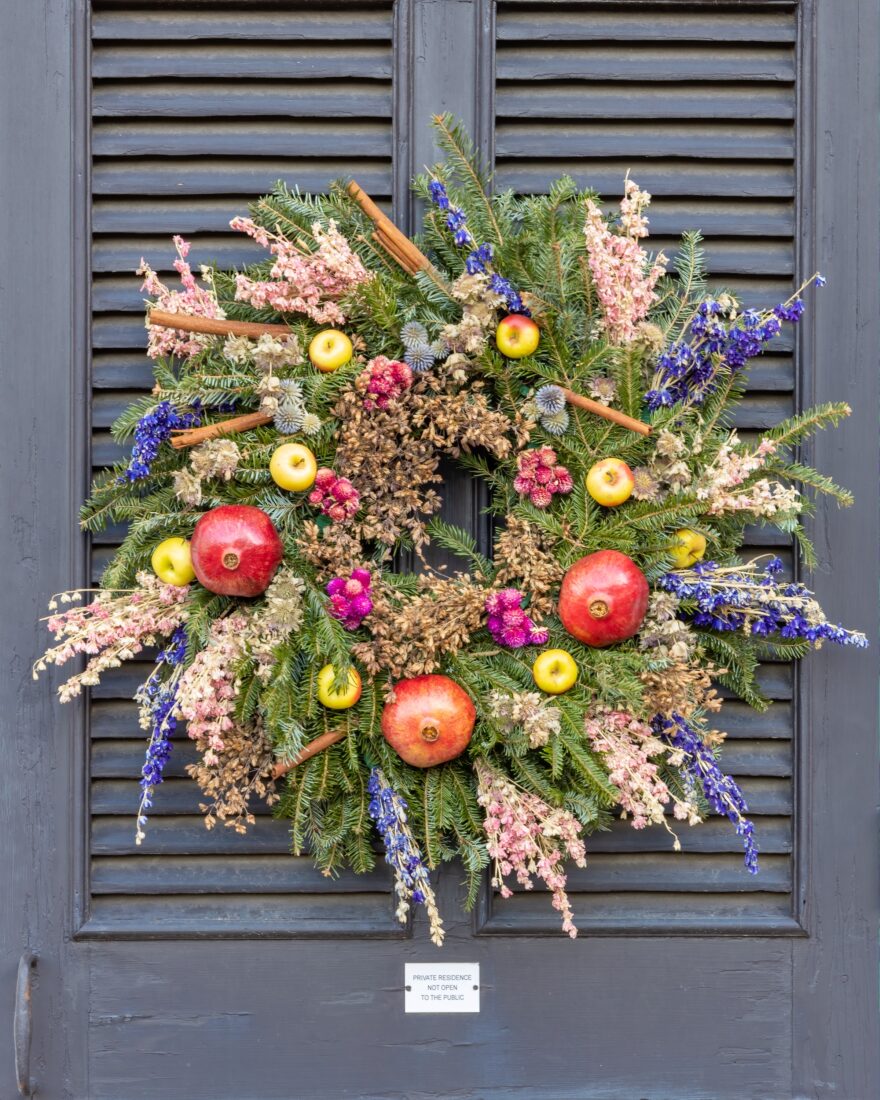
Photo: Jerry McCoy, The Colonial Williamsburg Foundation
Sometimes, more is more—pomegranates, apples, cinnamon sticks, and bright dried flowers pop among this wreath’s greenery. Occasionally, Chapman and her team have to replace fresh fruit if a hungry squirrel pays a visit.
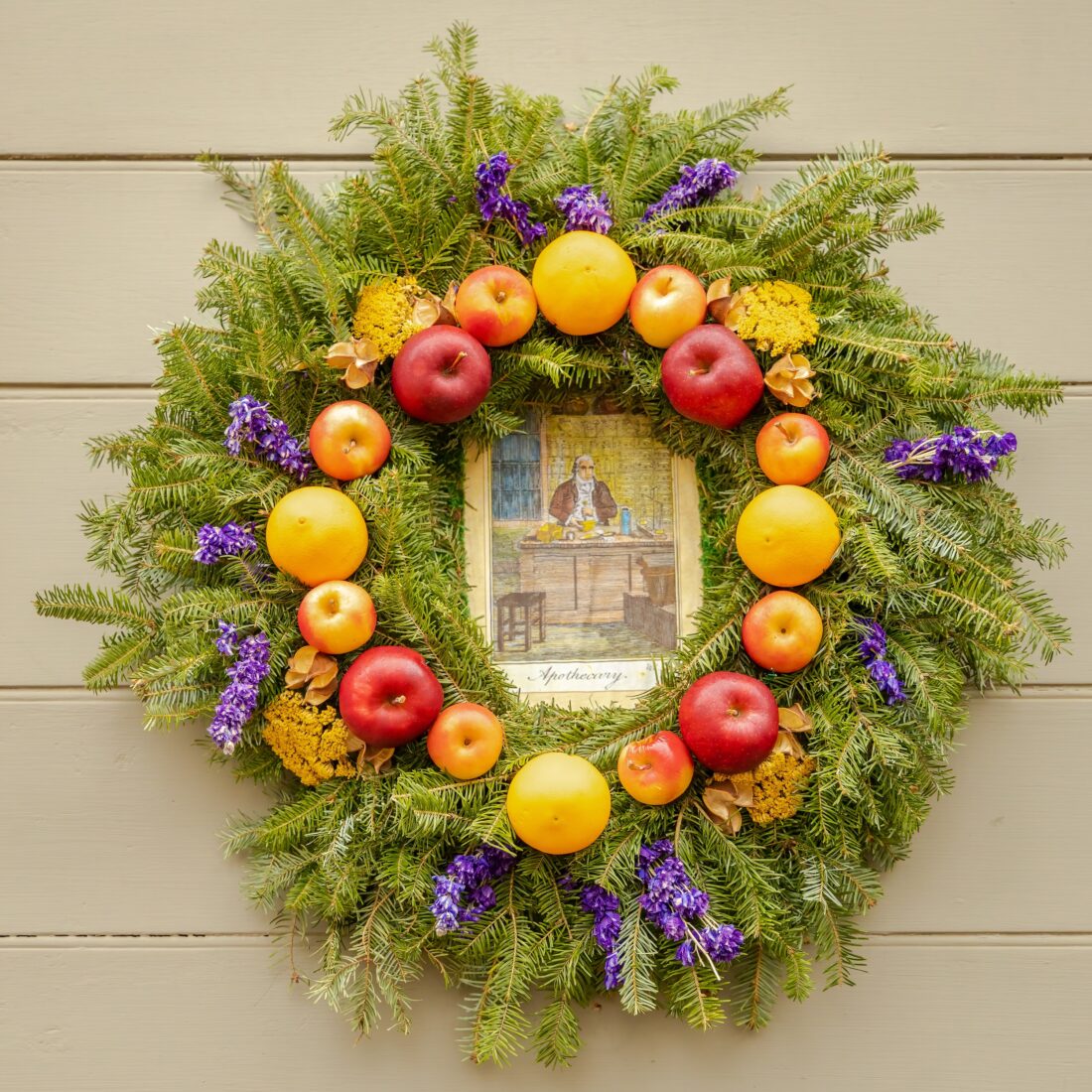
Photo: Jerry McCoy, The Colonial Williamsburg Foundation
A drawing of a historic apothecary serves as the focal point of this wreath featuring greenery and dried flowers alongside whole apples and oranges.
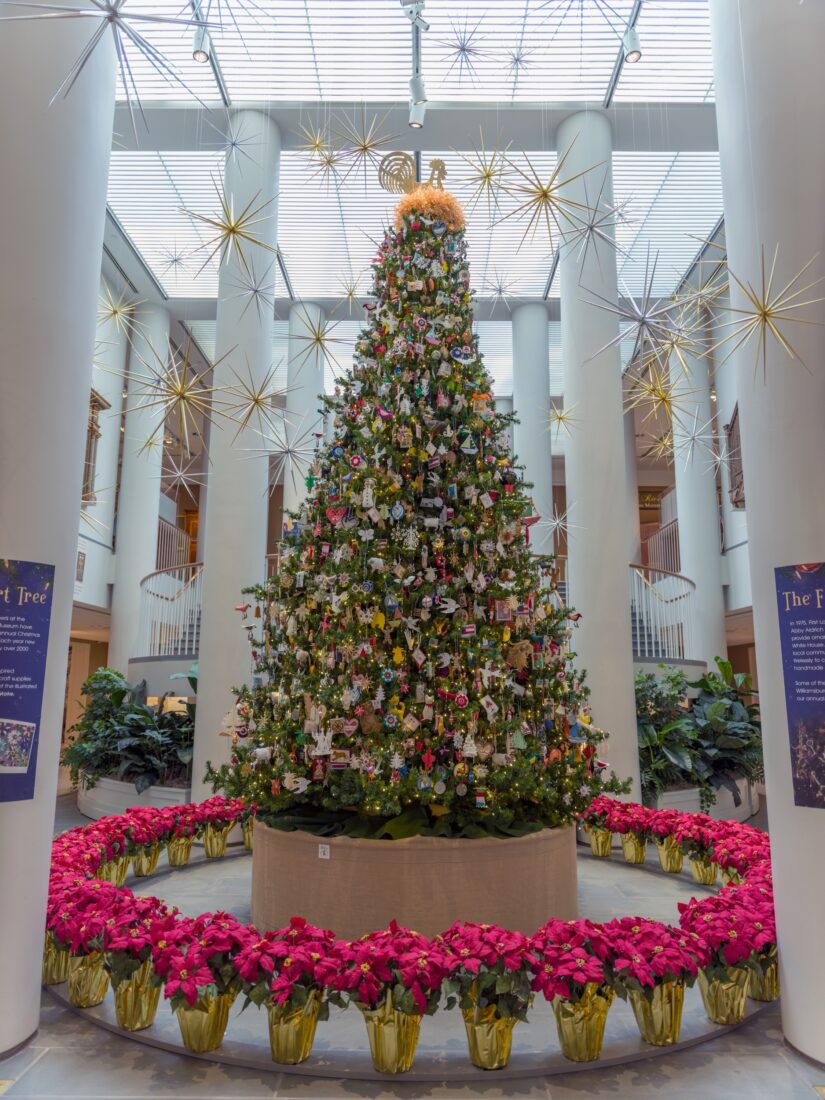
Photo: Tom Green, The Colonial Williamsburg Foundation
The folk art tree stands in the middle of a ring of poinsettias in the Abby Aldrich Rockefeller Folk Art Museum.
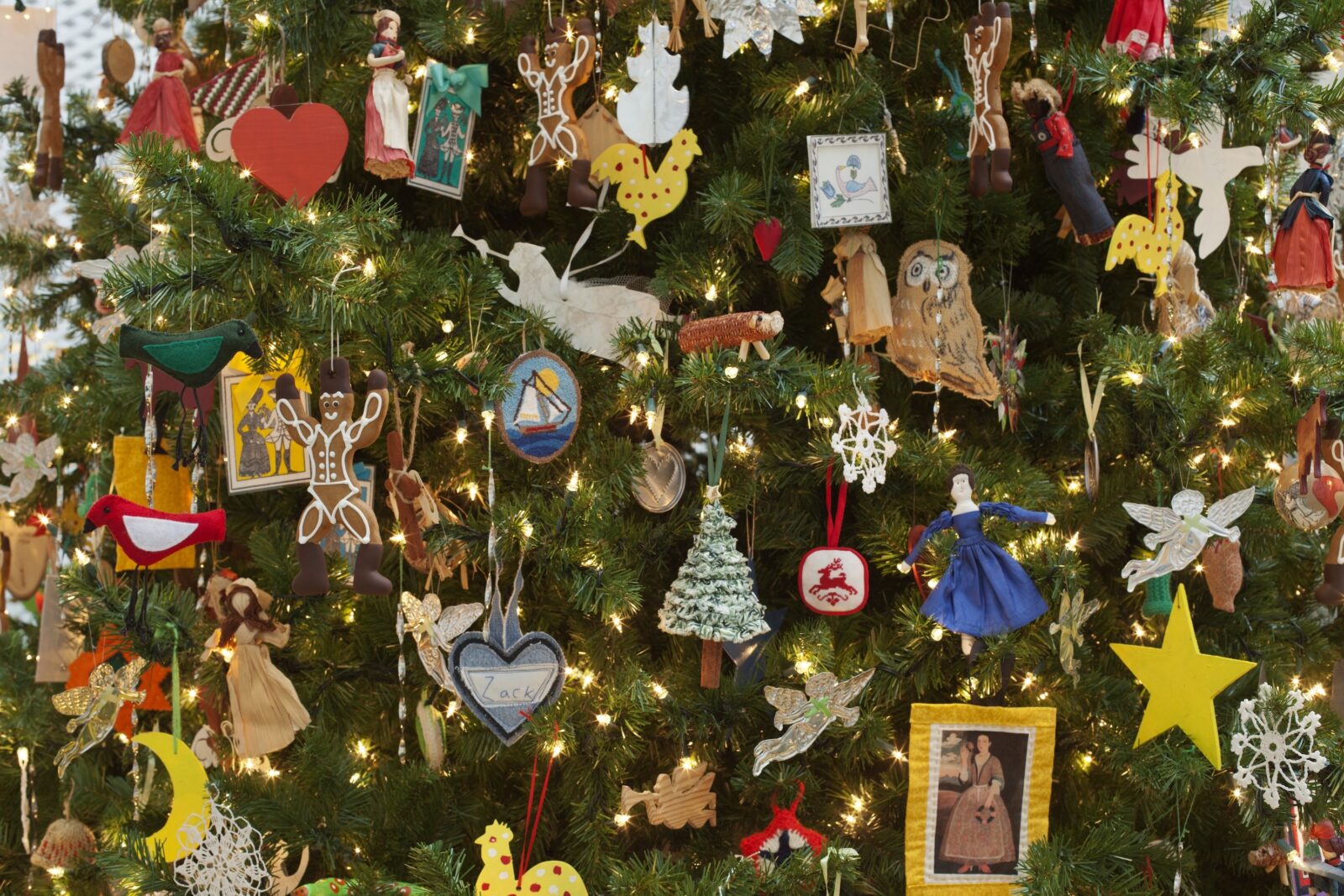
Photo: Tom Green, The Colonial Williamsburg Foundation
Hundreds of handmade ornaments hang on the folk art tree. Westenberger’s favorites include the burlap owls and dolls made of yarn.
Lindsey Liles joined Garden & Gun in 2020 after completing a master’s in literature in Scotland and a Fulbright grant in Brazil. The Arkansas native is G&G’s digital reporter, covering all aspects of the South, and she especially enjoys putting her biology background to use by writing about wildlife and conservation. She lives on Johns Island, South Carolina.
Related Stories:
Home & Garden
Shake off winter with lanterns, pottery, and more
Homeplace
The couple return with a flourish to their roots
Home & Garden
In a lush rhododendron forest in Highlands, a green Eden grows at Thistlewaite
Trending Stories:

Recipe
Garlic, white wine, and a hint of umami from anchovies kick up the childhood comfort food in a new cookbook all about butter

Distilled
Where to belly up for “dusties” in the South and beyond
Home & Garden
Let ’mater master Frank Hyman narrow the field to a delicious quartet