

For centuries the Angel Oak tree has anchored itself in the sandy loam of Johns Island, South Carolina, its trunk expanding to a commanding twenty-eight feet in circumference. As its branches have stretched more than six stories into the sky, layers of sinuous limbs have unfurled under the canopy to create a 17,000-square-foot living auditorium.
The tree was standing when enslaved West Africans arrived on the Atlantic Sea Islands in the eighteenth century to raise cotton, rice, and indigo. And it was there as they evolved the Gullah Geechee culture along the Lowcountry archipelago, serving as a shelter, a gathering place, and a symbol of strength and community for this corner of the diaspora.
“What’s really important and significant about the Gullah culture is how family extends from the immediate family to distant family, to church family, to neighborhood family,” says Quentin Baxter, percussionist for the Gullah-inspired quartet Ranky Tanky. The Angel Oak, he says, is symbolic of those intertwining relationships. “It’s how it reaches out, how it scoops down, how it really invites kids to jump on the branches and walk up the tree. So when I see that, I think, village tree.”
It’s fitting, then, that an image of the Angel Oak serves as the cover artwork for the group’s new single, “This Village,” released on Juneteenth alongside an announcement of Ranky Tanky’s forthcoming third album, also titled This Village.

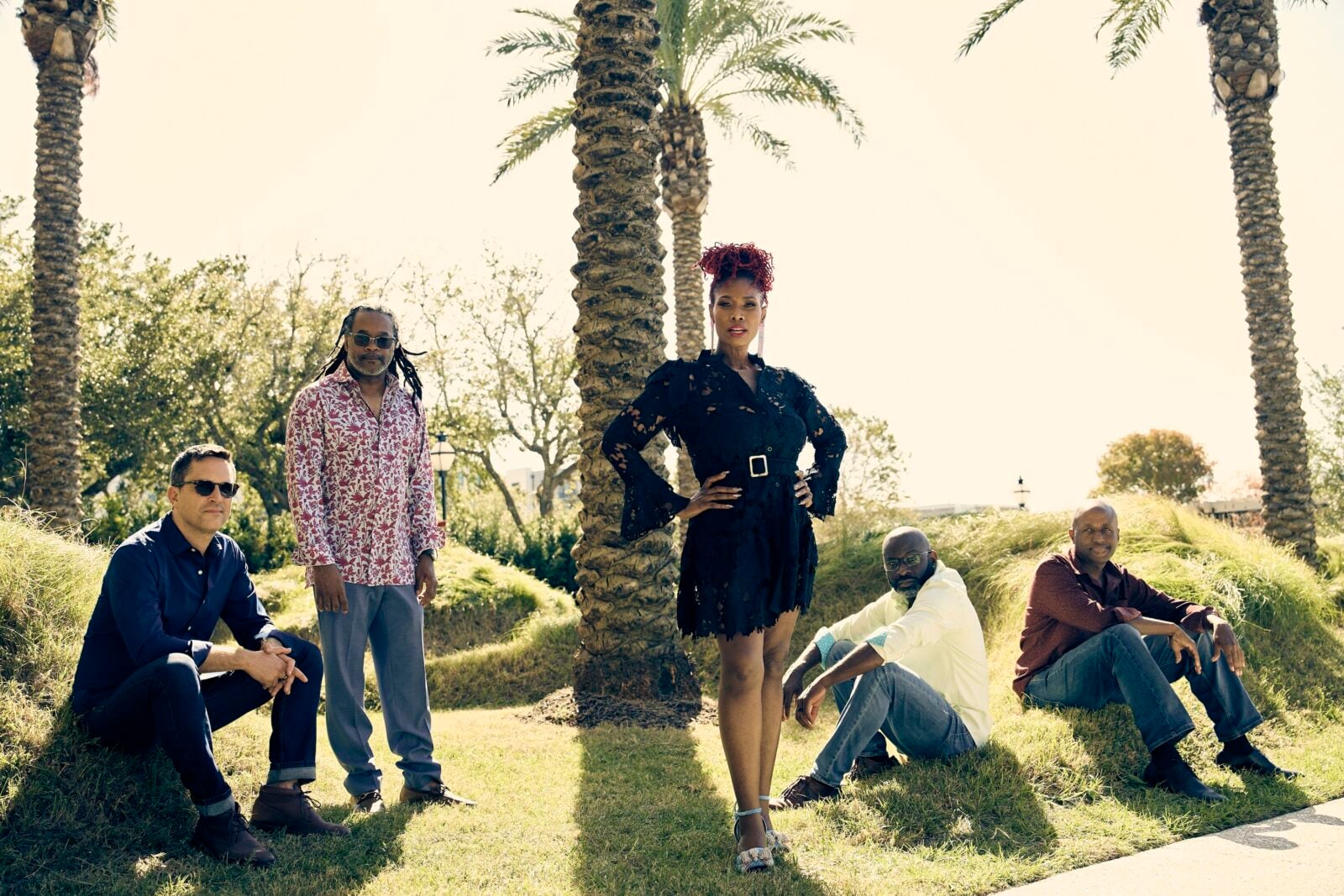
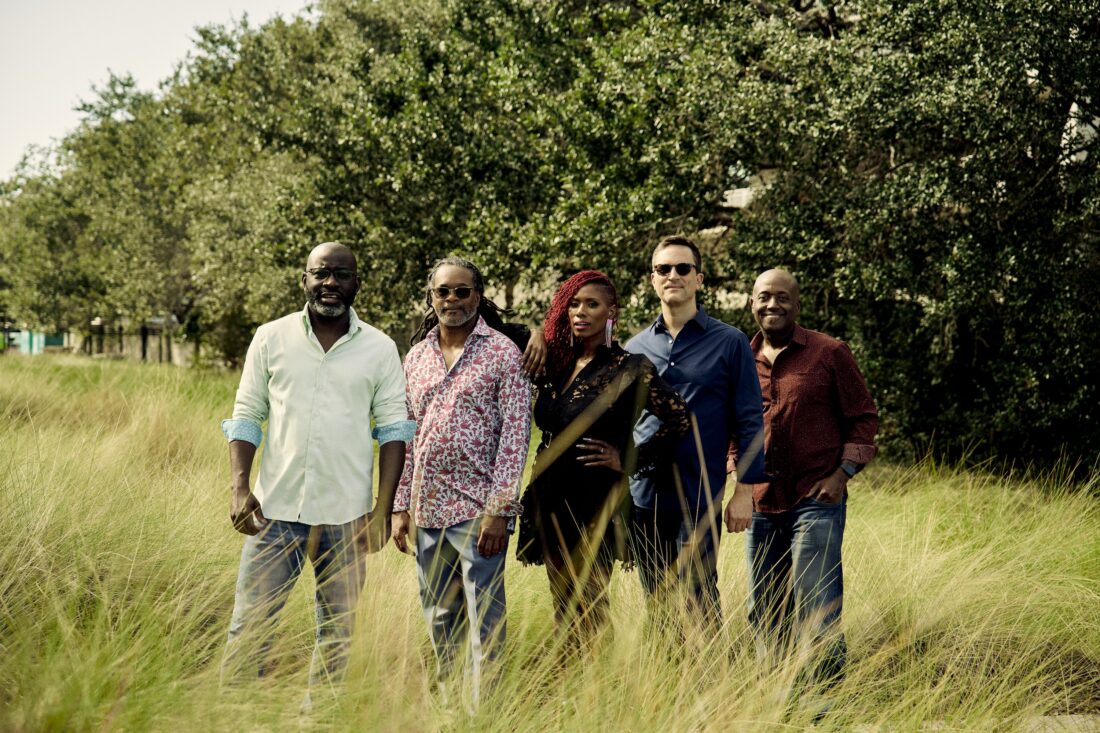
Since forming in 2016, when Baxter and longtime friends Quiana Parler, Charlton Singleton, Clay Ross, and Kevin Hamilton—all seasoned musicians from the Charleston, South Carolina area—finally pooled their talents, Ranky Tanky has earned acclaim for their interpretations of Gullah spirituals and original music that pulls from jazz and folk traditions. Their self-titled 2017 debut topped Billboard’s jazz chart, while the 2019 album Good Time won a Grammy for Best Regional Roots Music Album—the first time an album of Gullah music received the honor. The group followed up with another Grammy winner, Live At The 2022 New Orleans Jazz & Heritage Festival.
On the hopeful, piano-led “This Village,” Parler and Singleton sing of the joy, faith, and peace in their community, led equally by a matriarch whose “heart is full of love” and a patriarch whose strength and wisdom guide them. The individual families, serving as the branches in the metaphor, are “full of everlasting love.” As Baxter explains, the song “speaks on that very love, the spirit of the culture, the generosity, the shoulder to shoulder, the helping one another out, and actually having one another’s backs.” The song’s prelude, a minute-long orchestral movement titled “Out of One, Many,” was composed by Demetrius Doctor, another member of the group’s extended musical family.
Throughout the sixteen-song album, which comes out July 17, Ranky Tanky (which translates to “work it” or “get funky” in Gullah) expresses its communal philosophy in song. “The beautiful part about the band is how we’re able to acquiesce to the needs of the others,” Baxter says. “Knowing how to serve the music comes from experience and responsibility and the respect we have for one another. That’s why every song is special—I don’t care who’s writing the song. We’re always trying to fully manifest that person’s vision before we start messing with it, but we find a happy place.”
Undergirding their individual personalities, though, is a shared ancestry and experience growing up among other Gullah descendents. “Our ancestors, the Gullah people, told stories through their music, and it’s still in us,” Parler says. “That’s what we’re conveying. When Quentin plays his drums, he’s telling his story through his drum playing, and Charlton, his trumpet and singing, and myself. It’s embedded in us, so it’s being told through us. It’s almost like we’re a vessel.”
Jim Beaugez writes about music and culture from his native Mississippi. He has contributed to Garden & Gun since 2021 and has also written for the New York Times, Rolling Stone, Smithsonian, Oxford American, and Outside.