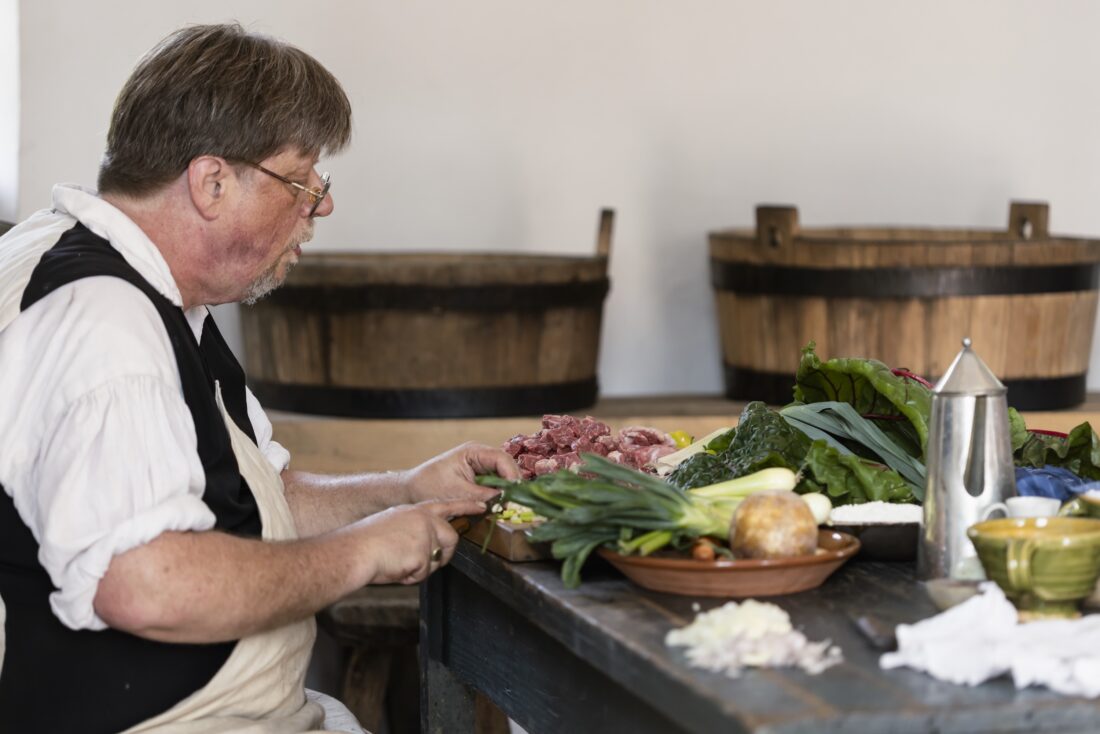
First things first: Eating in the eighteenth century was no walk in the park. “Cooking was a very physical activity,” says food historian Frank Clark. He would know—he’s the master of historic foodways at Virginia’s Colonial Williamsburg Foundation and has spent the last four decades researching, re-creating, and demonstrating cooking and brewing techniques of yore at the Governor’s Palace in the 301-acre living history museum. He broke down just how different American food habits are today.
Local, seasonal food was just…food.
“The major difference was in seasonality,” Clark says. An ingredient, be it asparagus, tomatoes, peas, or luxury items like artichokes, would be harvested and then gone until the next year, and anything bought at a market was usually walking or growing the day before. “Fresh, local, and organic farm-to-table was not a trend two hundred years ago. It was the only way you ate.”
Keeping a household fed was an all-day endeavor.
“Fire is fire. Heat is heat. What changes is the prep time,” Clark says. For fuel, people had to bring in either wood or charcoal—no turn of a burner. And “when you buy your chicken alive, there are forty-five minutes worth of killing and gutting and plucking before you can even start cooking it.”
Class often determined diet.
Today, most foods are available to most people. In colonial times, what the governor was eating was very much not standard fare for the average person. “If you are most Virginians, your cooking equipment consists of a cast-iron pot, so whatever you eat comes out of that pot and basically is some version of a soup, a stew, or a porridge, because that’s the way to stretch a little bit of meat—with vegetables and maybe a little grain—into feeding seven kids. People got half their daily calories—which fueled very active lifestyles—from a one-pot meal, and the other half from either a heavy whole-grain bread or corn johnnycakes. At the governor’s palace, meanwhile, a meal might consist of what we think of today as more traditional meat and sides—perhaps barbecue pork, slow-roasted in a marinade of red wine, garlic, and shallots and glazed with butter and cayenne pepper, alongside seasonal vegetables like fava beans, squash, and tomatoes.
But some menu items were universal.
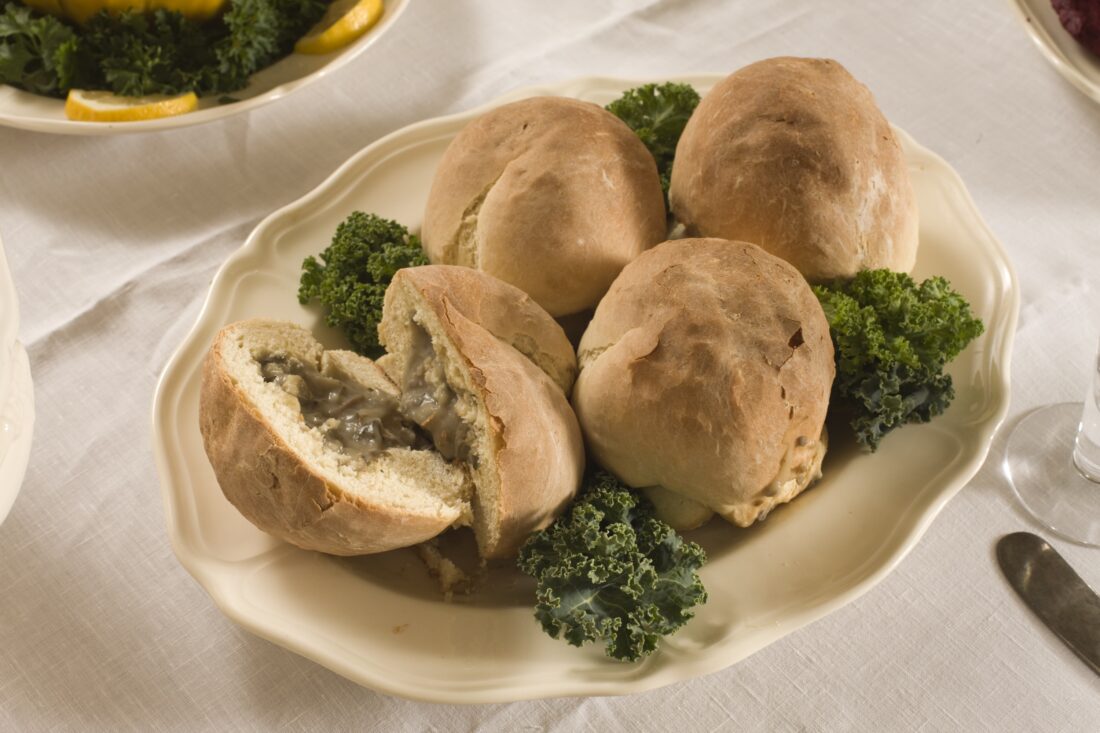
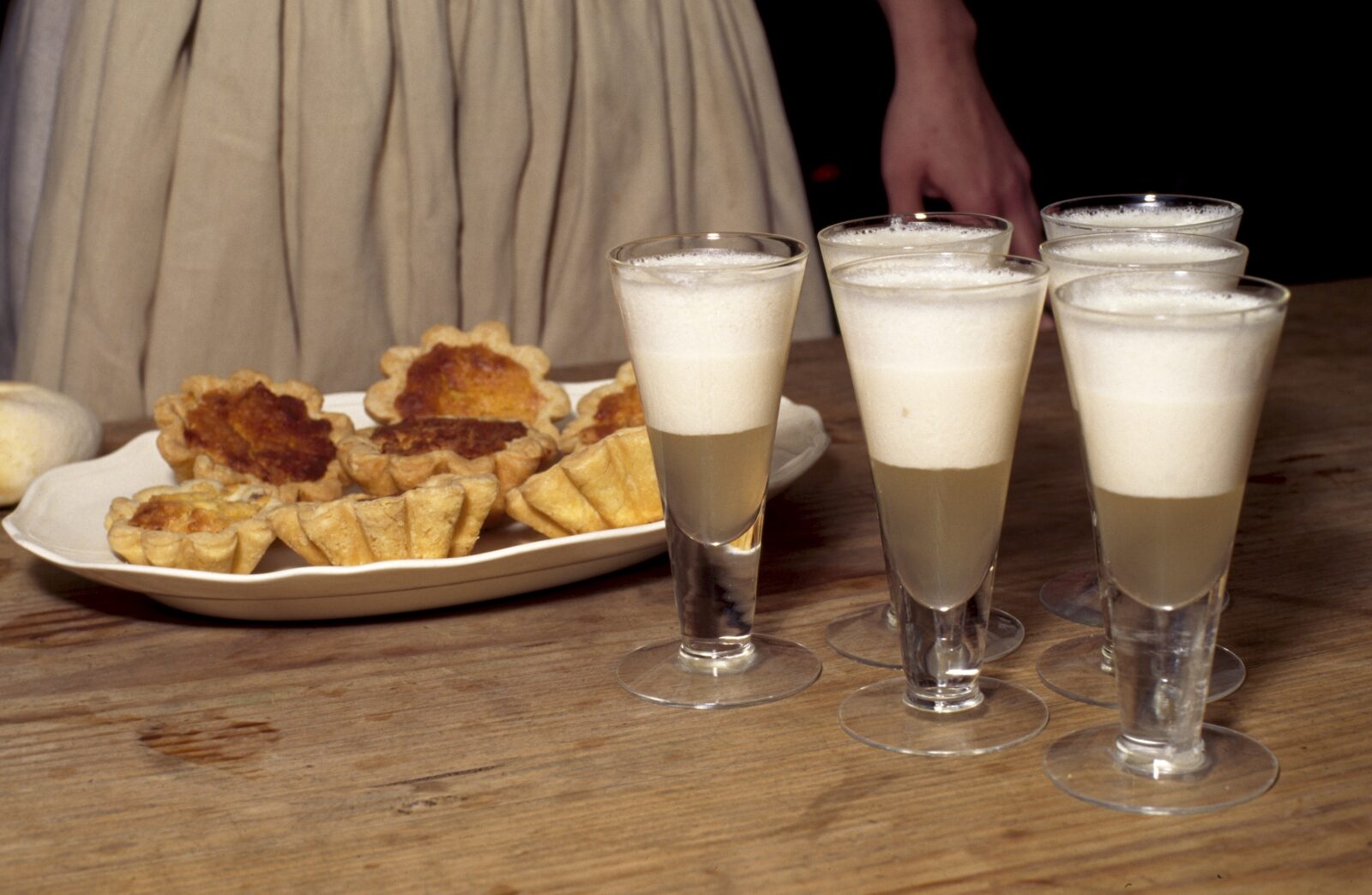
Of course, some things transcended class and were universally popular, like the dessert drink called a syllabub, puddings (fruit and spices boiled in a cloth instead of baked in a pie crust), and filled bread loaves. “Loaves were the eighteenth-century version of a bread bowl,” Clark says. “You take a bread roll and you hollow out the crumb in the middle, then fry them and fill them up with some sort of a sauce mixture.” Loaves held fowl, ham, broccoli, or oysters. “The oyster loaf is delicious,” Clark says. “If you’re going on a day’s ride in the eighteenth century you pack them up and take them with you. And that way you don’t have to stop and find a tavern along the way.”