

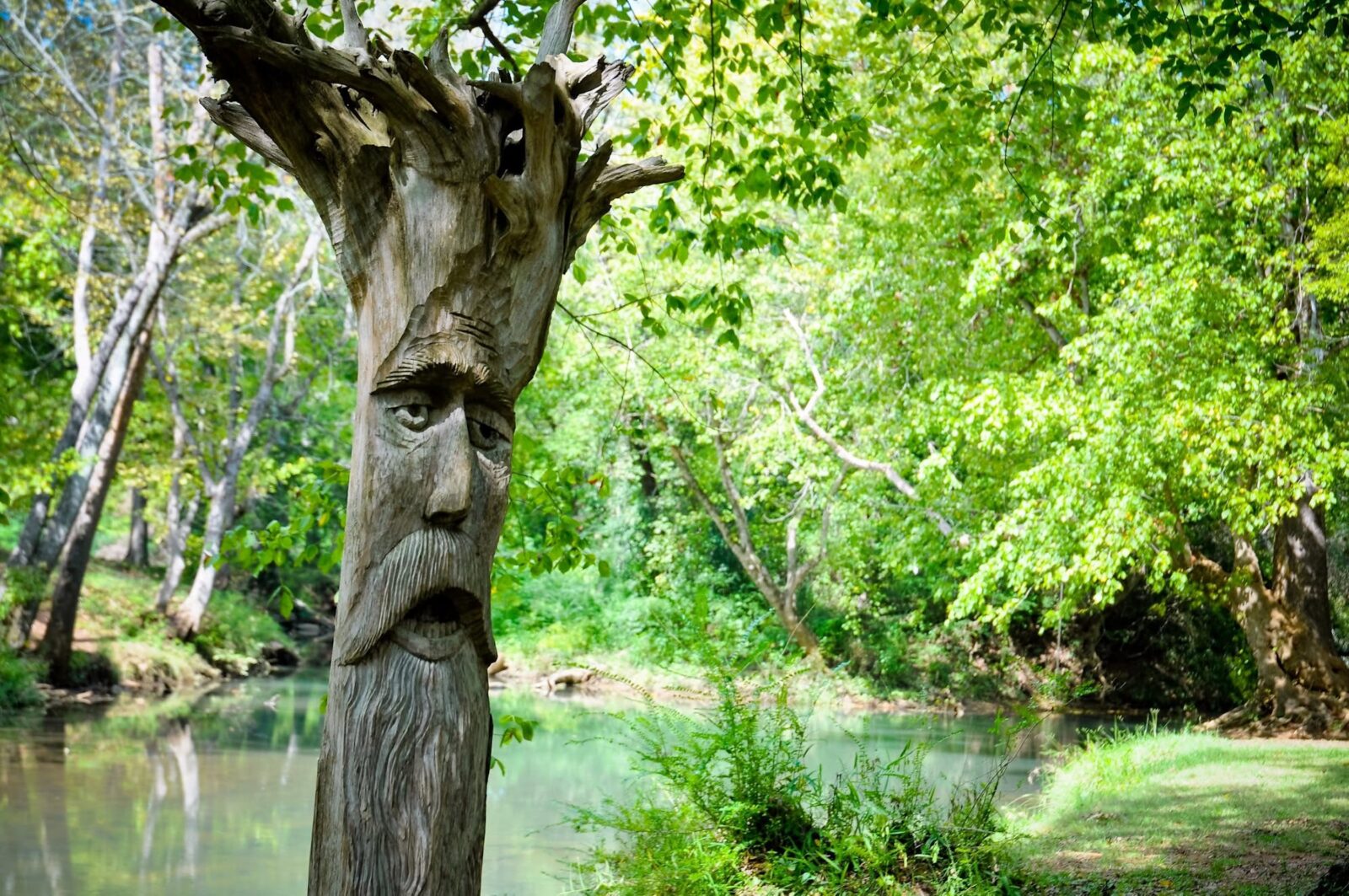
You’re never alone in Orr Park. In this peaceful forty-acre preserve in Montevallo, Alabama, there are faces everywhere you turn. They have goofy, gap-toothed grins; bushy mustaches; contemplative stares; open mouths poised to shout hello or sing a song. Carved into the trunks of fallen cedar trees, each face is unique—a Tim Tingle original made by chainsaw and chisel.

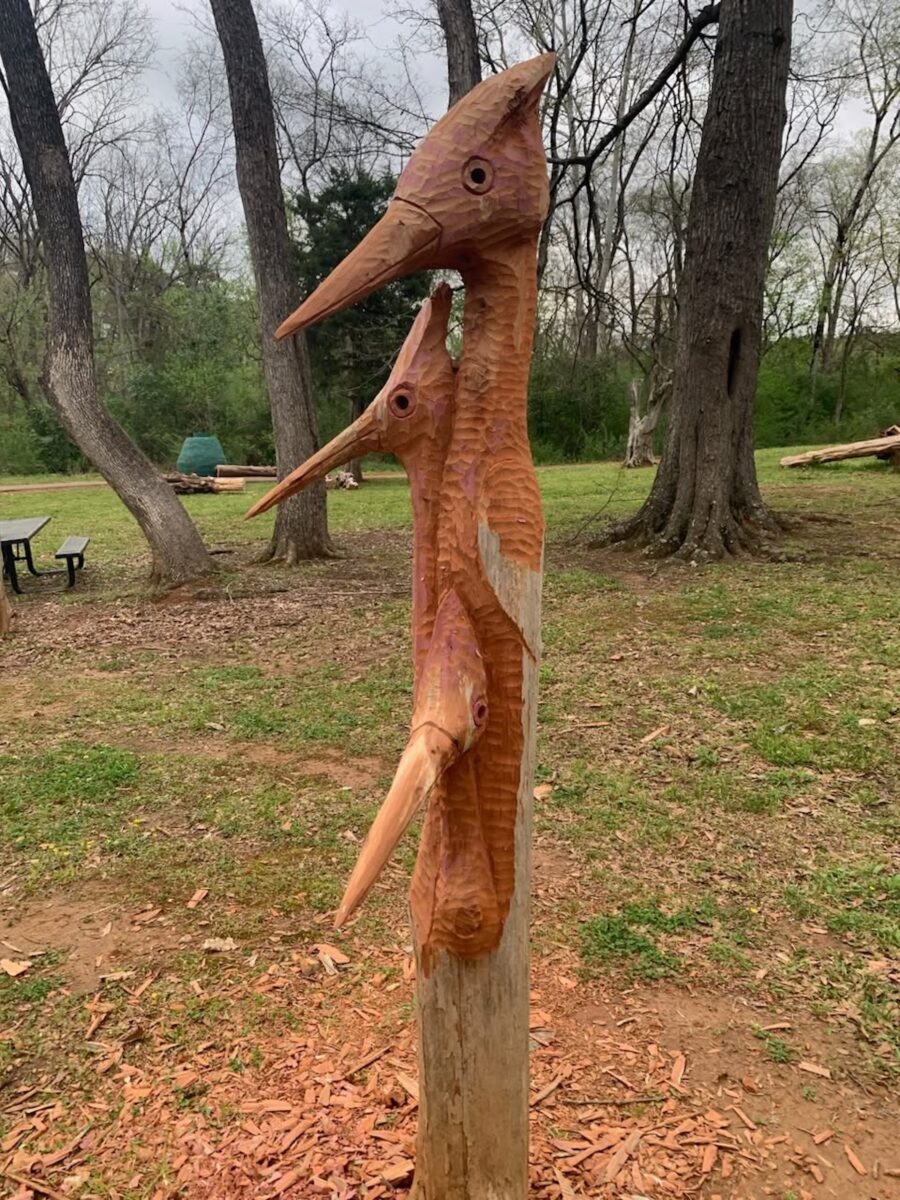
These playful carvings—122 and counting—reside in a part of Orr Park dubbed Tinglewood. As visitors walk or bike along shaded pathways, they pass by trees bearing Tingle’s trademark faces as well as animals, birds, storybook characters, and dragons. The shape and size of a tree stump often spark inspiration. “If I don’t have an idea in mind already, I look at the knots [in the wood] and I say, ‘Okay, that knot could be a nose, or maybe he’s holding a pipe,’” he says.
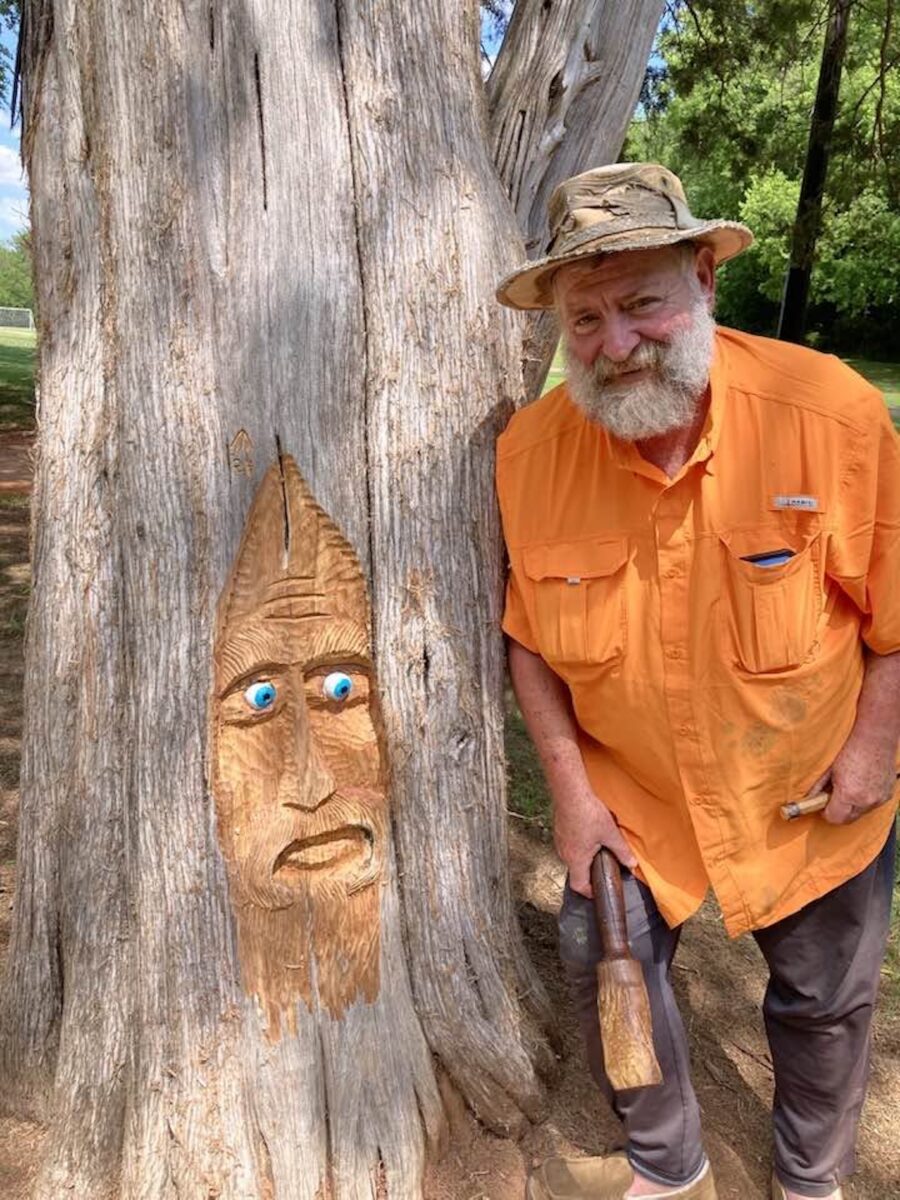
You could say that Tingle, a retired coal miner, helped put this park on the map. It takes its name from Montevallo’s former mayor, Dr. Milton Orr, who donated the land, but Tingle is the one with an annual event named after him. On the first Saturday after Labor Day, the city puts on its Tinglewood Festival, a free celebration of “shavings, smoke, and sound” at which Tingle and other woodworkers showcase their craft in whittling competitions and carving demos. Classic car and tractor shows, food vendors, and music from the Montevallo High School Jazz Band and other local performers round out a family-friendly afternoon in the park.
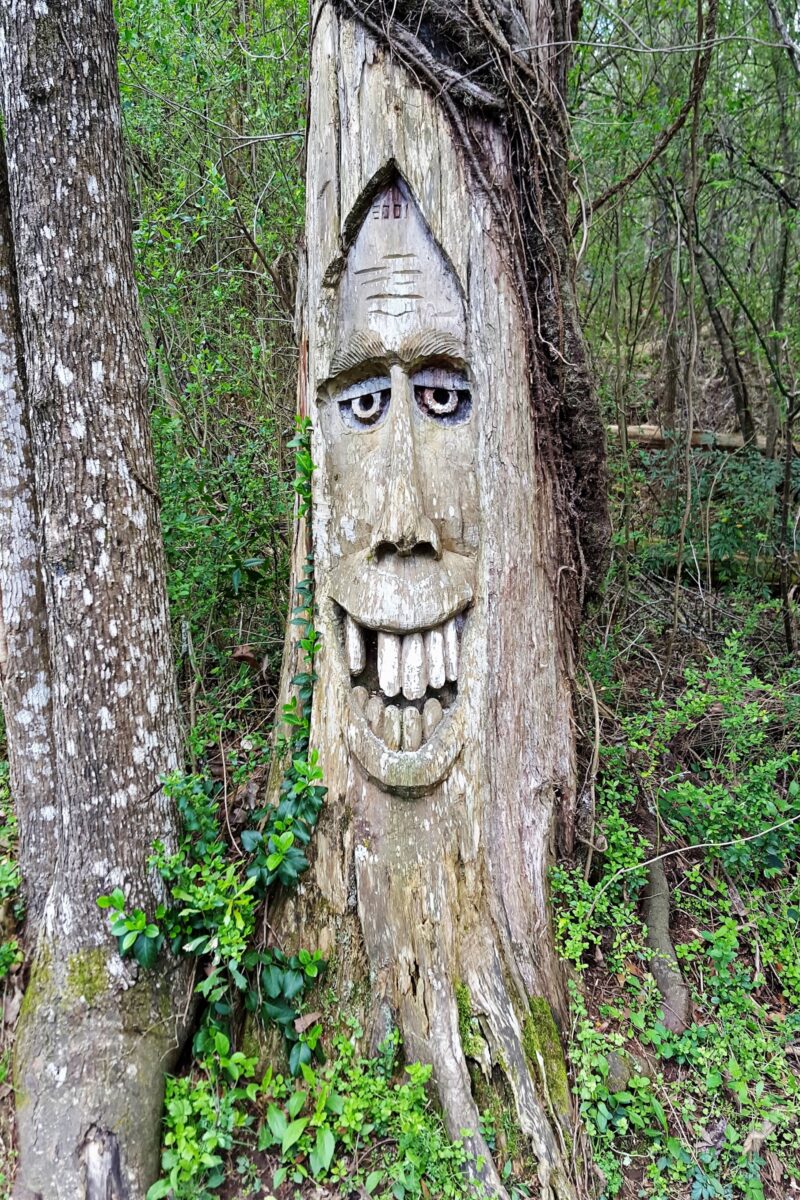
As beloved as Tingle’s art is today, the city didn’t always welcome his work. In 1993, an ice storm knocked down a number of cedar trees in Orr Park, so Tingle asked if he could help clear away the damage and perhaps take home some of the fallen trunks for his own carving projects. When the city said no to sharing the wood, he returned to the park when no one was around and carved a horse head into one of the stumps left in the ground. A few days later, he did the same thing, adding a face to a dead portion of an upright tree. “People naturally wanted to know who was doing it and were asking questions,” he says. “Someone who knew I was a wood carver asked me and I said, ‘Well, all I know is that they say these little elves come out at night and carve them.’ I did six of them before they caught me.”
He eventually got a call from the city, and they weren’t happy. The words “illegal” and “chopping trees” were used. But a field trip to the park prompted a change of heart. “The city council went out to examine the damage and to assess what they should do if they prosecuted,” Tingle recalls. “And they came back to City Hall and said we need to let this guy keep carving.”
Several years passed, and Tingle continued to populate the park with his creations. Then the internet took notice. “Pictures of my carvings were going all around the world and people were flocking to the park,” he says. “When [the city] realized how valuable the carvings were, they decided to change the name of that section of the park to Tinglewood.” Since then, Tingle has been so prolific that fallen trees are in short supply, so he now carves cedar logs set in concrete and adds smaller pieces, like gnomes and elves, that he makes at home.
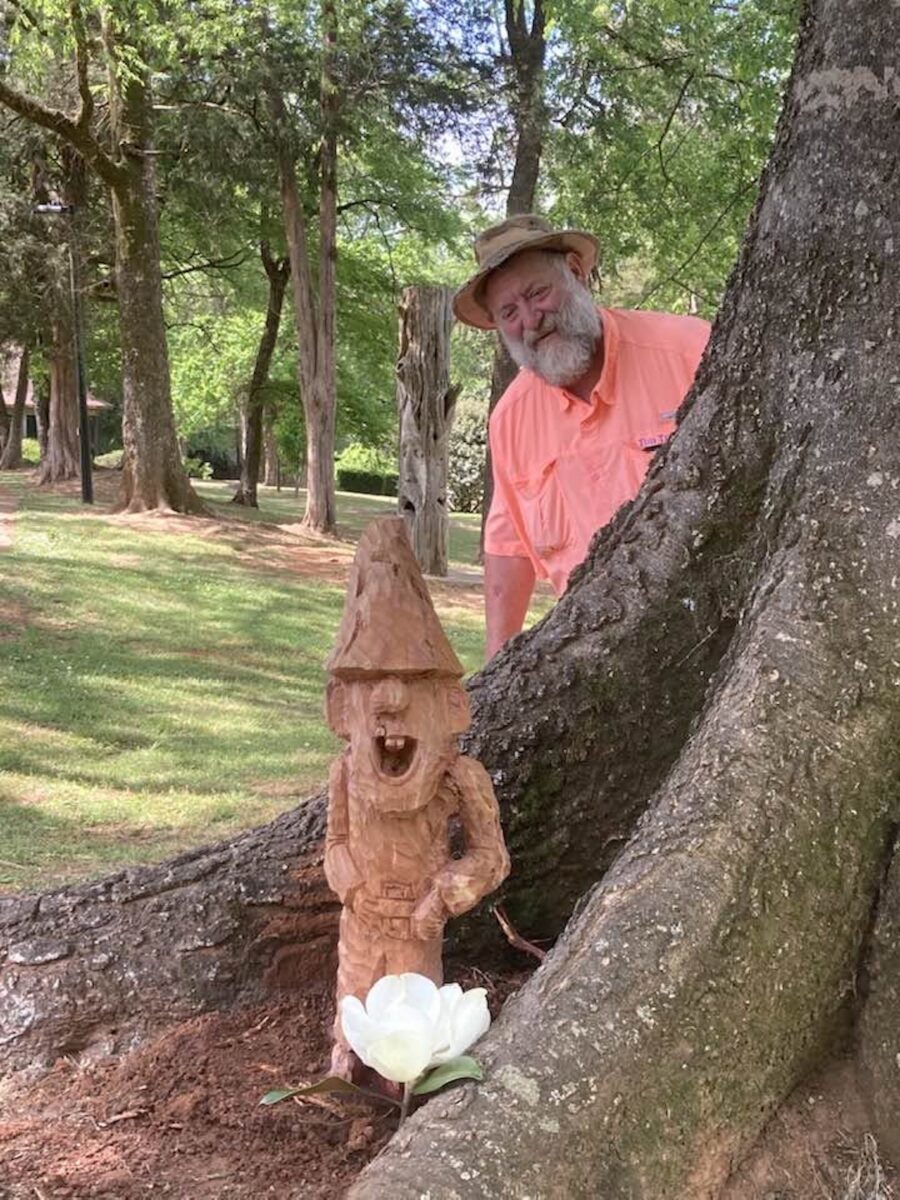
His creations are a gift to the community, but the work is more than an artistic outlet. Three years ago, a stroke temporarily sidelined his work, and he credits his rehabilitation to keeping his mind and body busy. “After I recovered from that stroke, I realized I needed to accelerate my output over there. So I did twenty carvings in 2024, twenty-two in 2025, and this year I’m probably going to have thirty-five,” he says. “I’m going to keep doing as many as I can.”
The addition of each piece keeps Orr Park feeling lively. Unlike other green spaces where the scenery doesn’t change very often, there’s always the possibility of seeing something new on a routine jog or bike ride. “People tell me my carvings make the park magical,” he says. “There’s nowhere you can go in the park where something’s not watching you.”