

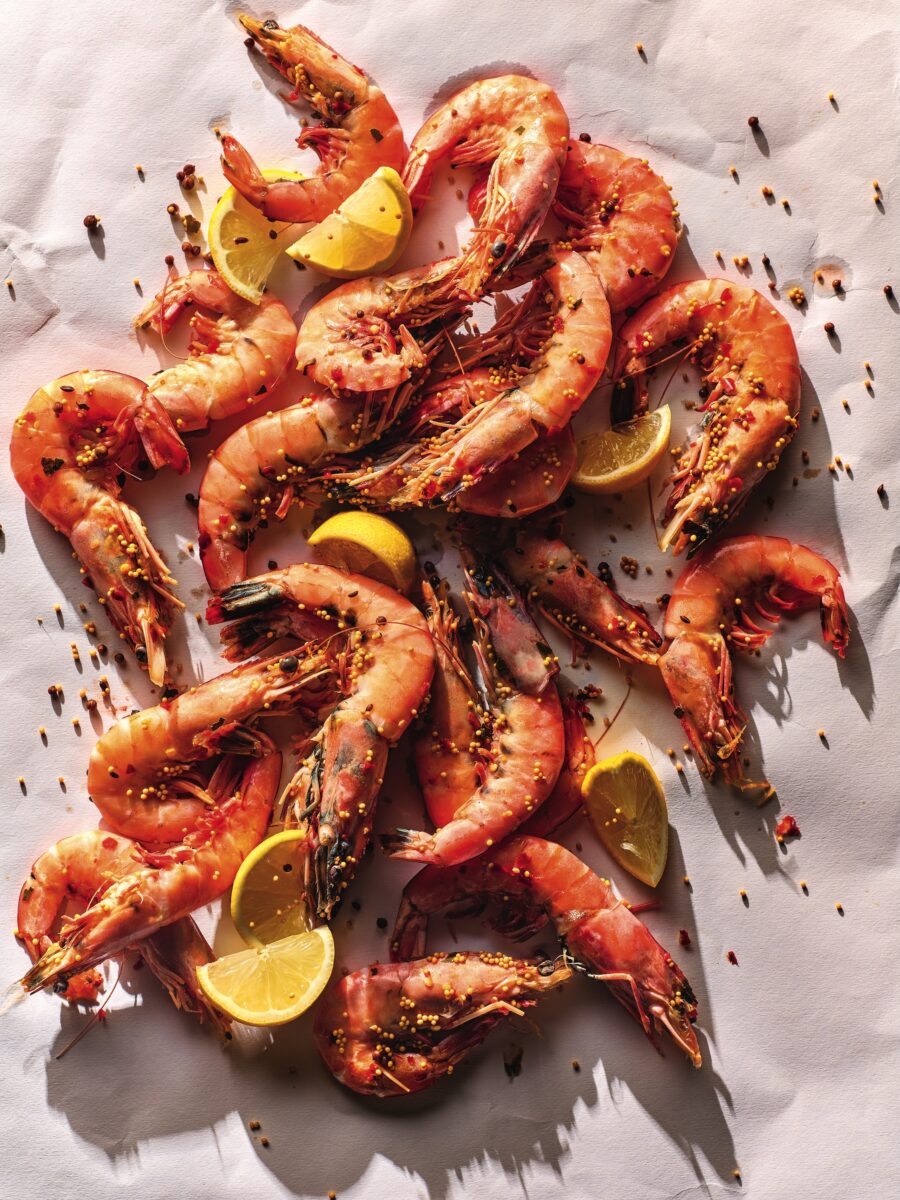
Rémoulade on the list of foods that divide New Orleans. You’re on either team red or team white. Tujague’s, the second-oldest restaurant in the city, will always be firmly in camp red, says owner Mark Latter, who took over the restaurant when his dad died suddenly in 2013.
The origins of rémoulade go back to seventeenth-century France. Its name derives from rémolat, the word for horseradish in a northern French dialect. But in its simplest form, the sauce contains no horseradish. Early versions mixed herbs, capers, and cornichons with mayonnaise.
The French brought the sauce to New Orleans, but the mayonnaise base didn’t do well in the heat. By the early 1900s, a version emerged using oil, vinegar, and plenty of Creole mustard, plus a healthy dose of paprika, which gave it a ruddy hue. Over the years, restaurants put their own twists on red rémoulade. Most recipes use lots of finely chopped celery and green onion, sometimes with boiled egg for added texture.
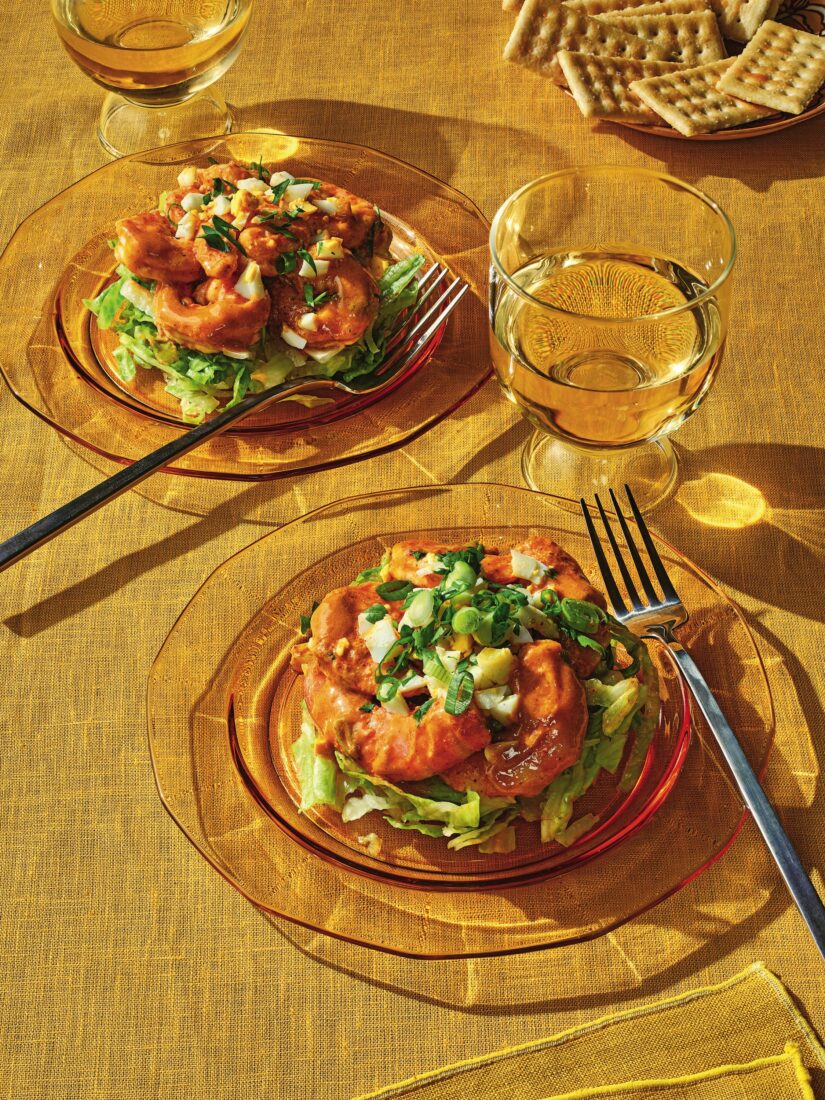
Celebrating its 170th anniversary this year, Tujague’s has been serving cold shrimp dressed in rémoulade over shredded lettuce since its classic five-course menu debuted in 1856. At some point, Latter says, the cooks began using red rémoulade, and while the recipe has evolved, the current version of the dressing has remained the same for almost forty-five years. “The original recipe was more like a cocktail sauce, but this one is what my dad inherited when he bought the place,” says Latter, who grew up busing tables and has worked every station in the kitchen. “I’ve made a lot of rémoulade.”
The sauce emulsifies olive oil with Zatarain’s Creole mustard and lemon juice, creating a thick dressing blended with chopped celery, parsley, and white and green onion. Tujague’s keeps its rémoulade a little chunkier than some versions. A standard blender works, but an immersion blender makes it easier to keep an eye on the texture.
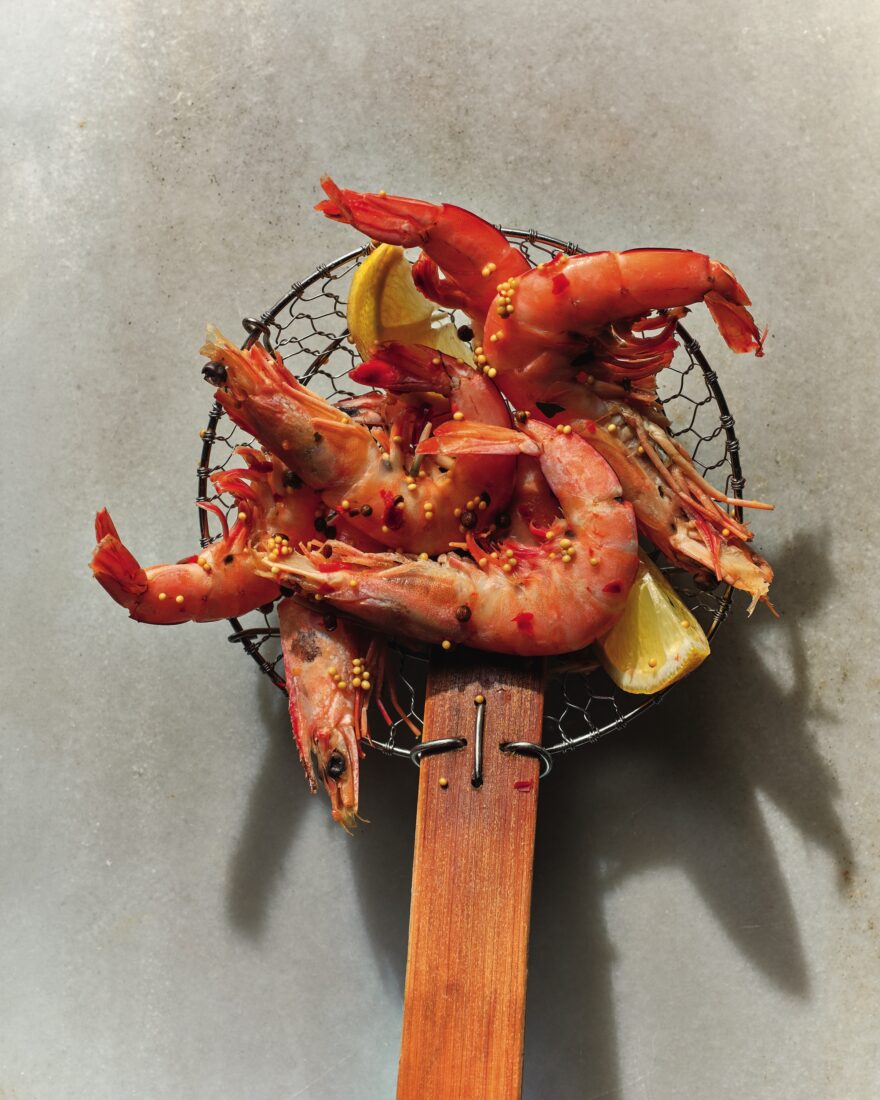
To cook the shrimp, add them as soon as the water comes to a boil, and once the water boils again, turn off the heat and cover the pot for about five minutes so the flavor of the crab boil can soak in. Moving the shrimp afterward to a bowl of ice helps them stay crisp.
“We get really fresh-grade Louisiana shrimp, so it’s hard to mess them up,” Latter says. Once they’re peeled, the shrimp get tossed in a generous amount of sauce, then arranged on shredded lettuce and sprinkled with finely chopped hard-boiled egg.
“The younger generations want what’s new and exciting,” he says. “The old-timers don’t like change. And this is as old-school as it gets.”