
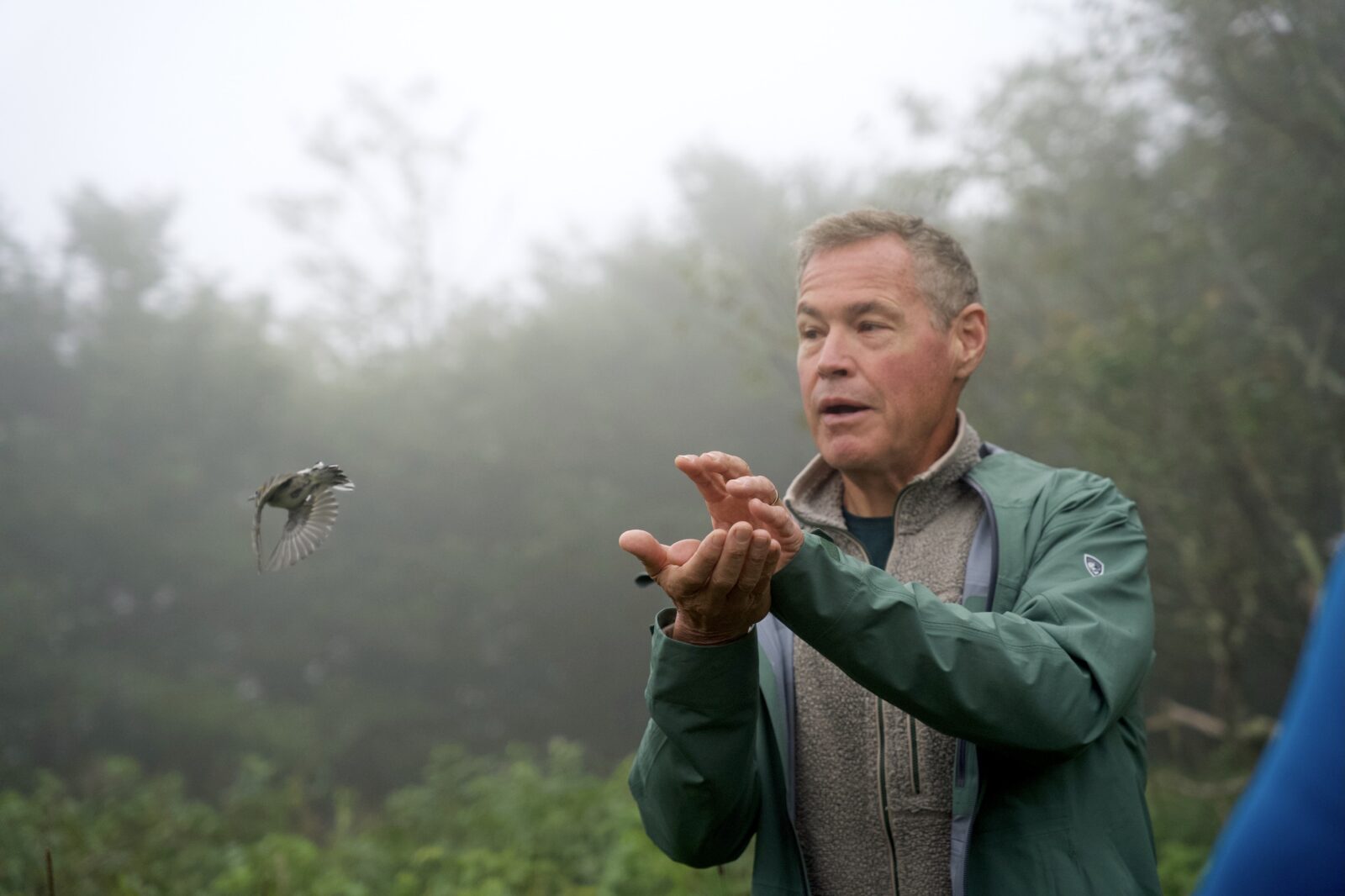
Since the late ’90s, conservationist Jeff Corwin has graced our screens alongside a wild roster of costars, including boa constrictors in Panama, Barbary macaques in Gibraltar, and tenrecs in Madagascar. But recently he’s turned his attention a bit closer to home.
In his new ABC series, Jeff Corwin’s Southern Wild, Corwin explores the ecosystems of none other than North Carolina. As with his former projects, he highlights the lesser-known species of the region, but the show also captures a shift in his storytelling over the past several decades: “Our journey really is to not only tell the story of wild North Carolina, but also to tell the story of the great collective of folks that are determined to save wild North Carolina for the next generation,” he tells G&G.
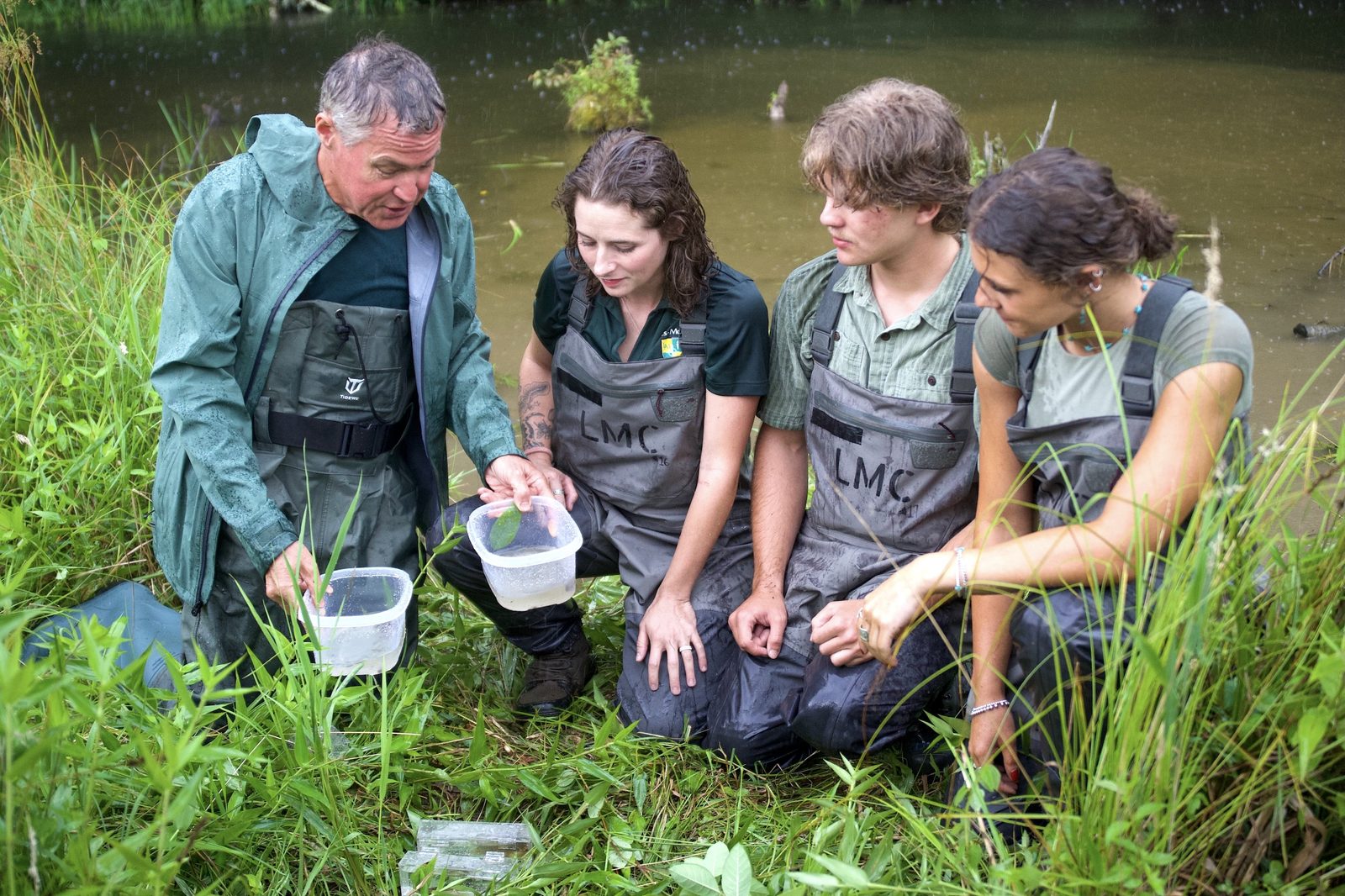
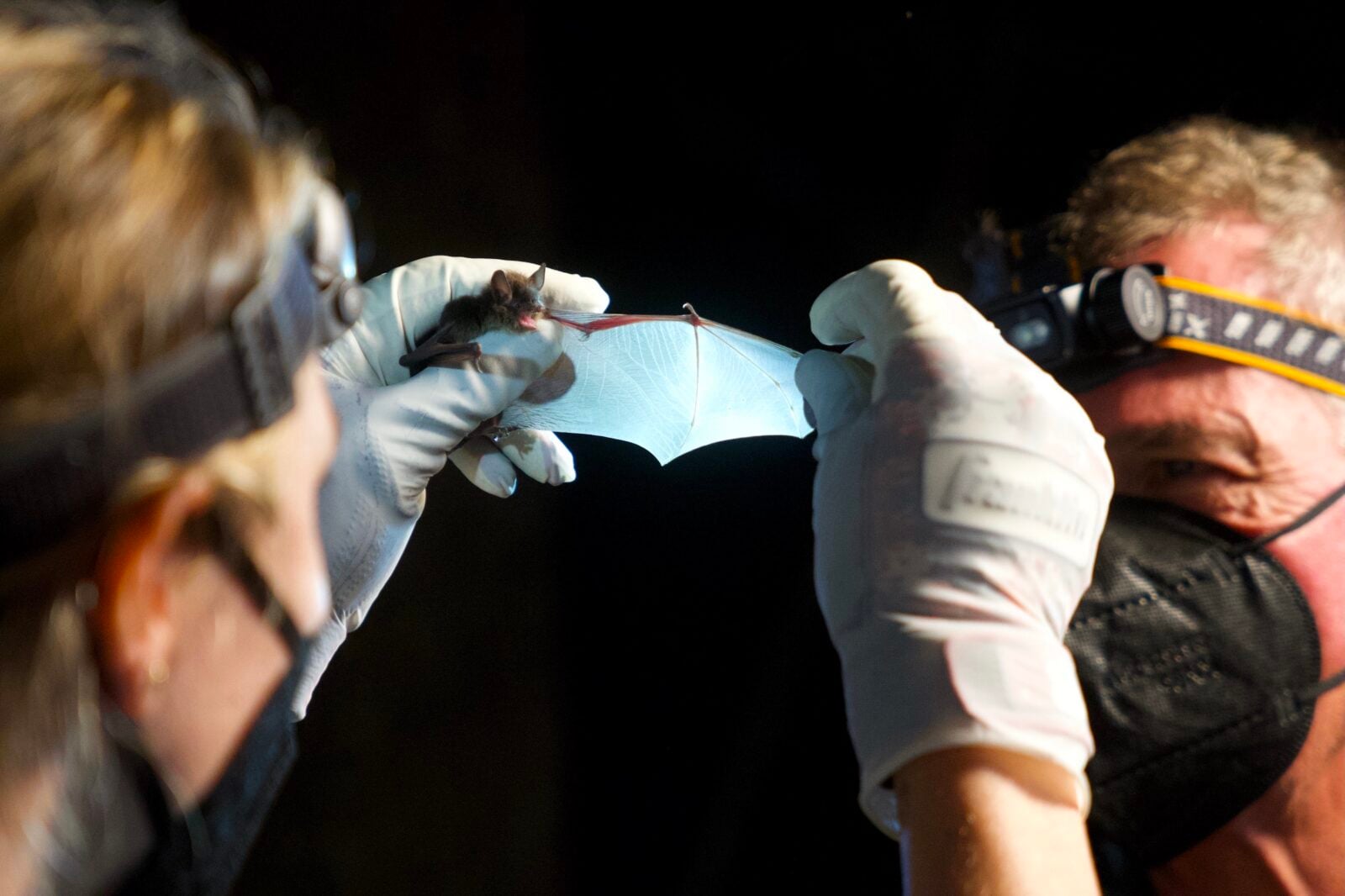
Partnering with Lees-McRae College in Banner Elk, North Carolina, Corwin is bringing conservationists and their innovations to the forefront of his program, from those who carry ancient fish in backpacks across mountains to reintroduce them to their historic waters, to scientists who have devised a way to track bats with a network of iPhones. Ahead of the show’s premiere on October 3, we chatted with Corwin about biodiversity in the Tar Heel state, the future of Southern conservation, and snot otters.
You’ve covered wildlife all across the globe, on almost every continent. What made you want to focus this show on North Carolina?
When you get into North Carolina, you get this incredible amalgamation, this wondrous blend of both the warm, almost subtropical ecology, where you’ve got alligators and you’ve got the Outer Banks, and you get red wolves and this diverse habitat. But then something incredible happens when you begin to go up in altitude, and you go into the Blue Ridge Mountains, and you go into the foothills of Appalachia. You see there is a flip in what the biodiversity is. You get this incredible experience of creatures that live in a temperate rainforest, and you get animals that are found nowhere else on Earth…it puts together this incredible palette, this great tableau of different types of wild space, and that was the great discovery for me.
I then discovered that equal to the incredible biodiversity of North Carolina is this amazing diaspora of folks from the federal level to the state level to the NGO level that are focused on saving these wild treasures, and that was kind of the epiphany. That was like—there are great stories to tell here.
Tell us about some of the species you’ve covered while filming this show.
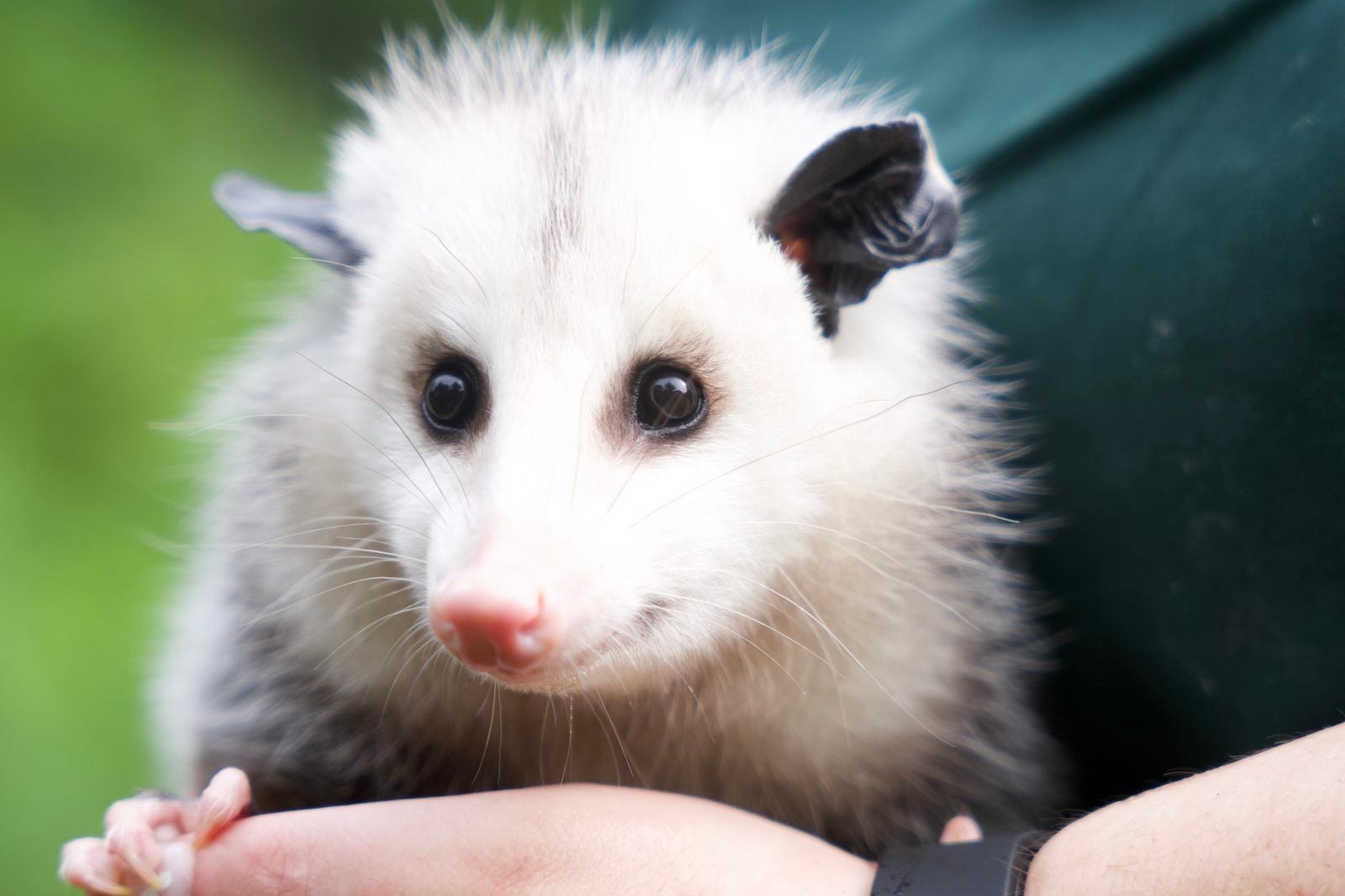
Oh my goodness! So many great creatures: red-cockaded woodpeckers, hellbenders, red wolves, timber rattlesnakes, bog turtles, sea turtles. Working with red drum, black bears. We helped relocate two rescued black bears two days ago into a new home where they will hopefully thrive. This one state seems to hold the lion’s share of creatures that are found in other places, and at the same time, they have creatures, like the Yonahlossee salamander, that only live in this one little patch of forest in North Carolina. The brook trout—If I showed you a picture of this animal in the space where it lives, you would say, “Oh, there you go, AI.” It’s not AI. It’s Mother Nature.
This show features a lot of animals many don’t even know reside in their home region. Why is it important to highlight these unsung species?
How many people know about hellbenders? Hellbenders are one of three species that belong to the cryptobranchid family. There’s one in China, and they’ve been all but eaten to extinction. You’ve got a species in Japan; they live in one little area outside of Kyoto Prefecture. And then you can come here and see snot otters throughout many of the streams in North Carolina. You want to see these big charismatic species, right? But it’s the little things that sometimes matter the most because they are the individual sparkles that allow this whole wild place to shimmer so brilliantly, biologically. They’re the little bits and pieces that tie it all together.
Just over two years ago, Hurricane Helene hit Western North Carolina, leaving unprecedented devastation. What is it like covering that area now?
Hurricane Helene was catastrophic and caused great impact on the wildlife and the people. But because North Carolina has such an abundance of wild space, that habitat contributes to the resiliency, so it was able to bounce back. We were in this river system yesterday in Pisgah National Forest, and the biologist was like, “All the trout were wiped out after Hurricane Helene, and two months later they were back spawning.” That’s what North Carolina is. Why do these places recover? Yes, human determination, what it means to be a community. But also do not undercut the value of that resilient wild space to be your buffer, to literally have your ecological back, and that’s what I see in North Carolina that I don’t see in a lot of other places.
You’ve been covering wildlife on our TVs since the late ’90s, and your content has shaped a generation of conservationists. Do you encounter that impact in the field?
It’s probably the best reward I get, and it’s both moving and humbling and a little embarrassing in a way, because I don’t live a limelight life. I’m a very private person. I’m a social, gregarious person, but I live on a little island off New England. And when I’m not making my TV shows, I’m a commercial fisherman in summer. I live on a twenty-two acre island—I love to hunt and fish and live close to nature. And when you go in and you’re working with this person in their twenties or their thirties and you find out that you’ve been a part of how they’ve come to be, it’s very rewarding. You kind of feel like, Man, that’s what I wanted to do. The animals are cool, the hikes, the adventure, the outdoor recreation, the diversity of North Carolina—unarguably awesome. But it’s the people that have come together, determined to ensure that this wild resource survives—that’s what thrills me.
Below, get an exclusive look at the first episode of Jeff Corwin’s Southern Wild.
Helen Bradshaw, Garden & Gun’s social media editor, is a born-and-raised Floridian. As such, she has an aptitude for finding alligators and an affinity for the weird and wonderful stories of the South. She graduated from Northwestern University with a focus in environmental journalism.